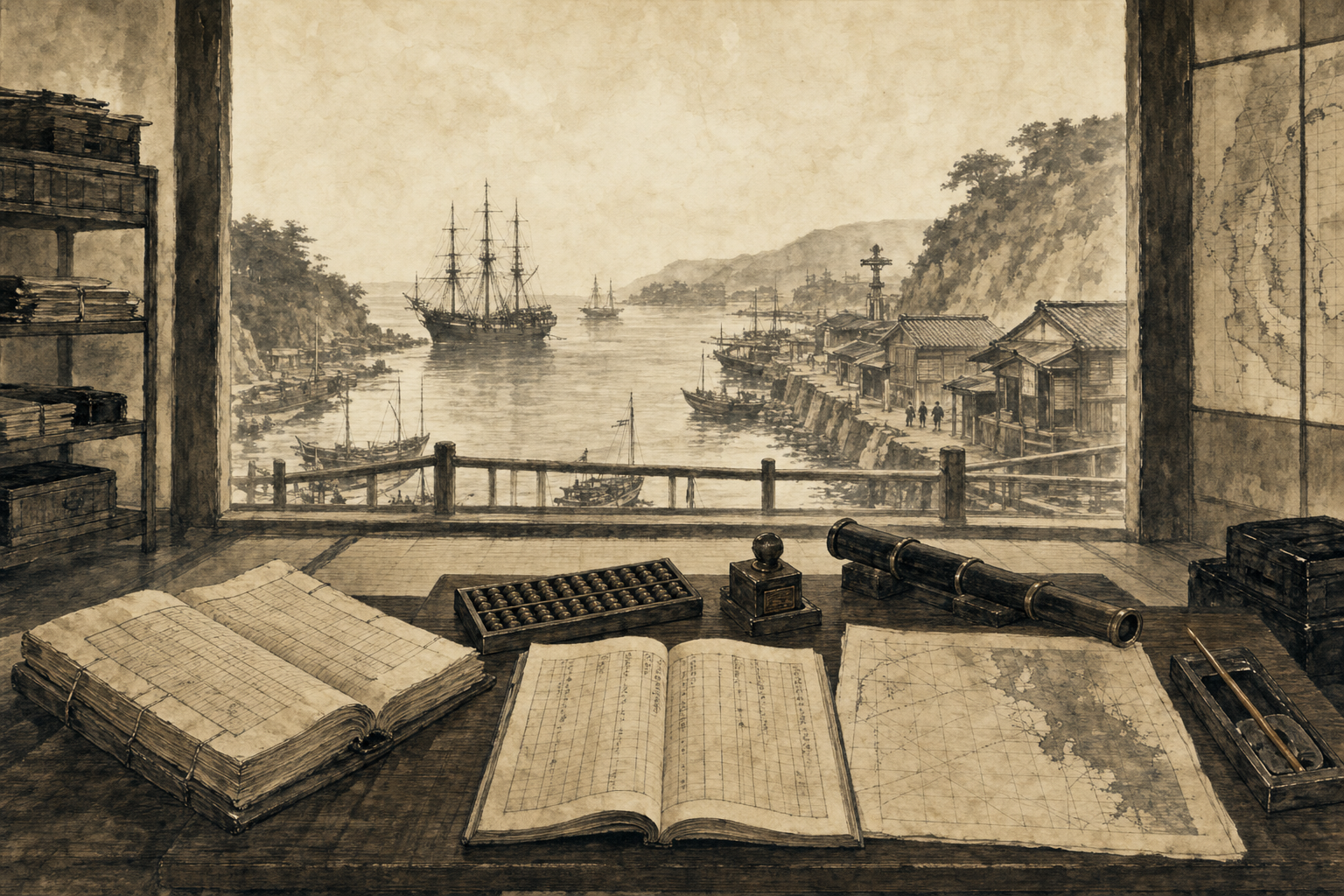
Uraga magistrate office and harbor
Learns observation and record work through port registers
Ship inspection, cargo checking, coastal defense, gunnery, and powder preparation become linked duties across office and port town.
Know the Person
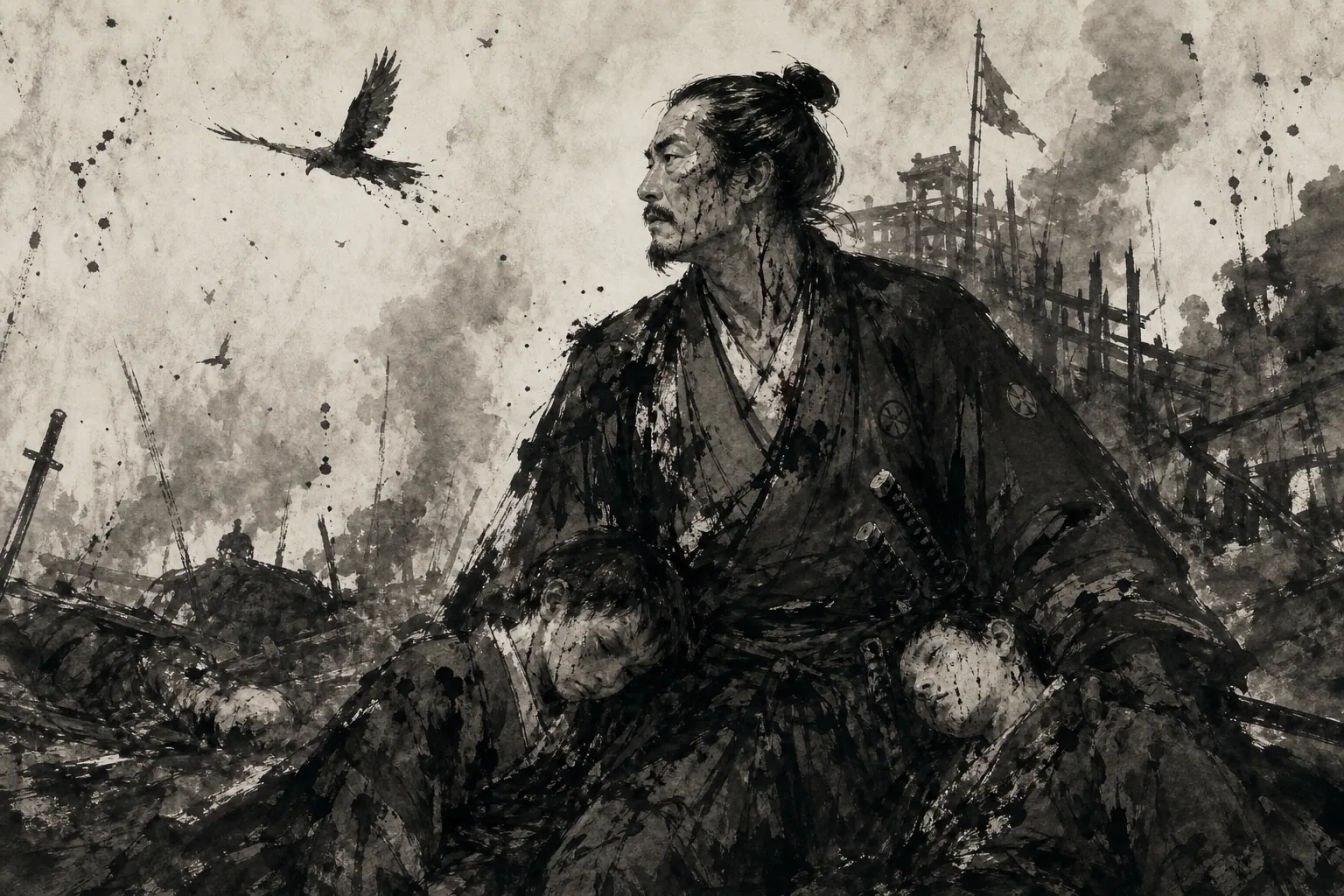
Nakajima Saburosuke should not be confined to two images: the Uraga officer who boarded Perry's ship and the old-shogunate father who died with two sons at Hakodate. The surviving material record follows ship-inspection registers, abacus, telescope, and tide charts at the Uraga magistrate office; cannon carriages, steam machinery, measuring tools, and observation notes aboard the Black Ships; Hoomaru hull plans, scale model, stocks, timber, and shipwright tools; charts, compass, sextant, gunnery instruments, and powder measures in naval training; Mokkei's inkstone, linked-verse slips, white peony, and Taishu Kihon mound; and the earthworks, gabions, cannon, ammunition chest, and three sets of equipment at the Chiyogaoka redoubt. Interpreting, shipbuilding, teaching, and the last defense remain collective work rather than a solitary hero story.
Life
Uraga magistrate office and harbor
Ship inspection, cargo checking, coastal defense, gunnery, and powder preparation become linked duties across office and port town.
Uraga waters and Kurihama
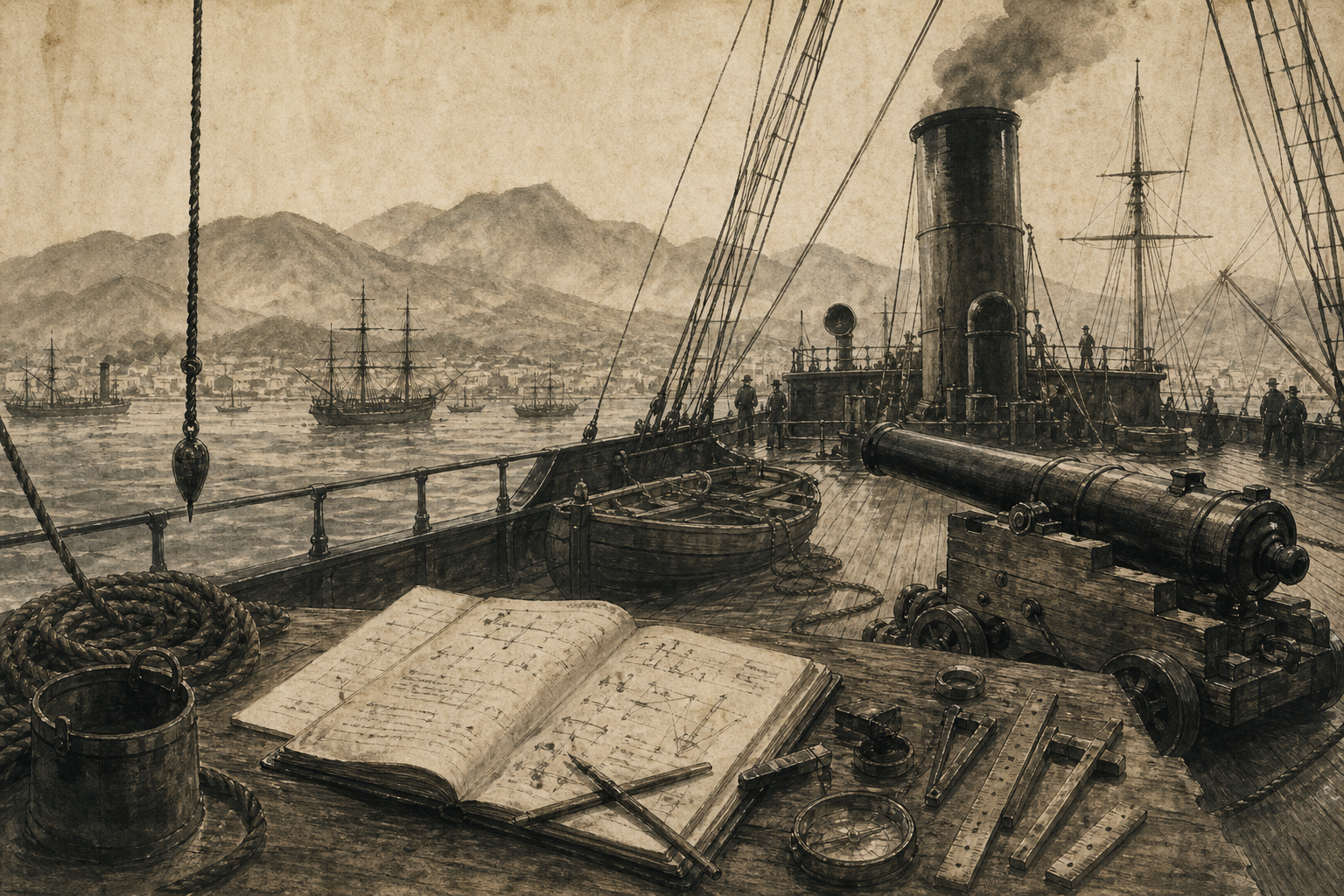
Ceremony and negotiation accompany measurements of cannon, steam equipment, decks, and rigging that can be reused in construction.
Uraga shipyard
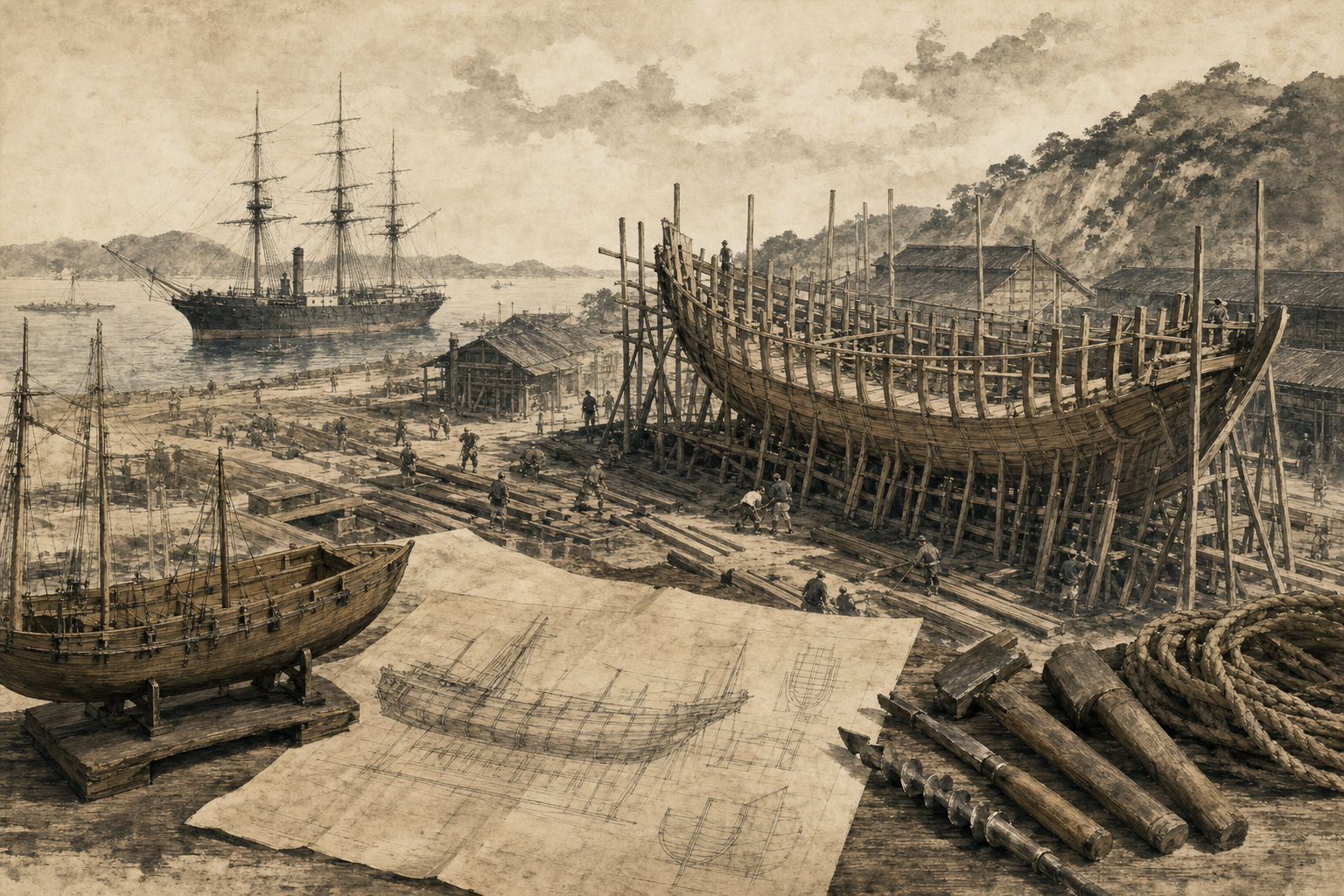
Plans, model, timber, iron fittings, rigging, and gun placement translate foreign observation into a working hull.
Nagasaki, Edo, and Uraga
Charts, astronomical instruments, models, guns, and powder scales turn separate skills into a shogunate naval curriculum.
Uraga and Taishu Kihon mound
A master carpenter, magistrate, calligrapher, and Nakajima jointly create a stone linked to Uraga's literary community.
Hakodate and Chiyogaoka redoubt
Nakajima, Kotaro, Eijiro, and others die in the 16 May battle that makes the Hakodate force's defeat decisive.
神奈川県横須賀市
奉行所建物は現存しない。跡地と郷土資料館を入口に、廻船の入港、積荷、通行、海防を記録した与力の仕事をたどる。
中島三郎助
Address神奈川県横須賀市浦賀7丁目周辺
Nearby
神奈川県横須賀市
来航記念の現地。艦上交渉の一点を示す場所ではなく、浦賀沖の艦隊、蒸気船、大砲を奉行所側が観察した海域を考える補助地点。
中島三郎助
Address神奈川県横須賀市久里浜7丁目
Nearby
神奈川県横須賀市
現存ドックは鳳凰丸の船台ではなく後世の施設。船大工、木材、工具、設計、組立という浦賀の造船史を重ねて見る。
中島三郎助
Address神奈川県横須賀市浦賀4丁目
Nearby
長崎県長崎市
船模型、海図、羅針盤、測角器、砲術器具から、経験知を幕府海軍の教育へ組み替えた過程をたどる。
中島三郎助
Address長崎県長崎市江戸町周辺
Nearby
神奈川県横須賀市
大衆帰本塚は中島の筆致を刻み、愛宕山の招魂碑は後世の顕彰を示す。作品と記憶を同一視せず歩く。
中島三郎助
Address神奈川県横須賀市西浦賀・東浦賀周辺
Nearby
北海道函館市
弁天岬台場とは別の陣地。1869年5月16日、中島父子らが戦い、旧幕府脱走軍側の敗北が決定的になった場所。
中島三郎助
Address北海道函館市中島町周辺
Nearby
Keys
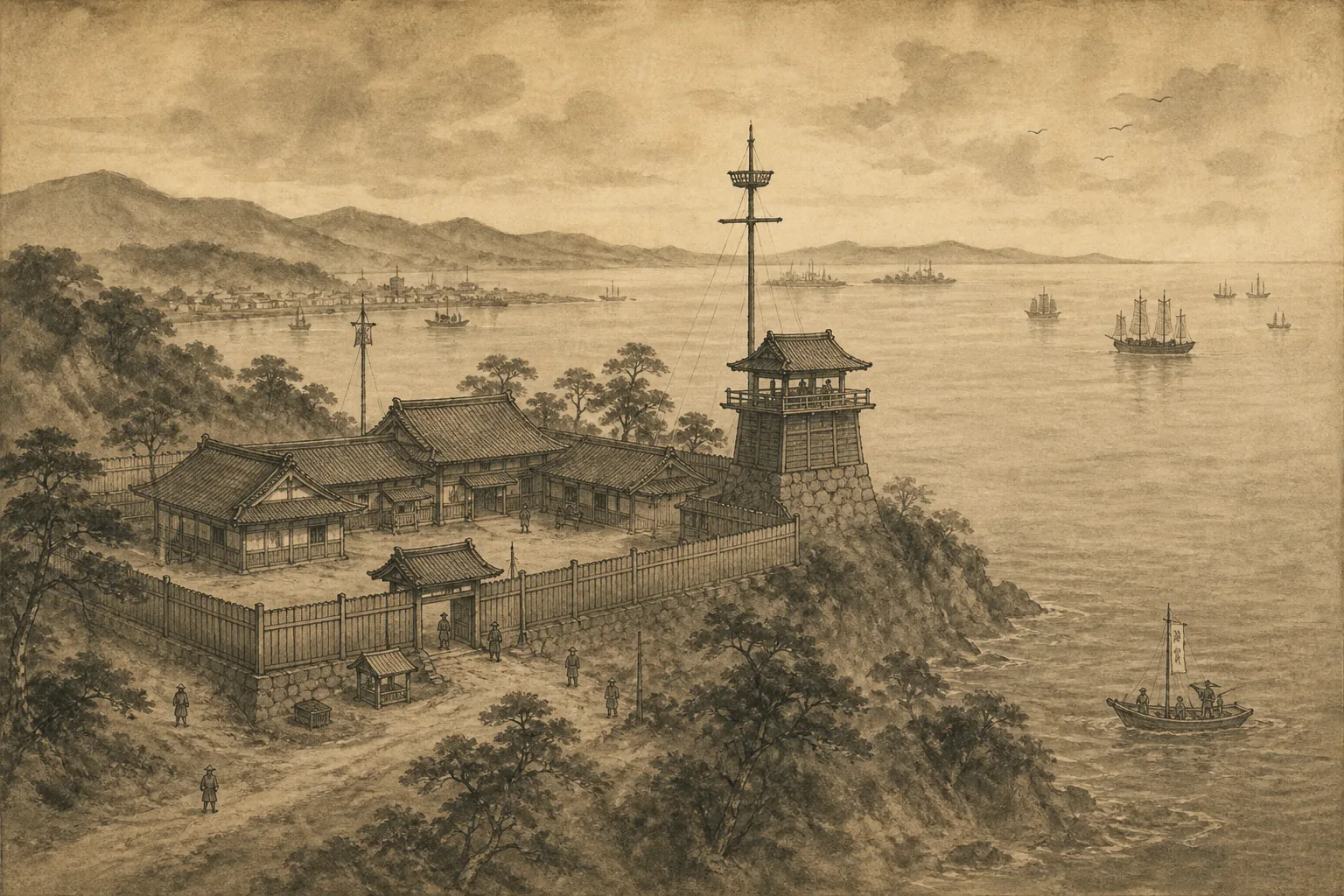
Born into a hereditary Uraga magistrate-office family, Nakajima did not suddenly become an observer when foreign ships arrived. Officials copied ship names, owners, cargo, travel documents, and entry times into inspection registers; checked quantities on an abacus; applied office seals; and watched Edo Bay through telescopes and coastal charts. Magistrates, supervisors, yoriki, doshin, interpreters, checkpoint staff, and shipmasters made the records connect. This routine of looking, measuring, comparing, and writing formed the working method later used aboard Perry's vessel and in ship construction.
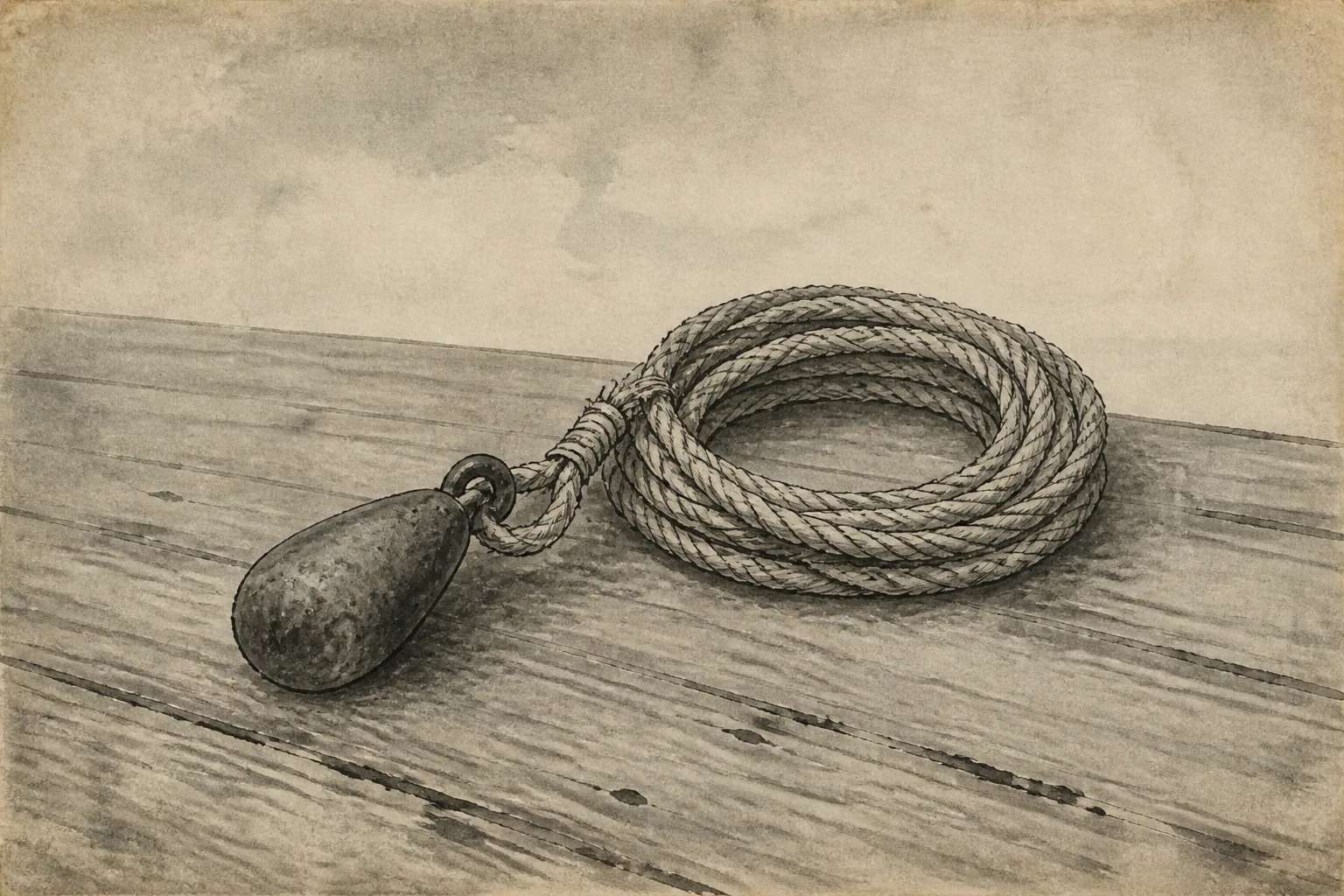
In 1853 Nakajima boarded an American vessel as an Uraga response officer with interpreter Hori Tatsunosuke and others. While conducting formal exchanges, he examined cannon caliber and carriage, deck arrangement, rigging, steam funnel, routes toward machinery, boats, ropes, and sounding equipment, turning what he saw into notes, dimensions, and sketches. American accounts portrayed him as insistently inquisitive because he refused to stop at ceremony. Yet the information did not belong to one sharp-eyed hero: interpreters, fellow officials, sailors, and American officers occupied the same constrained negotiating deck.
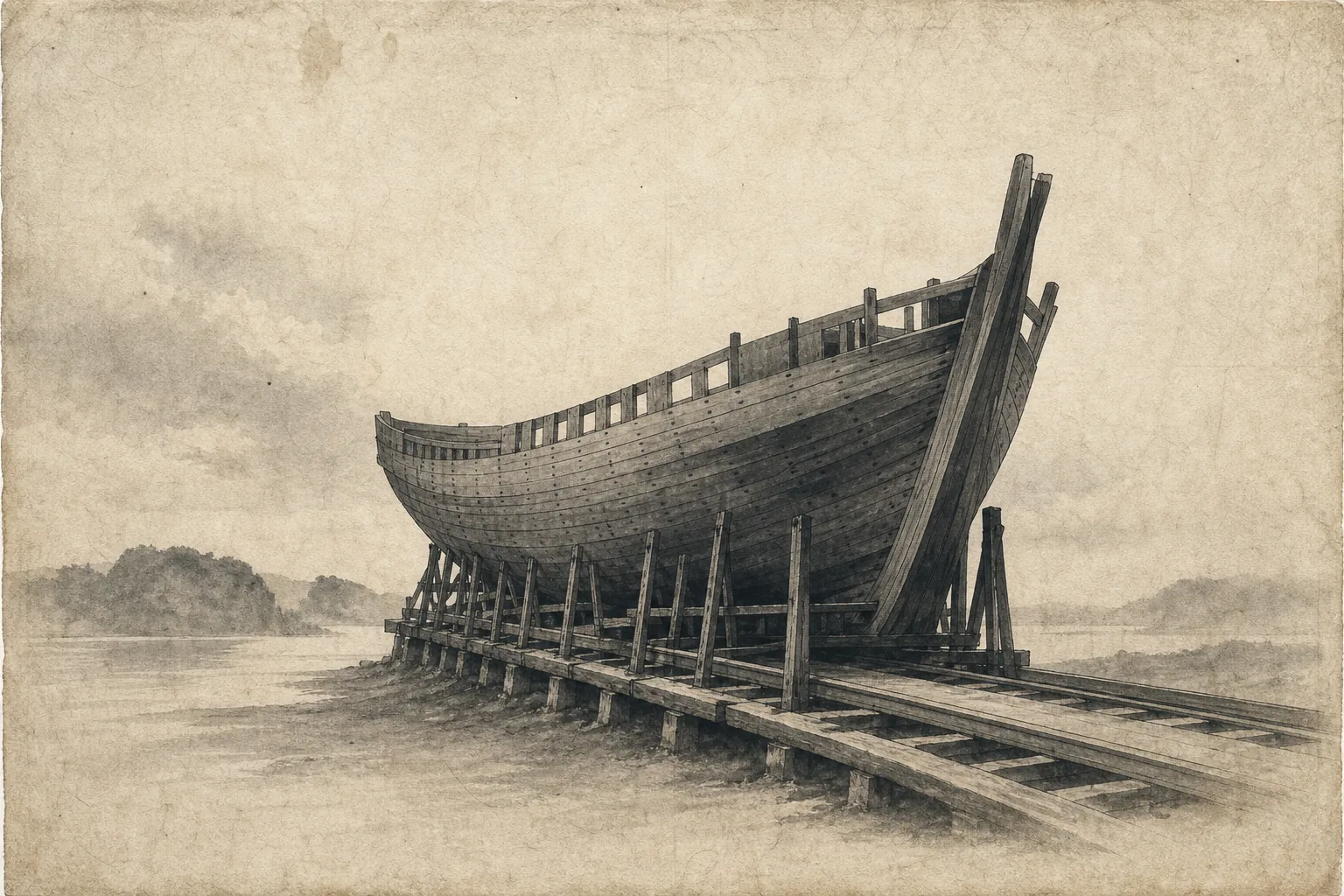
When the shogunate ordered a Western-style sailing warship at Uraga, observations from the Black Ships had to be translated into hull lines, a scale model, keel, frames, joints, masts, rigging, and gun placement. Timber, ink line, square, adze, chisel, auger, pulley, rope, and iron fittings show that Hoomaru was a collective product of the magistrate office, shipwrights, smiths, rope makers, and timber suppliers, not Nakajima's private invention. Today's Uraga brick dock is later and is not Hoomaru's building stocks; it is useful for following how his memorial later stimulated another phase of Uraga shipbuilding.
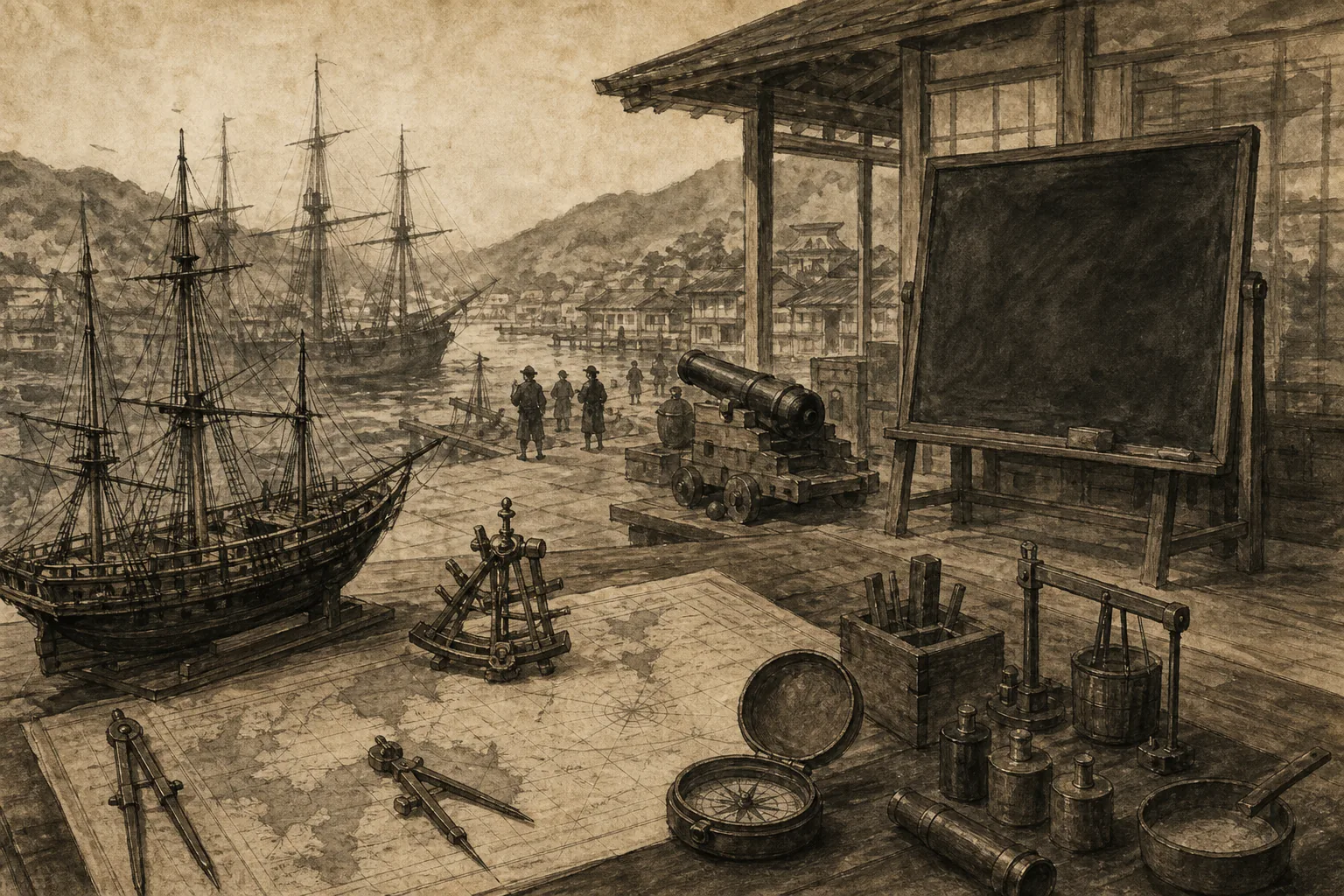
After Hoomaru, Nakajima connected study at the Nagasaki Naval Training Center and shogunate naval instruction with practical navigation, construction, and gunnery. Charts, compass, sextant, ship model, blackboard, cannon, sights, powder scale, and cartridge measures reveal a navy built from mathematics, celestial observation, machinery, ordnance, powder preparation, and shared commands rather than seamanship alone. Nagasaki training and the Edo naval school were not one building or one moment. Dutch instructors, shogunate trainees, and men from several domains carried techniques between distinct institutions.
Using the art name Mokkei, Nakajima practiced kanshi, waka, and haikai and participated in Uraga's late-Edo literary culture. An inkstone, brushes, linked-verse slips, notebook, and white peony represent collaborative language very different from orders and technical drawings. The 1864 Taishu Kihon mound joined master carpenter Kawashima Heikichi's proposal, the magistrate's support, Ohata Shunkoku's seal-script heading, and Nakajima's handwriting. Rather than certifying every attributed death poem, the objects preserve his gentle hand and local literary relationships against the later image of a purely martial last stand.
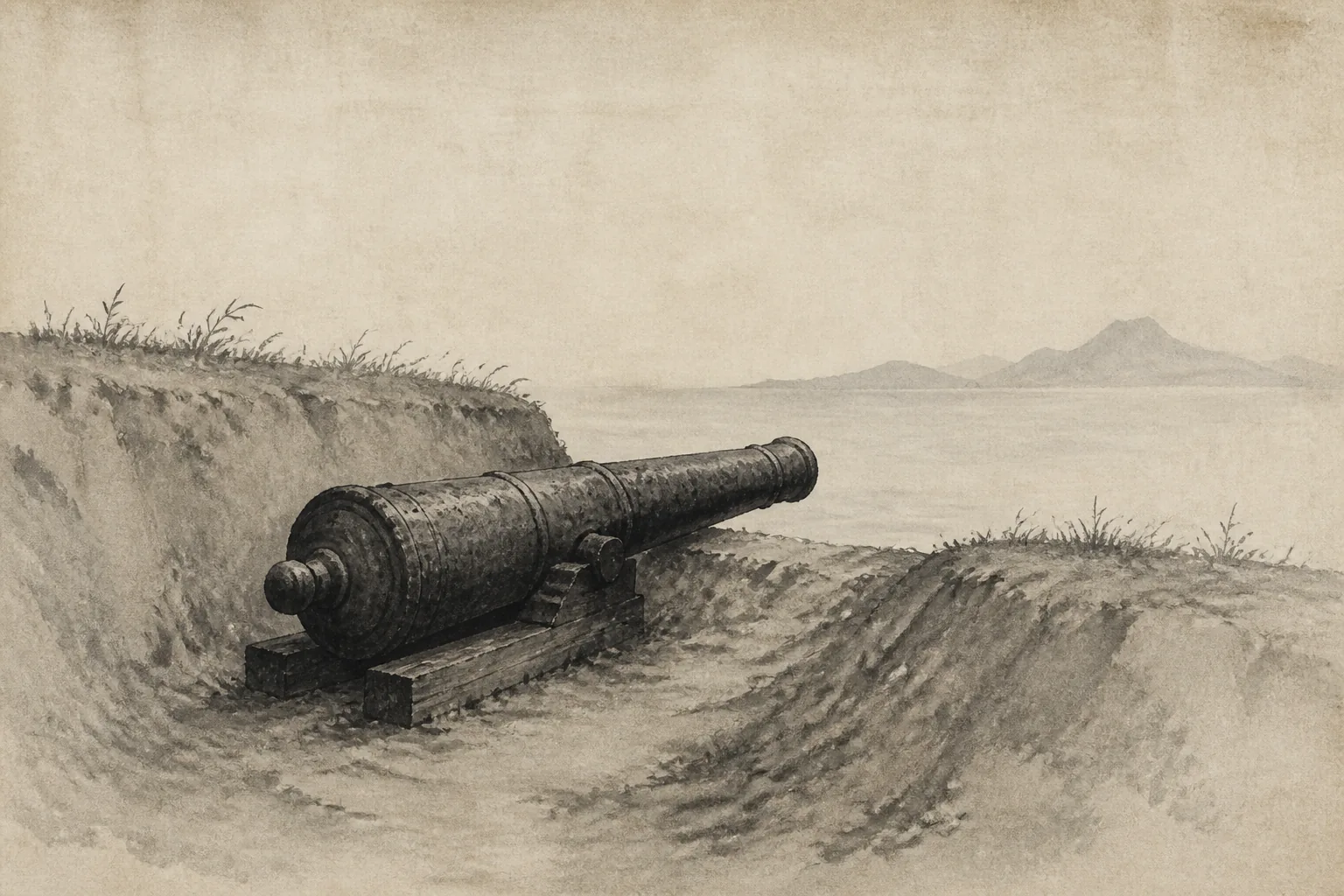
Benten Cape Battery surrendered on 15 May 1869. On the following day at the separate Chiyogaoka redoubt, Nakajima, his elder son Kotaro, younger son Eijiro, and other defenders chose a final fight. Earthworks, gabions, cannon, shot, ammunition chest, rifles, bayonets, and three sets of cartridge boxes and footwear replace abstract loyalty with a position constrained by men and supplies. Hakodate City's account describes the redoubt as devastated and the old-shogunate force's defeat as decisive. The sons' agency should not disappear into the father's legend, and Chiyogaoka must not be mislabeled as Benten Battery.
VISIT
Search events related to Saburosuke Nakajima →Browse all Bakumatsu events →