Takeaki Enomoto · Former Tokugawa Shogunate
Original
出五稜郭
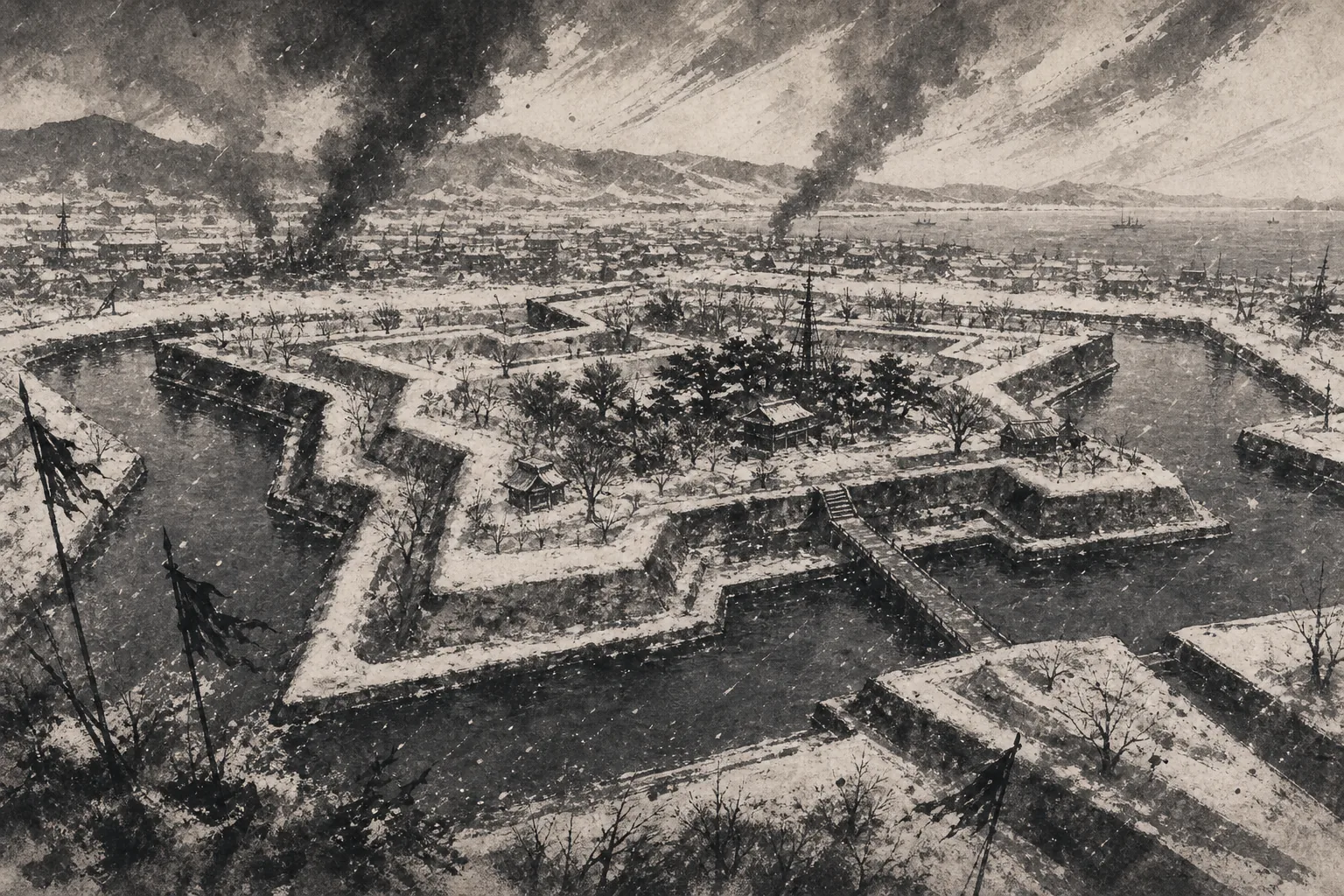
Takeaki Enomoto's Chinese-style poem, "出五稜郭七重濱接五稜郭耳熟朝朝喇叭聲". Read the original Japanese, modern translation, interpretation, and historical context as distinct parts of the poem.
Person
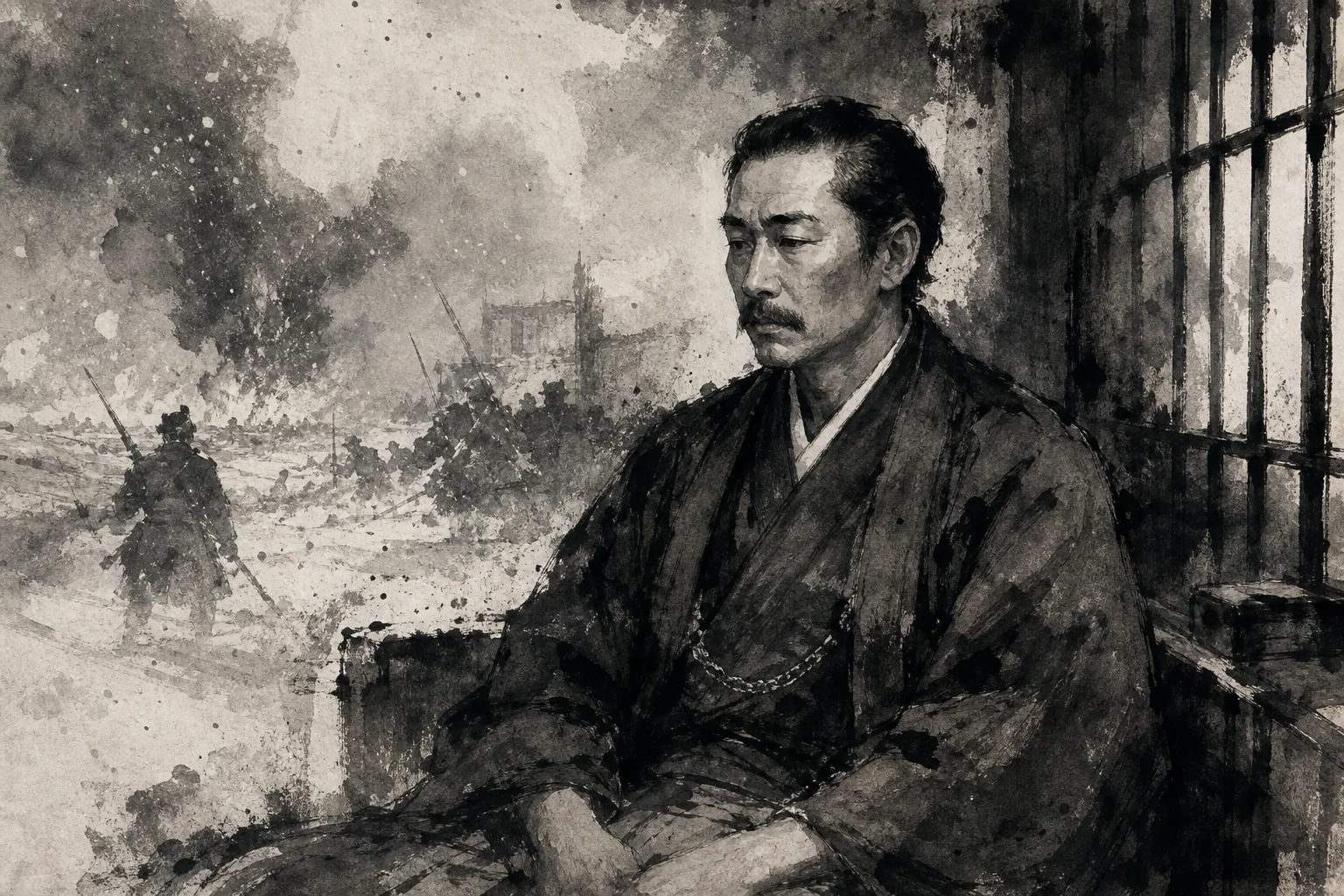
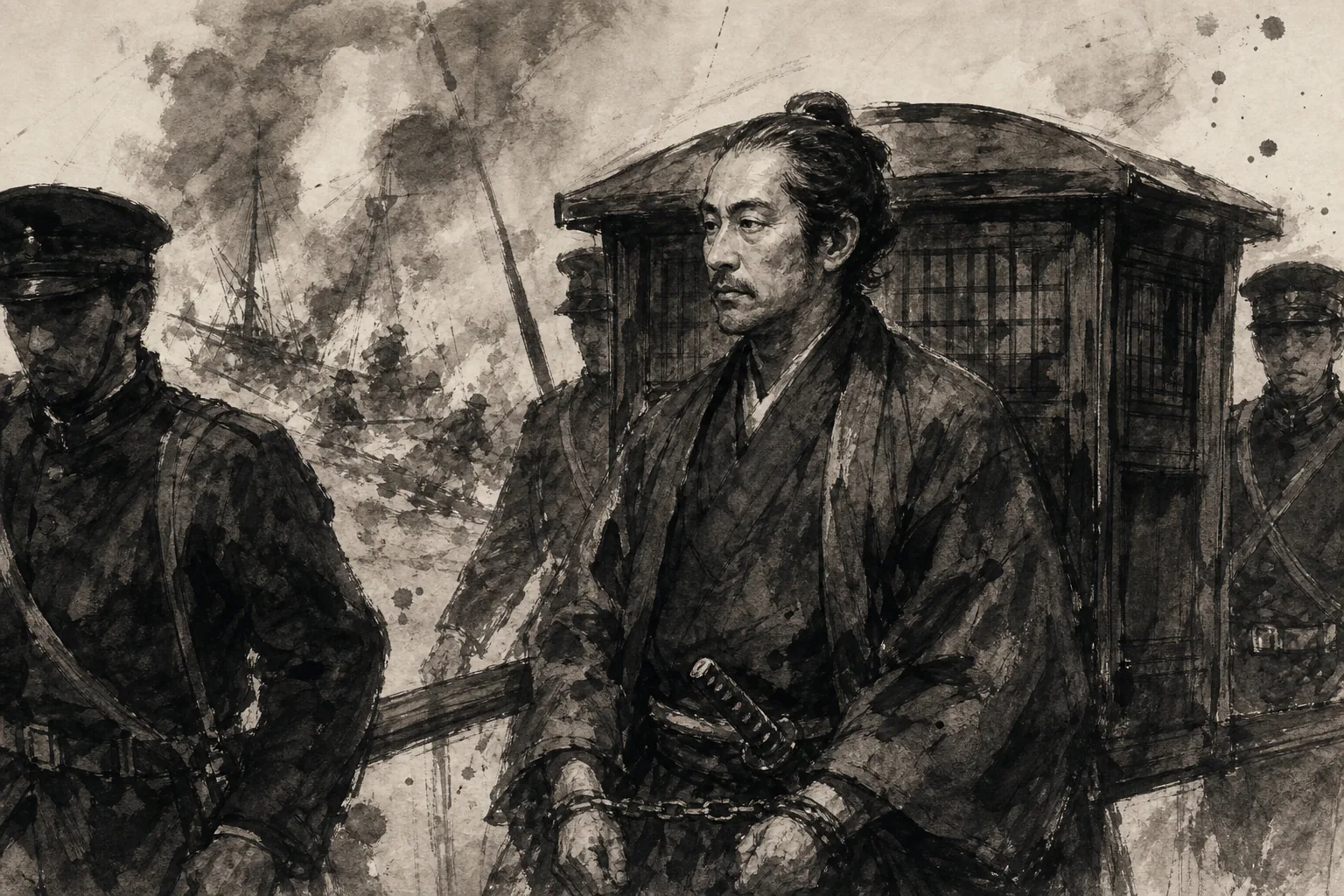
Commander of the shogunate navy and president of the Hakodate government, later imprisoned and then employed by the Meiji state.
Learn about Enomoto Takeaki
Translation
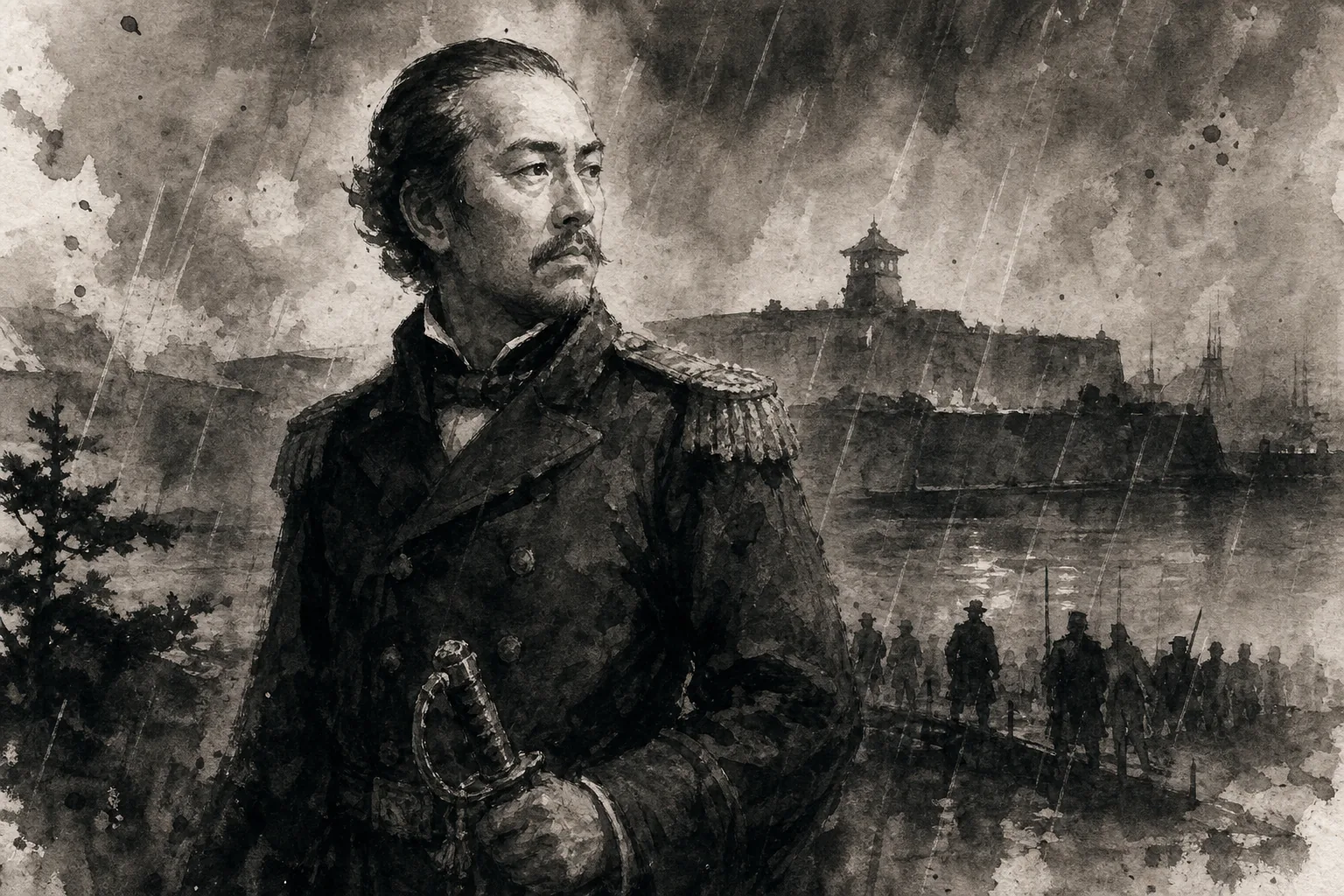
Nanaehama lies beside Goryokaku. Familiar with the morning bugle, I spend the rainy night before surrender with thoughts moving back and forth until dawn.
Poetic Shape Kanshi draws on a classical Chinese poetic tradition, where restraint, allusion, and moral tension carry much of the weight. The poem sounds formal, but the pressure beneath it is personal.
Reading
This is not a poem of battle, but of the night when surrender was decided.The moment when the last resistance quietly ends emerges through rain and bugle calls.
Background
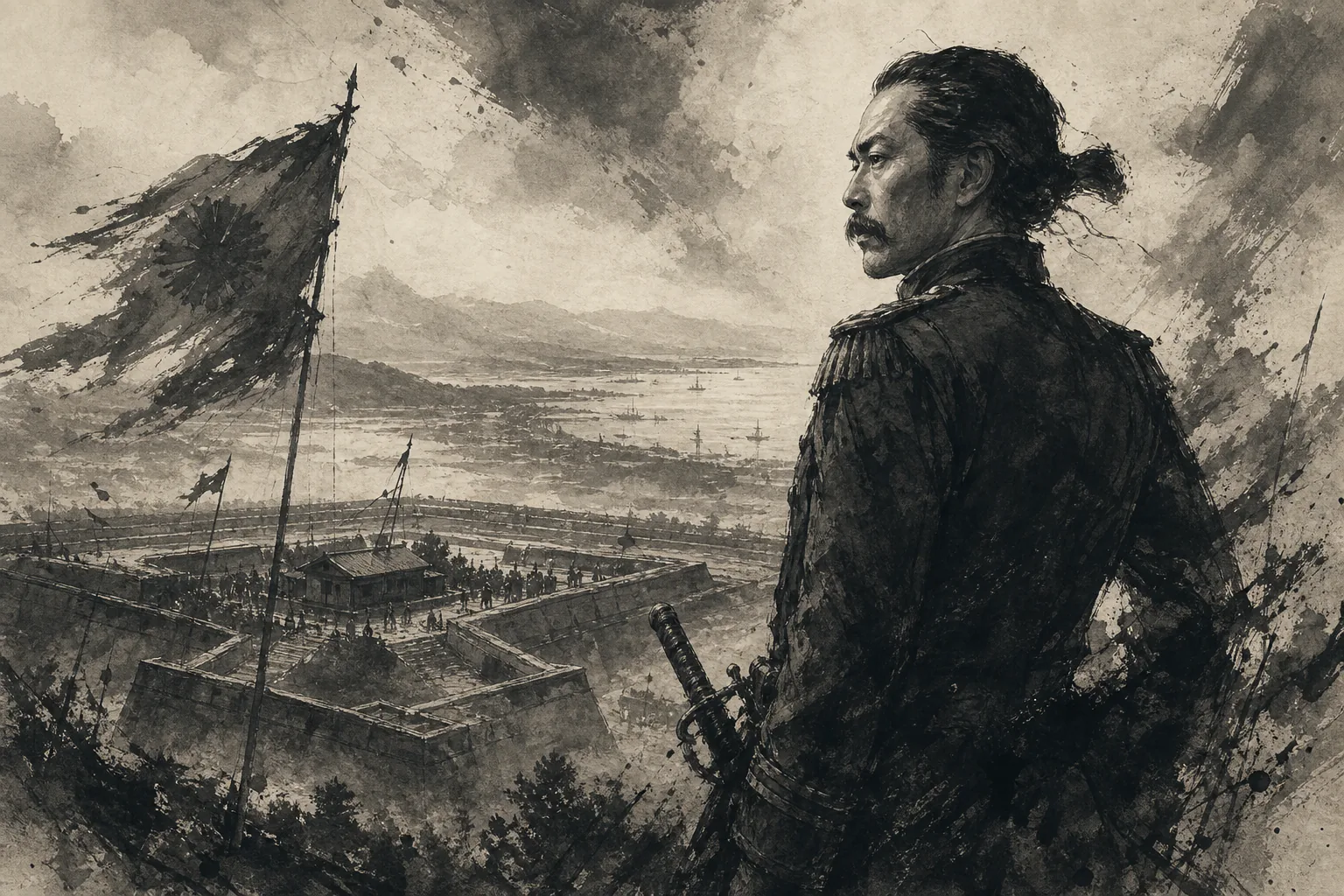
A poem conveying Enomoto's state of mind near the end of the Hakodate War, when defeat had become decisive and he and the others were about to leave Goryokaku.
Source / Transmission Wording and readings may differ by transmission; this page treats the text as one circulated form.
Further Reading
Find related books and places to stay For readers who want more historical context, these links search for related books on external stores.
Affiliate link