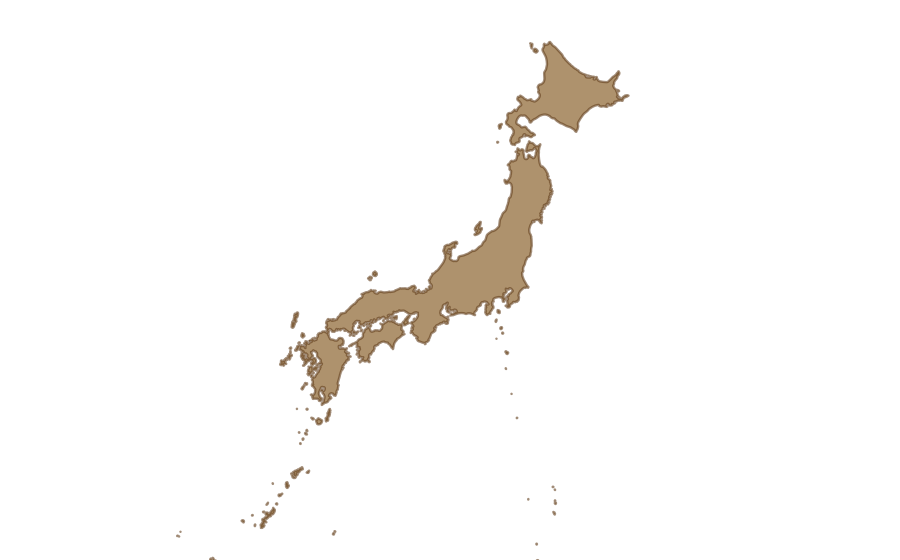
Mito castle town
Genealogies and retainer rosters preserve clues to the Yamakuni household, family, rank, and offices
Brotherhood with Tamaru remains separate from each man’s office and political route.
Know the Person
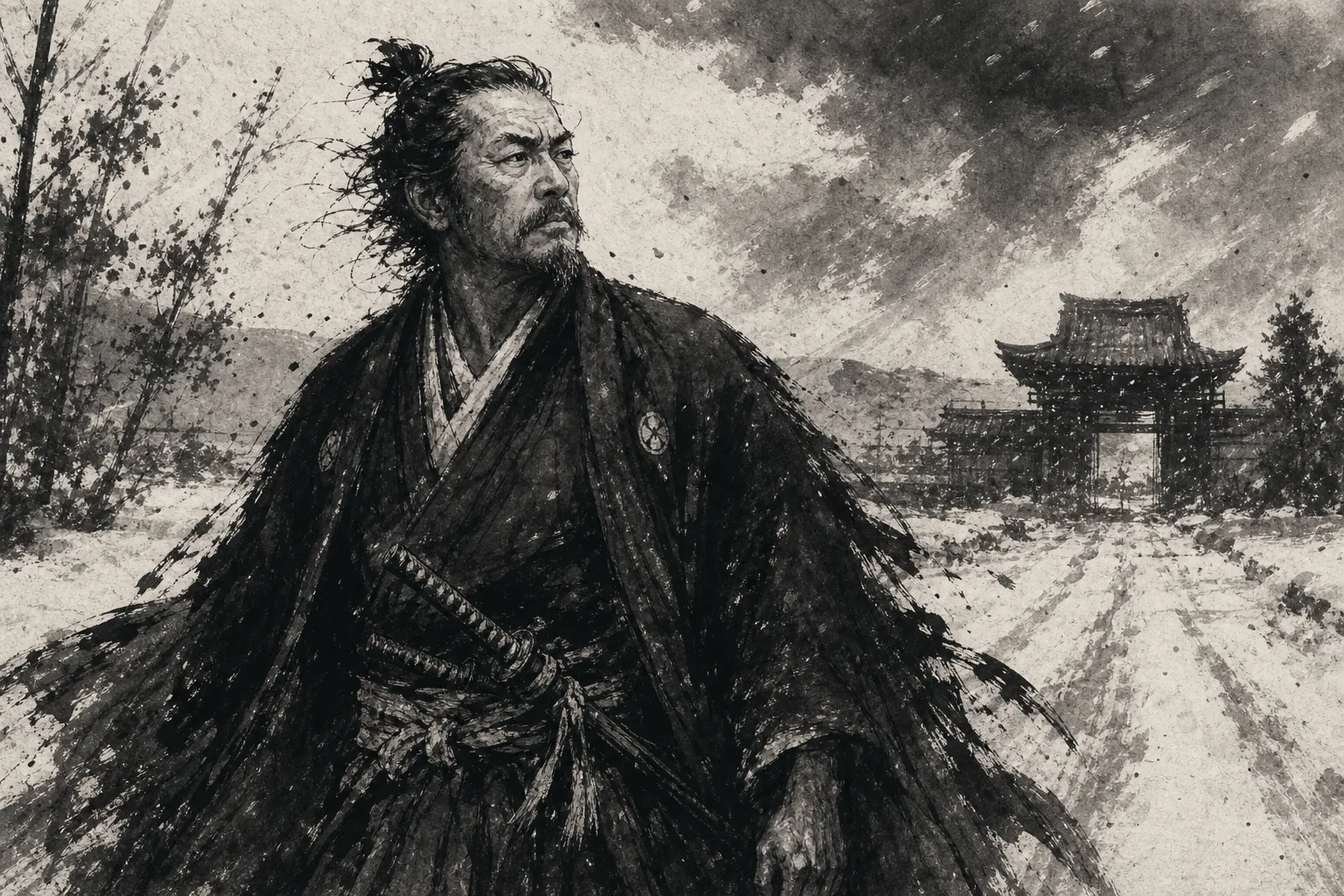
Yamakuni Hyobu is not reduced to the single label “chief strategist” or to stories about his death. Yamakuni family papers and genealogy test his relationship as the elder brother of Tamaru Inanoemon without assuming that the brothers followed an identical political route. Mito administration appears through circulars, office rosters, domain diaries, and punishment registers. The July mobilization at Yoshida is distinguished from the original March uprising at Mount Tsukuba, and the later junction near Nakaminato is followed through rosters, ration ledgers, travel permits, and route maps. War-council notes, unit organization, and orders turn the later title “chief strategist” into a question about command rather than personality. Lodging allocations, baggage inventories, porter accounts, food, medicine, and winter equipment reveal the westward march as the management of more than eight hundred people. Confinement and execution at Tsuruga, a transmitted calligraphy scroll, and the later graves at Jinnoji remain separate layers of evidence. Documents, places, maps, objects, writing, and memorials lead toward books and visits concerning Mito government, military organization, highways, inns, calligraphy, and conservation.
Life
Mito castle town
Brotherhood with Tamaru remains separate from each man’s office and political route.
Mito government and castle town
Appointments, removal, and return take precedence over ideological shorthand.
Yoshida to Nakaminato
The March Tsukuba uprising and July Yamakuni-Takeda mobilization retain different starts.
Nakaminato area
Title, formal office, and actual approval are compared through rosters and orders.
Daigo, Joshu, Mino, and Imajo
Totals, route, snow, and inn burdens retain the differences among records.
Tsuruga
Execution, burial, and the transmission of calligraphy are kept separate from later grave construction and commemoration.
Kanazawa and Mito
Mounting, grave construction, commemoration, and cultural-property conservation are traced by date and responsible institution.
茨城県水戸市緑町
山国兵部と田丸稲之衛門が兄弟だったという系譜は、同時代の役割まで同一だったことを意味しない。家譜・分限帳・書簡の差出人と年代を照合する。
山国兵部・田丸稲之衛門・山国家
Address茨城県水戸市緑町2-1-15
Nearby
茨城県水戸市三の丸
弘道館を山国兵部個人の執務室とはせず、水戸藩政・教育・派閥抗争を調べる地理的な入口とする。回状、役職帳、処分記録を優先する。
山国兵部と水戸藩政
Address茨城県水戸市三の丸1-6-29
Nearby
茨城県水戸市元吉田町・ひたちなか市
山国兵部らは筑波山挙兵の当初から同じ隊を率いたのではなく、七月に吉田で兵を挙げ、那珂湊方面で筑波勢と合流した。地点と時系列を分ける。
山国兵部・武田耕雲斎勢
Address茨城県水戸市元吉田町周辺
Nearby
茨城県ひたちなか市湊本町
後世にいう『大軍師』を性格評ではなく組織上の呼称として扱い、総大将・本陣・諸隊の名簿と命令系統を照合する。戦場の英雄化より港町の損失にも目を向ける。
山国兵部と天狗党諸隊
Address茨城県ひたちなか市湊本町周辺
Nearby
福井県南越前町今庄
西上を雪中の悲劇だけで語らず、宿割、食糧、薬、荷物、人足、通行交渉という集団運営として検証する。山国の担当範囲は命令書と隊編成表で確かめる。
山国兵部・天狗党西上隊
Address福井県南条郡南越前町今庄
Nearby
福井県敦賀市松島町
敦賀での収容・処刑と集団墓を確かめる地点。伝来した『枕上邯鄲夢未成』の筆跡巻や水戸神応寺の墓は、別地域・別年代の関連資料として区別する。
山国兵部の筆跡・墓・顕彰
Address福井県敦賀市松島町2丁目
Nearby
Keys
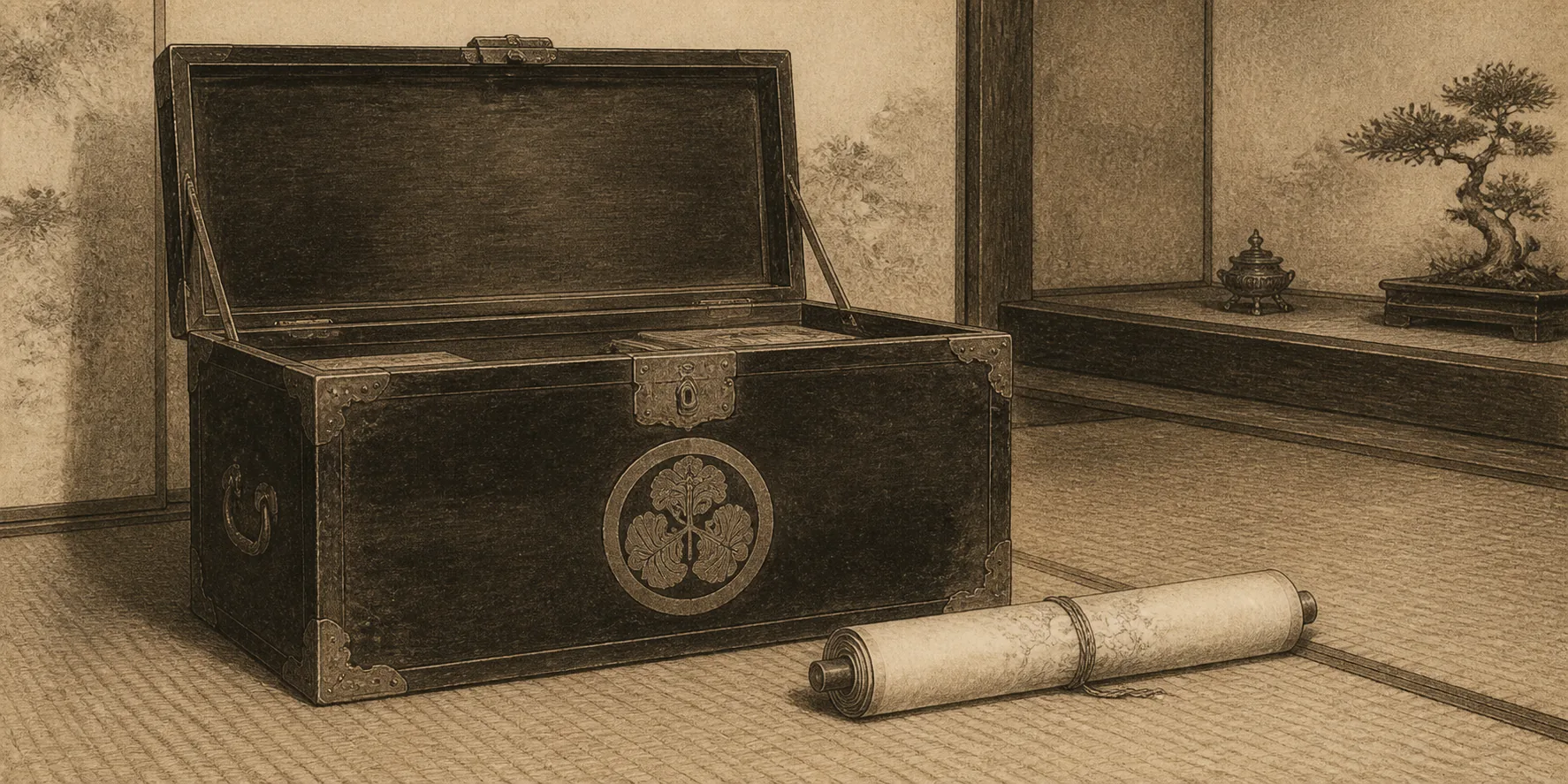
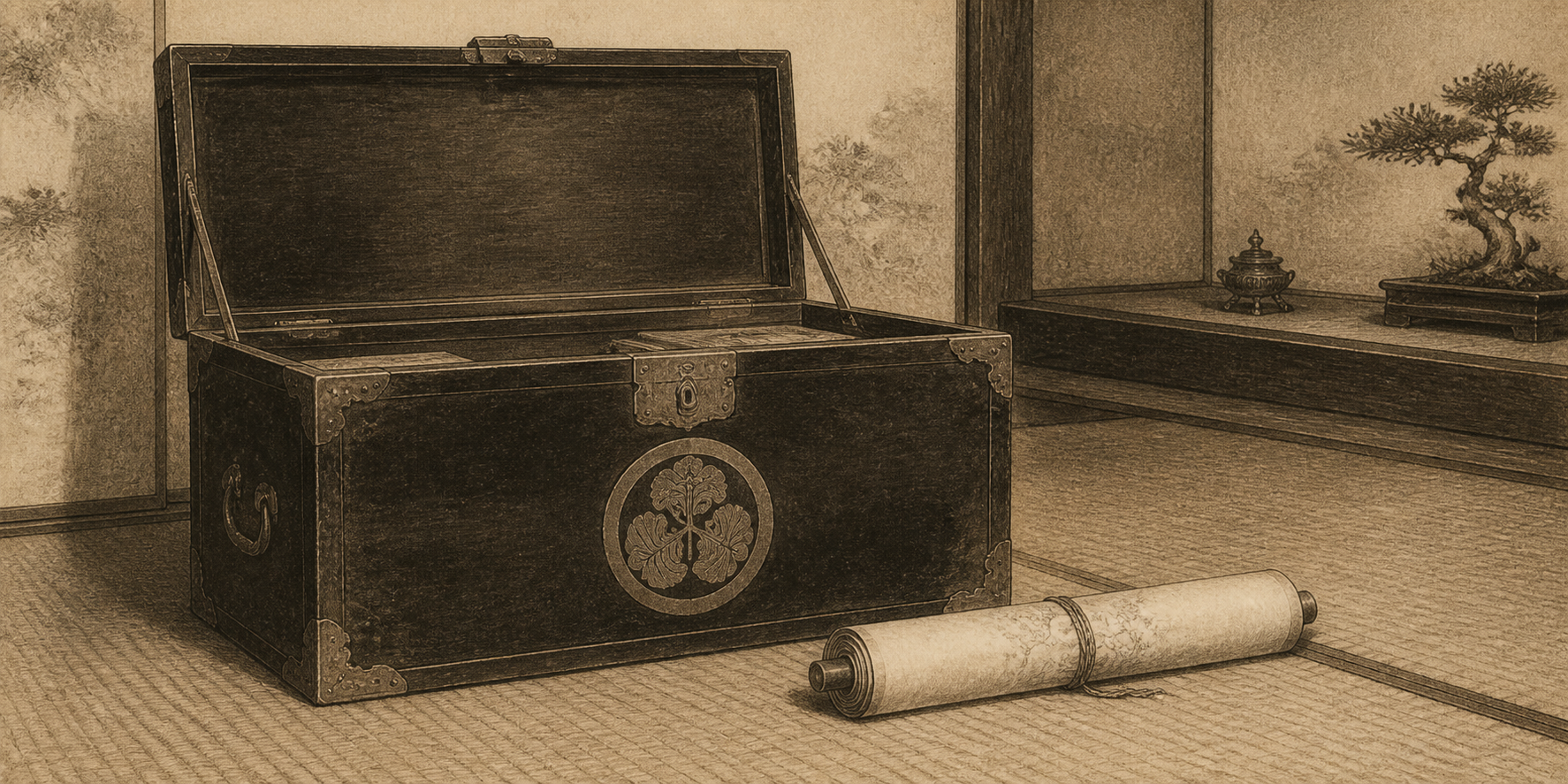
The Yamakuni family archive chest is the starting point for establishing Hyobu’s household rank, offices, and relationship to Tamaru Inanoemon. Genealogies, retainer rosters, letters, and seals show that the brothers entered the conflict at different times and by different routes. Inanoemon became a leader of the Tsukuba uprising, whereas Hyobu later raised men at Yoshida and moved toward Nakaminato. The archive separates family connection from individual political choice.
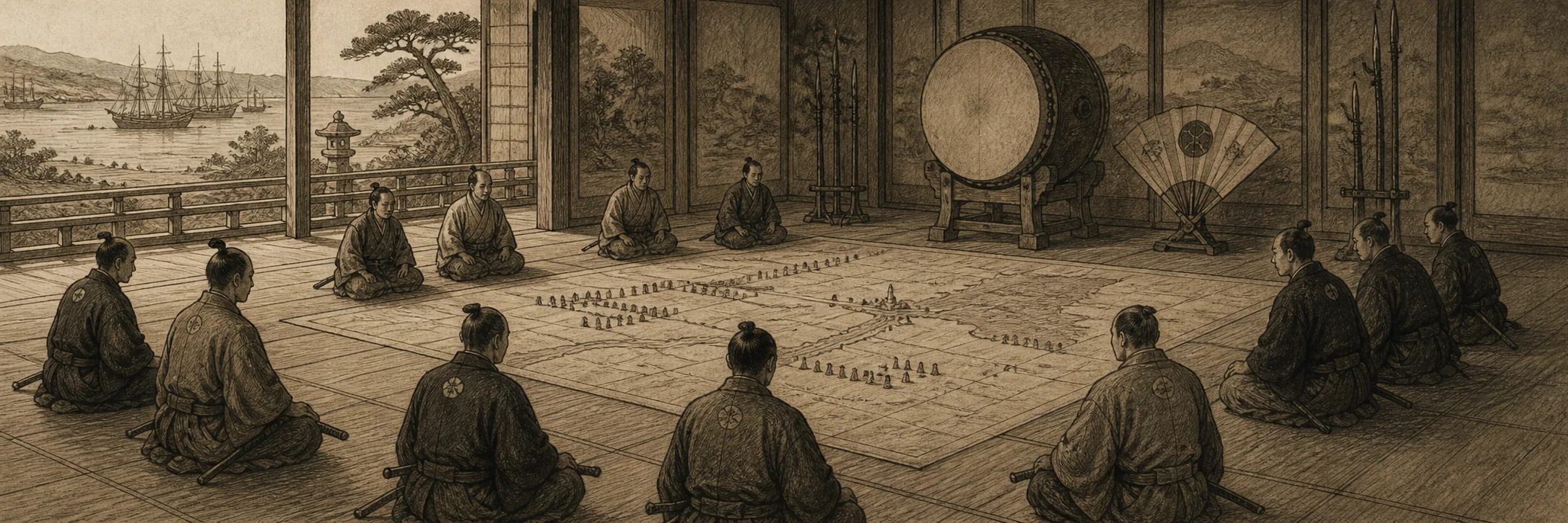
Hyobu belonged to the reform current within the Mito domain, but his work also involved ordinary administration. Circulars, attendance records, appointments, rewards, and punishment registers carried decisions from the domain office to its retainers. Ideas discussed around the Kodokan and coastal defense became questions of staffing, expenditure, discipline, and enforcement. The dates of Hyobu’s dismissal and return expose both factional conflict and the instability of Mito government.
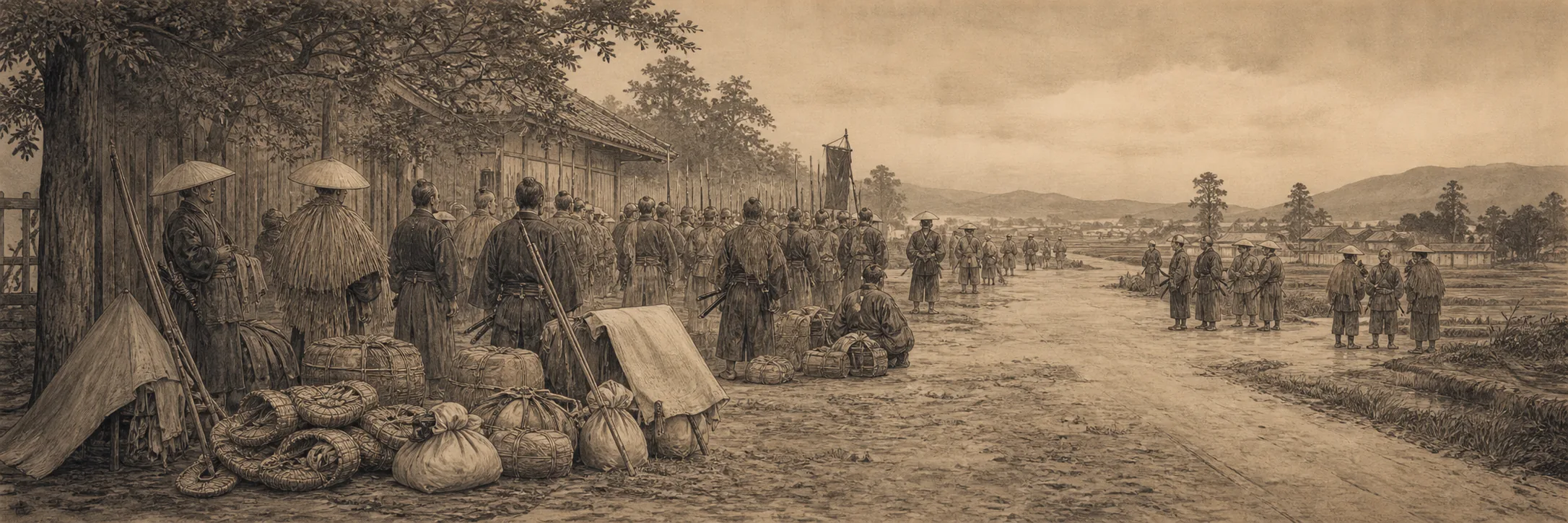
In the seventh month of 1864, Yamakuni Hyobu, Takeda Kounsai, and their associates gathered men at Yoshida south of Mito Castle and moved toward Nakaminato. This was distinct from the original uprising led from Mount Tsukuba. Samurai, rural warriors, farmers, and townspeople required rations, sandals, rain capes, lodging, and transport before they could move as one force. The Yoshida muster shows how separate groups became a larger column and how mobilization burdened local communities.
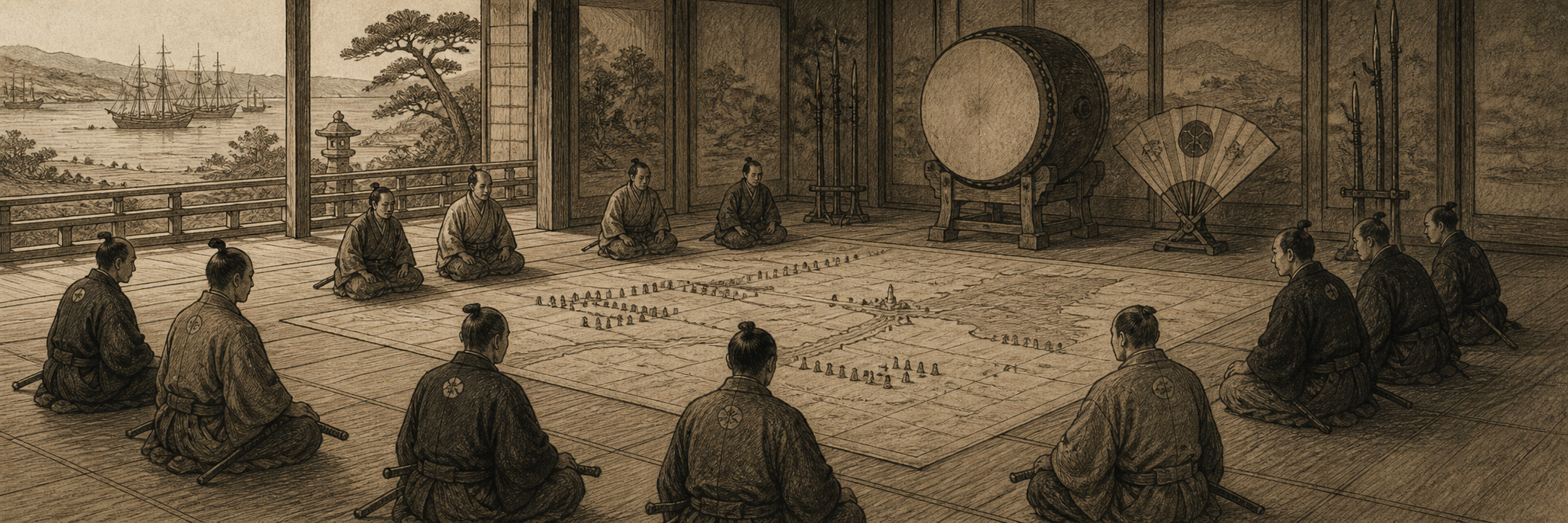
After several forces converged at Nakaminato, a war council had to decide who issued orders and where each unit would be placed. Later accounts commonly call Takeda Kounsai commander-in-chief and Yamakuni Hyobu chief strategist, although the contemporary status of the latter title remains uncertain. Headquarters plans, unit organization, and command routes point to collective decision-making rather than a single mastermind. Those decisions also shaped fighting in the port town and the evacuation of residents.
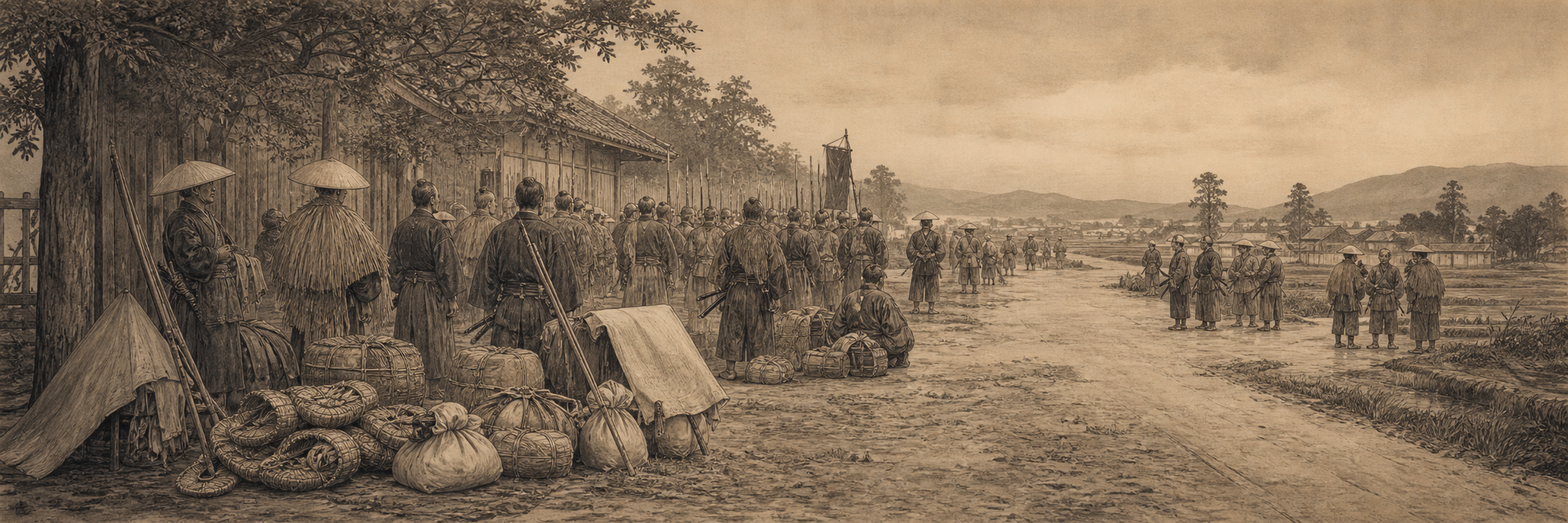
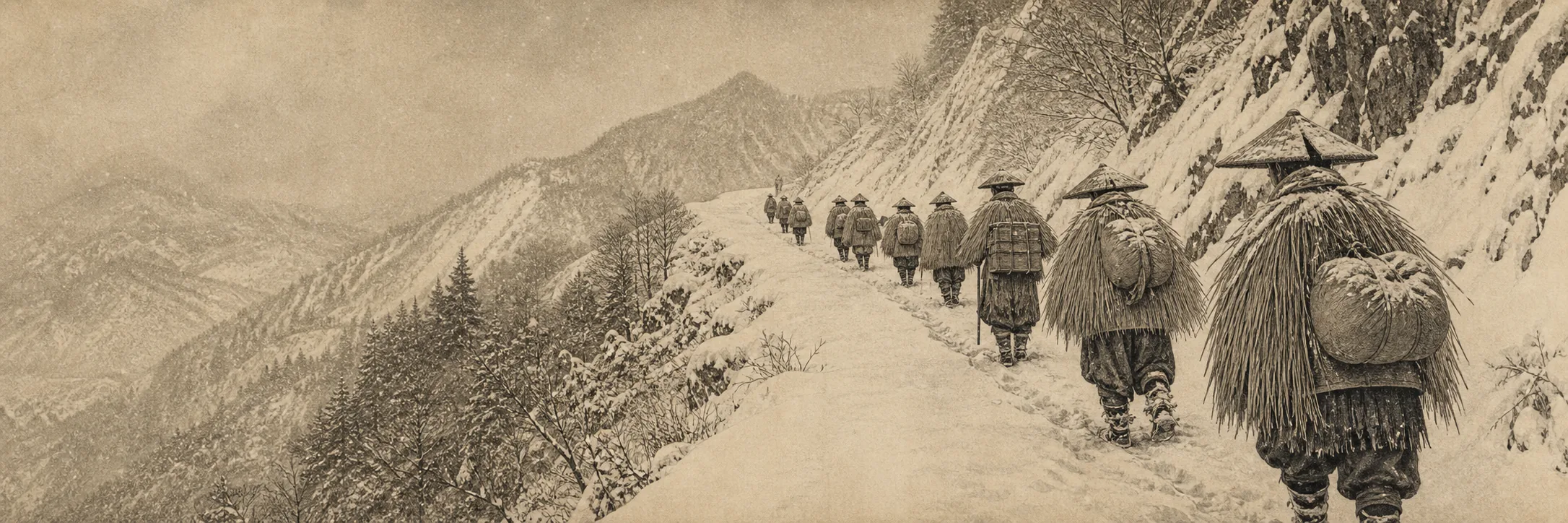
In late 1864 the westward column followed the Hokuriku roads toward the imperial court and crossed the snow-covered Kinome Pass. A force said to number more than eight hundred needed straw capes, sandals, ration sacks, medicine chests, cooking gear, lodging, food, and porters. Snow, illness, desertion, and delayed baggage controlled the pace, while settlements such as Imajo carried much of the burden. The march reveals the logistical limits behind its remembered winter landscape.
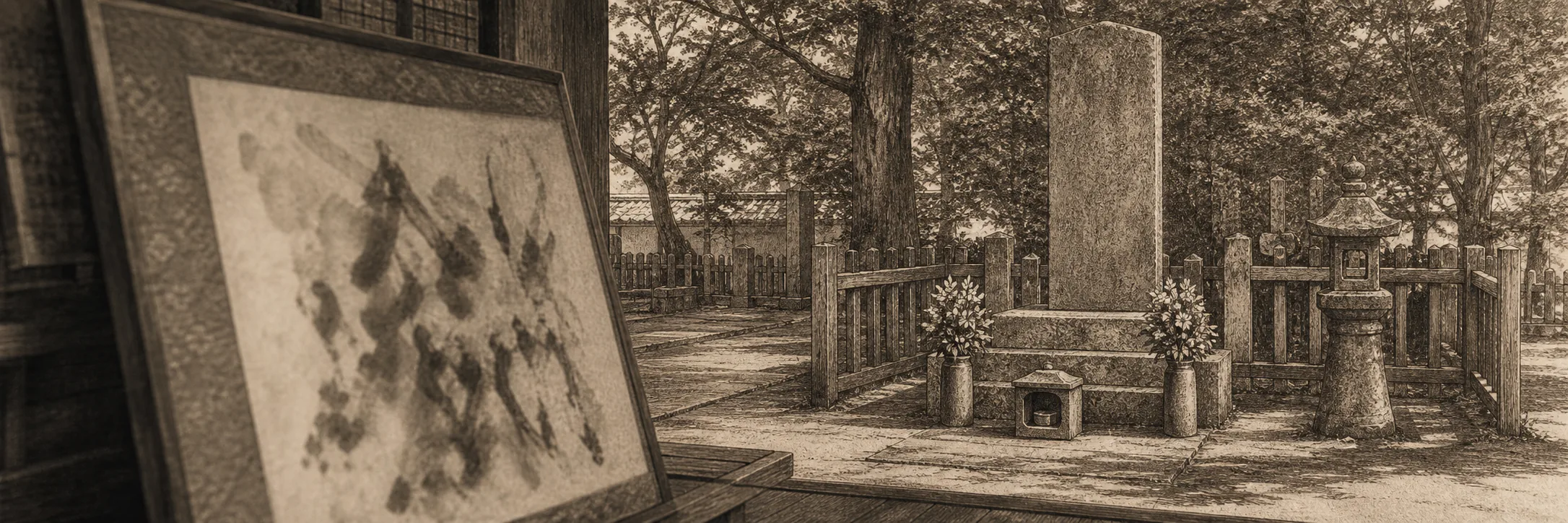
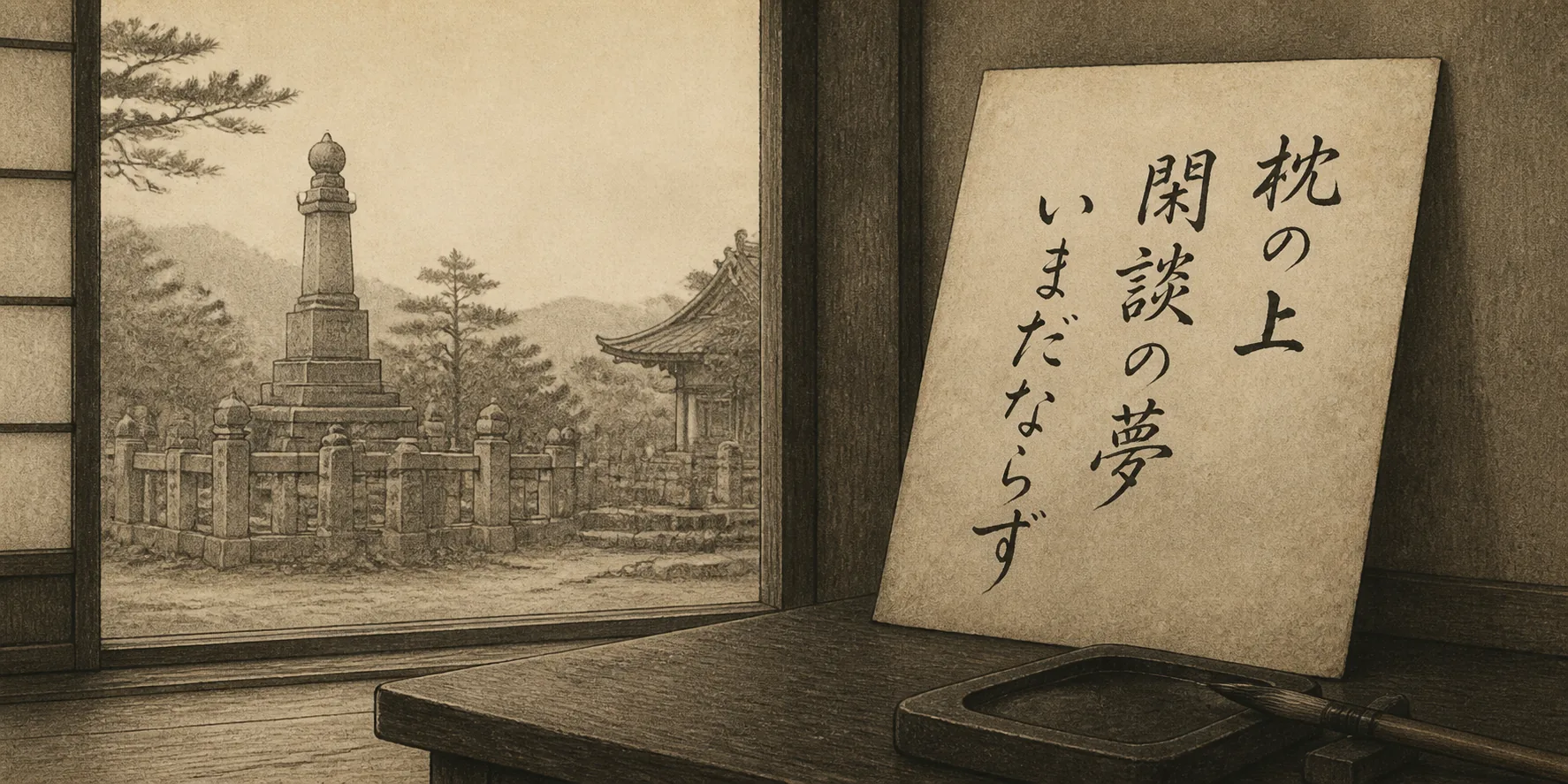
A mounted work bearing the phrase “Makura no ue Kantan yume imada narazu” survives as Yamakuni Hyobu’s calligraphy. Its paper, ink, preservation, and later mounting belong to a different history from his surrender at Tsuruga, confinement in herring warehouses, and execution on 4 February 1865. Hyobu and Tamaru Inanoemon have graves at Jinnoji, but the cemetery is not the execution ground. The single sheet and memorial landscape distinguish personal words, penal records, and later commemoration.
VISIT
Search events related to Hyobu Yamakuni →Browse all Bakumatsu events →