Know the Person

Shinsaku Takasugi

長州藩 / 1839-1867

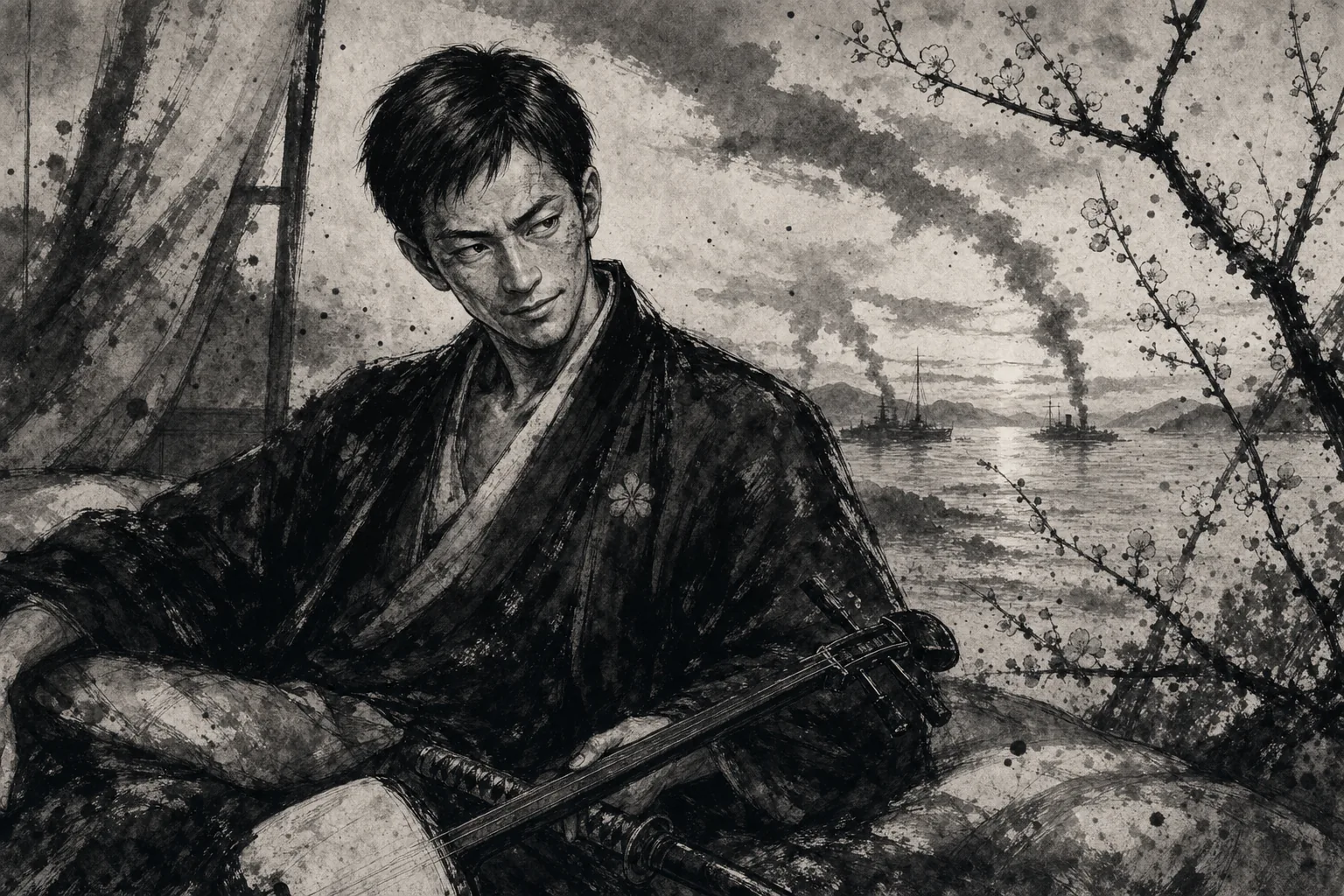
Shinsaku Takasugi is not reduced to a youthful activist leading the Kiheitai. His route begins at Shoka Sonjuku, where Yoshida Shoin used questions, maps, letters, and rivalry to connect study with action. A shogunate mission then placed Takasugi before Shanghai’s foreign settlements, steamships, weapons, and commerce. Back in Choshu, Kiheitai rosters, ration books, and command rules reveal both the possibilities and limits of mixed-status organization. Records of the Four-Power allied fleet negotiations show how defeat required translation, compensation, and bargaining. Horses, lanterns, temple space, and routes through Chofu make the Kozanji uprising a problem of timing and mobilization. Medicines, bedding, visitors’ records, and poems from his tuberculosis sickbed finally return attention to the body behind the politics.

Life

From Hagi to Shanghai and Shimonoseki

Edo Period
Tenpo 101839BornAnsei 41857Bunkyu 21862Bunkyu 31863Genji 11864Genji 1-Keio 21864-66Keio 31867Died
1

Hagi, Choshu

Born into a Domain Samurai House


Takasugi was born in Hagi as the eldest son of a Choshu retainer and studied at the domain school Meirinkan. The castle town gave him the obligations of a samurai house, but his later career repeatedly moved outside the route prepared for him.
1

Shoka Sonjuku, Hagi

Learning with Shoin and Kusaka


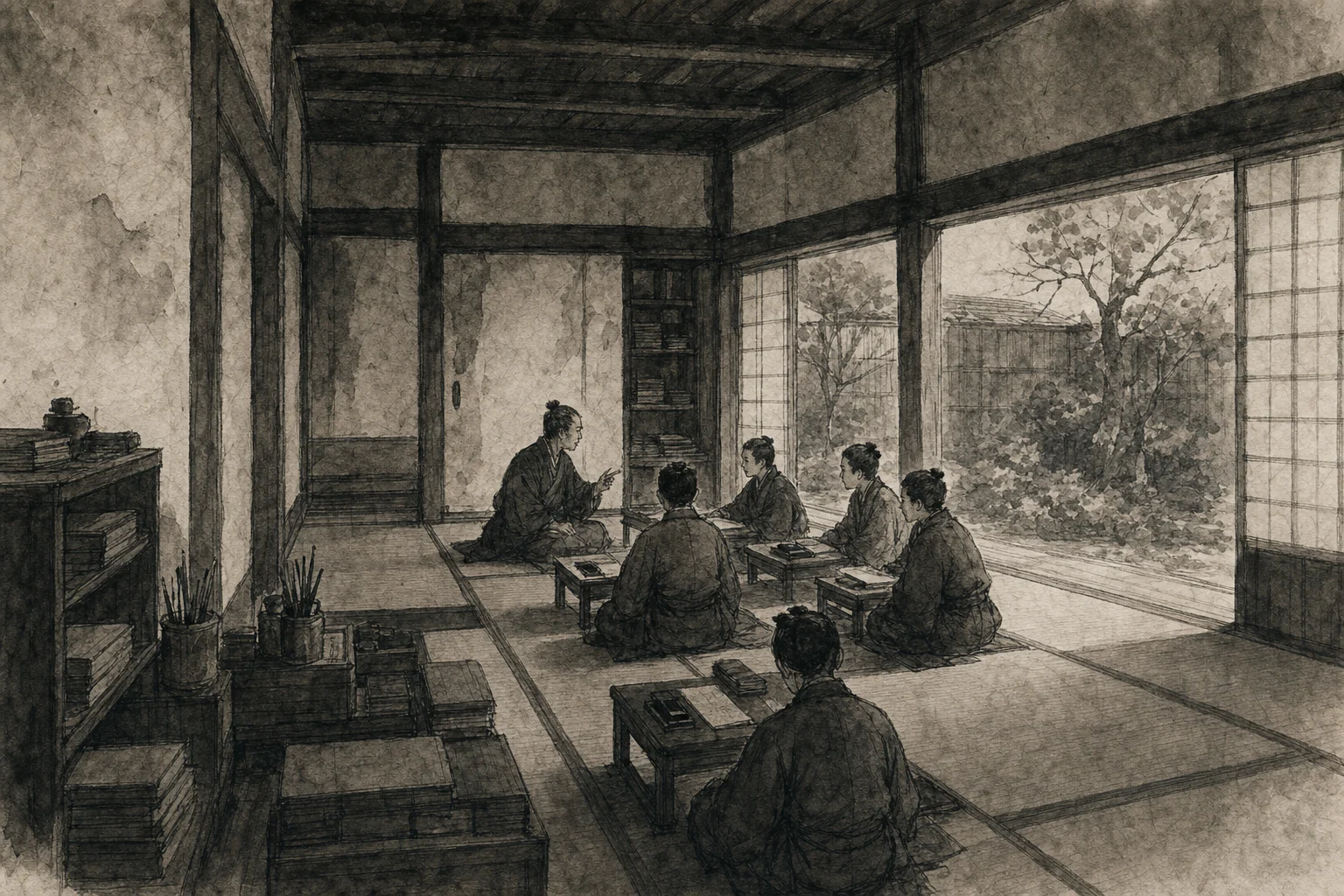
At Shoka Sonjuku he studied under Yoshida Shoin and competed with Genzui Kusaka. Shoin pressed learning toward action and used rivalry rather than easy praise. Takasugi would become a student who changed methods with circumstances instead of merely repeating his teacher.

Shoka Sonjuku ink painting

Shanghai, Qing China

Seeing Foreign Power in Shanghai


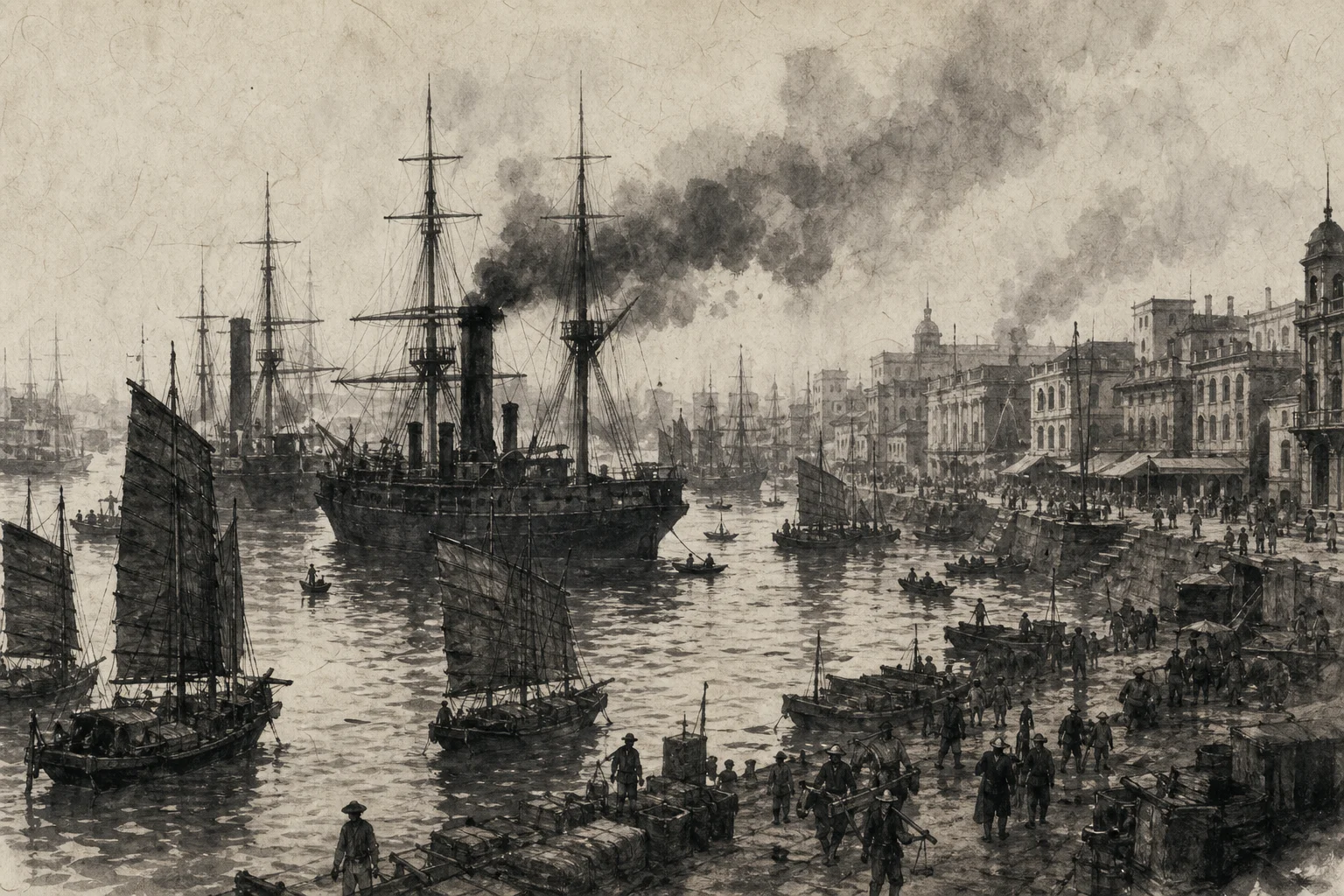
Takasugi joined a shogunate mission to Shanghai during the Taiping upheaval. Foreign settlements, steamships, weapons, and commerce showed him an Asian city penetrated by Western power. He returned with more than an abstract slogan about expelling foreigners: he had seen the military gap in a working port.

Shanghai ink painting
2

Shimonoseki

Founding the Kiheitai


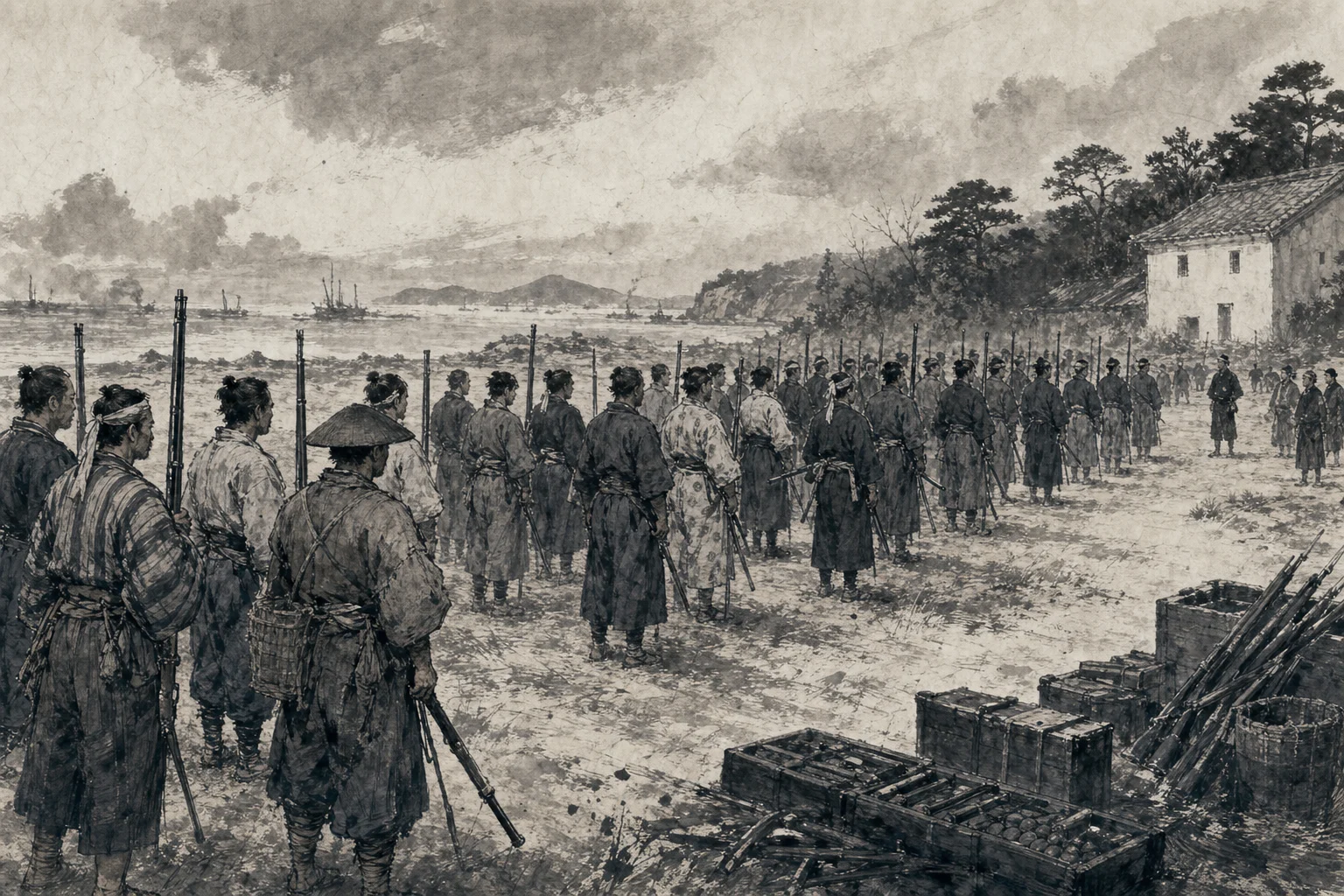
After Choshu fired on foreign shipping, Takasugi organized the Kiheitai for Shimonoseki's defense. It recruited beyond the regular samurai ranks, including townsmen and farmers, but still required pay, discipline, weapons, and command. His personal defiance became an institution able to keep moving without him.

Kiheitai ink painting
2

Shimonoseki

Negotiating After Defeat


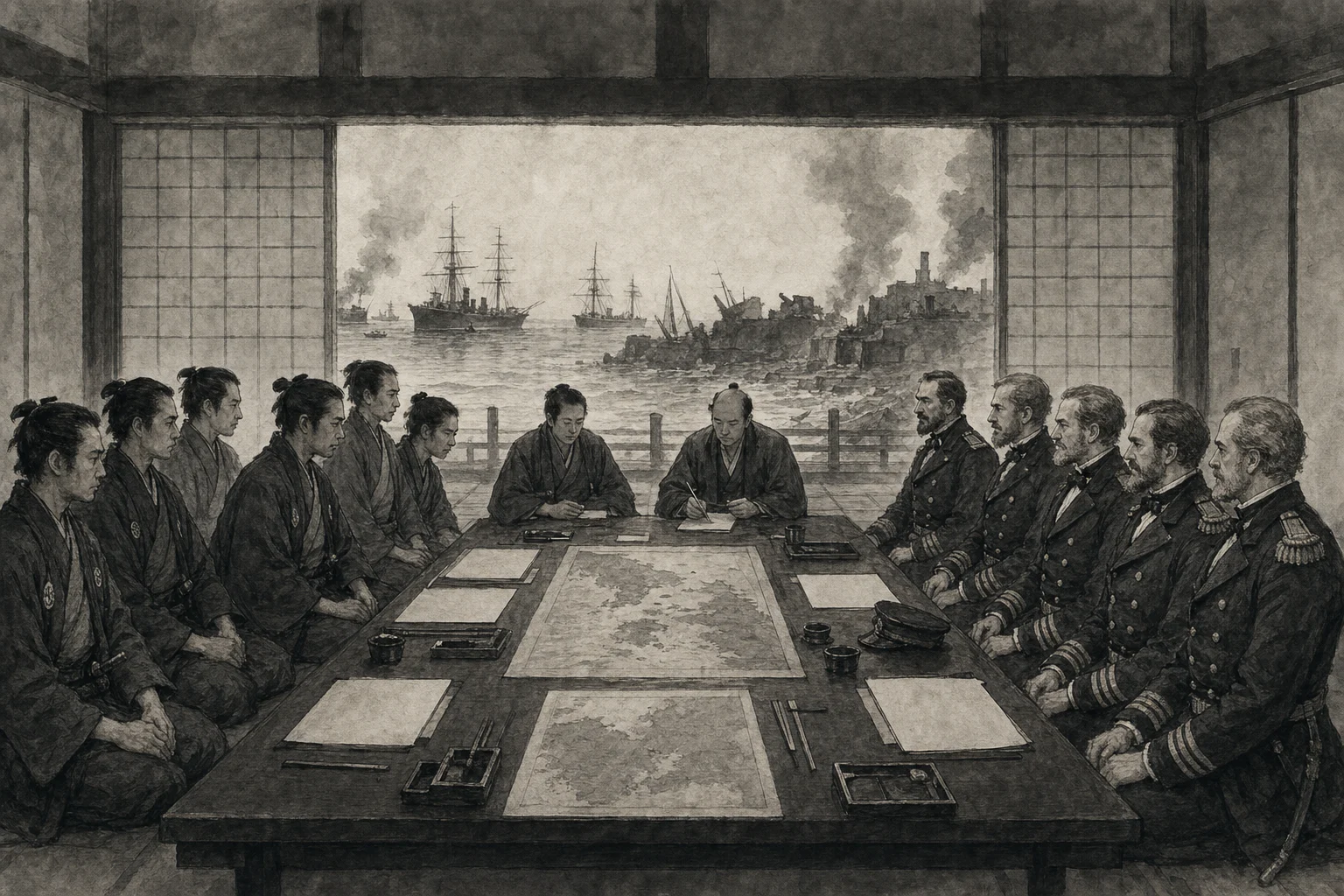
When the Four-Power allied fleet defeated Choshu, Takasugi entered the peace negotiations. The man associated with armed expulsion now had to hear foreign demands and limit the domain's losses. Taking responsibility for the aftermath keeps him from being reduced to a romantic destroyer.

3

Kozanji and the Kokura Front

Turning a Small Uprising into a Domain Shift


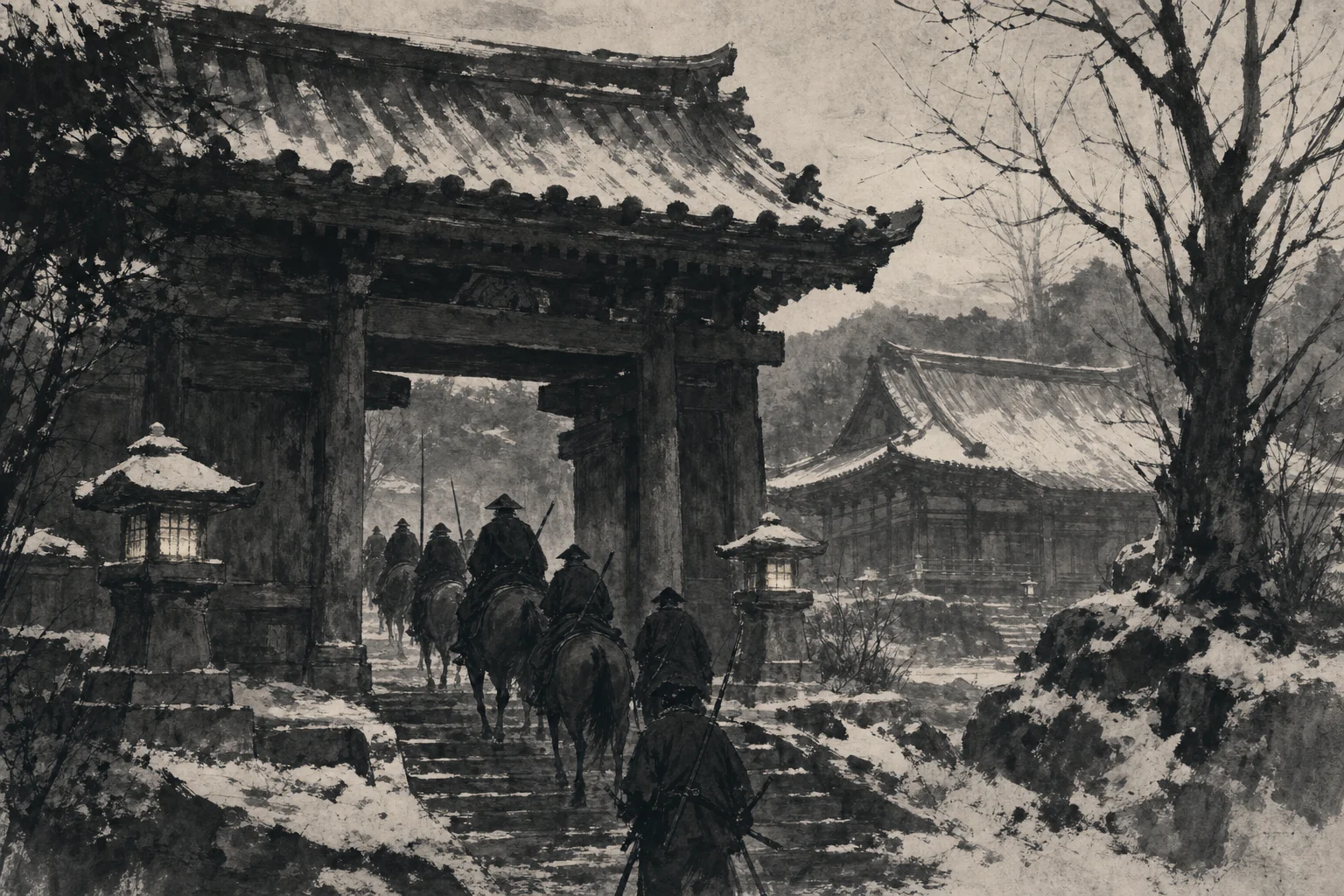
Takasugi rose at Kozanji against the conservative domain government with only a small following. He drew in irregular corps, shifted political control, and later commanded at the Kokura front against shogunate forces. The sequence shows his ability to turn a risky first move into coordinated political and military action.

2

Shinchi, Shimonoseki

Poems from Illness


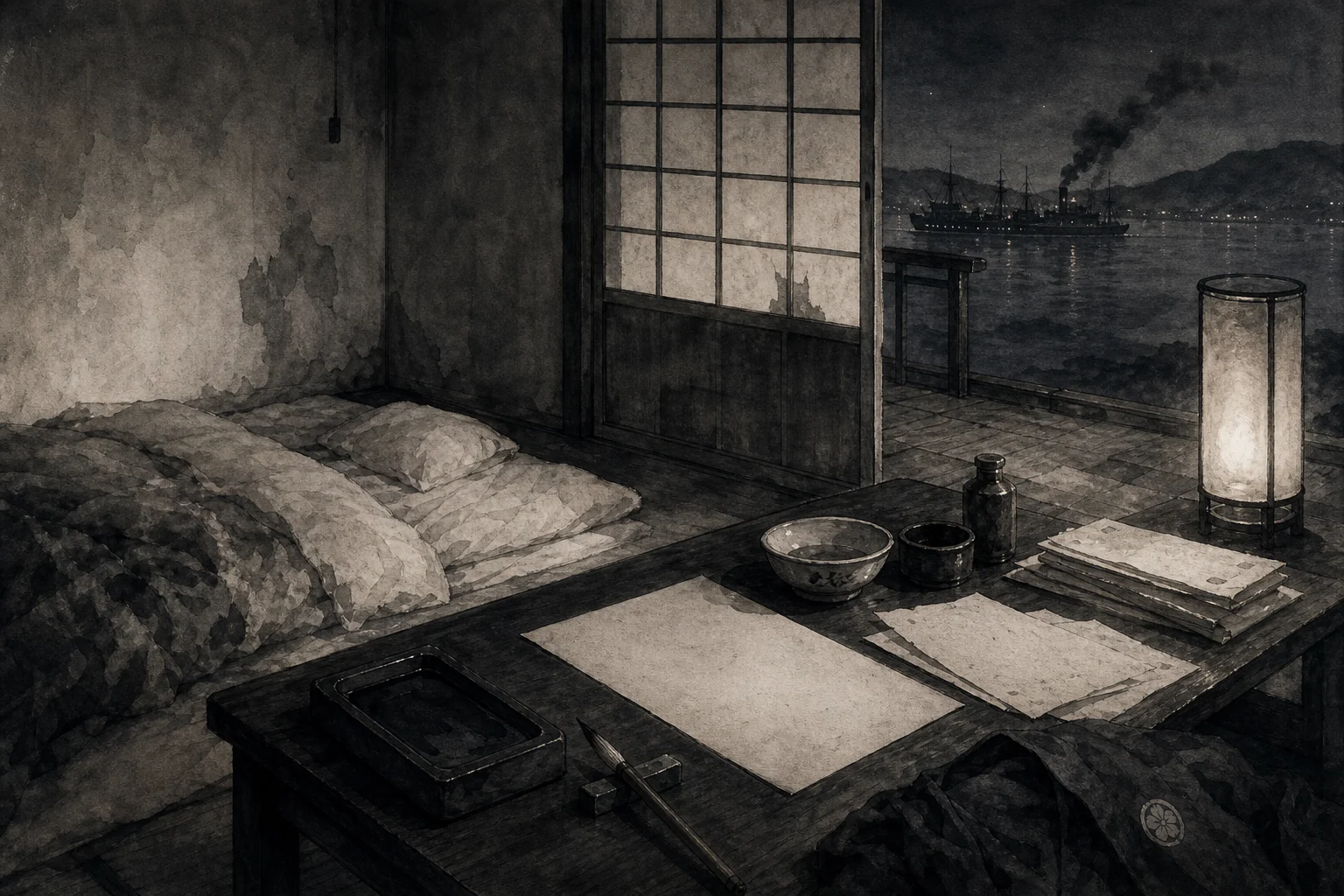
Tuberculosis removed Takasugi from the center of the movement before the Restoration. He died in Shimonoseki before turning twenty-nine and was buried near the former Kiheitai camp at Yoshida. His final poems hold achievement, impatience, friendship, and a refusal to release the world from a body that could no longer move.

123
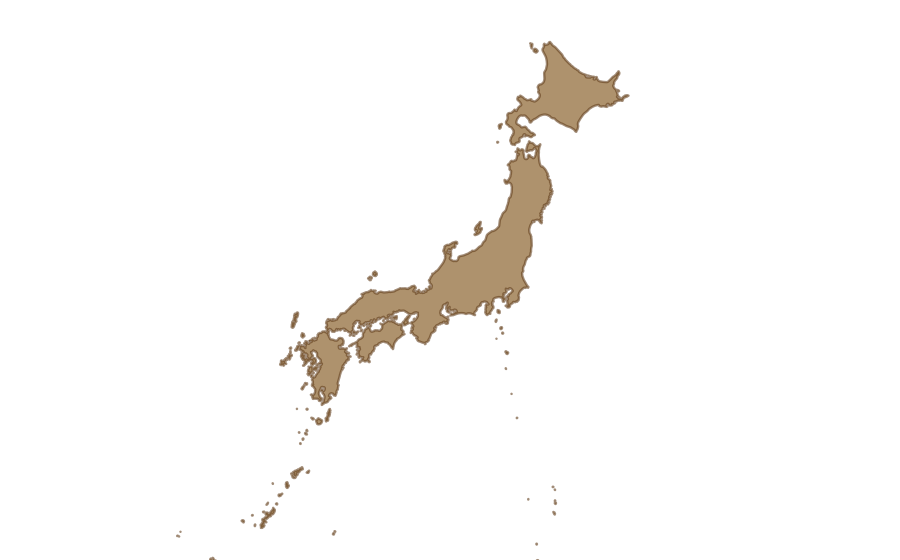
Map of Japan
1
2
3

Keys

What Shaped Shinsaku Takasugi

Learning without a Ready Answer ink painting
01

Shoka Sonjuku

Shoin did not simply praise Takasugi. He sharpened rivalry with Kusaka and pushed study toward action. Takasugi became a student who changed methods with the situation rather than preserving a teacher's words unchanged. To investigate “Learning without a Ready Answer” further, do not stop with a commemorative plaque. Compare the date, maker or former owner, provenance, restoration status, and present location of each element named in “Shoka Sonjuku.” Old maps, municipal histories, museum catalogues, document editions, material-culture studies, and field guides help distinguish contemporary evidence from reconstruction and later memory. They also provide a practical route to relevant books, facsimiles, maps, equipment histories, and a responsible site visit.

Seeing the Shape of Defeat Overseas ink painting
02

Shanghai

Shanghai placed foreign settlements, steamships, weapons, trade, and Qing disorder in one city. Takasugi still moved toward armed expulsion after returning, but he did so after seeing the imbalance directly rather than imagining it from Japan. To investigate “Seeing the Shape of Defeat Overseas” further, do not stop with a commemorative plaque. Compare the date, maker or former owner, provenance, restoration status, and present location of each element named in “Shanghai.” Old maps, municipal histories, museum catalogues, document editions, material-culture studies, and field guides help distinguish contemporary evidence from reconstruction and later memory. They also provide a practical route to relevant books, facsimiles, maps, equipment histories, and a responsible site visit.

Recruiting beyond Hereditary Rank ink painting
03

Kiheitai

The Kiheitai was more than the slogan of ignoring status. Samurai, farmers, and townsmen still needed arms, pay, discipline, and command. Takasugi's restless individual energy became a military organization that could continue beyond him. To investigate “Recruiting beyond Hereditary Rank” further, do not stop with a commemorative plaque. Compare the date, maker or former owner, provenance, restoration status, and present location of each element named in “Kiheitai.” Old maps, municipal histories, museum catalogues, document editions, material-culture studies, and field guides help distinguish contemporary evidence from reconstruction and later memory. They also provide a practical route to relevant books, facsimiles, maps, equipment histories, and a responsible site visit.

Facing the Enemy after Fighting It ink painting
04

Peace Negotiations

After the Four-Power allied fleet defeated Choshu, Takasugi helped negotiate peace. Stories about his exchanges require care, but his role in handling defeat is firm. He dealt not only with the excitement of attack, but with consequences and unequal power. To investigate “Facing the Enemy after Fighting It” further, do not stop with a commemorative plaque. Compare the date, maker or former owner, provenance, restoration status, and present location of each element named in “Peace Negotiations.” Old maps, municipal histories, museum catalogues, document editions, material-culture studies, and field guides help distinguish contemporary evidence from reconstruction and later memory. They also provide a practical route to relevant books, facsimiles, maps, equipment histories, and a responsible site visit.

Making a Minority Move Spread ink painting
05

Kozanji Uprising

The Kozanji uprising began as a dangerous minority action. Its force came from supporters and irregular corps joining across the domain. Takasugi read who might move and turned a small beginning into a change in Choshu's political direction. To investigate “Making a Minority Move Spread” further, do not stop with a commemorative plaque. Compare the date, maker or former owner, provenance, restoration status, and present location of each element named in “Kozanji Uprising.” Old maps, municipal histories, museum catalogues, document editions, material-culture studies, and field guides help distinguish contemporary evidence from reconstruction and later memory. They also provide a practical route to relevant books, facsimiles, maps, equipment histories, and a responsible site visit.

Words Left by a Body That Could Not Move ink painting
06

Illness and Poetry

Tuberculosis complicates the familiar image of Takasugi always in motion. Read together, his poems carry friendship, distance from death, and frustration at not seeing the political result. His famous final verse should not be reduced to a cheerful maxim. To investigate “Words Left by a Body That Could Not Move” further, do not stop with a commemorative plaque. Compare the date, maker or former owner, provenance, restoration status, and present location of each element named in “Illness and Poetry.” Old maps, municipal histories, museum catalogues, document editions, material-culture studies, and field guides help distinguish contemporary evidence from reconstruction and later memory. They also provide a practical route to relevant books, facsimiles, maps, equipment histories, and a responsible site visit.

Poems by This Person