Nariaki Tokugawa · Mito
Original
弘道館賞梅花
Nariaki Tokugawa's Chinese-style poem, "弘道館賞梅花弘道館中千樹梅淸香馥郁十". Read the original Japanese, modern translation, interpretation, and historical context as distinct parts of the poem.
Person
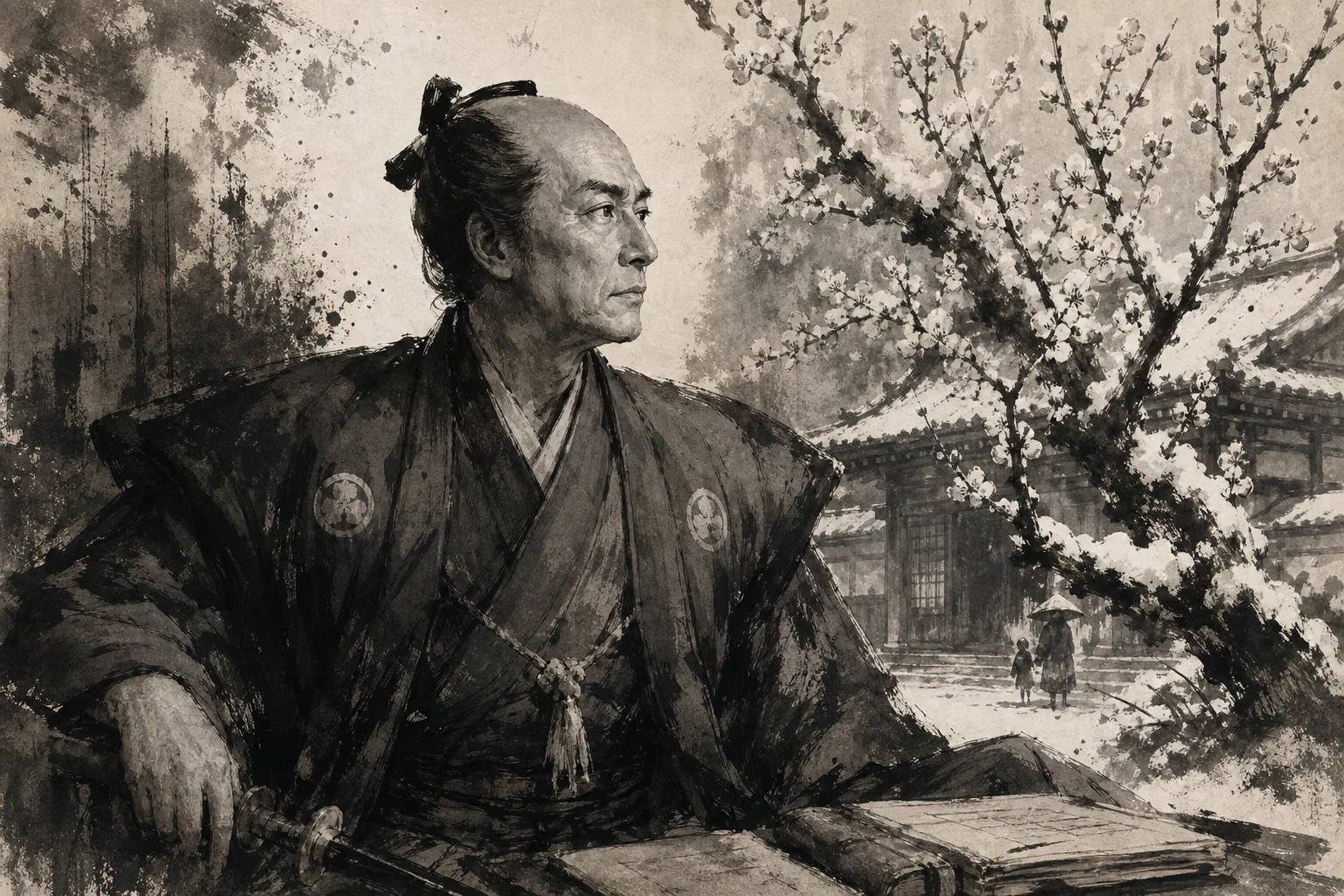
Lord of Mito, founder of the Kodokan, and a major influence on Mito learning and loyalist thought.
Learn about Tokugawa Nariaki
Translation
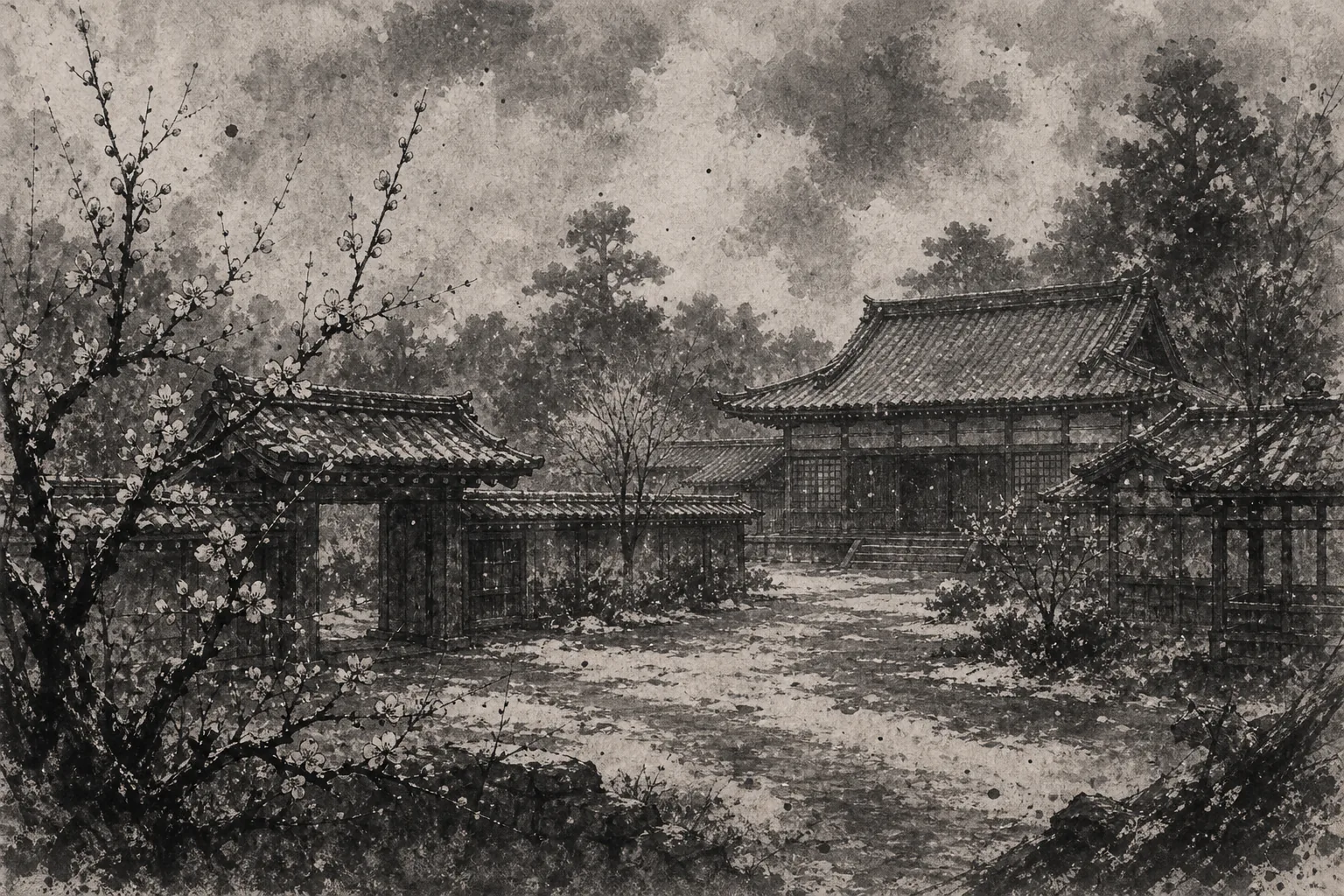
A thousand plum trees bloom in Kodokan; though lovers of letters, they lack no martial strength, claiming spring first in the snow.
Poetic Shape Kanshi draws on a classical Chinese poetic tradition, where restraint, allusion, and moral tension carry much of the weight. The poem sounds formal, but the pressure beneath it is personal.
Reading
This poem can symbolize Mito thought through plum blossoms.Literature and arms, learning and resolve, become one image.
Background
A Chinese poem by Tokugawa Nariaki on plum blossoms at the Kodokan, the Mito domain school.It is a poem of the background of Mito learning and loyalist thought.
Source / Transmission Wording and readings may differ by transmission; this page treats the text as one circulated form.
Further Reading
Find related books and places to stay For readers who want more historical context, these links search for related books on external stores.
Affiliate link