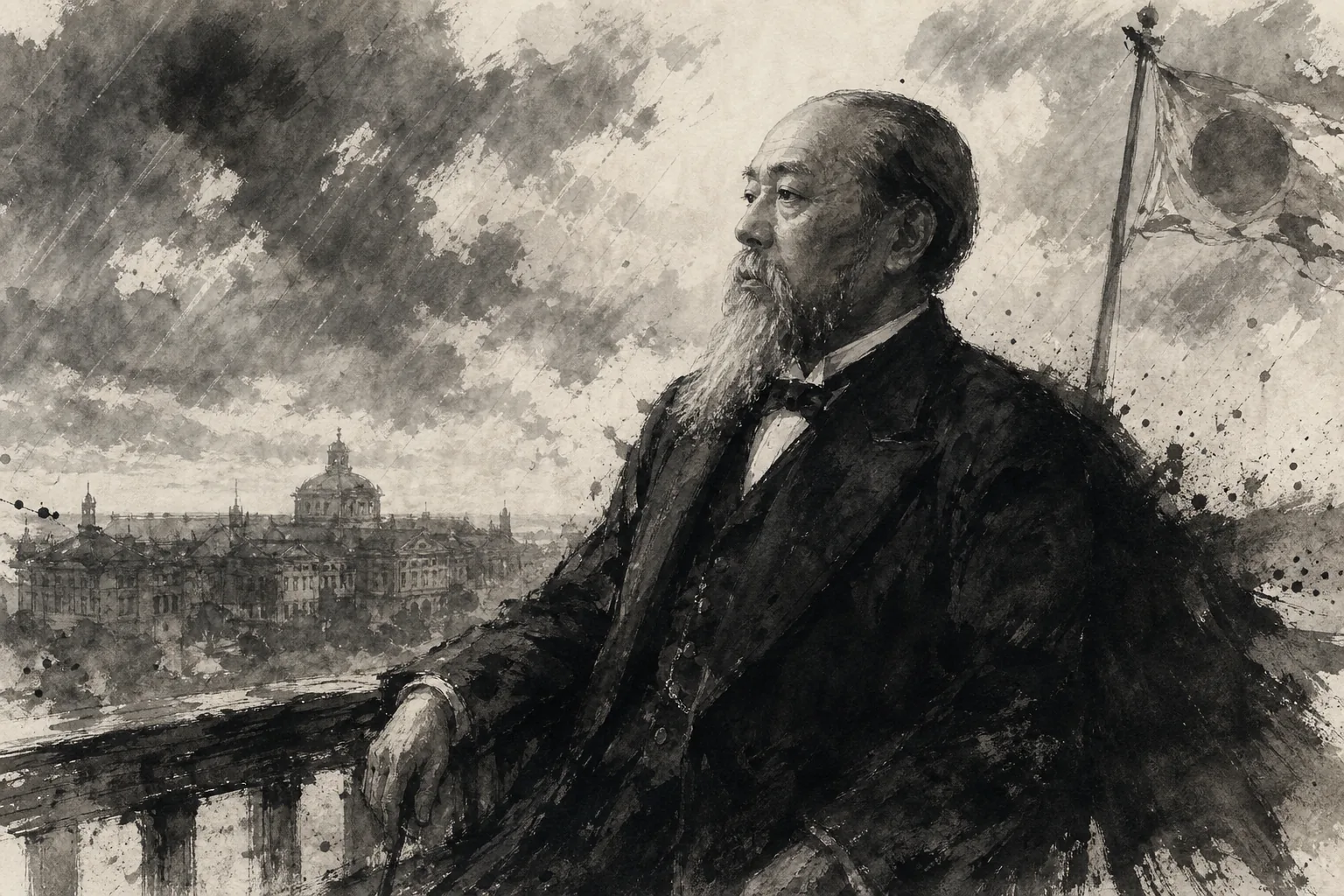
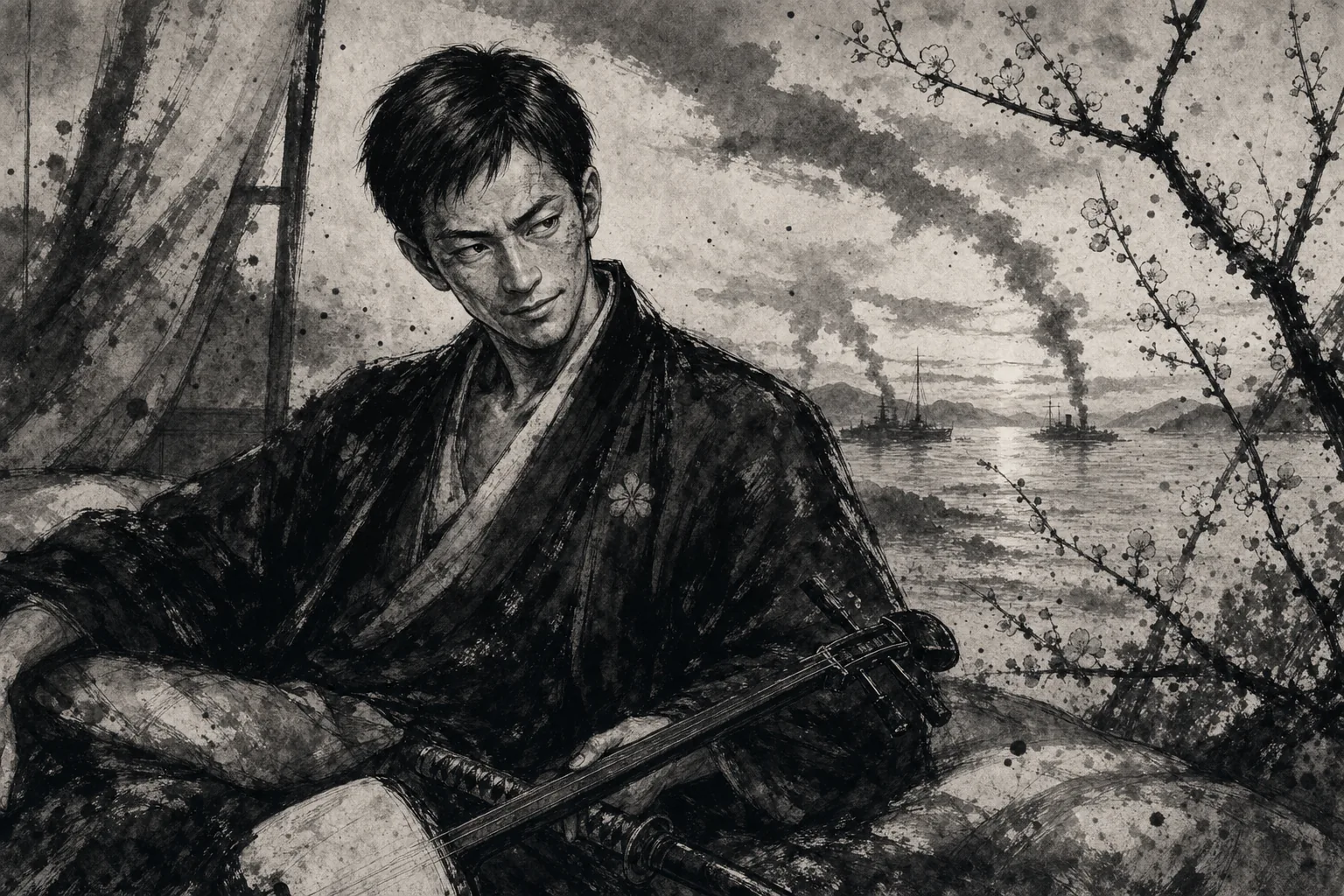
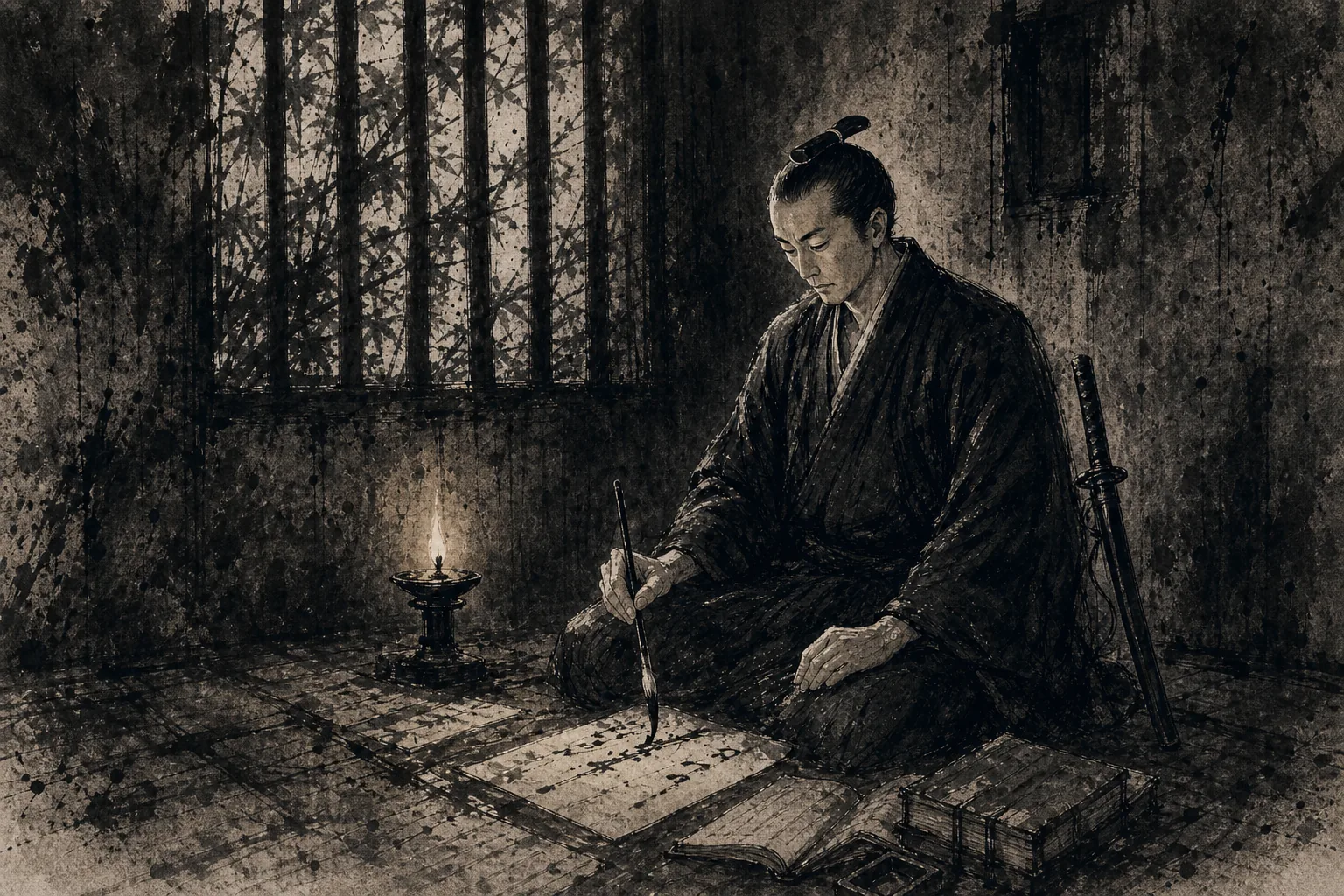
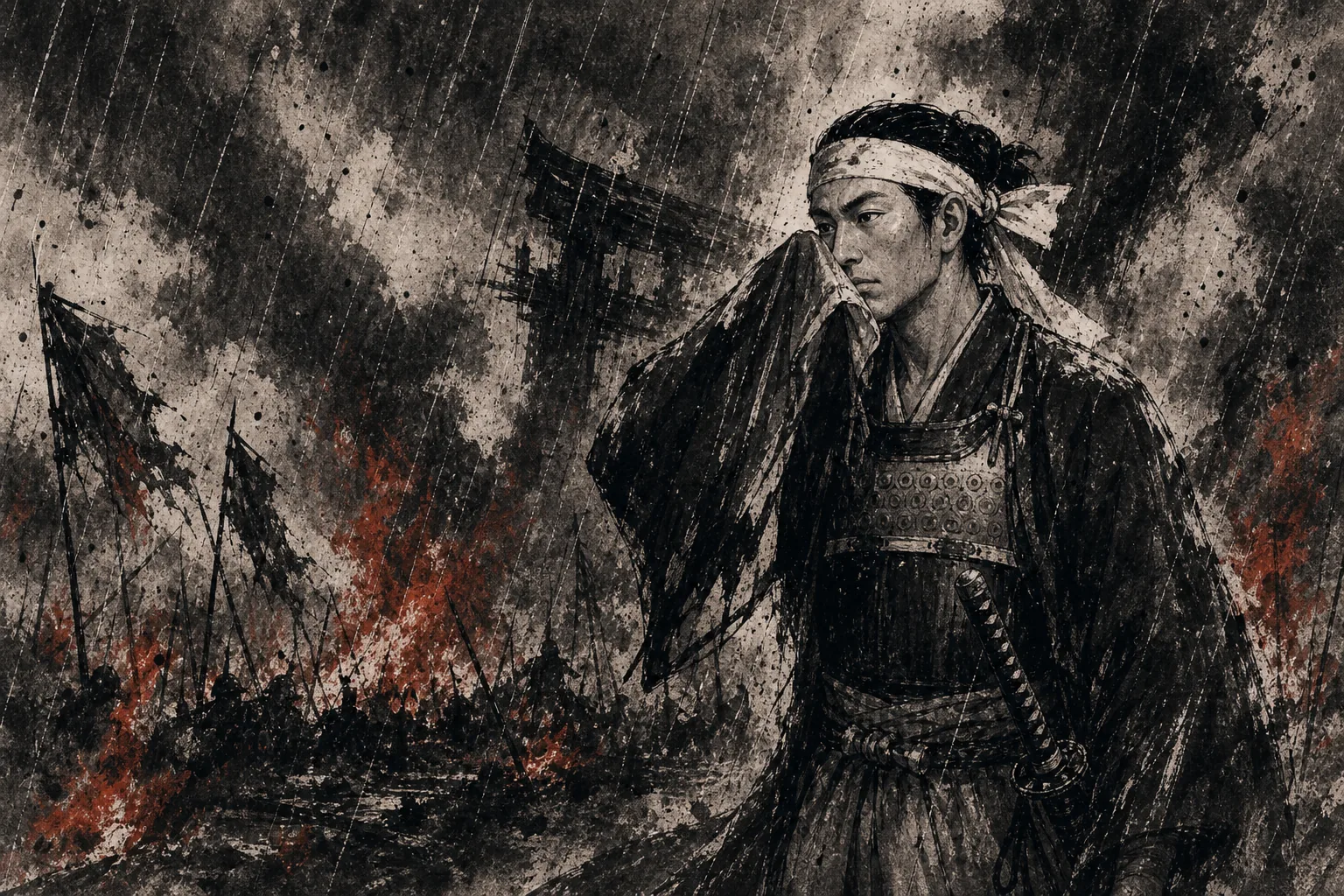
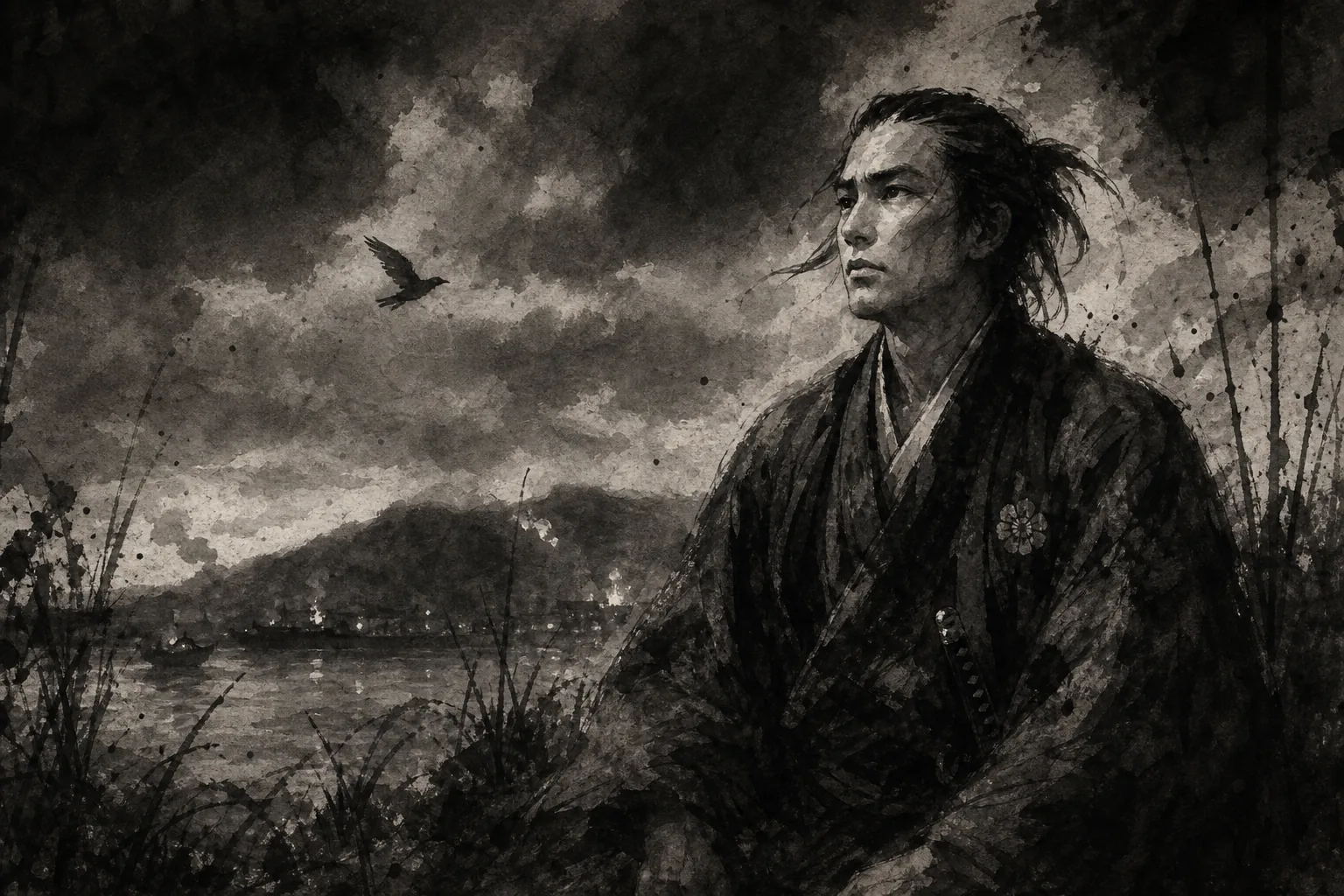
Hirobumi Ito · Choshu
Original
明治十一年五月
Hirobumi Ito's Chinese-style poem, "明治十一年五月甲東翁薨後七日會于友人". Read the original Japanese, modern translation, interpretation, and historical context as distinct parts of the poem.
Person
A Choshu samurai who moved from Bakumatsu activism to the center of the Meiji state, becoming Japan's first prime minister.
Learn about Ito Hirobumi
Translation
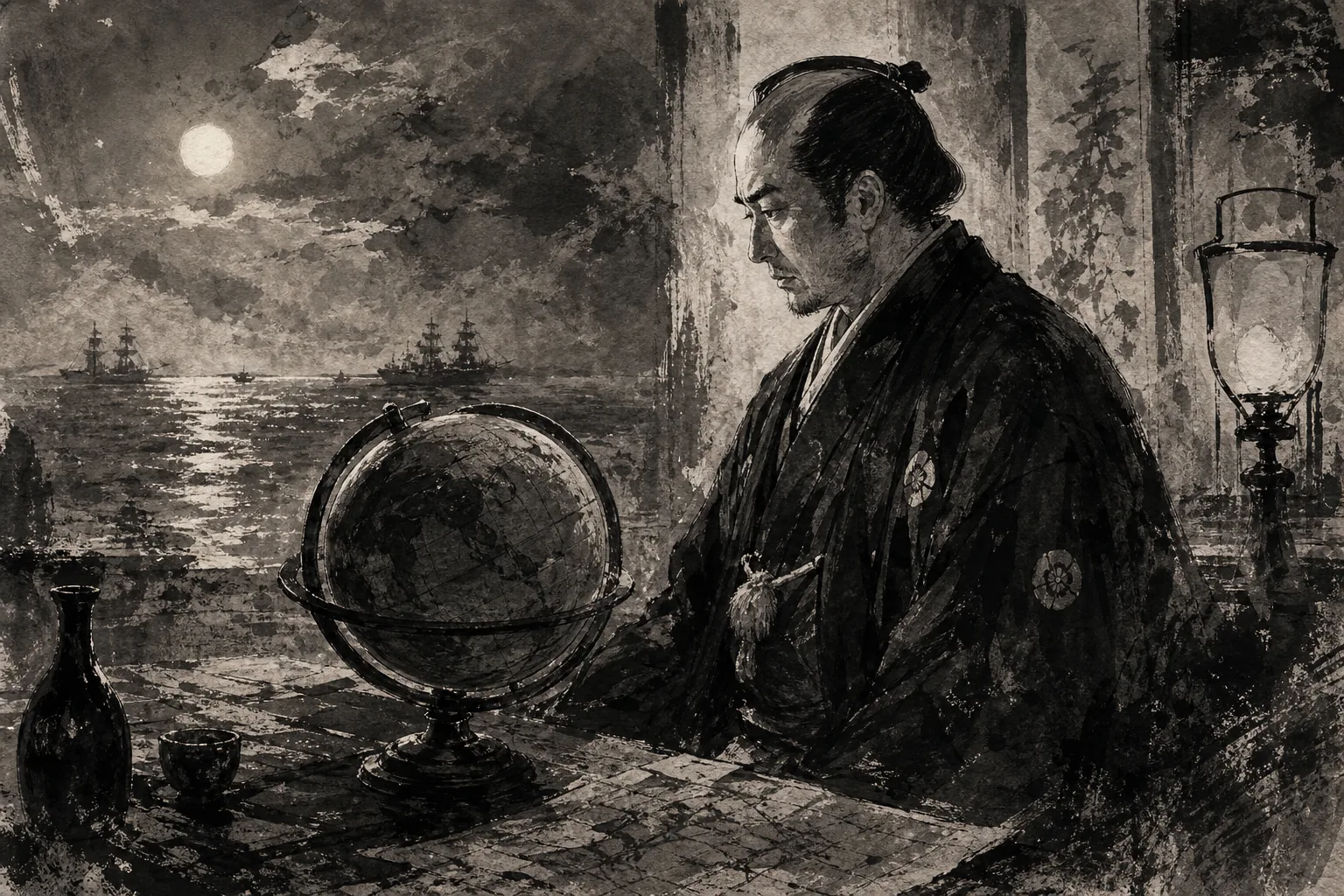
Where can one seek a true friend of a thousand years? After the hero is gone, the air turns autumnal and wind-rain falls like tears across the land.
Poetic Shape Kanshi draws on a classical Chinese poetic tradition, where restraint, allusion, and moral tension carry much of the weight. The poem sounds formal, but the pressure beneath it is personal.
Reading
As a memorial poem after Okubo Toshimichi's assassination, it carries the loss felt by those who survived the Restoration.It resonates with the afterglow beyond the Bakumatsu itself.
Background
Introduced as a Chinese poem written by Ito Hirobumi after Okubo Toshimichi's death.The bonds among Bakumatsu comrades turn here into the political loneliness of Meiji.
Source / Transmission Wording and readings may differ by transmission; this page treats the text as one circulated form.
Further Reading
Find related books and places to stay For readers who want more historical context, these links search for related books on external stores.
Affiliate link