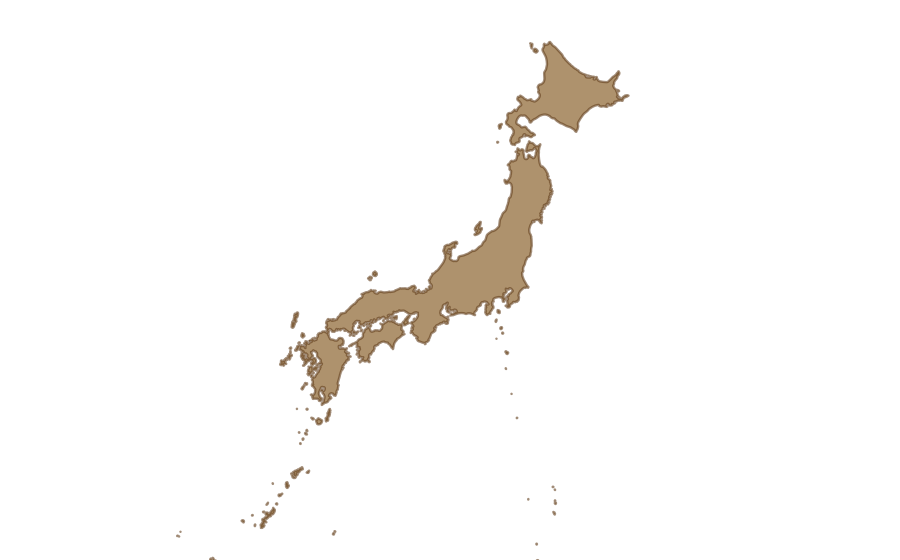
Shinmichi, Matsumoto village, Hagi
Grows amid rice allotments, repaired clothing, household work, and Hozoin-ryu spear practice
Household economy, dwelling, teacher, and training dates require separate evidence.
Know the Person
Yoshida Toshimaro is not reduced to a Shokasonjuku “Four Heavenly Kings” label and a young death at Ikedaya. His lower-ranking retainer household in Shinmichi, Matsumoto village, is reconstructed through stipend books, rice measures, patched clothing, household chests, and Hozoin-ryu spear equipment. At Shokasonjuku, classics, maps, question slips, notebooks, desks, lamps, and correspondence reveal a short period of shared reading and debate. A dated 1857 letter from Edo to Yoshida Shoin is examined as paper, dimensions, address, content, folding, later mounting, and provenance; it shows information about U.S. envoy Townsend Harris traveling back to Hagi. Movement among Hagi, Edo, Kyoto, and other domains becomes the work of route maps, permits, lodging tags, sandals, rain capes, medicines, coins, and letter packets. A proposal to recruit across status lines returns to rosters, oath sheets, ration tokens, wages, equipment, and discrimination that military participation did not erase. The Ikedaya incident is approached through a personal pocket case described as his sole returned keepsake, inventories, floor plans, messages, timelines, and conflicting testimony rather than a fight scene. These objects lead to sites, books, spear equipment, classics, facsimile letters, travel gear, military and status history, and Kyoto fieldwork.
Life
Shinmichi, Matsumoto village, Hagi
Household economy, dwelling, teacher, and training dates require separate evidence.
Shokasonjuku, Hagi
Attendance, Shoin’s praise, and later elite labels remain distinct.
Edo to Hagi
Paper, dimensions, content, mounting, and Sugi-family donation form separate evidence.
Hagi, Edo, Kyoto, and other domains
Routes, aliases, and assignments are tested through diaries, inn books, and letters.
Choshu territory
Proposal and later unit systems, military entry and equality, are not identical.
Kyoto and Hagi Museum
Place and manner of death, return, donation, and display keep separate dates.
山口県萩市椿東
生家建物の現存を示す場所ではなく、軽卒家の知行、住居、米計量、衣服、宝蔵院流槍術の稽古環境を調べる入口。
吉田清内家・吉田栄太郎
Address山口県萩市椿東新道周辺
Nearby
山口県萩市椿東松本市
四天王という序列ではなく、漢籍、地図、質問札、筆記、出席、共同討論と、在塾期間の短さを史料から確認する。
吉田稔麿・吉田松陰と塾生
Address山口県萩市椿東1537
Nearby
山口県萩市堀内
江戸で見聞きした米国公使ハリスの情報と村塾への関心を伝えた書簡を、掛幅化以前の通信文として読む。
吉田稔麿書簡・吉田松陰宛
Address山口県萩市堀内355
Nearby
京都府京都市中京区河原町通御池上る
地下活動の英雄像ではなく、萩・江戸・京都・諸藩を結んだ手形、宿札、草鞋、雨具、薬袋、書状の運搬を検証する。
吉田稔麿と長州藩の連絡網
Address京都府京都市中京区上本能寺前町周辺
Nearby
山口県山口市春日町
屠勇取立を美談にせず、被差別身分を含む参加者の名簿、待遇、食糧、賃金、装備、差別の継続を確認する。
吉田稔麿の兵員取立構想と長州藩
Address山口県山口市春日町8-2周辺
Nearby
京都府京都市中京区三条通河原町東入
復元店舗や戦闘場面ではなく、萩博物館に残る懐中品、所持品目録、藩邸への伝達、証言、平面図から死亡経緯の諸説を分ける。
吉田稔麿と池田屋事件資料
Address京都府京都市中京区三条通河原町東入中島町
Nearby
Keys
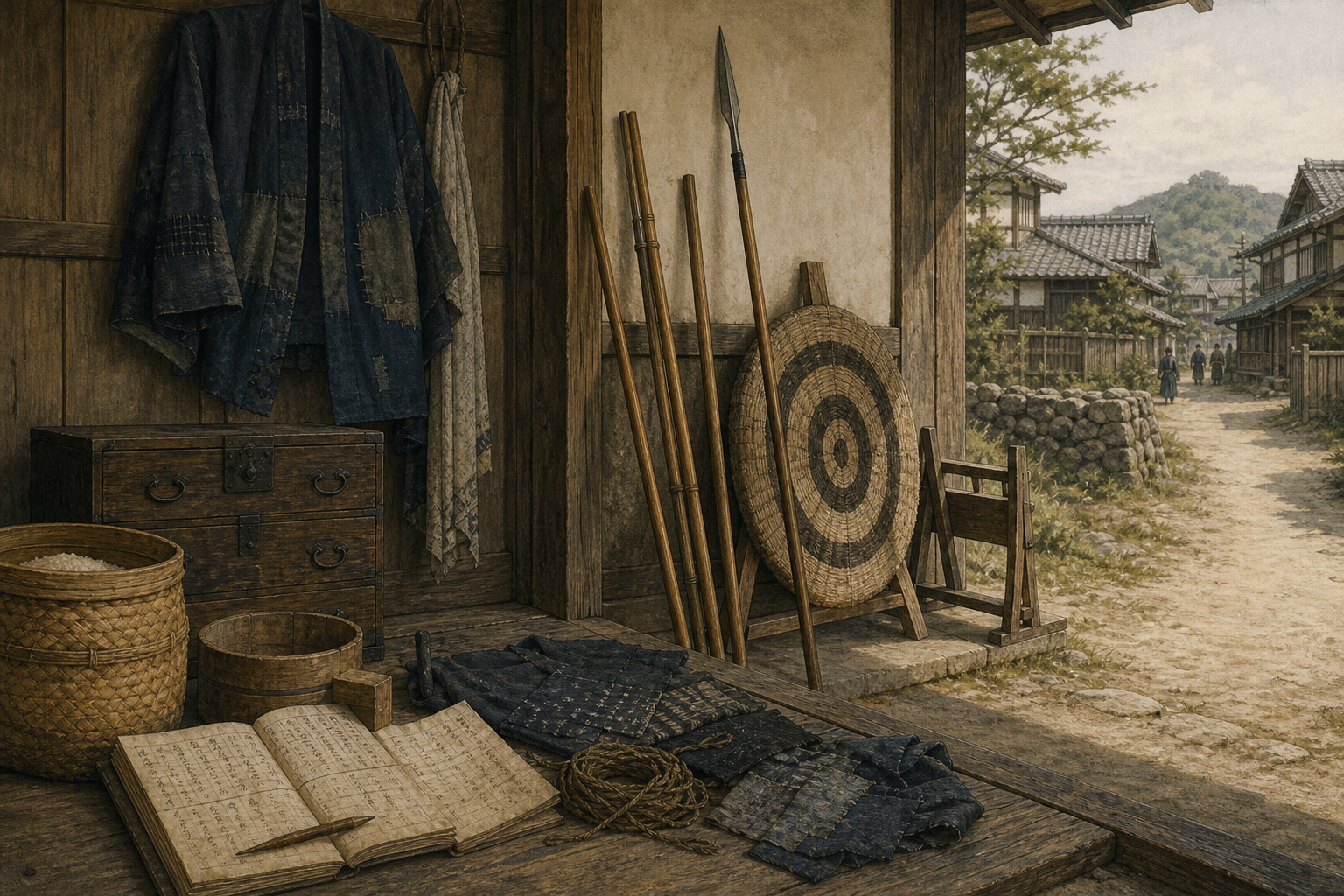
Yoshida Eitaro, later Toshimaro, was born in 1841 to lower-ranking Choshu retainer Yoshida Seinnai in Shinmichi, Matsumoto village outside Hagi. Stipend books, rice allotments, measures, patched clothing, household chests, dwelling plans, village lanes, wooden Hozoin-ryu spears, targets, and repair cords turn rank and martial training into material conditions. The birthplace marker is not a surviving house, and household size or income must be tested through Yoshida papers rather than generic examples alone. Poverty is not used to explain later ability or character in a straight line. Reading paths include Hagi’s lower-retainer districts, stipends, rice measures, clothing repair, spear traditions, local maps, and walking guides.
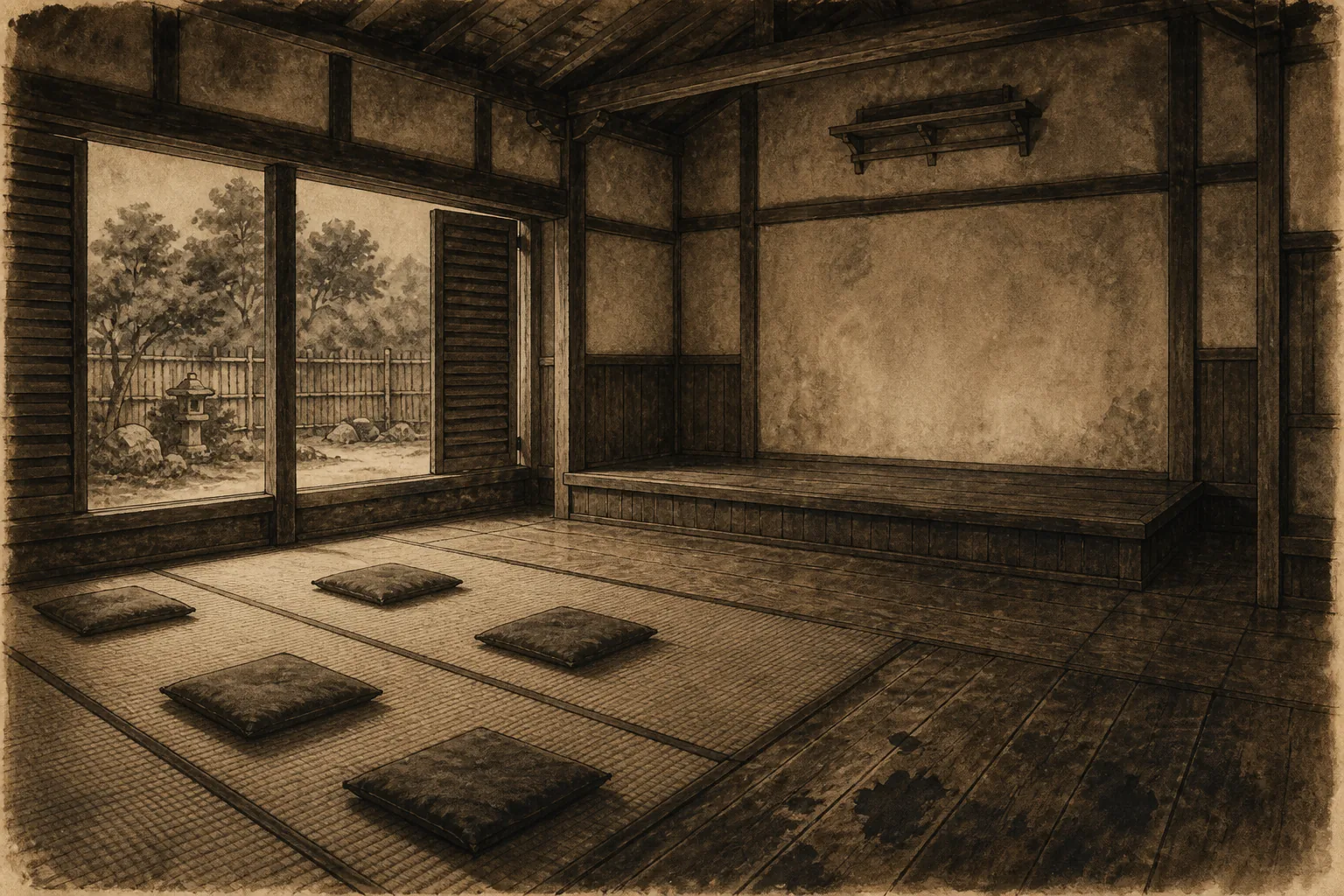
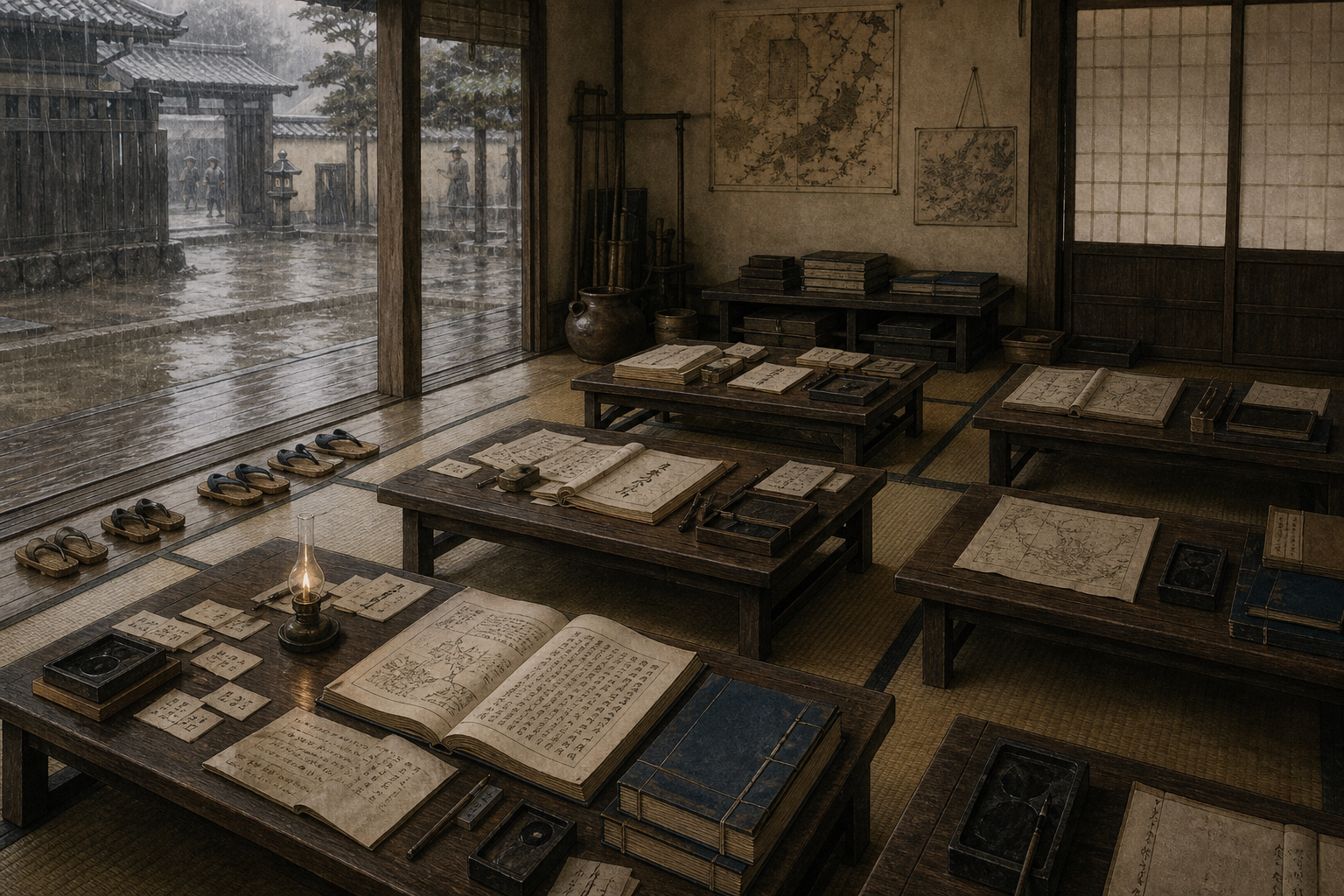
Toshimaro entered Yoshida Shoin’s teaching circle at sixteen in 1856. Chinese classics, maps, current-affairs materials, question slips, notebooks, inkstones, low desks, lamps, footwear, and letters between teacher and students reconstruct reading, questioning, group discussion, and correction. Later labels such as Three Outstanding Students or Four Heavenly Kings are not treated as attendance ranks or examination results; Shoin’s praise requires its date and epistolary context. The surviving building’s rooms and the provenance of displayed objects also remain distinct. Reading paths include Chinese classics, historical maps, private academies, notebooks, writing tools, Shoin’s correspondence, and the architecture of compact classrooms.
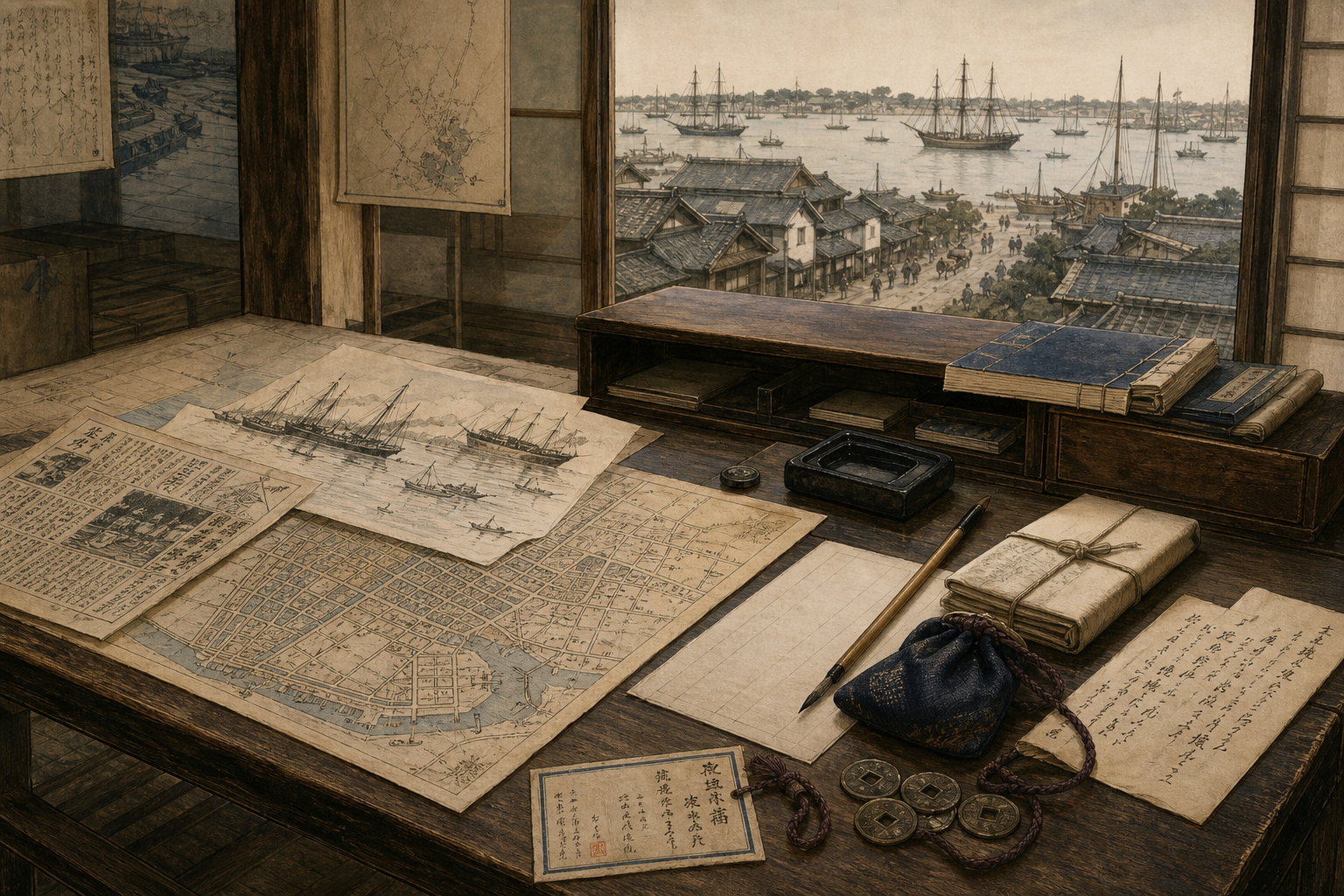
The Cultural Heritage Database registers a letter Toshimaro sent from Edo to Shoin on 25 November 1857. He welcomed news of the school’s vitality and reported information including U.S. envoy Townsend Harris’s audience with the shogun. Paper, ink, dimensions, folds, seal, address, harbor sketches, Edo maps, information slips, and a travel purse reveal how news moved by observers and letters. Its present hanging-scroll format does not mean it began as display calligraphy. The record of donation from the Sugi family is part of provenance. Reading paths include letters, Bakumatsu diplomacy, Edo maps, information before modern newspapers, postal history, facsimiles, and museum conservation.
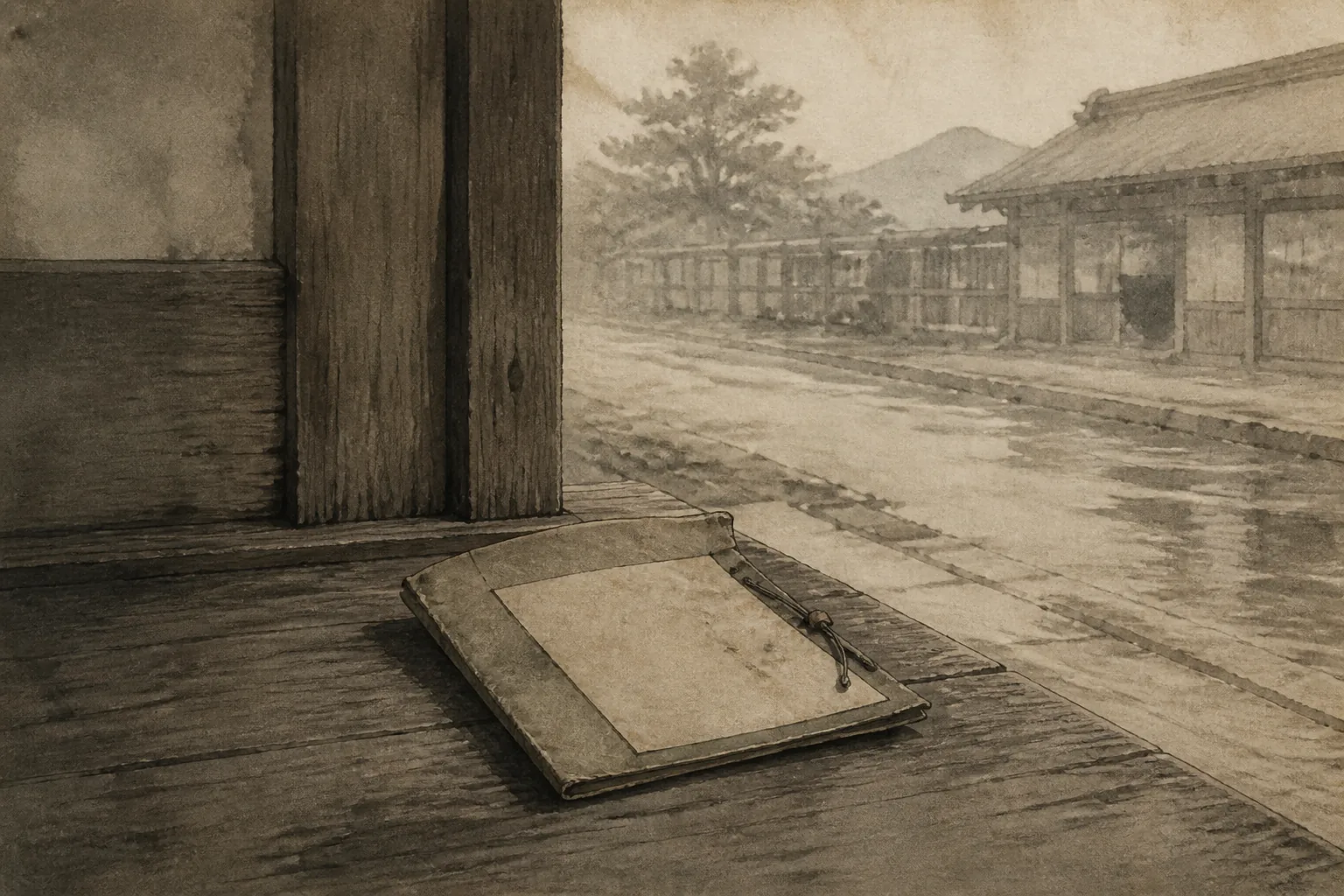
Toshimaro’s activity crossed Hagi, Edo, Kyoto, Choshu territory, and contacts in other domains. Route maps, travel permits, lodging tags, sandals, rain capes, hats, medicines, coin strings, letter packets, spear bags, and inn books help establish dates, routes, expenses, and correspondents. Stories about aliases and concealment are made specific only where contemporary signatures, diaries, or lodging evidence survive, so later adventure narratives do not fill the gaps. The Kyoto Choshu residence marker provides geographical orientation but is not a surviving domain building. Reading paths include highways, inns, travel equipment, couriers, domain residences, old maps, historical walking, and editions of political correspondence.
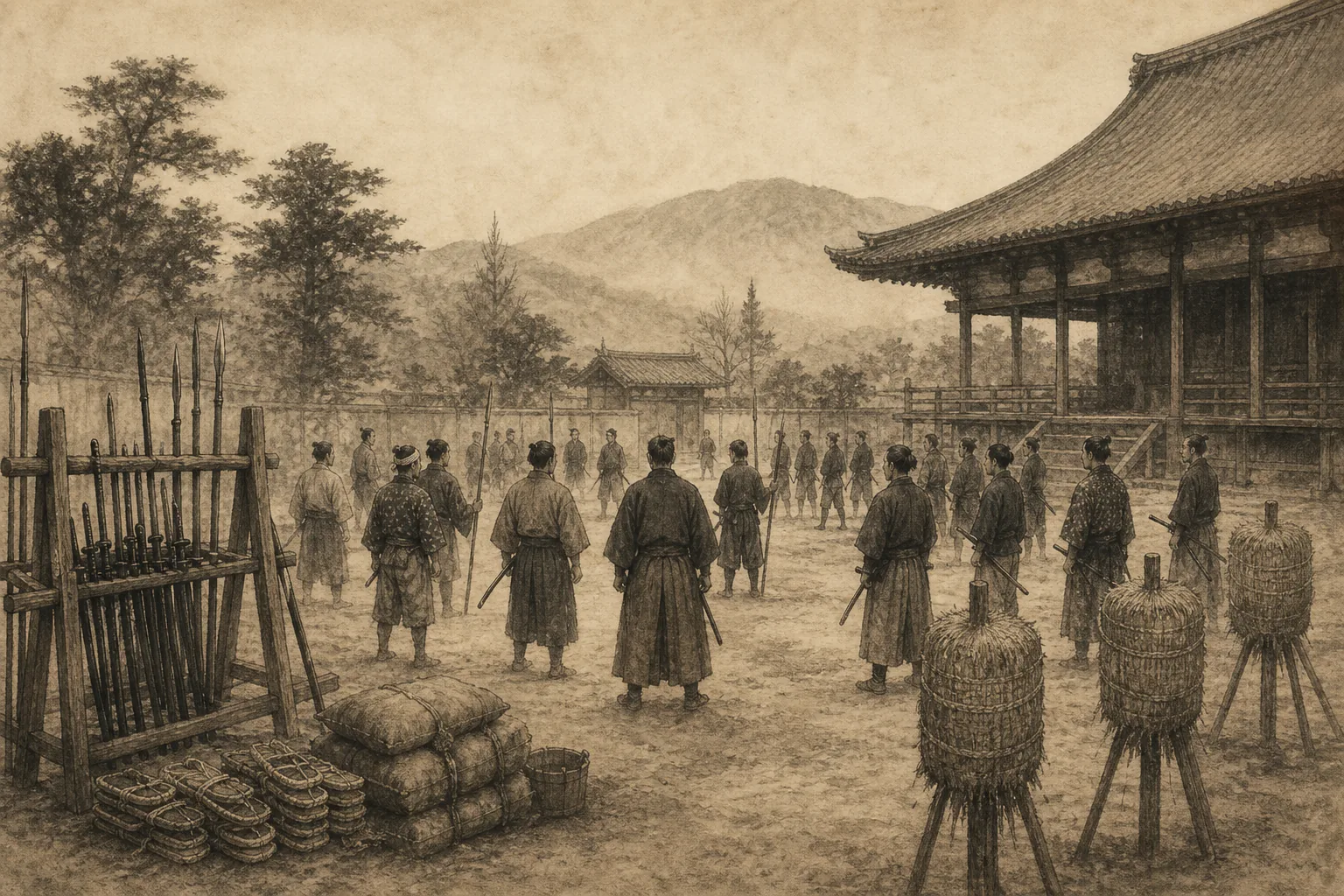
The Yamaguchi Prefectural Library research guide points readers to scholarship on Toshimaro’s plan for recruitment often called shuyu toritate, including people from discriminated communities. Status rosters, oath sheets, ration tokens, cloth badges, clothing, canteens, sandals, wage books, training schedules, and village maps test recruiters, eligibility, treatment, weapons, command, and what happened afterward. Military participation is not assumed to have created social equality. Toshimaro’s proposal also remains separate from the later organization and history of Choshu irregular units. Reading paths include status history, military organization, food supply, uniforms, rosters, discrimination, local archives, and critical studies of Restoration forces.
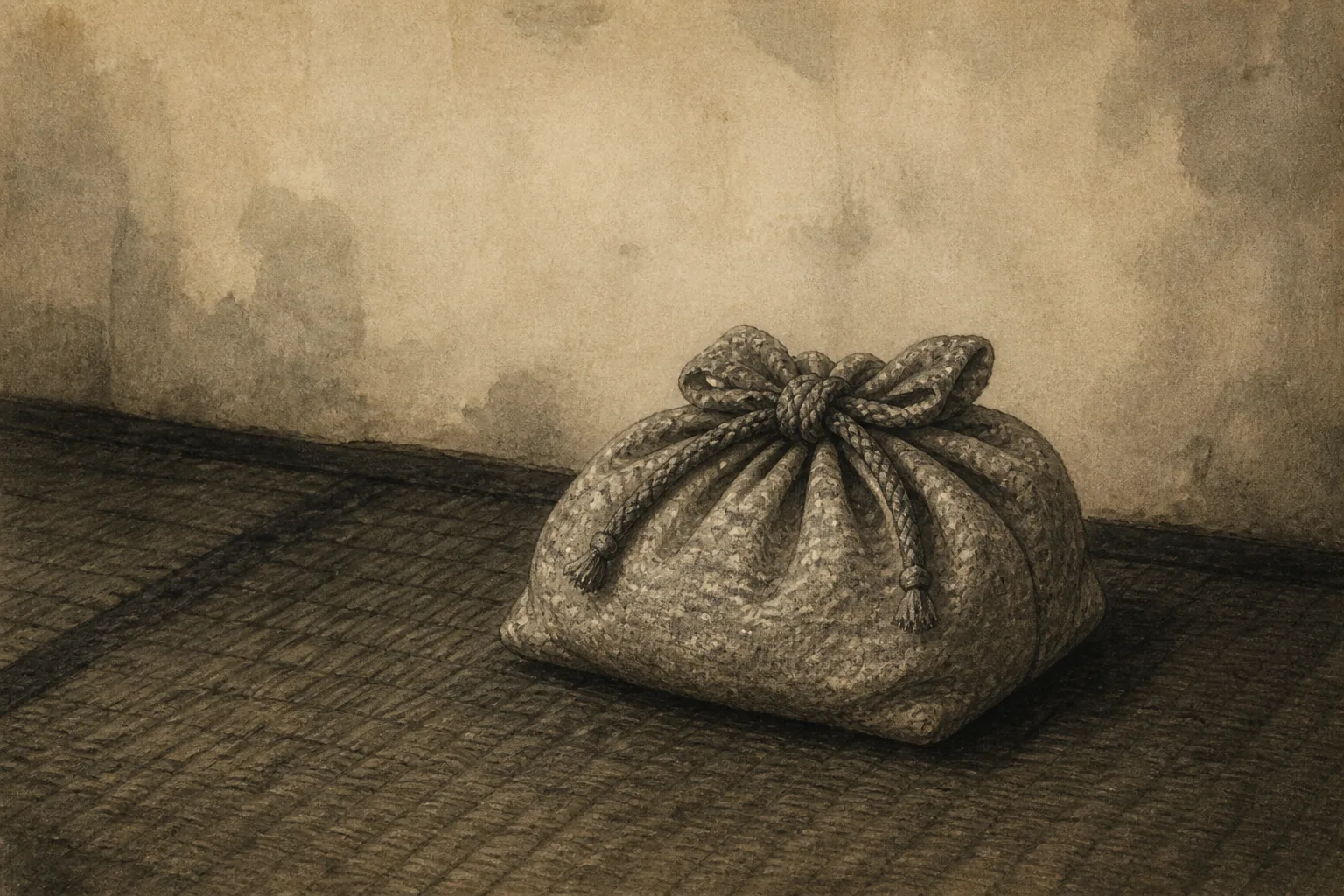
Toshimaro died at twenty-four during the Ikedaya incident in 1864. Hagi Museum describes a pocket case carried during the incident and later returned to his family as his only surviving keepsake. The case, property inventories, inn plans, Kyoto street maps, messages to the Choshu residence, witness statements, timelines, and a damaged spear shaft allow comparison of claims that he left to report the attack and returned, where he died, and whether his death was in combat or self-inflicted. None is fixed without source comparison. The current establishment and marker are not the 1864 inn. Reading paths include museum relics, Ikedaya research, Kyoto maps, testimony, provenance, and conservation of keepsakes.
VISIT
Search events related to Toshimaro Yoshida →Browse all Bakumatsu events →