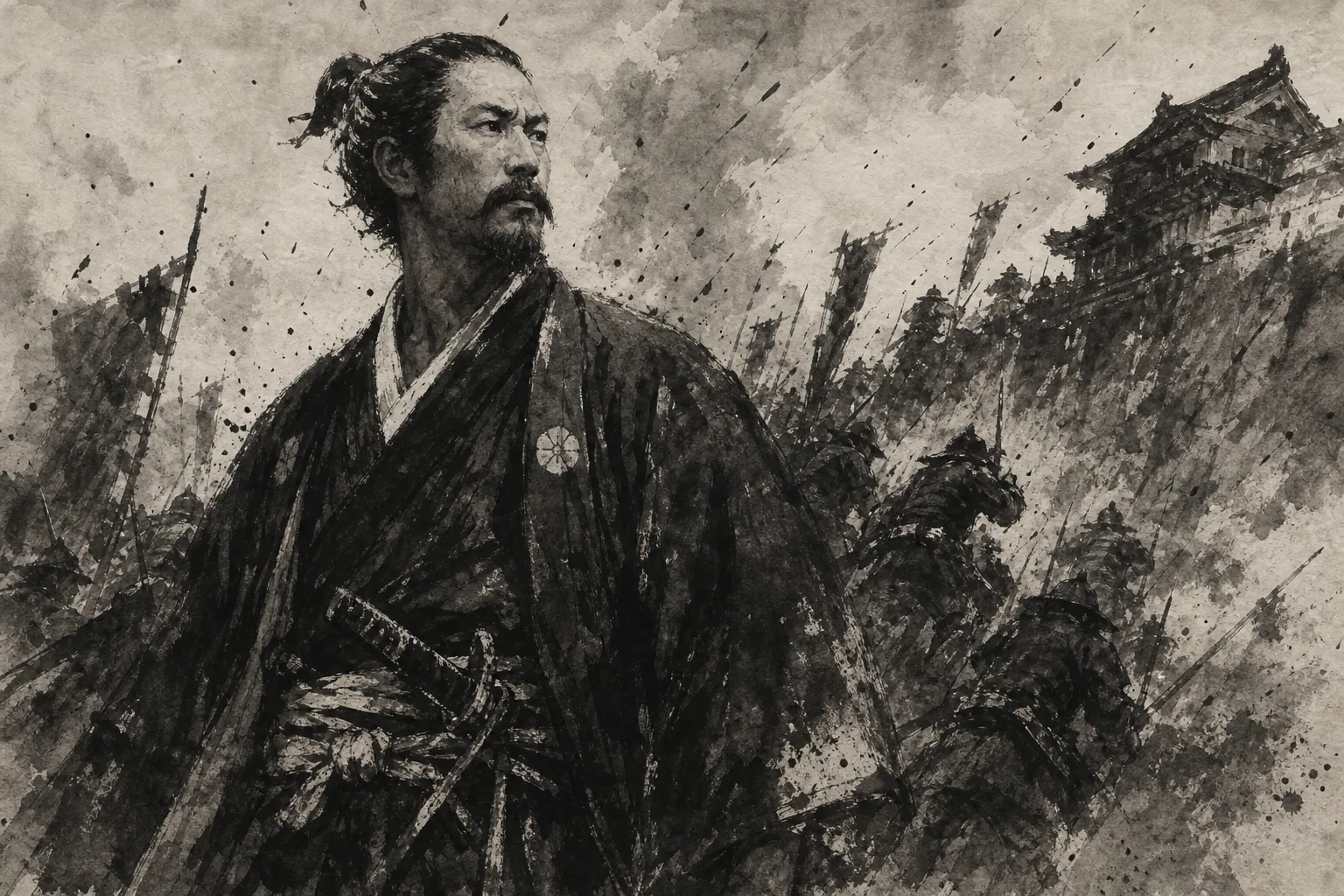
Toshimichi Okubo · Satsuma
Original
訪石門戰場偶成
Toshimichi Okubo's Chinese-style poem, "訪石門戰場偶成王師一到忽摧兇戰克三千". Read the original Japanese, modern translation, interpretation, and historical context as distinct parts of the poem.
Person
One of the three great leaders of the Restoration, who moved from Satsuma politics into the center of Meiji state-building.
Learn about Okubo Toshimichi
Translation
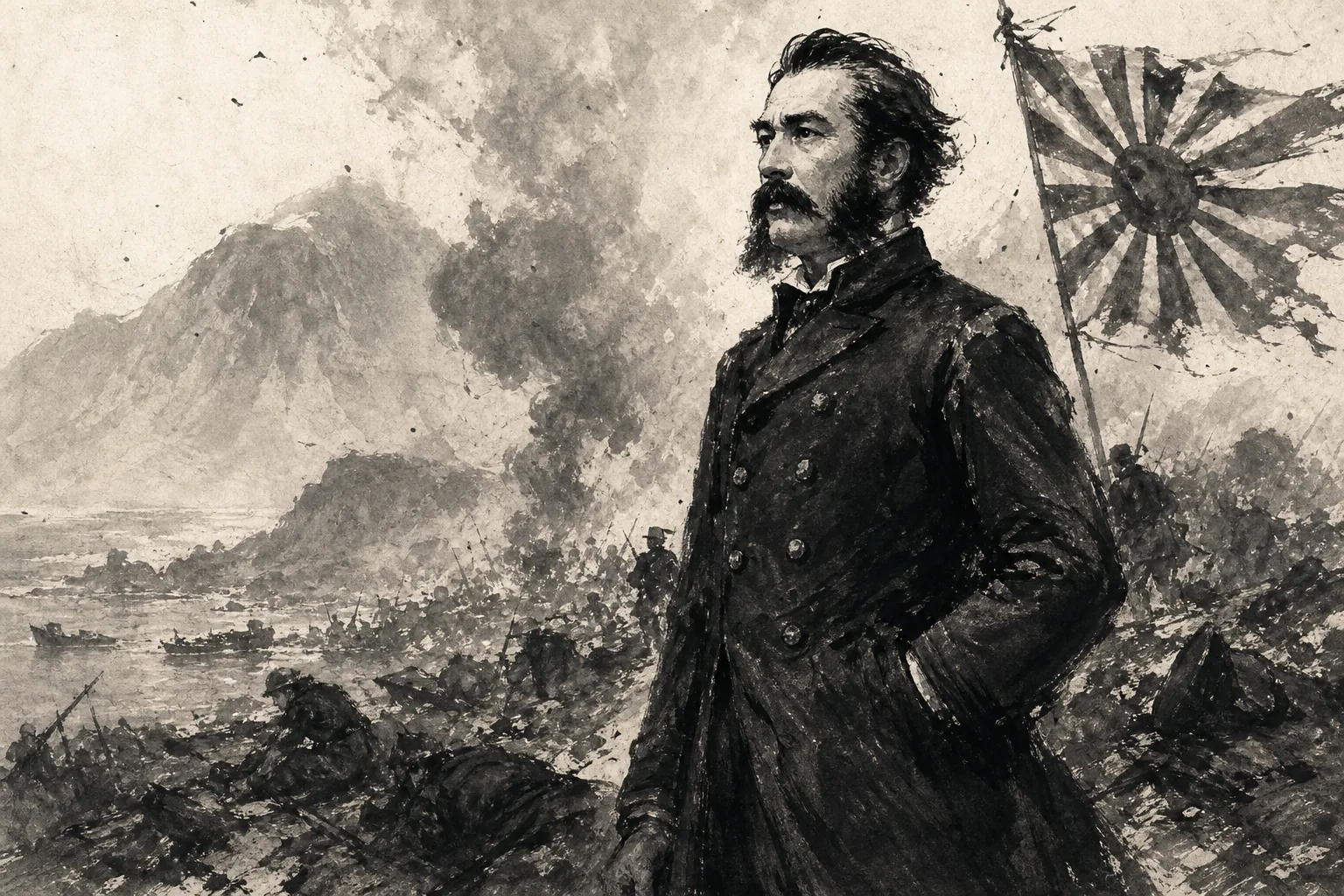
When the imperial army arrives, the enemy breaks; three thousand soldiers stand high in spirit, and the rising-sun flag flies over Shimen.
Poetic Shape Kanshi draws on a classical Chinese poetic tradition, where restraint, allusion, and moral tension carry much of the weight. The poem sounds formal, but the pressure beneath it is personal.
Reading
This is closer to the formation of the Meiji imperial state than to the Bakumatsu itself, but it reveals Okubo's cold sense of state power beside Saigo and Kido.
Background
A Chinese poem by Okubo Toshimichi after visiting the battlefield of the Taiwan Expedition.It reads as a turning point where the anti-shogunate movement leads into Meiji state expansion.
Source / Transmission Wording and readings may differ by transmission; this page treats the text as one circulated form.
Further Reading
Find related books and places to stay For readers who want more historical context, these links search for related books on external stores.
Affiliate link