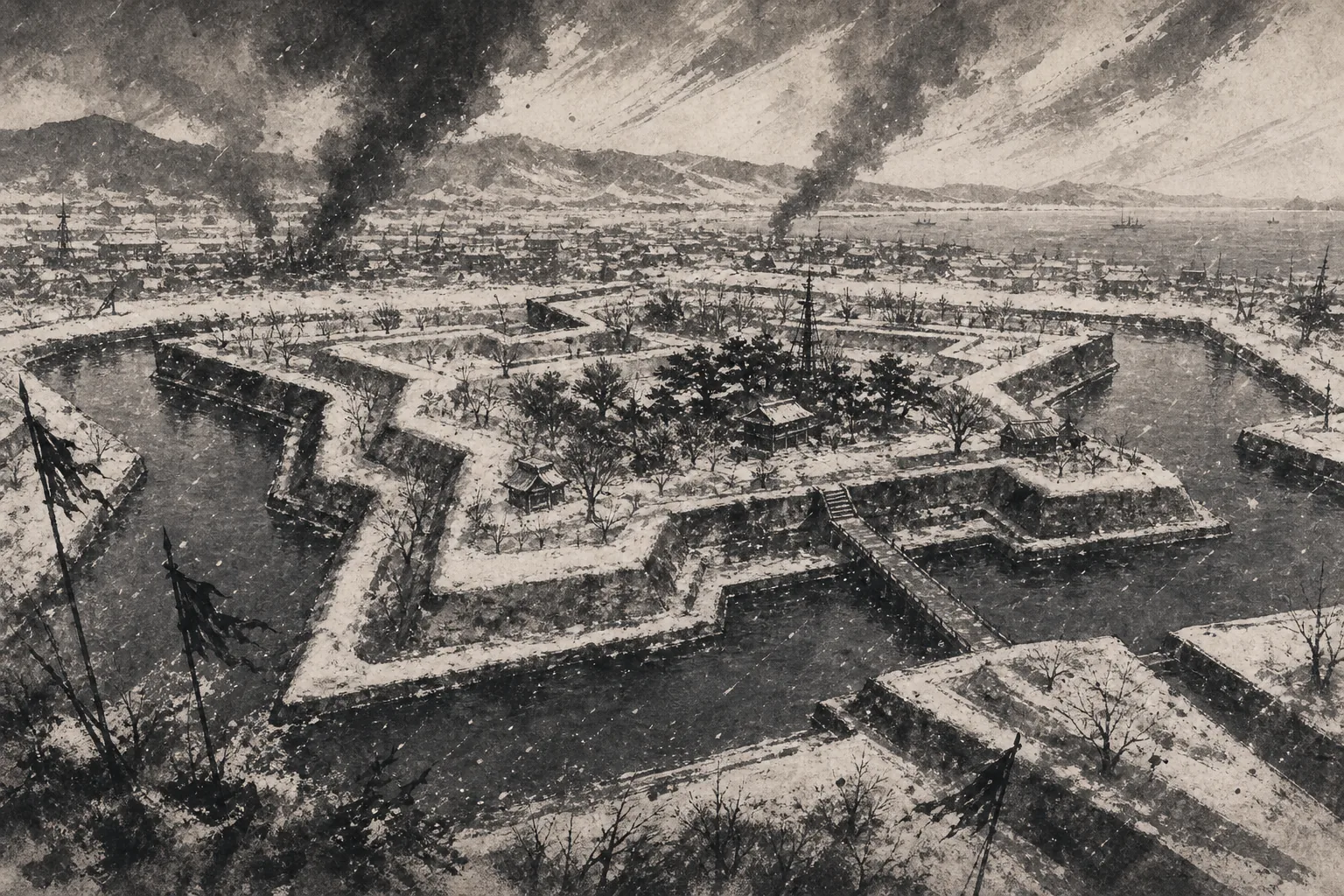
Takeaki Enomoto · Former Tokugawa Shogunate
Original
囚中作
Takeaki Enomoto's Chinese-style poem, "囚中作自歎身世與心違胸裡汗靑未治饑天". Read the original Japanese, modern translation, interpretation, and historical context as distinct parts of the poem.
Person
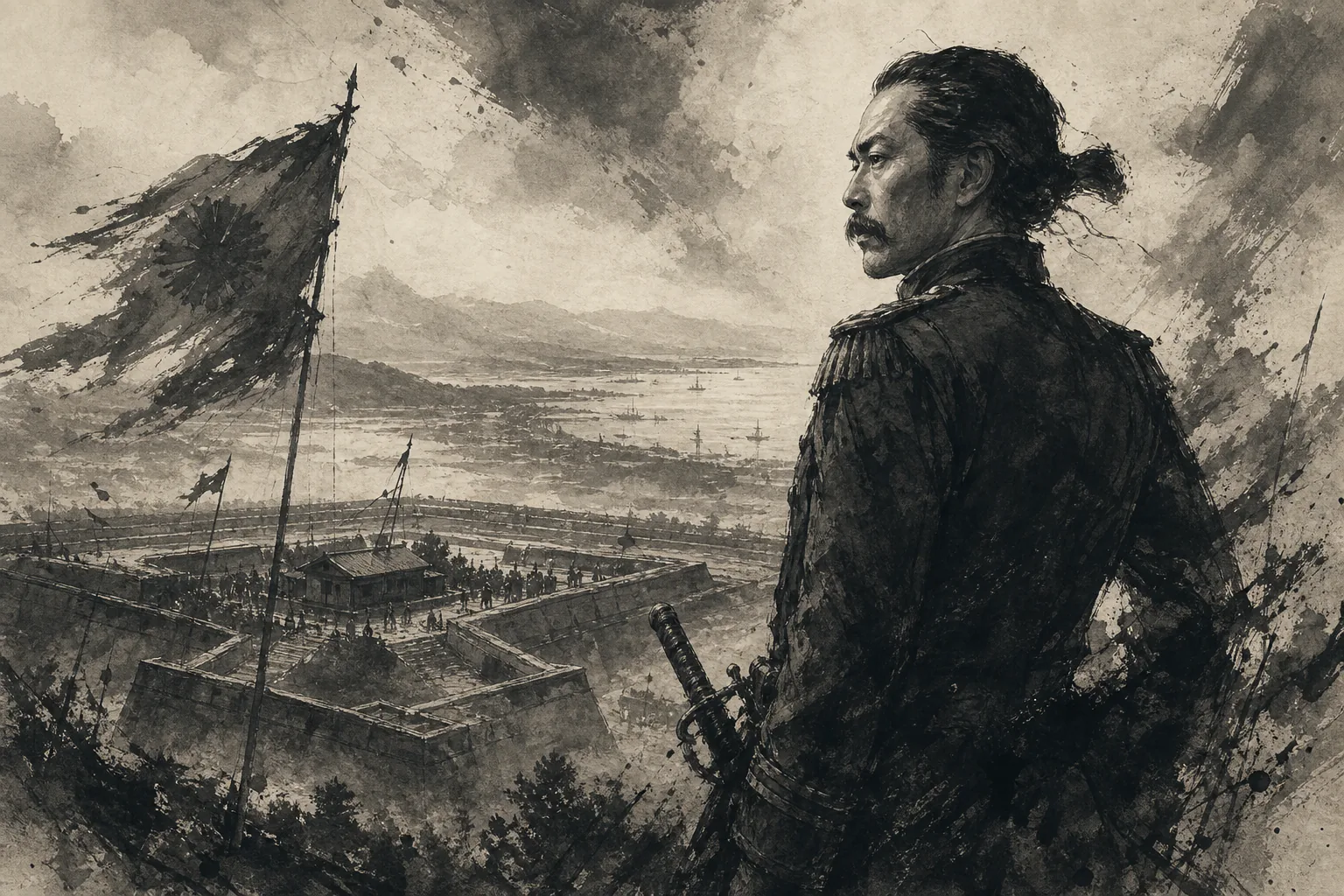
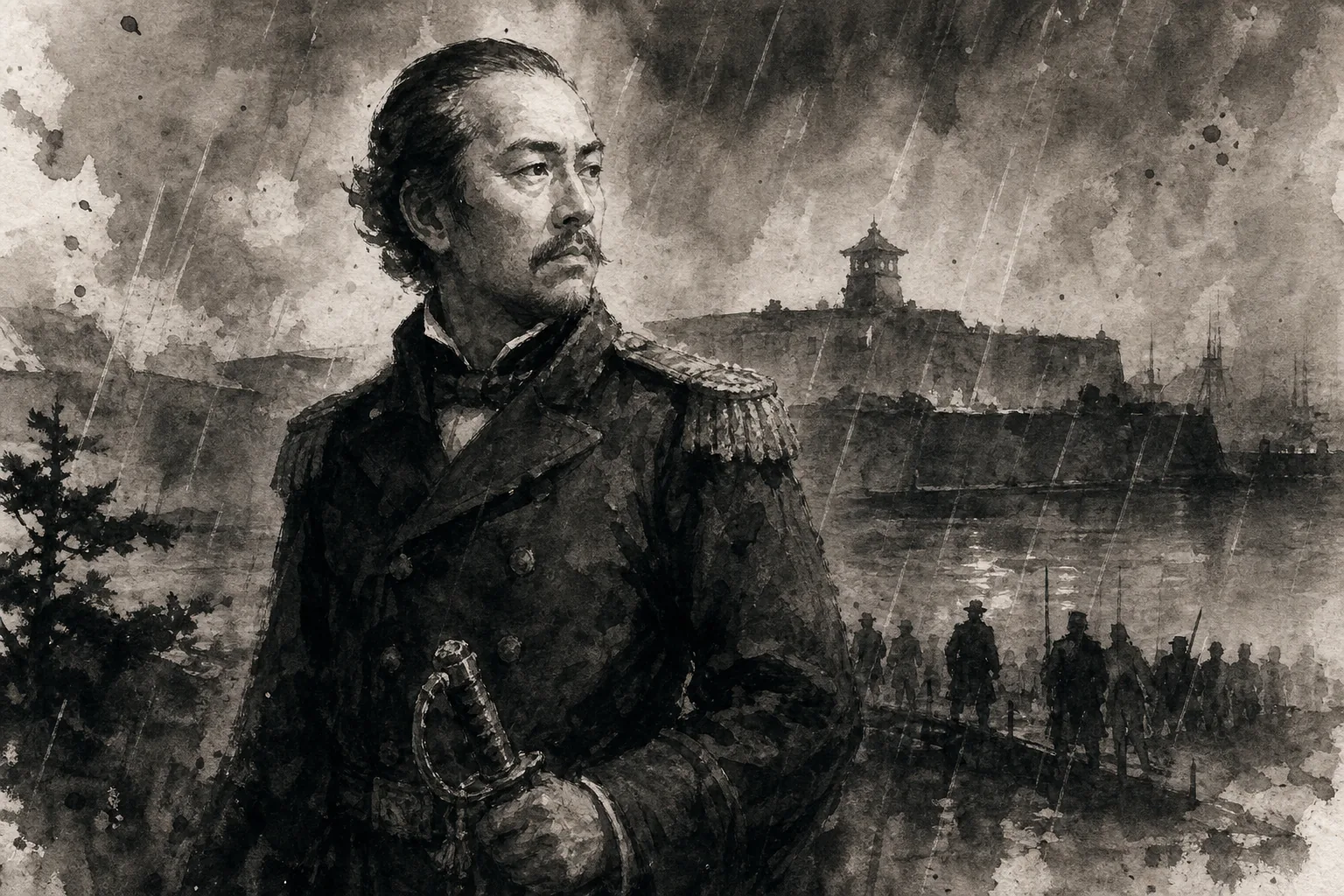
Commander of the shogunate navy and president of the Hakodate government, later imprisoned and then employed by the Meiji state.
Learn about Enomoto Takeaki
Translation
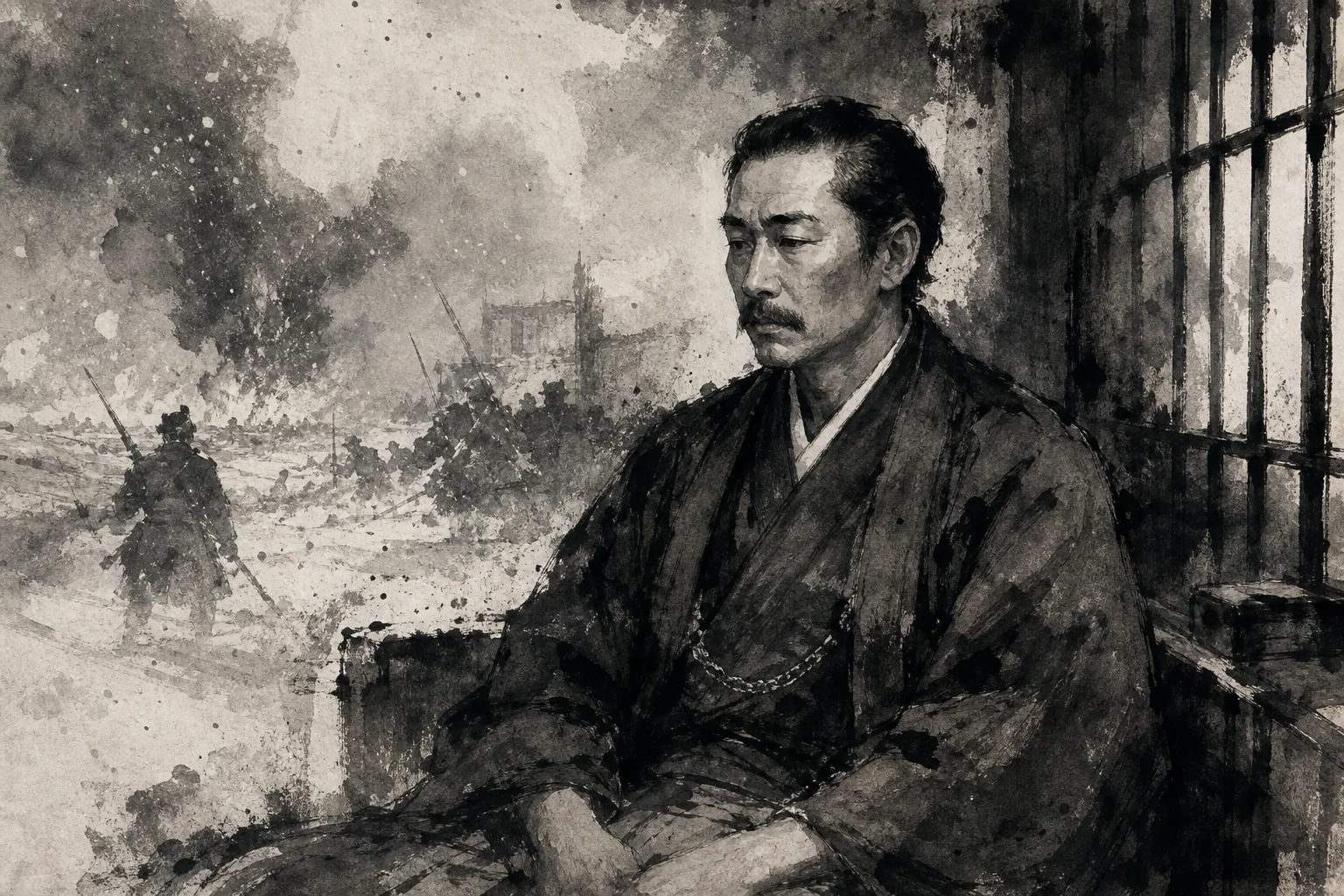
In prison I grieve that my life has gone against my heart; in dreams, the winter battle returns, sword-sparks flying through snow.
Poetic Shape Kanshi draws on a classical Chinese poetic tradition, where restraint, allusion, and moral tension carry much of the weight. The poem sounds formal, but the pressure beneath it is personal.
Reading
Enomoto appears not simply as a defeated general, but as an intelligence still asking what is right and wrong.The final image of snowy battle returning in a dream is powerful.
Background
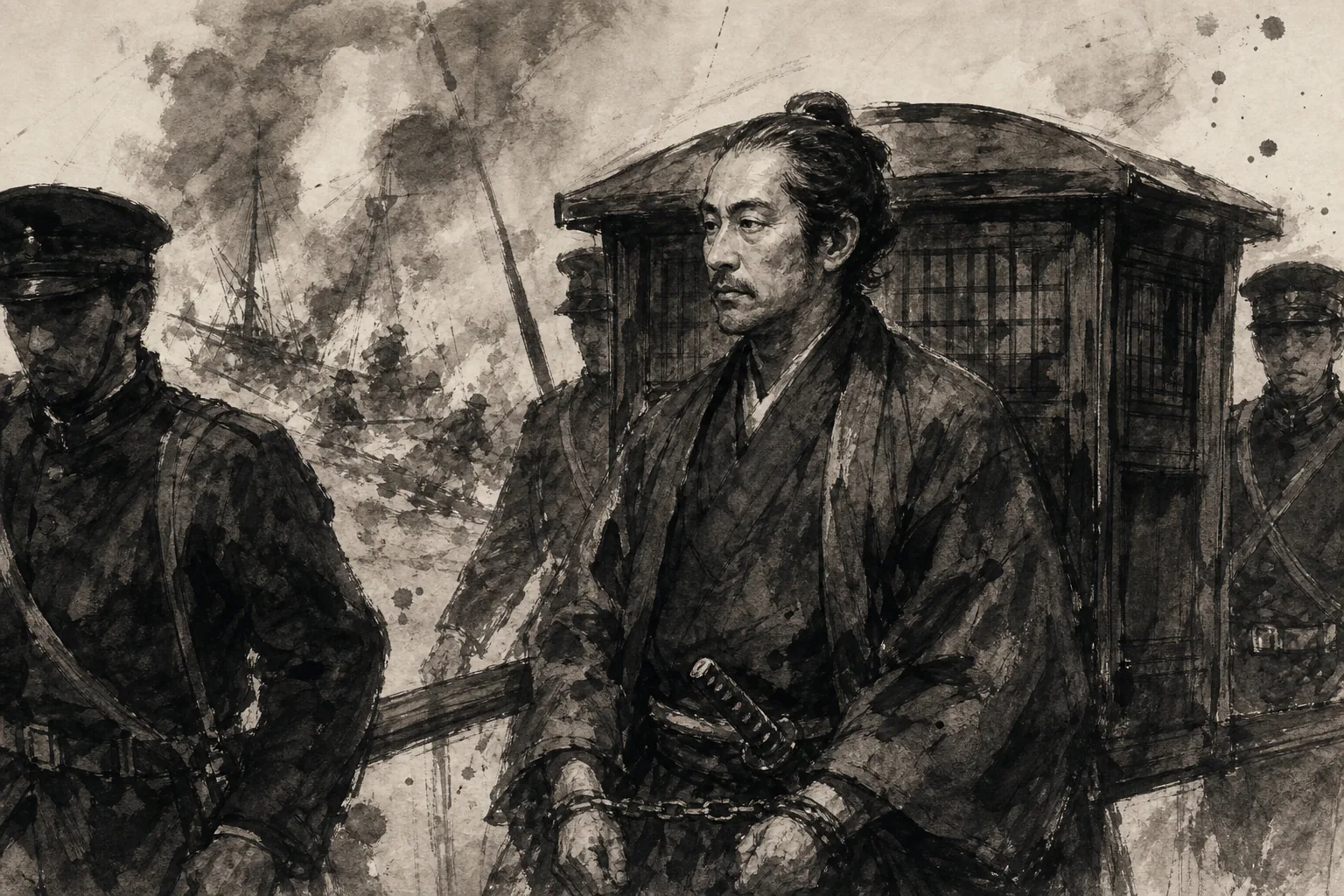
Written while Enomoto was imprisoned in Tokyo after the surrender at Hakodate.It carries the cold self-questioning that follows the defeat of the former shogunate side's justice.
Source / Transmission Wording and readings may differ by transmission; this page treats the text as one circulated form.
Further Reading
Find related books and places to stay For readers who want more historical context, these links search for related books on external stores.
Affiliate link