Kounsai Takeda · Mito
Original
かたしきて
Kounsai Takeda's death poem, "かたしきて寝ぬる鎧の袖の上におもひぞ". Read the original Japanese, modern translation, interpretation, and historical context as distinct parts of the poem.
Person
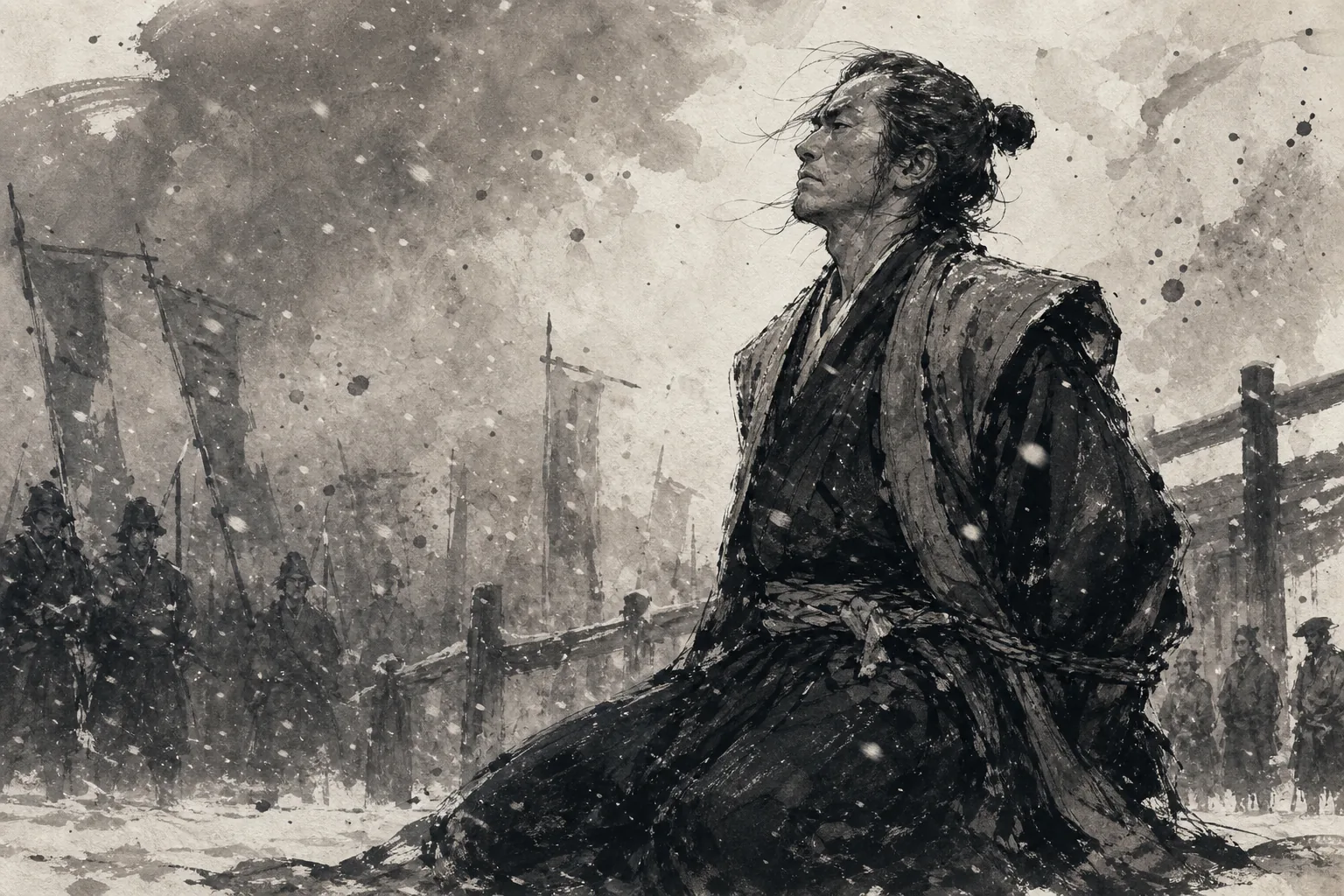
A leading figure of the Mito Tengu Party, executed after surrendering at Tsuruga in Echizen.
Learn about Takeda Kounsai
Translation
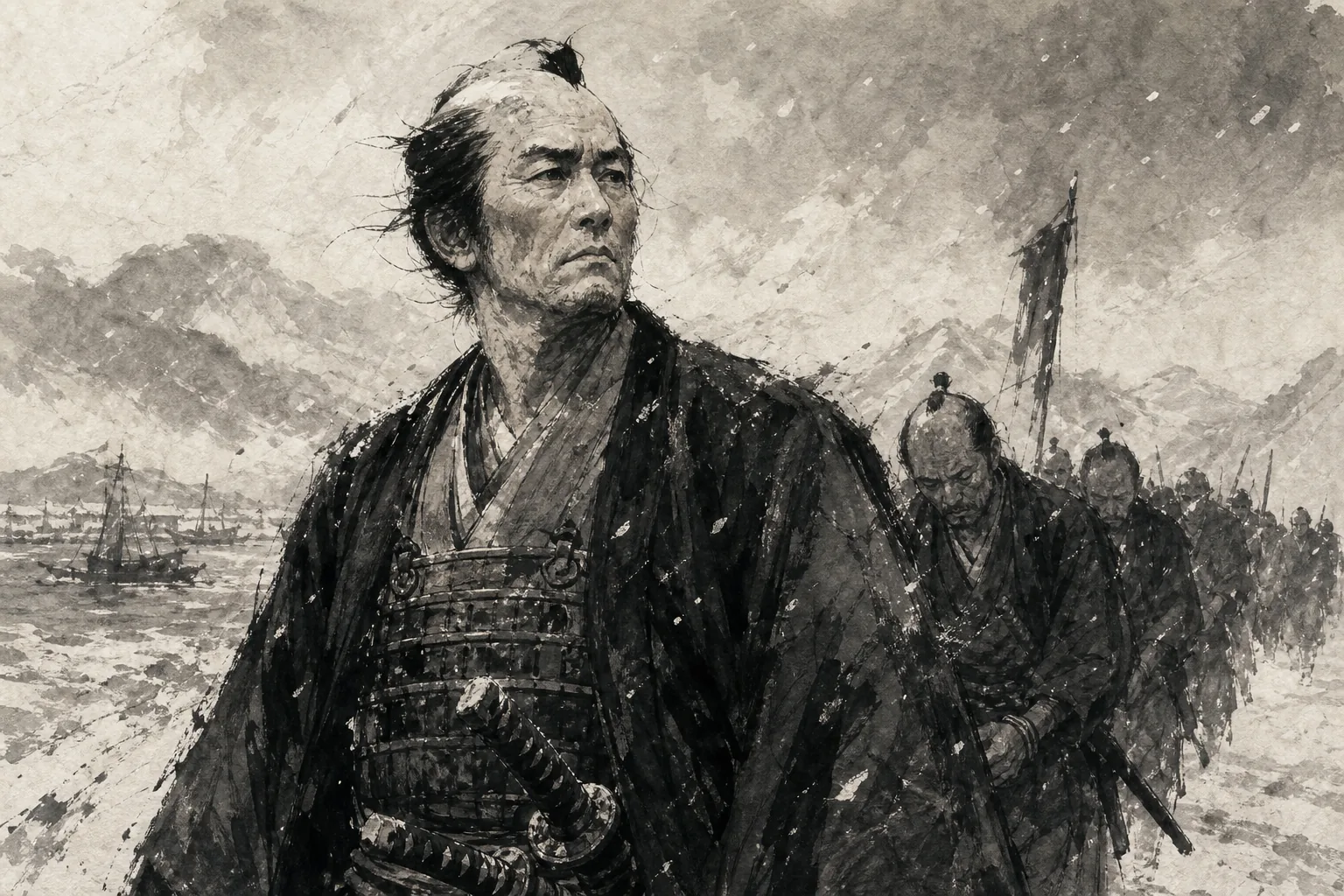
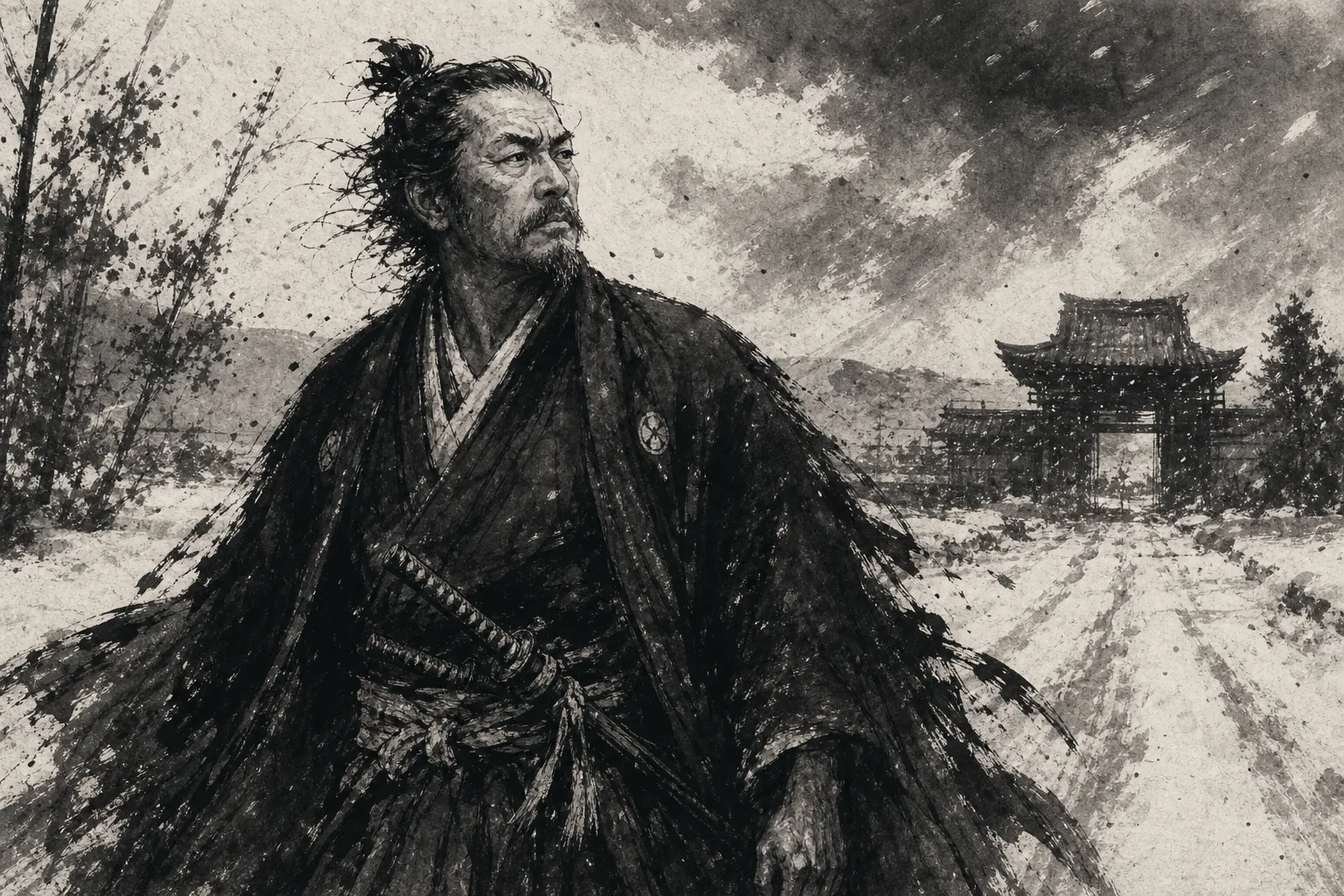
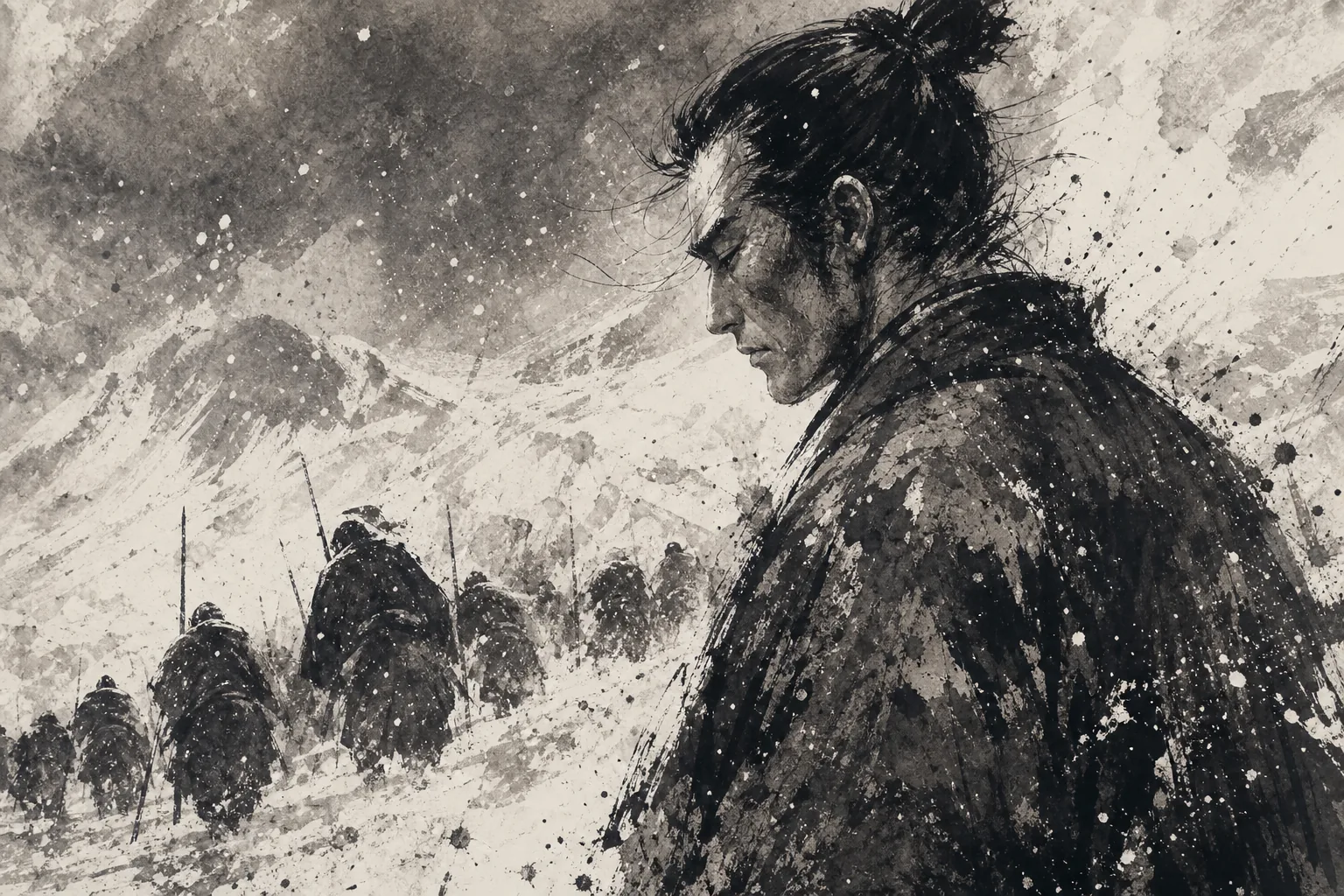
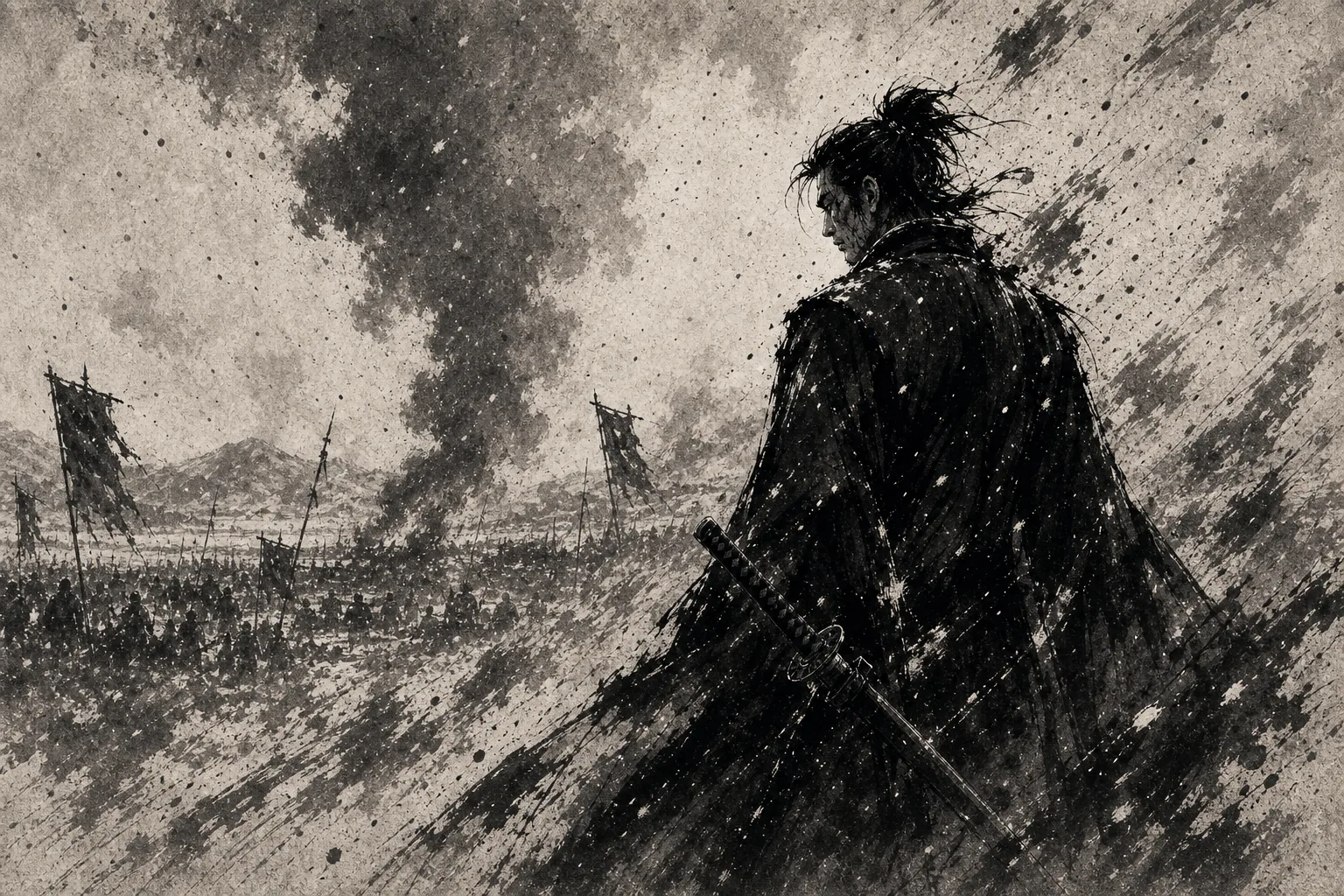
Sleeping with one sleeve of armor beneath me, thoughts pile up like white snow in Echizen.
Poetic Shape A Japanese death poem is less a final explanation than a last shape given to feeling. Its brevity matters: a life is not narrated, but compressed into a few lines that leave room for silence.
Reading
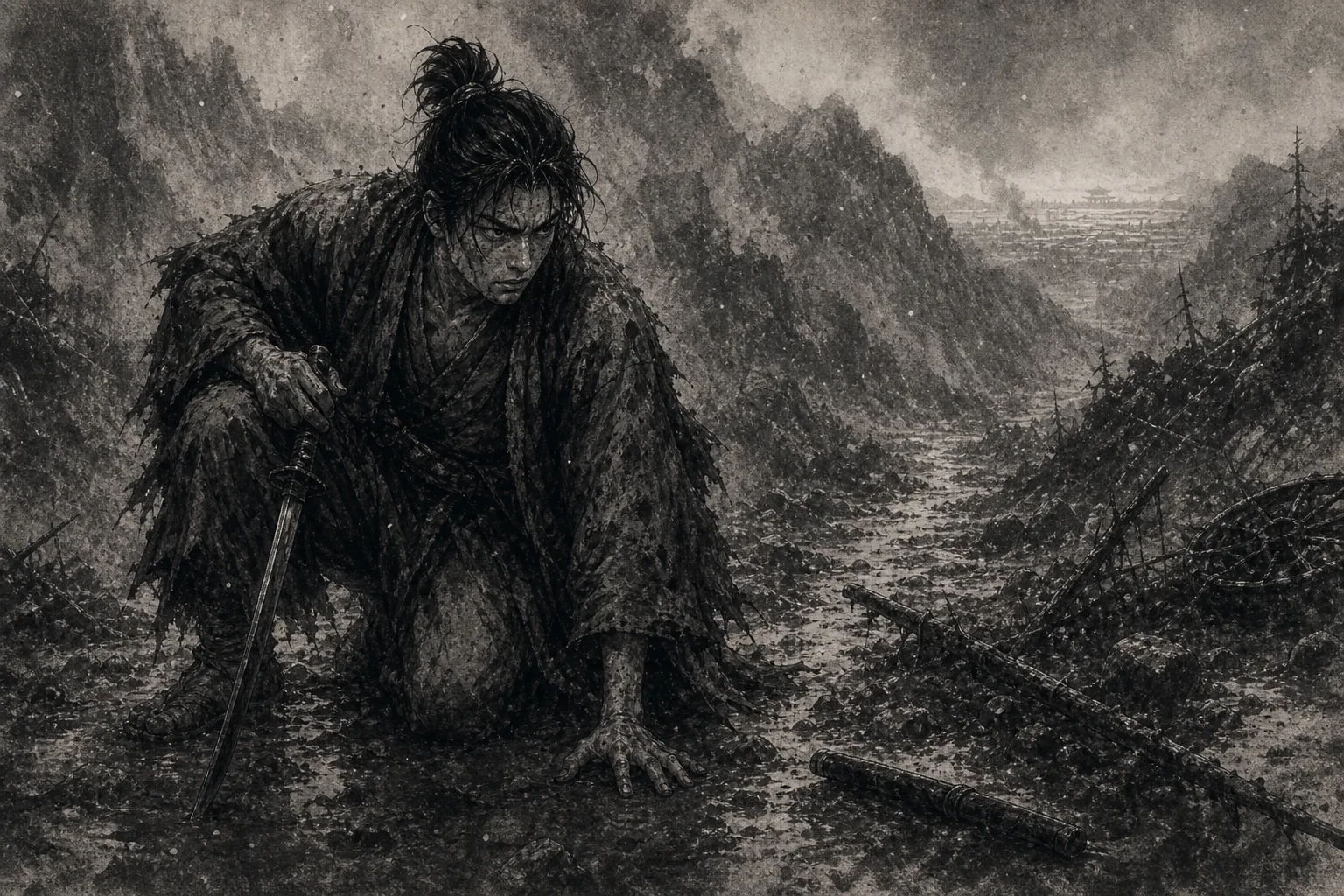
The reality of the battlefield and the stillness of snow are beautiful together.The tragedy of the Tengu Party emerges through cold and weight rather than loud combat.
Background
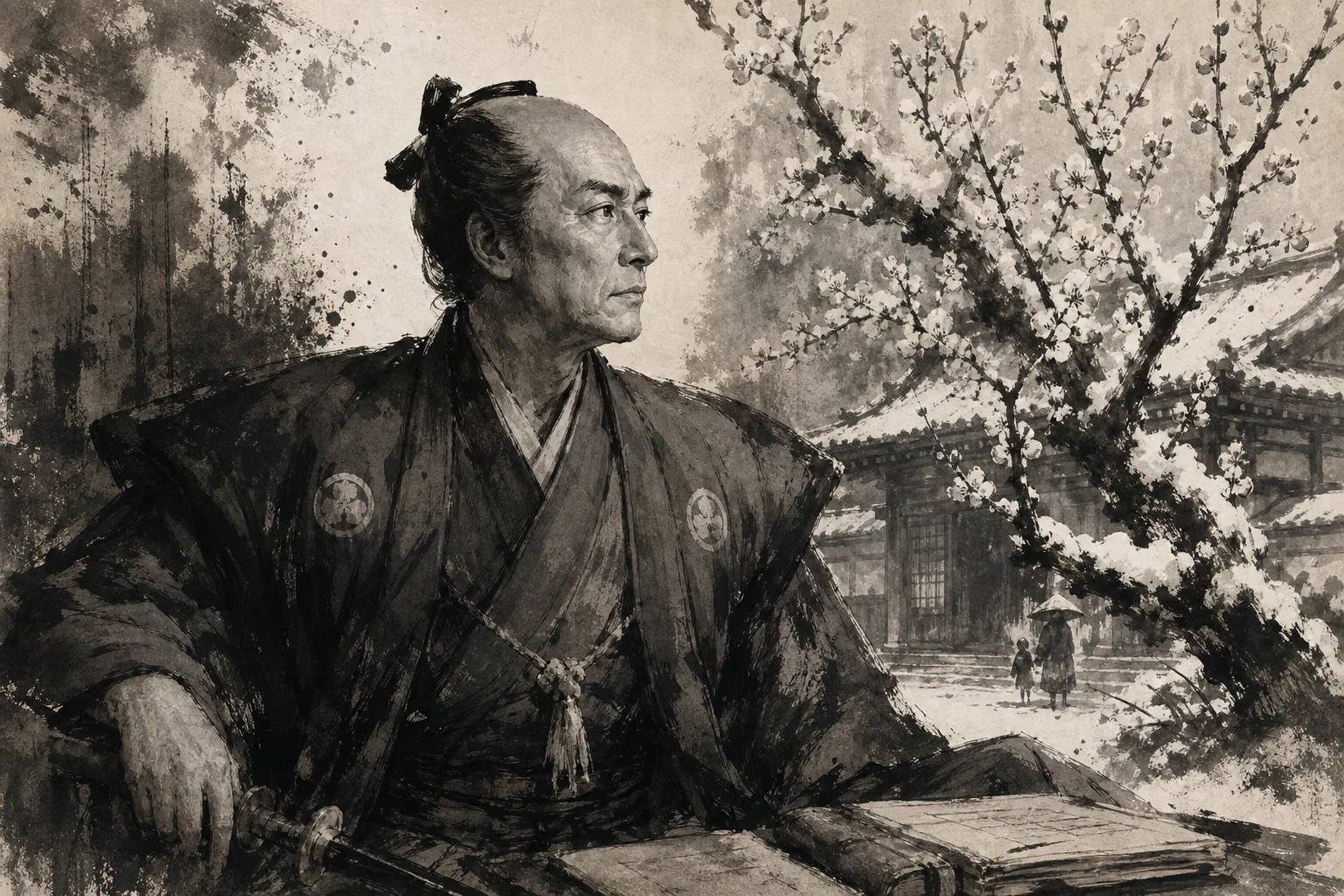
This poem belongs naturally to the Tengu Party's retreat into Echizen and surrender at Tsuruga.The sleeve of armor and the white snow of Echizen overlap, letting the sorrow of an aged warrior emerge quietly.The cold at the end of the march feels less like weather than like the time in which an ideal is gradually cornered.A leading figure of the Mito Tengu Party, Takeda was executed after surrendering at Tsuruga in Echizen.
Source / Transmission Wording and readings may differ by transmission; this page treats the text as one circulated form.
Further Reading
Find related books and places to stay For readers who want more historical context, these links search for related books on external stores.
Affiliate link