Munemitsu Mutsu · Kishu
Person
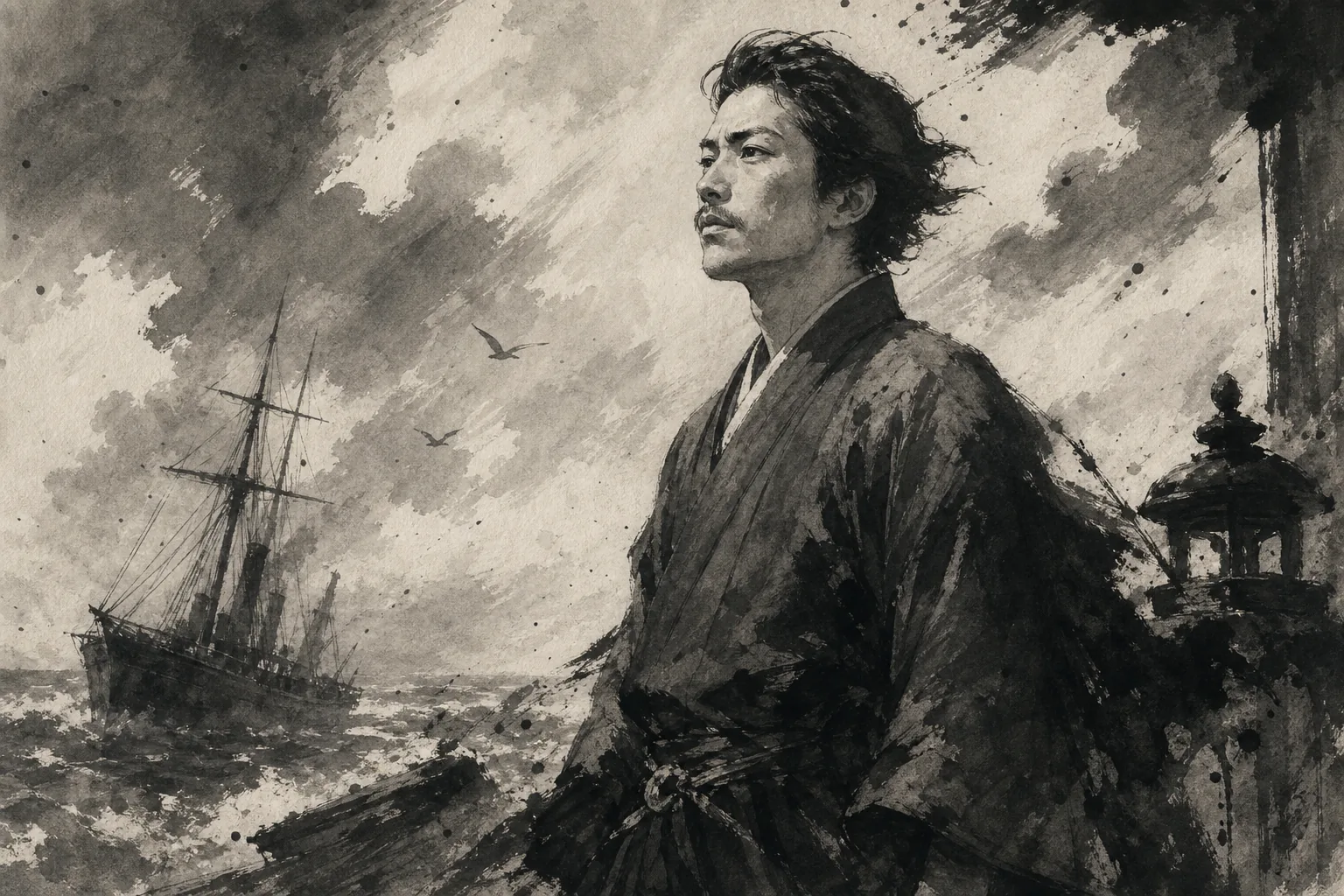
A Kishu-born figure connected with Sakamoto Ryoma in the Bakumatsu, later a major diplomat of the Meiji era. His poems carry the restlessness of a young activist and the later gaze of a man who would read Japan through the world.
Translation
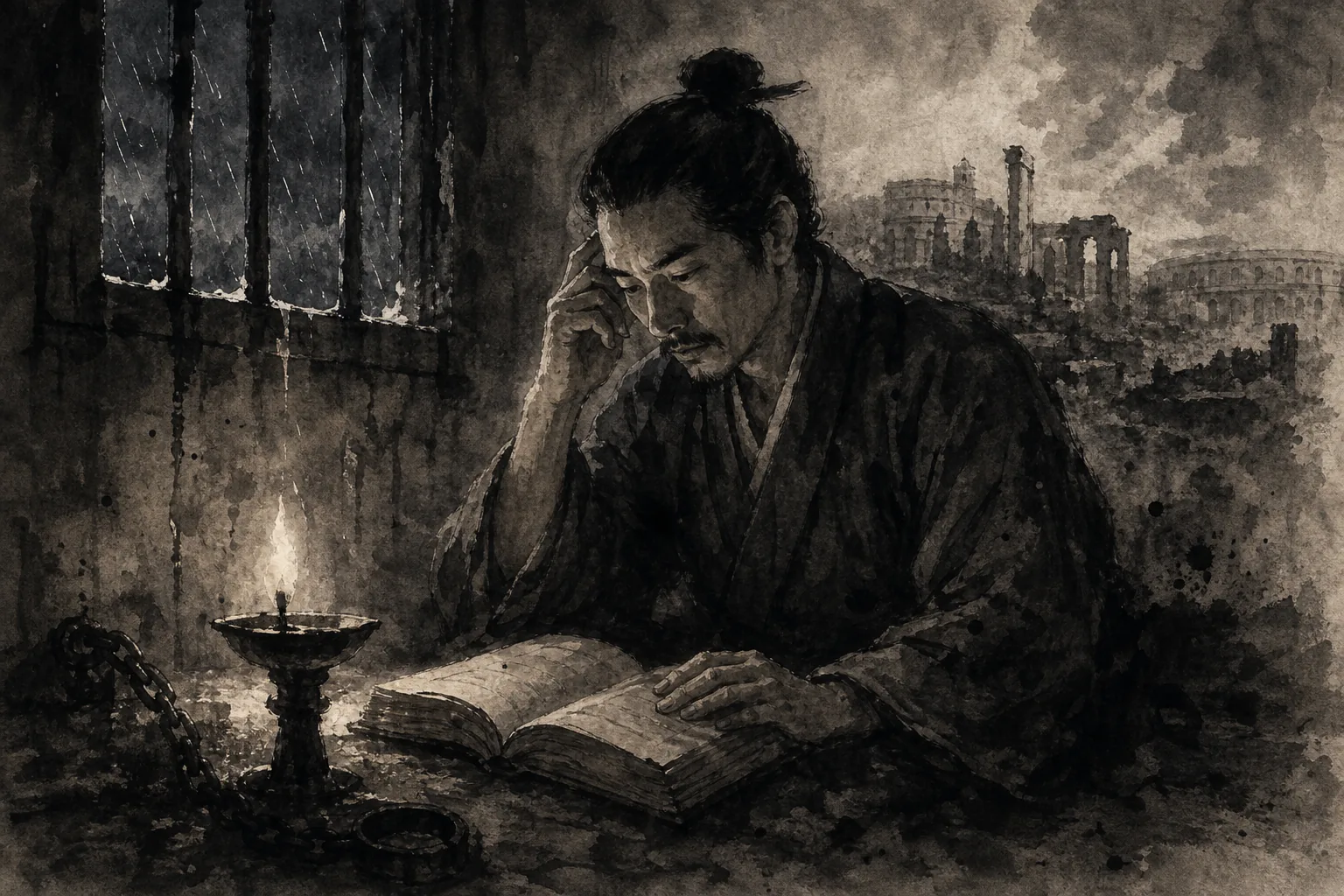
Late at night in prison I read European history; nations rise and fall like a game of go, and as rain strikes the window and the lamp darkens, I reach Rome’s fall.
Reading
Mutsu in prison reads the rise and fall of nations through European history. It crosses distance easily and foreshadows his later diplomatic gaze. Read together with Munemitsu Mutsu, the poem is not only a matter of literal meaning; it shows resolve turning inward inside confinement. With the figure in mind, what remains after reading is resolve, solitude, and the beauty that often belongs to the defeated side.
Background
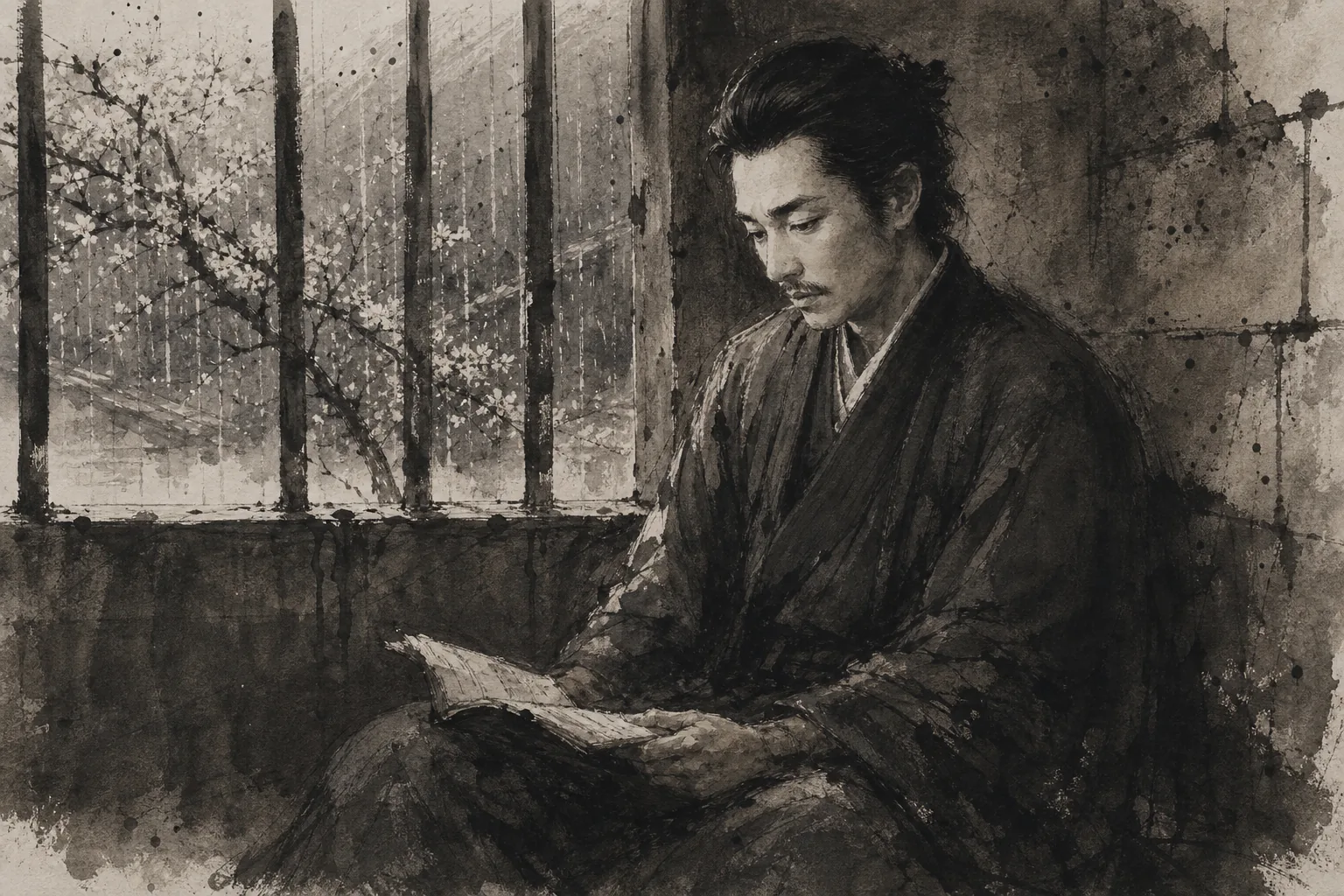
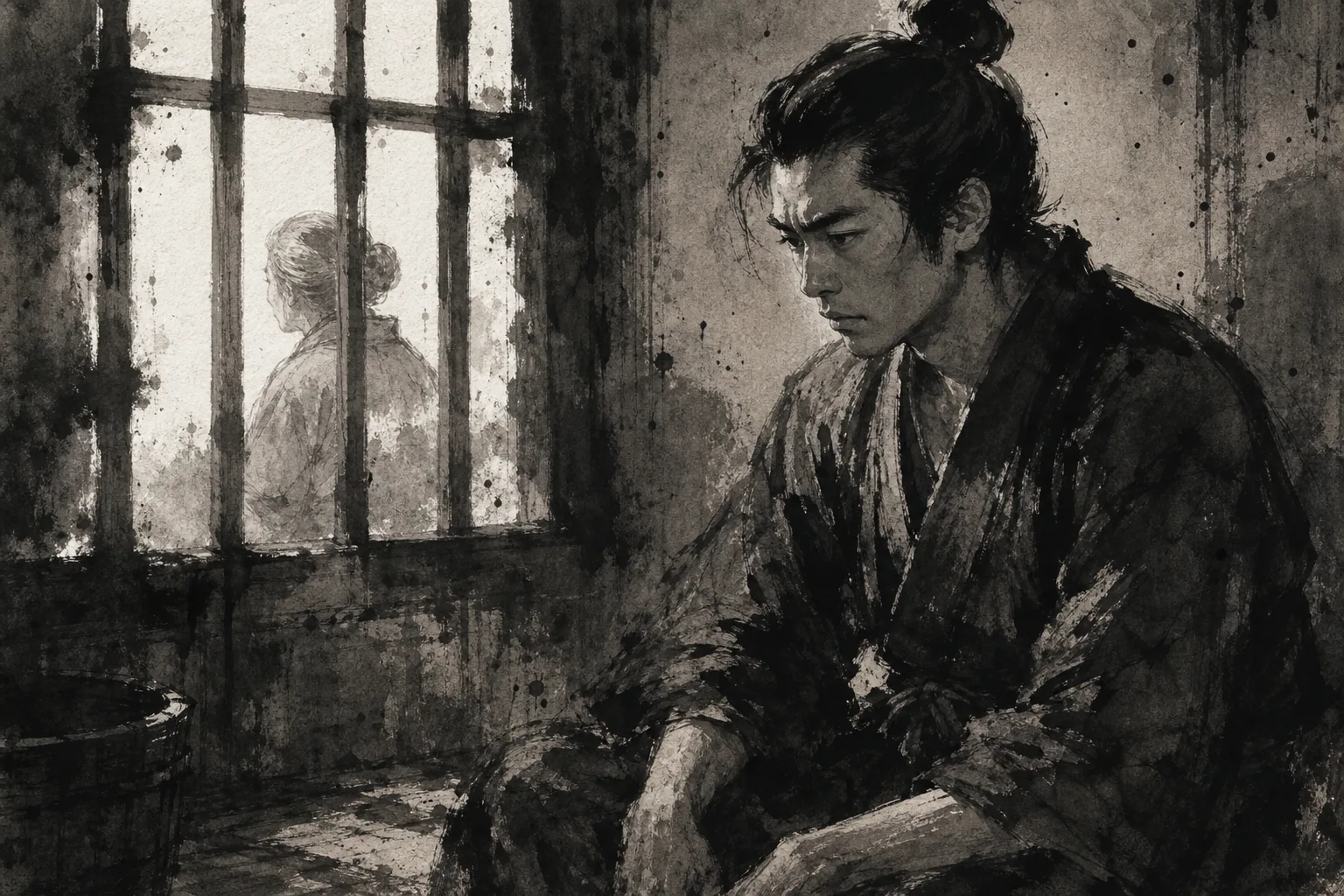
A Chinese poem written by Mutsu in prison after the Risshisha Incident. The experience of a Bakumatsu activist turns into a perspective for reading the modern state. A Kishu-born figure connected with Sakamoto Ryoma in the Bakumatsu, later a major diplomat of the Meiji era. The words carry the inner pressure of someone caught in Bakumatsu politics, war, execution, exile, or the losses that followed the Restoration. Even where the transmission is uncertain, they quietly preserve the pain of the age.
Source / Transmission Wording and readings may differ by transmission; this page treats the text as one circulated form.