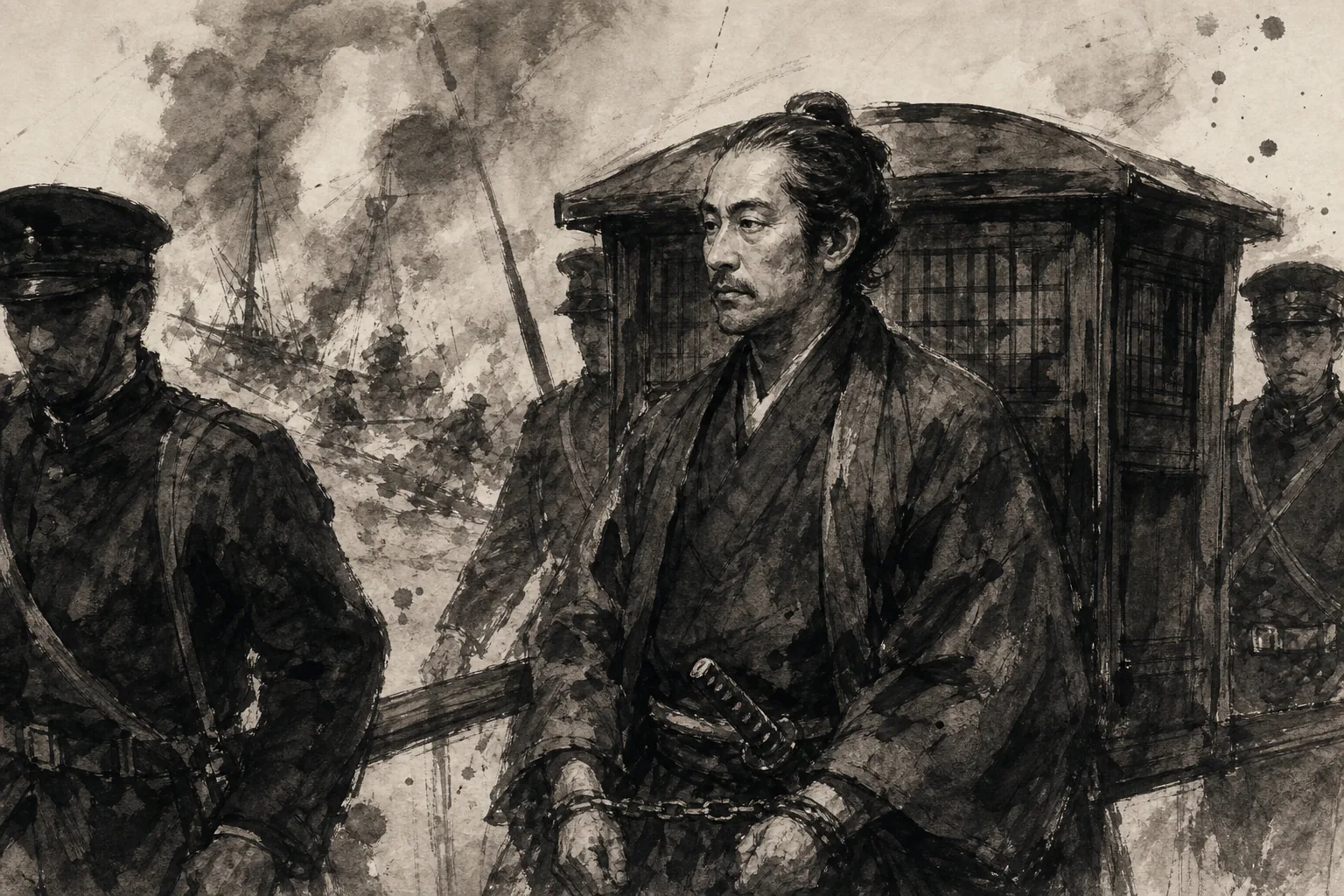
Takeaki Enomoto · Former shogunate
Person
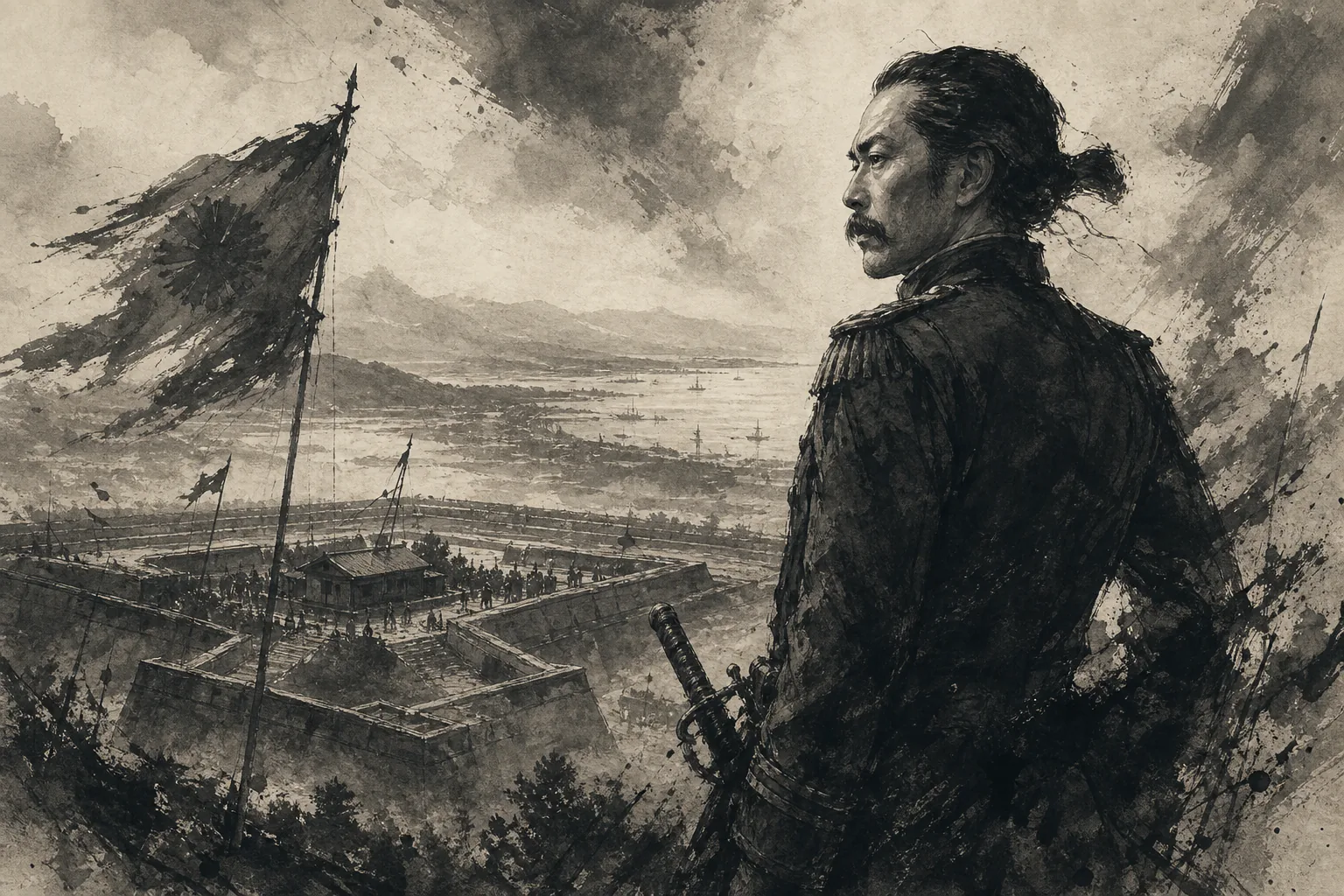
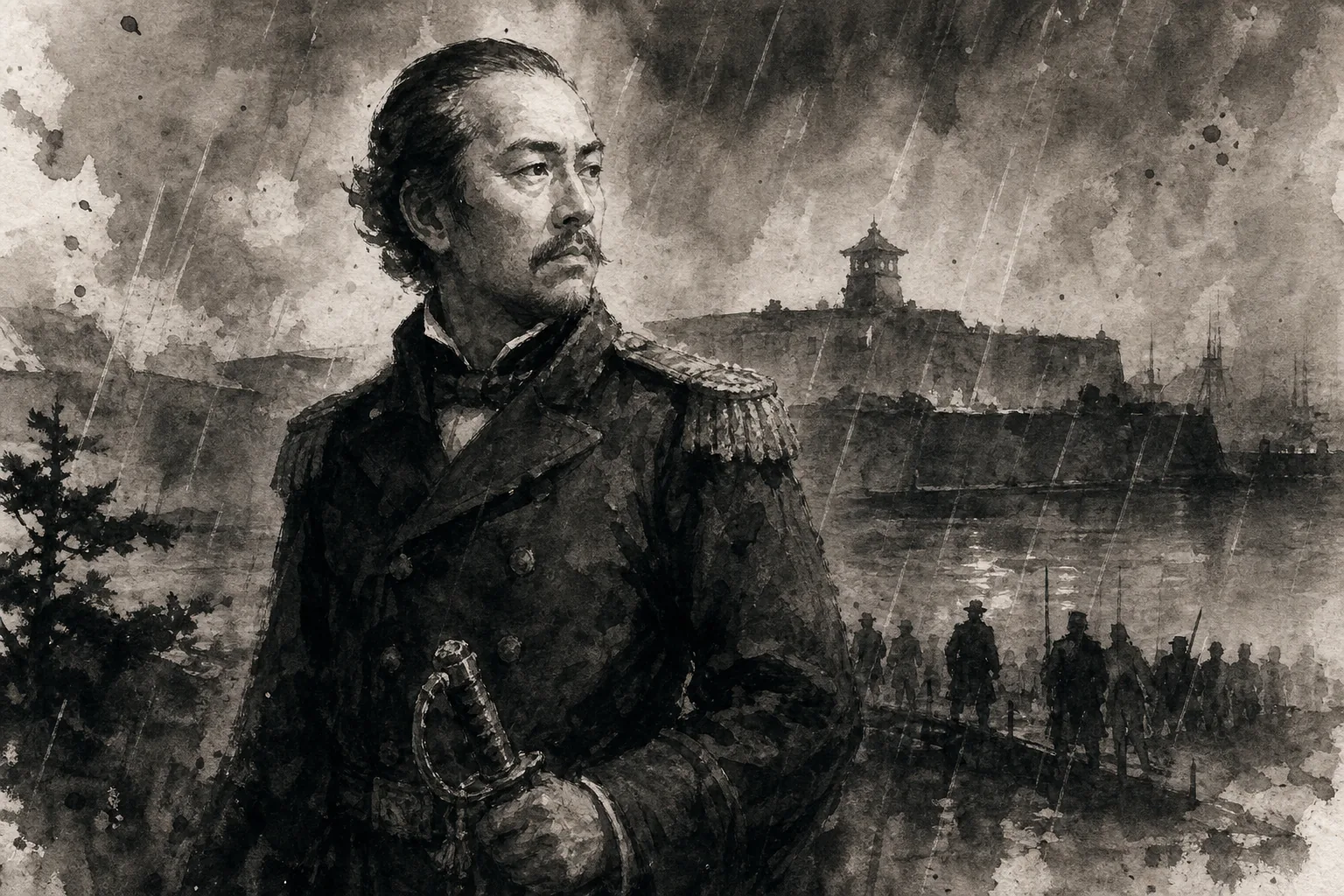
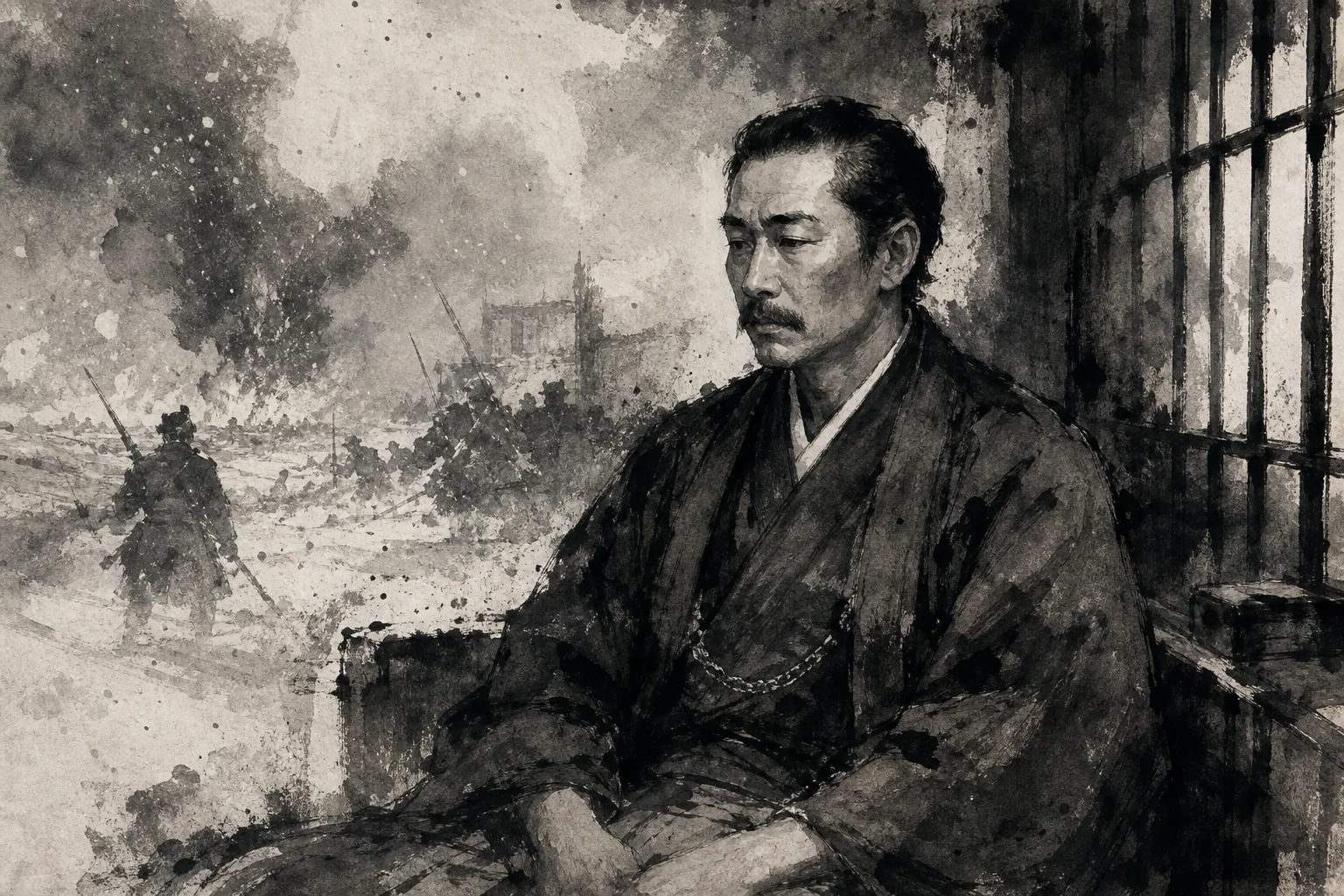
Commander of the shogunate navy and president of the Hakodate government, later imprisoned and then employed by the Meiji state. He is one of the most complex defeated men of the Bakumatsu: a rebel, a prisoner, a technocrat, and eventually a servant of the new order.
Translation
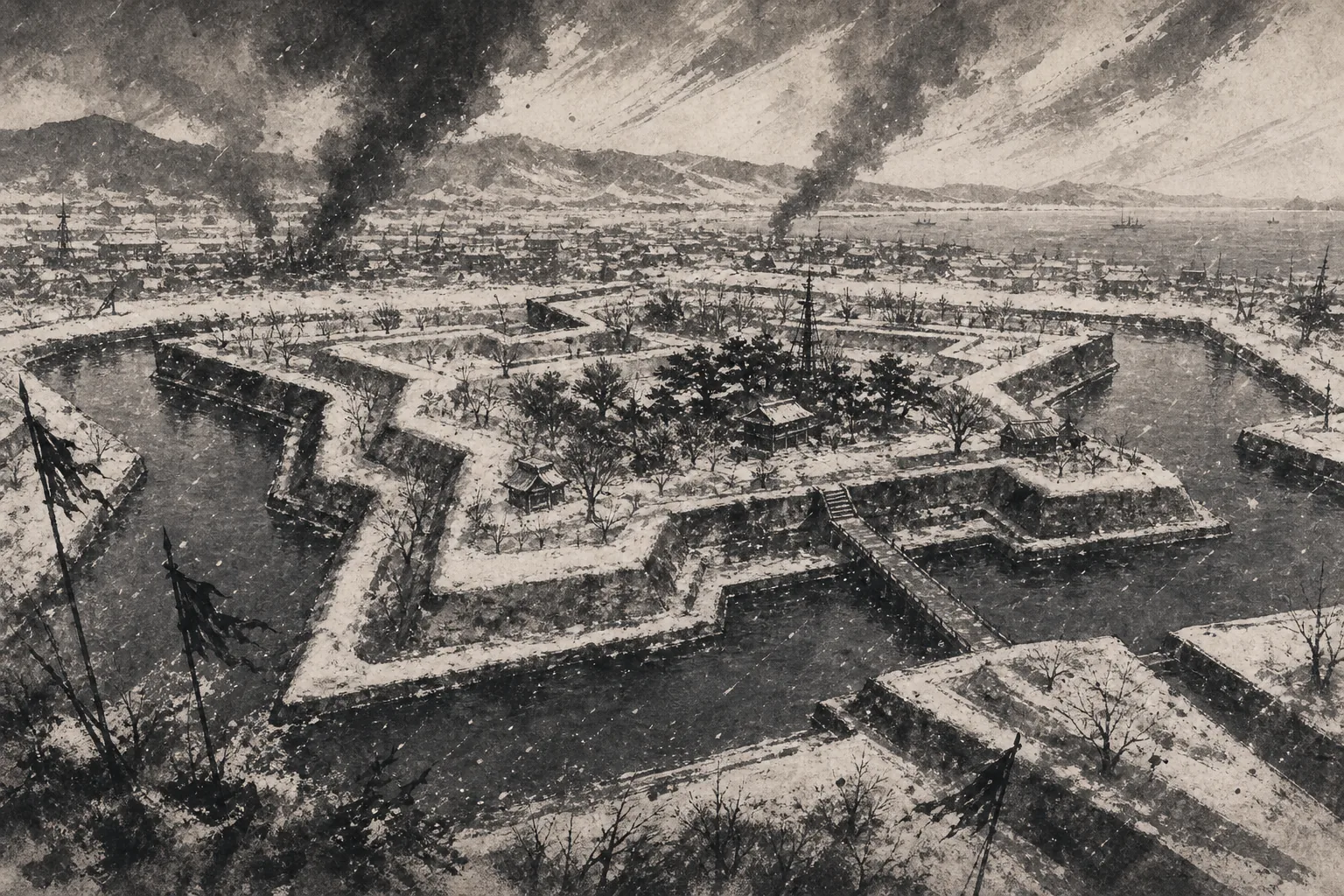
From beside Goryokaku I look toward Edo, a lonely exile at the edge of the world, vowing to return with soldiers in spring.
Reading
There is a dangerous exaltation in Enomoto as a defeated man who has not yet broken. The dream of the Hakodate government and the old shogunate view of 'rebels' are both strong here. Read together with Takeaki Enomoto, the poem is not only a matter of literal meaning; it shows movement and solitude at the edge of an age. With the figure in mind, what remains after reading is resolve, solitude, and the beauty that often belongs to the defeated side.
Background
Written around the end of 1868, when former shogunate forces used Goryokaku as their base. The dream of retaking Edo already carries the sadness of a lonely exile. Commander of the shogunate navy and president of the Hakodate government, later imprisoned and then employed by the Meiji state. The words carry the inner pressure of someone caught in Bakumatsu politics, war, execution, exile, or the losses that followed the Restoration. Even where the transmission is uncertain, they quietly preserve the pain of the age.
Source / Transmission Wording and readings may differ by transmission; this page treats the text as one circulated form.