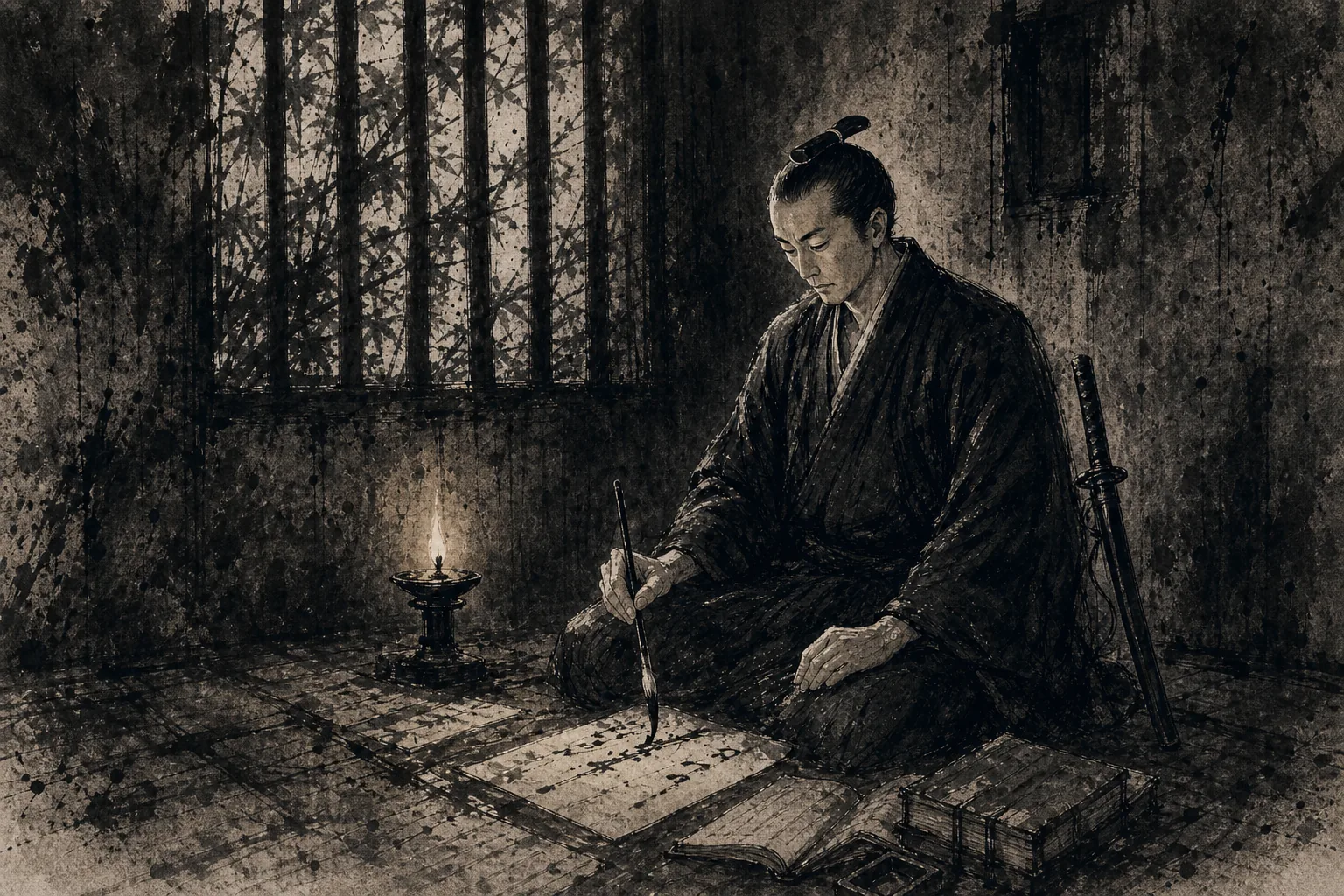
Hanpeita Takechi · Tosa
Original
ふたゝひと 返らぬ歳を はかなくも 今は惜しまぬ 身となりにけり
Hanpeita Takechi's death poem, "ふたゝひと返らぬ歳をはかなくも今は惜". Read the original Japanese, translation, meaning, and historical background. There is a dry stillness in the voice of someone who has already offered up his life.
Person
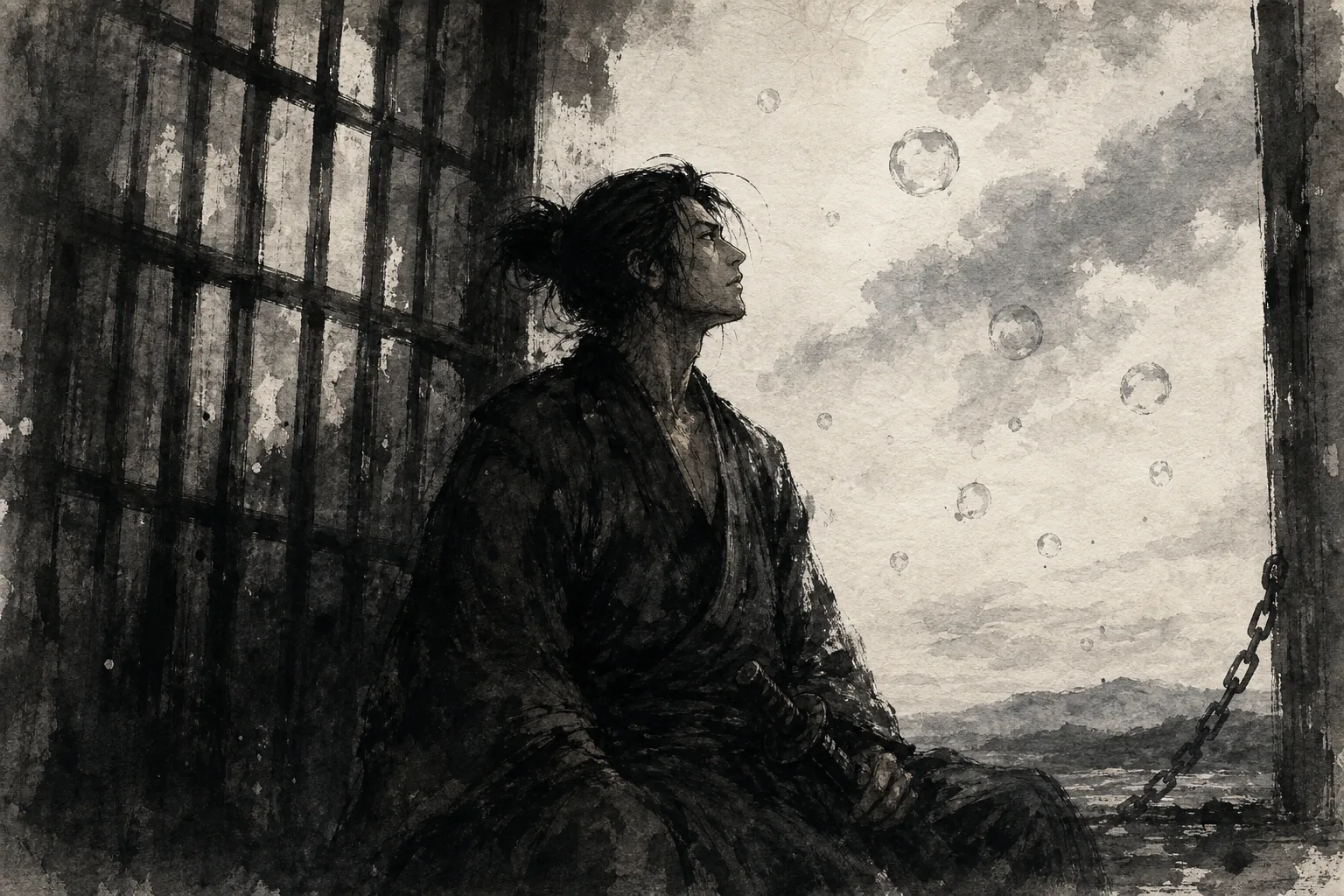
Leader of the Tosa Loyalist Party and a central figure in Tosa's Sonno Joi movement. After a long struggle from prison, he was ordered to commit seppuku; his life carries both the brightness and ruin of Tosa loyalism.
Know This Person
Translation
The years that never return are no longer something I cling to; I have become one who does not spare himself.
Poetic Shape A Japanese death poem is less a final explanation than a last shape given to feeling. Its brevity matters: a life is not narrated, but compressed into a few lines that leave room for silence.
Reading
There is a dry stillness in the voice of someone who has already offered up his life. The ideals and collapse of Takechi Hanpeita sound here not as resignation, but as acceptance.
Background
Passed down as Takechi's death poem after the repression of the Tosa Loyalist Party, long imprisonment, and his order to commit seppuku. It symbolizes the closing scene of the loyalist movement in Tosa. Leader of the Tosa Loyalist Party and a central figure in Tosa's Sonno Joi movement.
Source / Transmission Wording and readings may differ by transmission; this page treats the text as one circulated form.
Further Reading
Find related books and places to stay For readers who want more historical context, these links search for related books on external stores.
Affiliate link