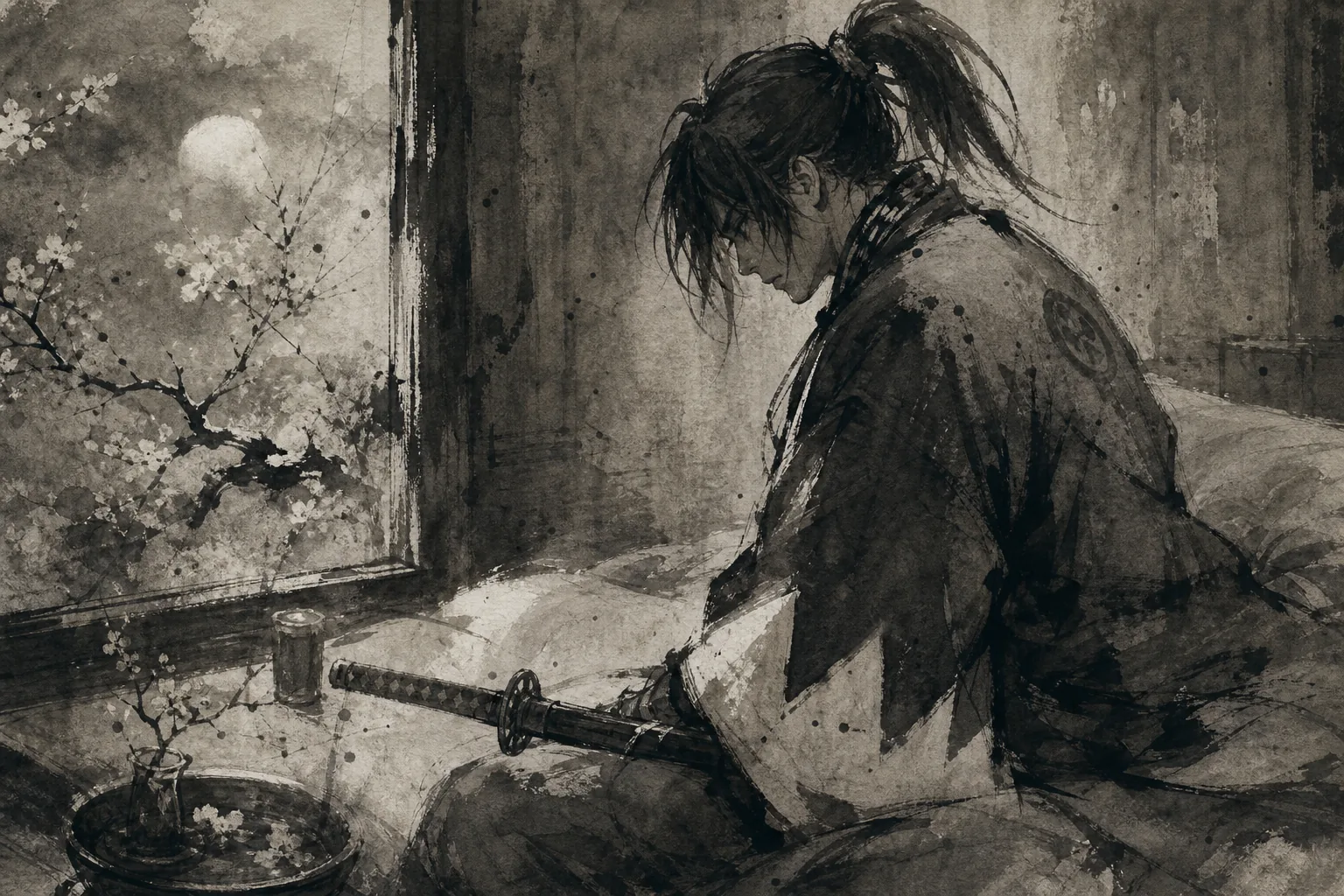
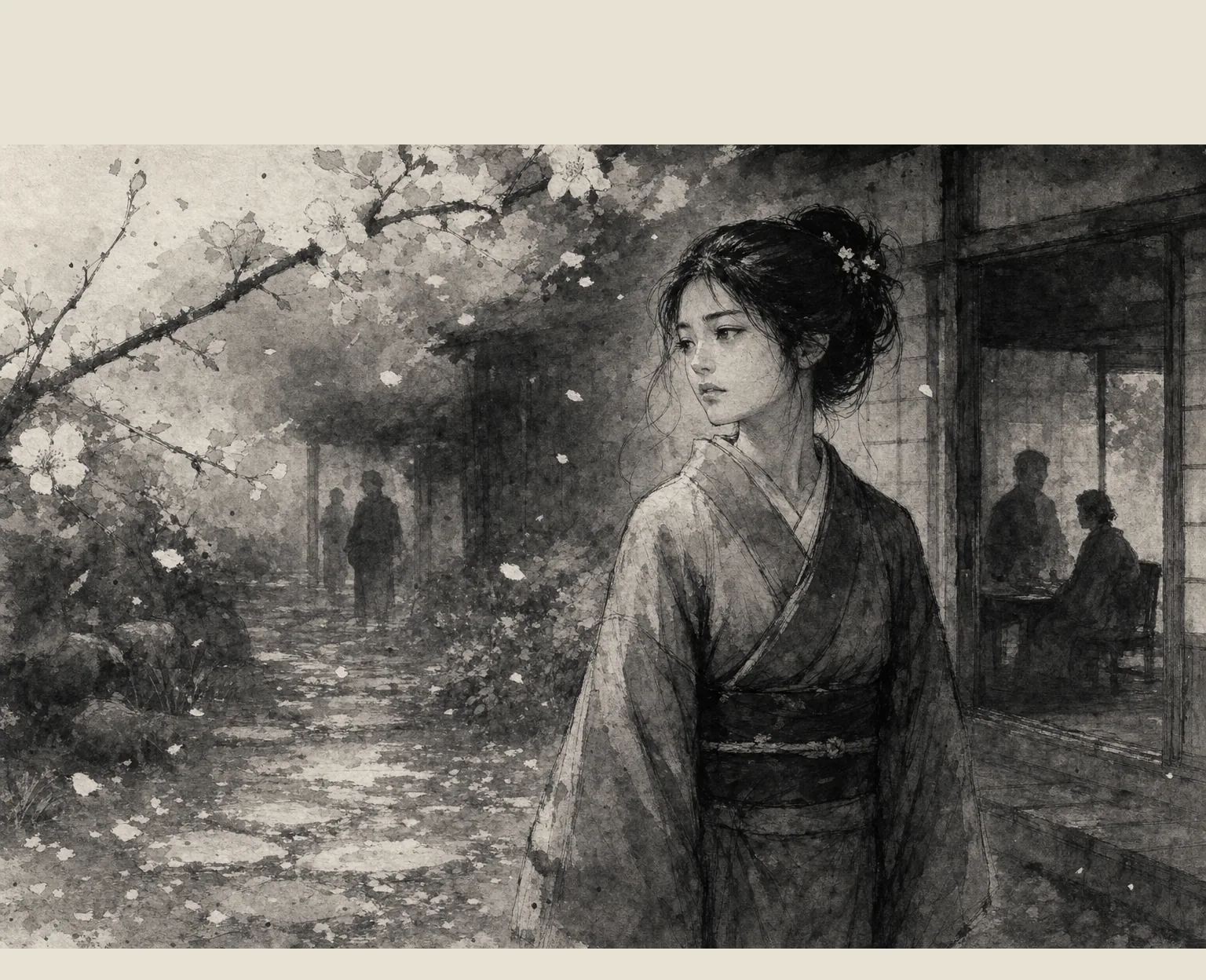
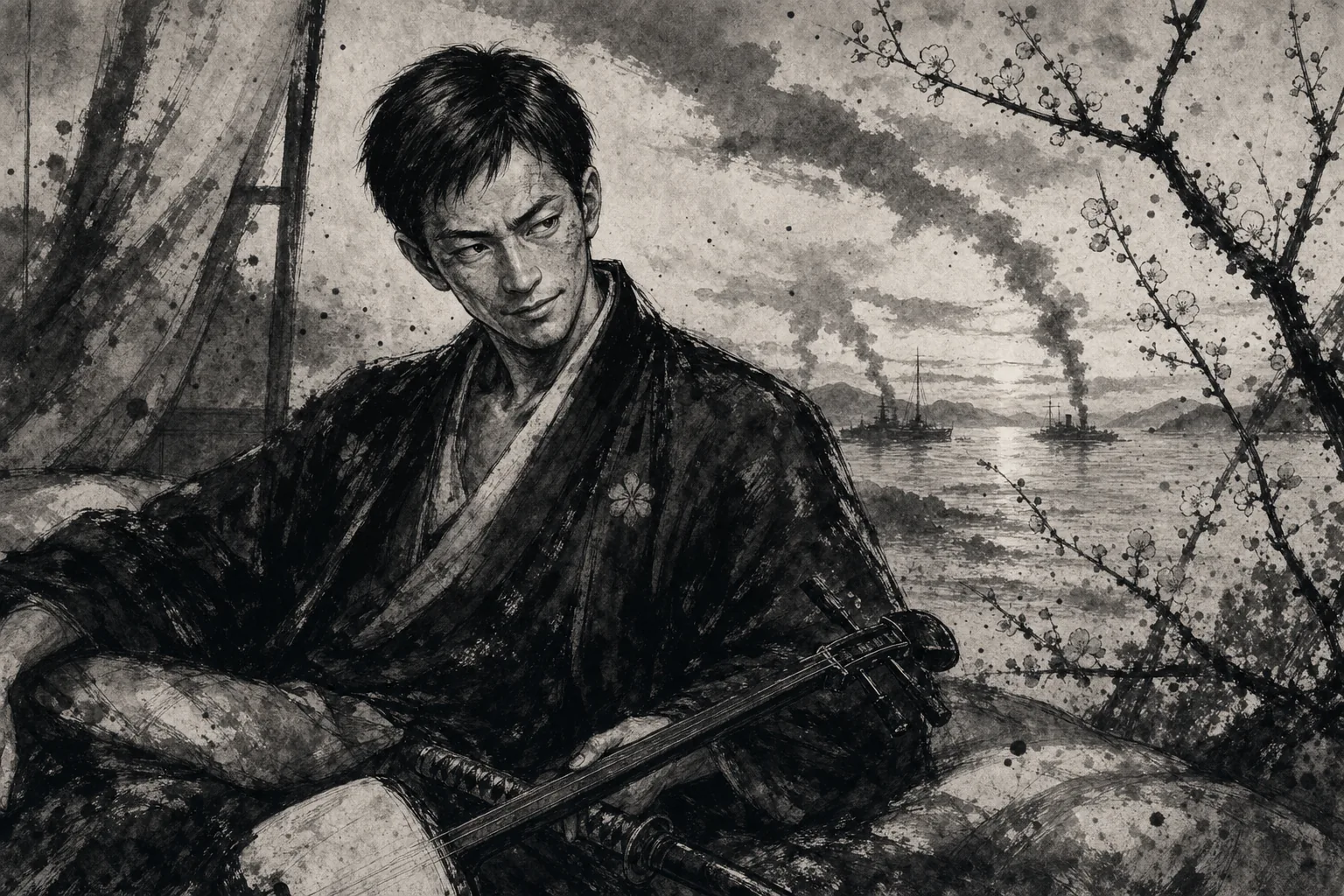
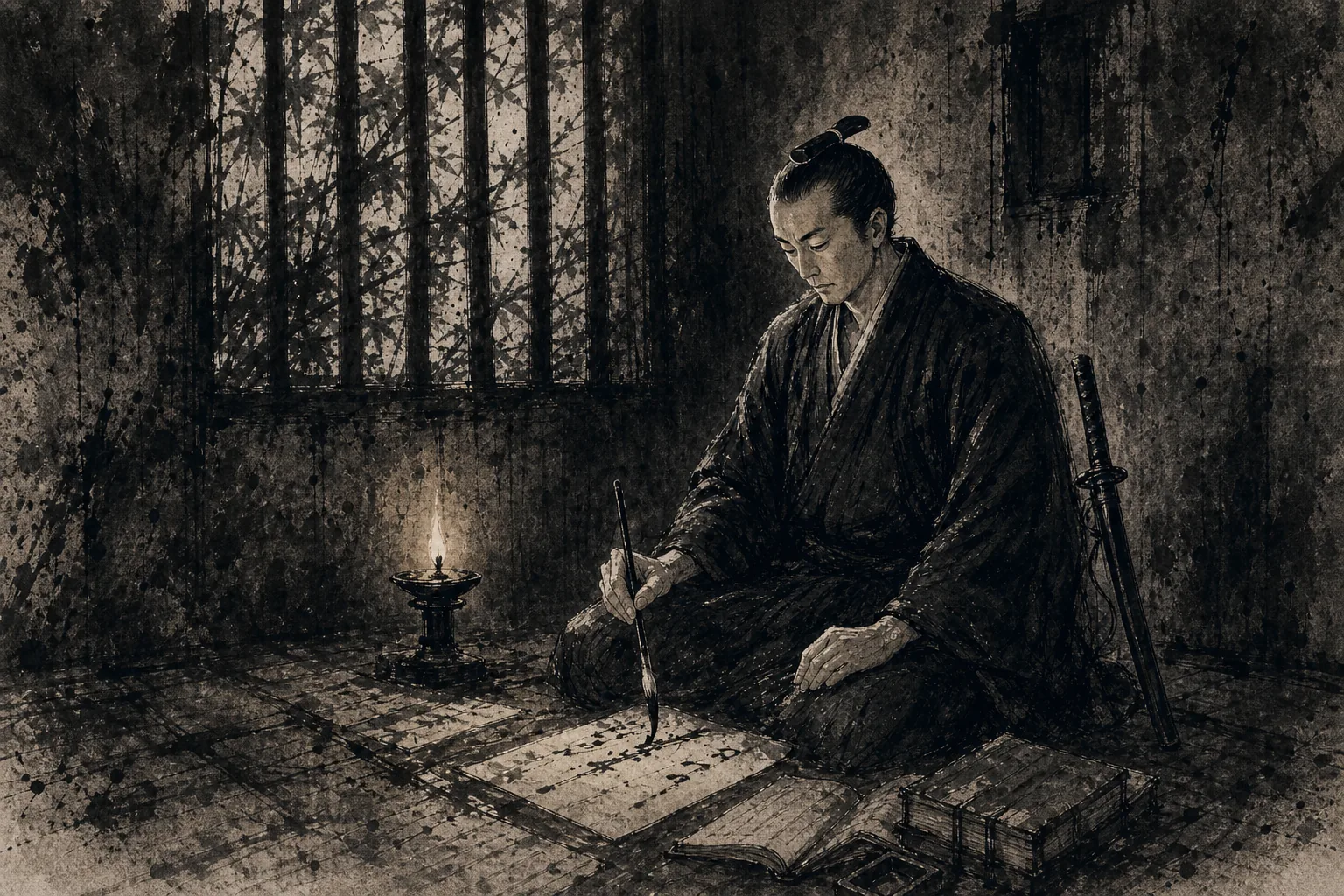
Soji Okita · Shinsengumi Soji Okita's death poem, "動かねば闇にへだつや花と水". Read the original Japanese, modern translation, interpretation, and historical context as distinct parts of the poem.
Person
Captain of the Shinsengumi First Unit, remembered as a young swordsman marked by brilliance and illness.
Learn about Okita Soji
Translation
If nothing moves, even flower and water are divided in the dark.
Poetic Shape A Japanese death poem is less a final explanation than a last shape given to feeling. Its brevity matters: a life is not narrated, but compressed into a few lines that leave room for silence.
Reading
Because its meaning remains uncertain, the poem is best read through the hush of illness and twilight around Okita.It should keep a quiet margin rather than explain everything away.
Background
Introduced as Okita Soji's death poem, though its transmission should be handled with care.The fixed image of youth, illness, and genius with the sword is very strong.
Source / Transmission Wording and readings may differ by transmission; this page treats the text as one circulated form.
Further Reading
Find related books and places to stay For readers who want more historical context, these links search for related books on external stores.
Affiliate link