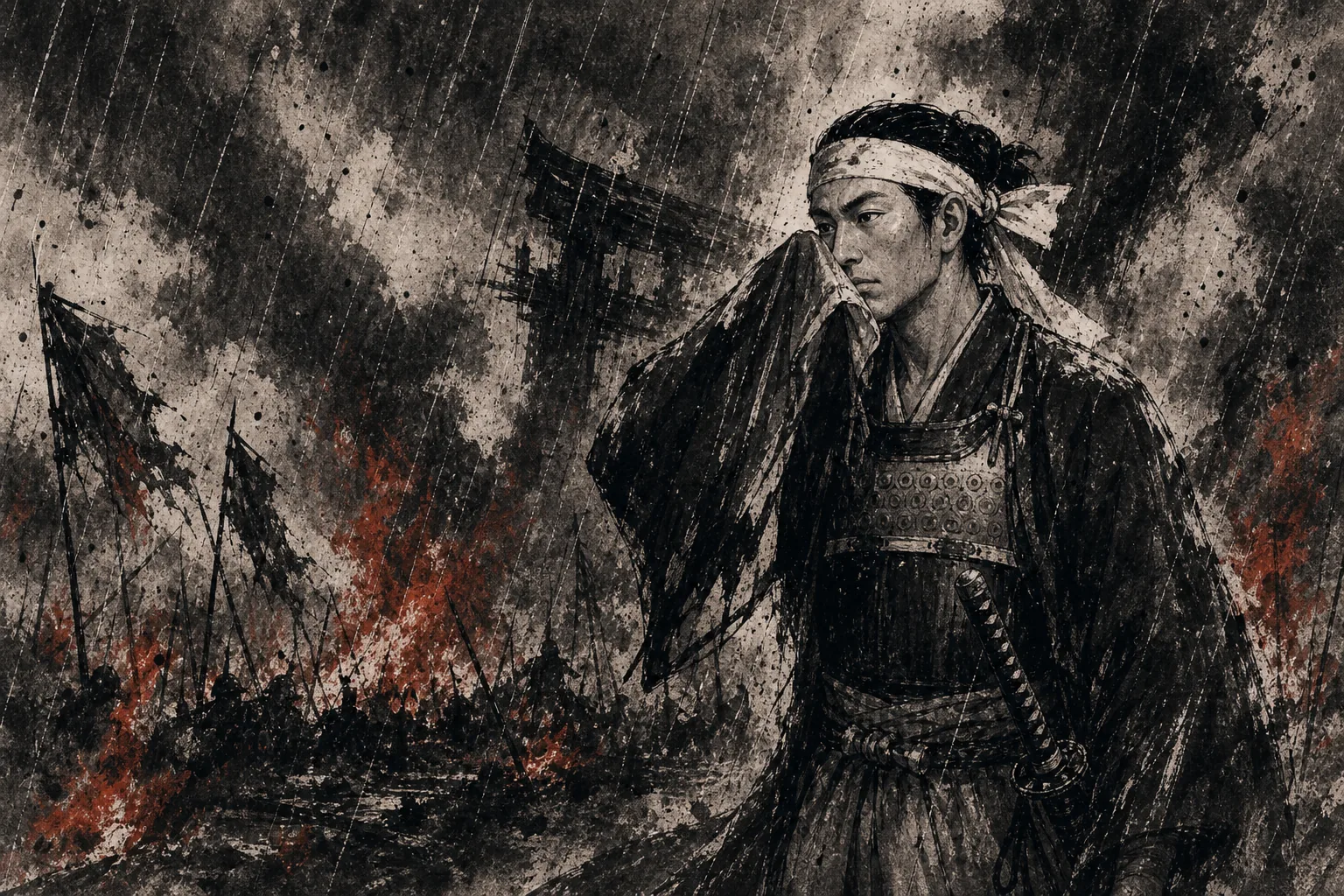
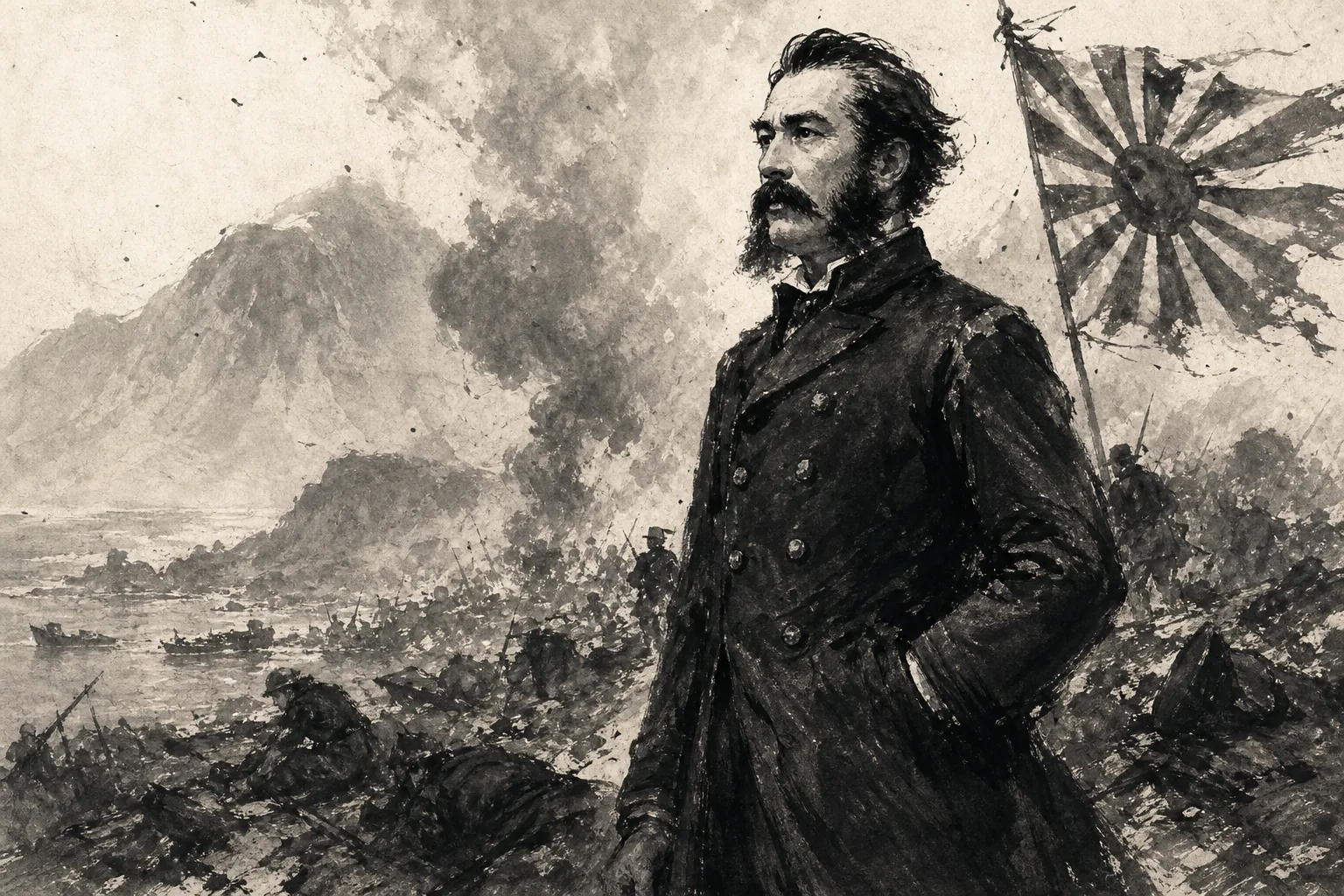
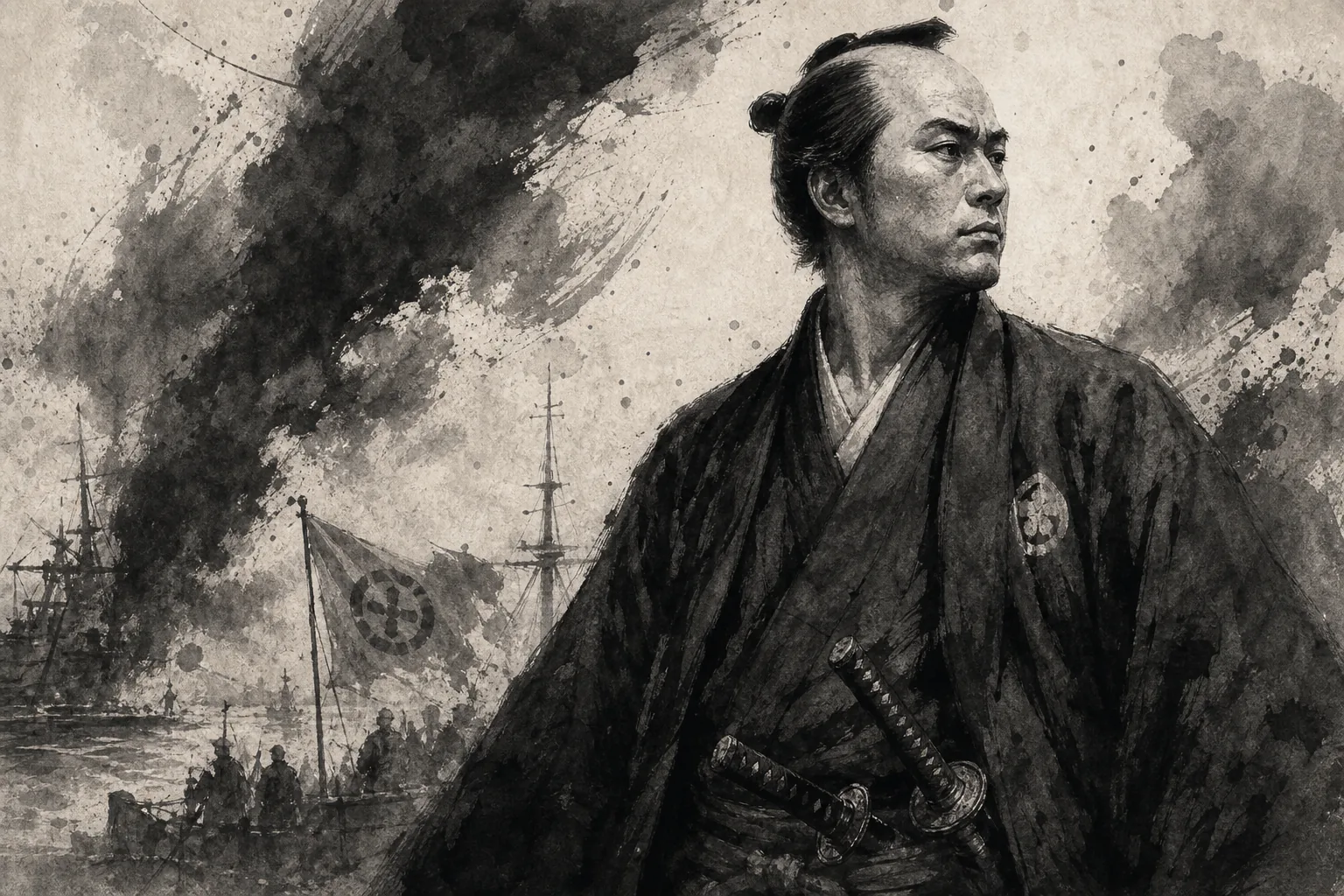
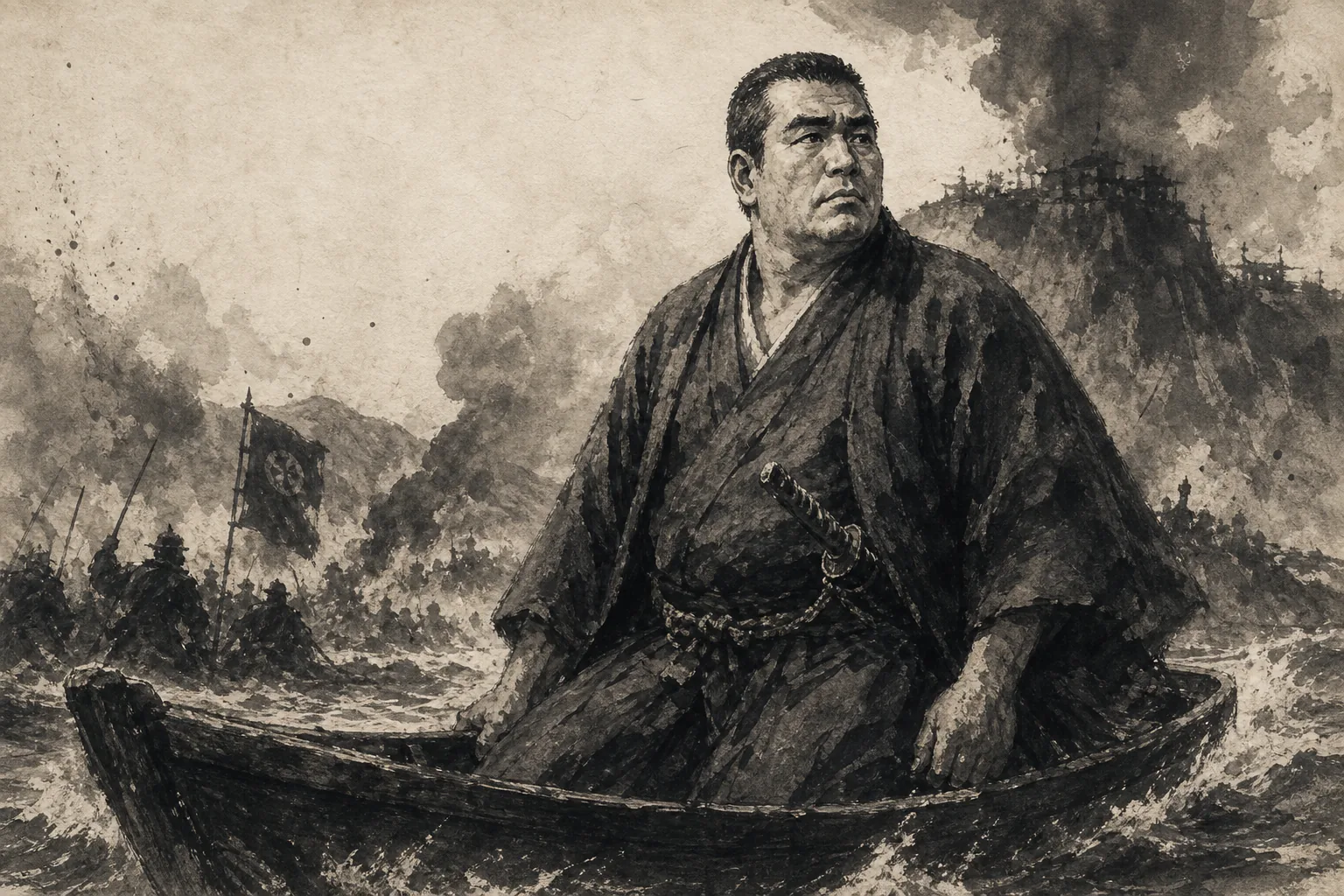
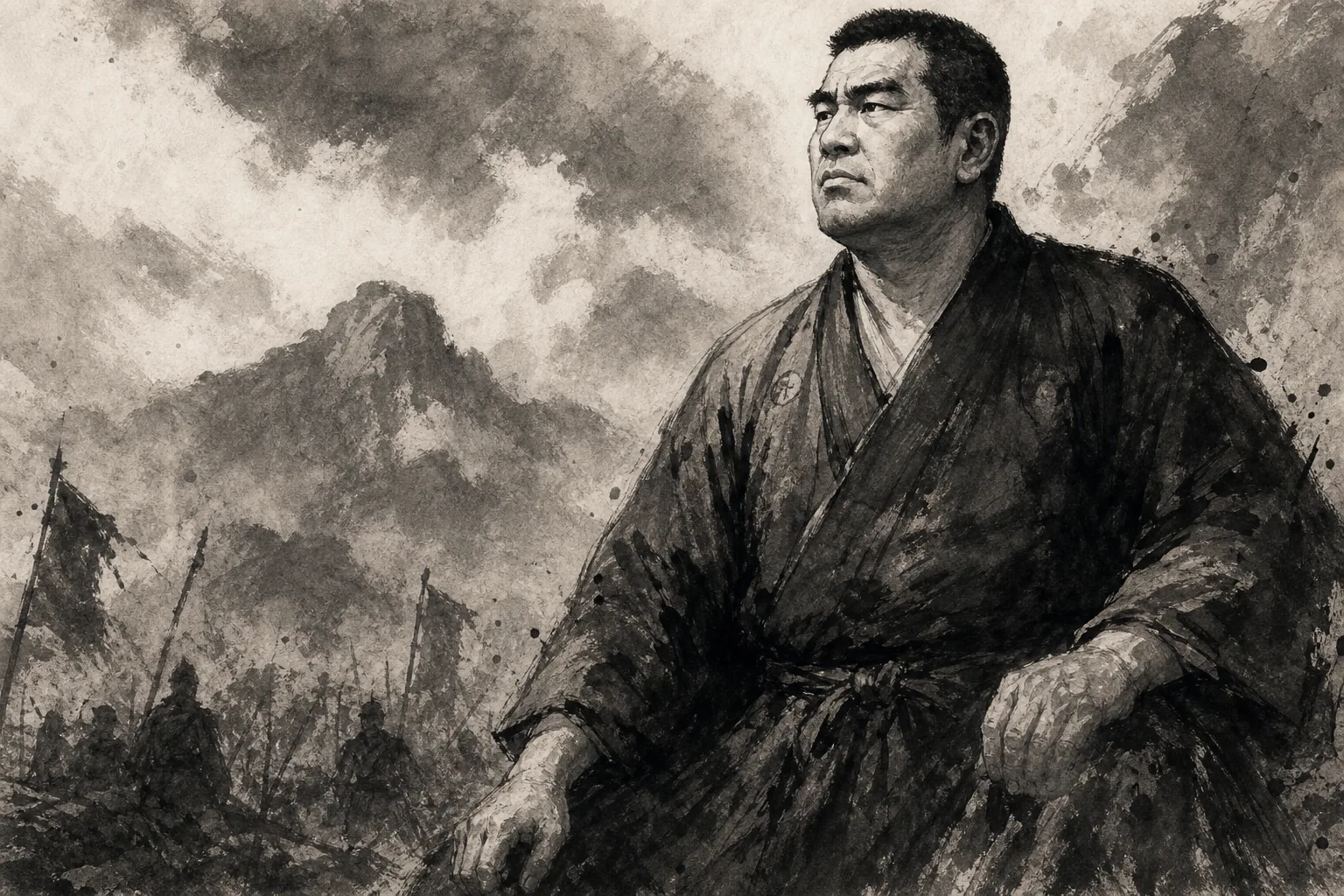
Takamori Saigo · Satsuma
Original
奇策明籌不可謨 正勤王事是眞儒 懷君一死七生語 抱此忠魂今在無
Takamori Saigo's Chinese-style poem, "奇策明籌不可謨正勤王事是眞儒懷君一死". Read the original Japanese, translation, meaning, and historical background. Through reverence for Kusunoki Masashige, the poem reveals the death-consciousness of Bakumatsu loyalists.
Person
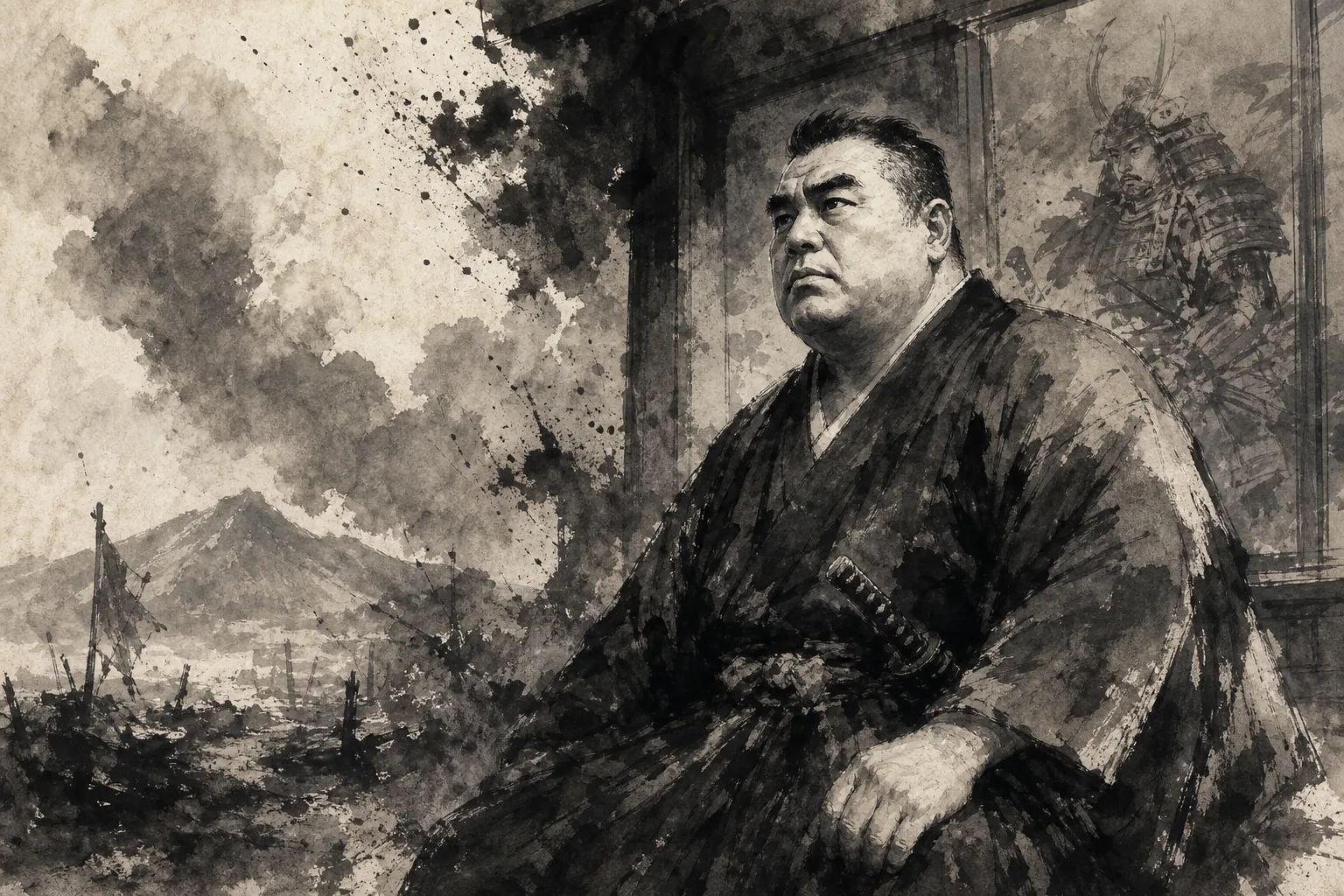
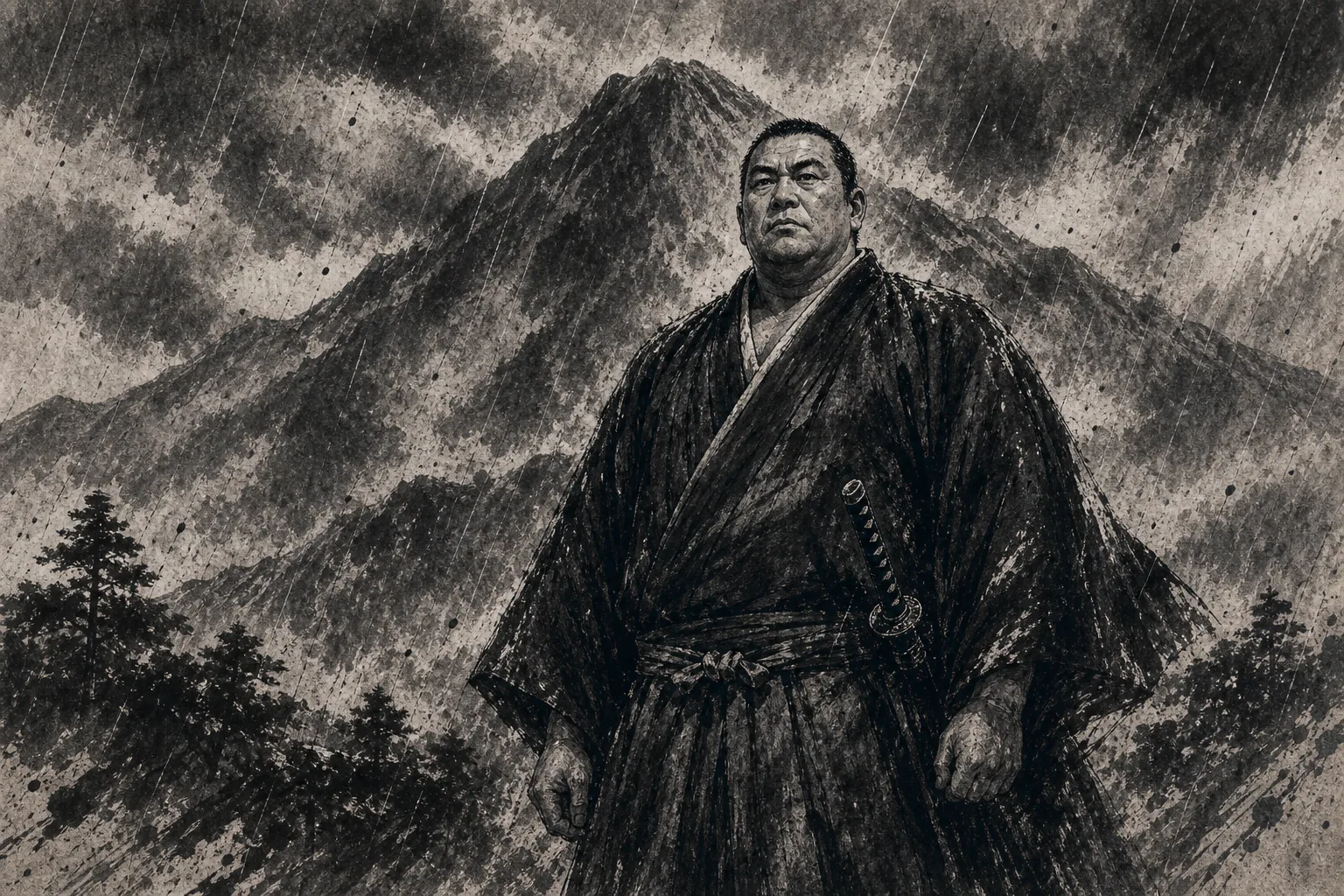
A Satsuma samurai whose scale, solitude, and contradictions shaped the Restoration. He carried both greatness and loneliness: a victor of the new age who also bore the beauty and weight of defeat.
Know This Person
Translation
Who now carries the loyal soul of Kusunoki Masashige? The old vow returns as a question to the present.
Poetic Shape Kanshi draws on a classical Chinese poetic tradition, where restraint, allusion, and moral tension carry much of the weight. The poem sounds formal, but the pressure beneath it is personal.
Reading
Through reverence for Kusunoki Masashige, the poem reveals the death-consciousness of Bakumatsu loyalists. It lets Saigo appear not merely as a strong man, but as an inheritor of an older idea of loyalty.
Background
Kusunoki Masashige was a powerful symbol of imperial loyalty in the Bakumatsu period. This poem is a poem of Saigo's classical sense of fidelity. A Satsuma samurai whose scale, solitude, and contradictions shaped the Restoration.
Source / Transmission Wording and readings may differ by transmission; this page treats the text as one circulated form.
Further Reading
Find related books and places to stay For readers who want more historical context, these links search for related books on external stores.
Affiliate link