Ganzo Tanaka · Mito
Original
みちのくの
Ganzo Tanaka's death poem, "みちのくの山路に骨は朽ちぬとも". Read the original Japanese, modern translation, interpretation, and historical context as distinct parts of the poem.
Person
A radical Tengu Party commander who led a separate force, was captured after retreat, and was executed.
Learn about Tanaka Ganzo
Translation
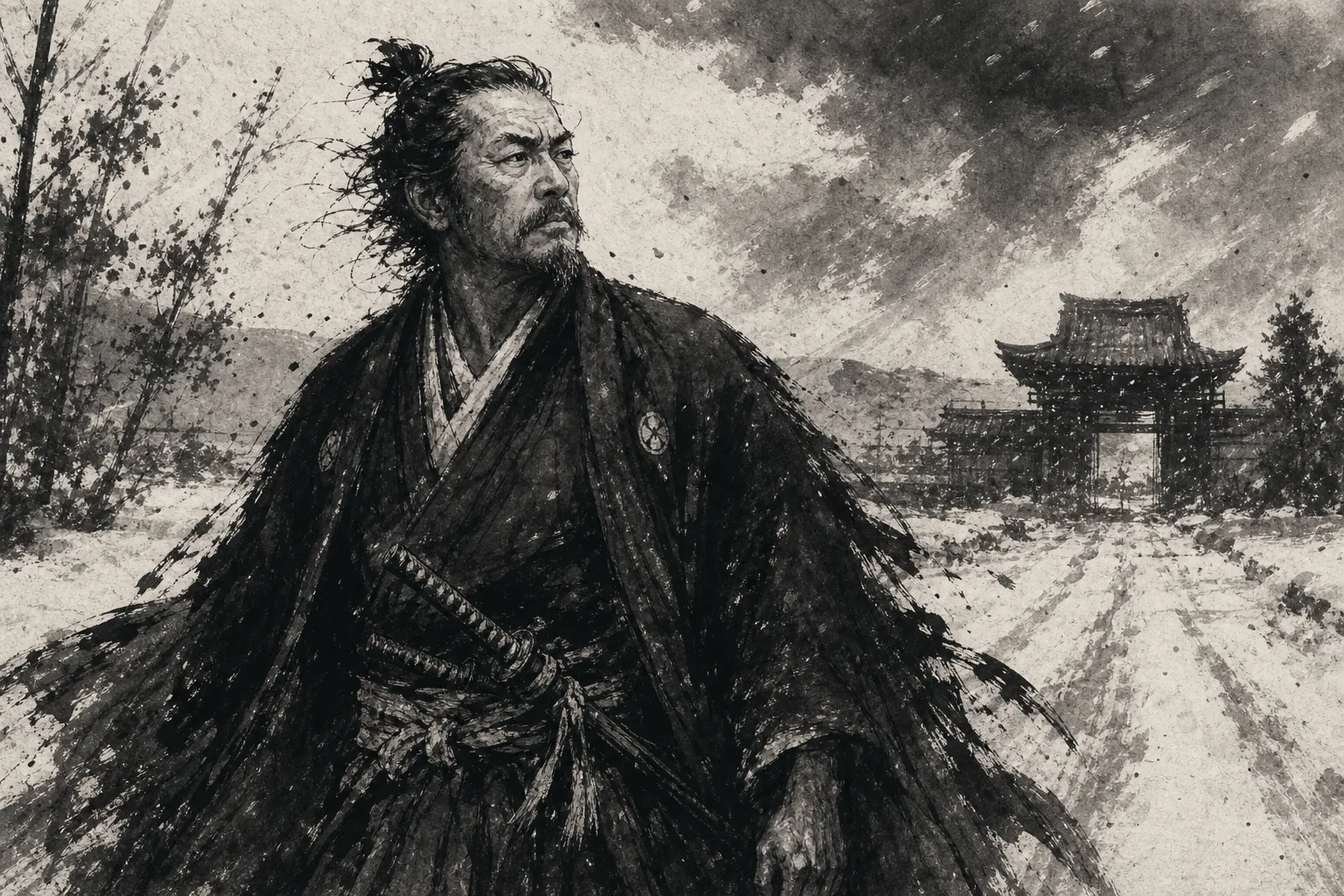
Even if my bones decay on the mountain roads of the north, I will still guard the imperial palace.
Poetic Shape A Japanese death poem is less a final explanation than a last shape given to feeling. Its brevity matters: a life is not narrated, but compressed into a few lines that leave room for silence.
Reading
Ganzo Tanaka's final poem holds both the force and danger of loyalty.The image of bones decaying on mountain roads collides with the vast vow to guard the imperial palace.It lets us see that Tengu Party idealism also contained roughness and eruption.
Background
Ganzo Tanaka led a separate Tengu Party force and is remembered for radical actions in several places.He was captured after retreat and executed.The force of the poem does not erase his dangerousness; it shows how Bakumatsu heat could push people toward extremes.
Source / Transmission Wording and readings may differ by transmission; this page treats the text as one circulated form.
Further Reading
Find related books and places to stay For readers who want more historical context, these links search for related books on external stores.
Affiliate link