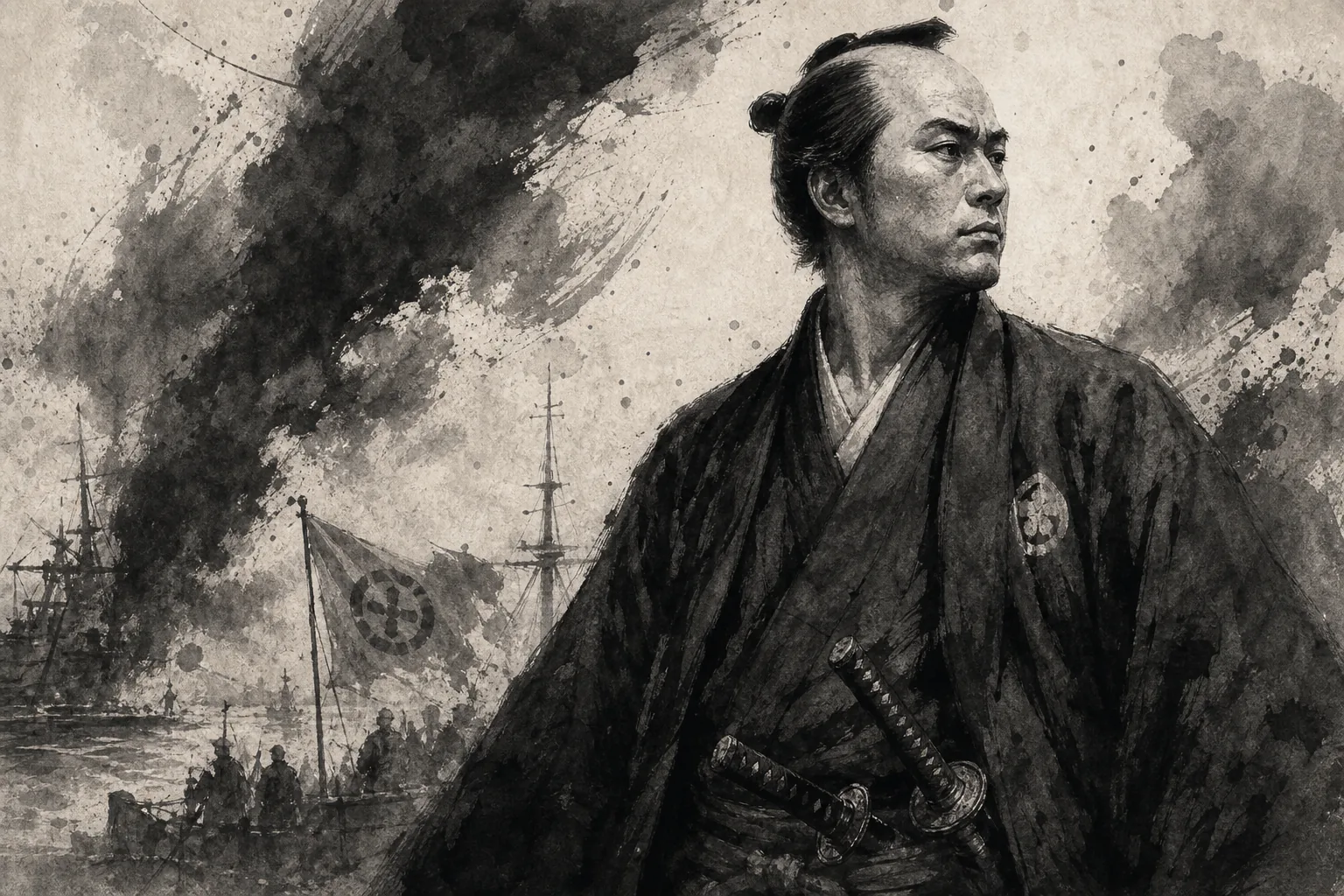
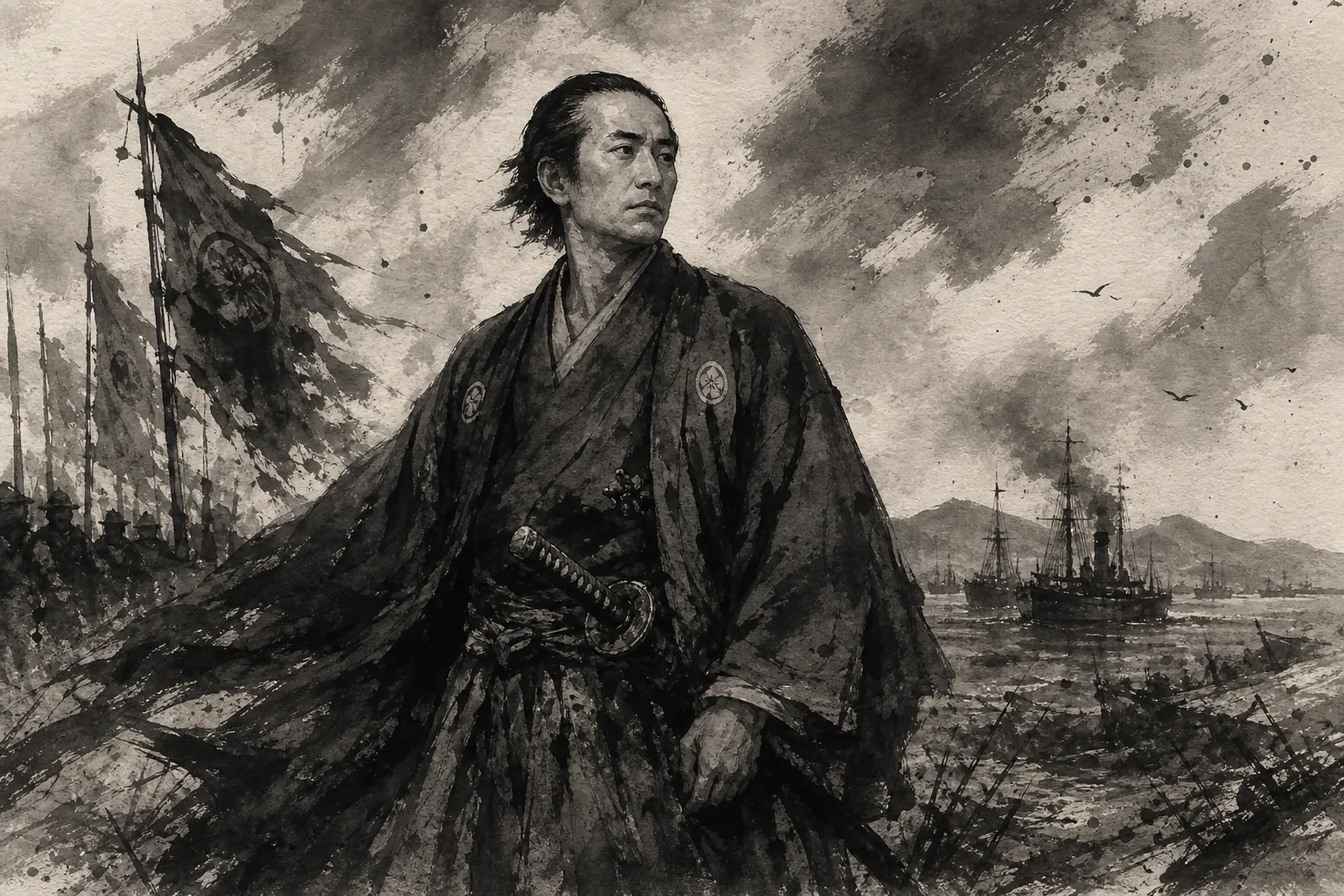
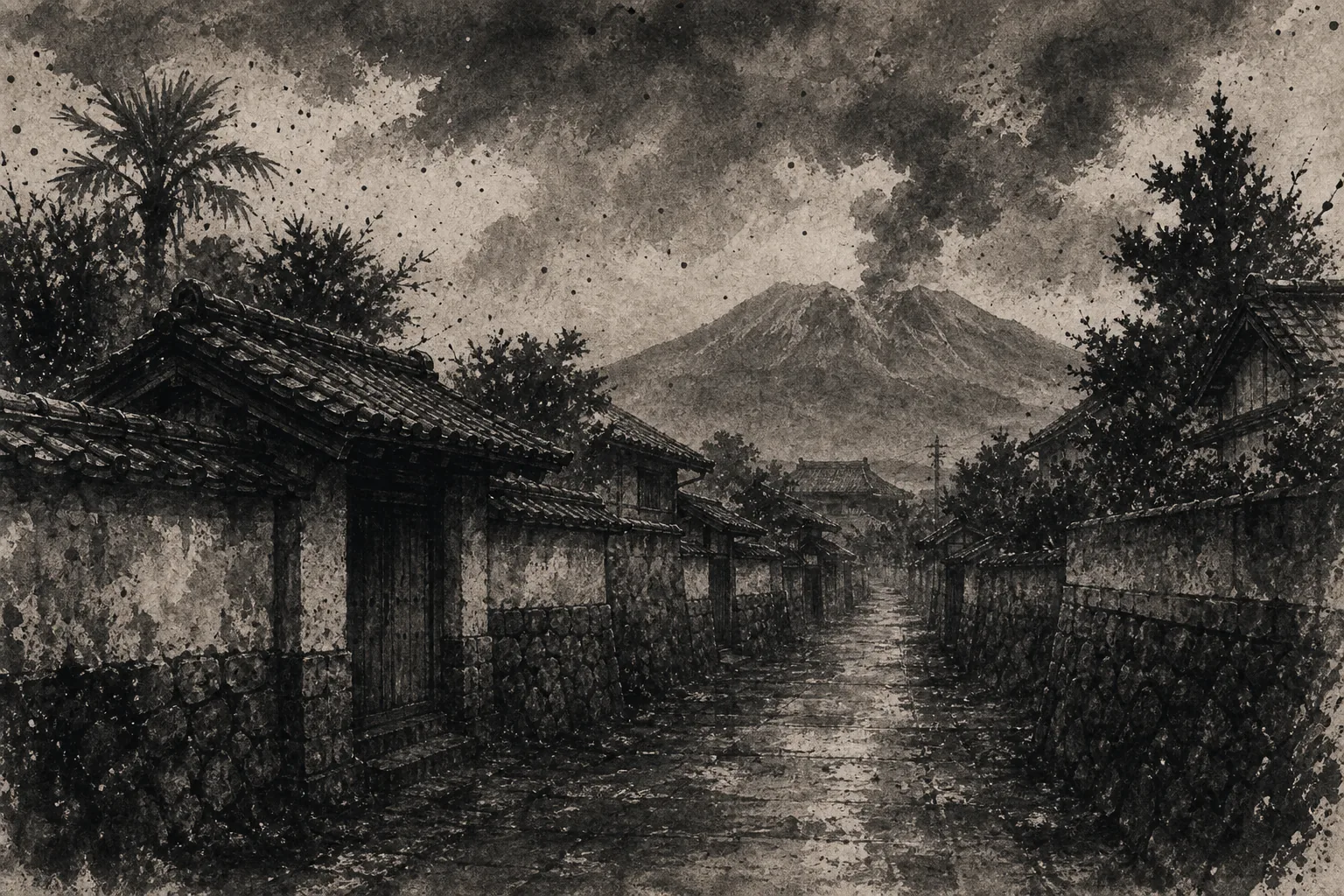
Tatewaki Komatsu · Satsuma
Original
戊辰作
Tatewaki Komatsu's Chinese-style poem, "戊辰作王事多艱志未酬東奔西走幾春秋男". Read the original Japanese, modern translation, interpretation, and historical context as distinct parts of the poem.
Person
A Satsuma chief retainer who worked behind the scenes on the Satsuma-Choshu Alliance and the restoration of imperial rule.
Learn about Komatsu Tatewaki
Translation
Imperial affairs are full of hardship and my resolve remains unrewarded; a man has his lifelong vow, and I swear not to rest until the enemy is struck down.
Poetic Shape Kanshi draws on a classical Chinese poetic tradition, where restraint, allusion, and moral tension carry much of the weight. The poem sounds formal, but the pressure beneath it is personal.
Reading
Komatsu Tatewaki is often remembered as a mediator, but this poem carries the heat of the Boshin War.It gives the hidden Satsuma administrator the shadow of battle.
Background
Passed down as a Chinese poem from the Boshin War period.Its martial diction contrasts with the negotiating work for which Komatsu Tatewaki is better known, revealing how political settlement and armed conflict remained entangled at the birth of the new government.
Source / Transmission The original wording may differ by base text; this page treats the text as a provisional form.
Further Reading
Find related books and places to stay For readers who want more historical context, these links search for related books on external stores.
Affiliate link