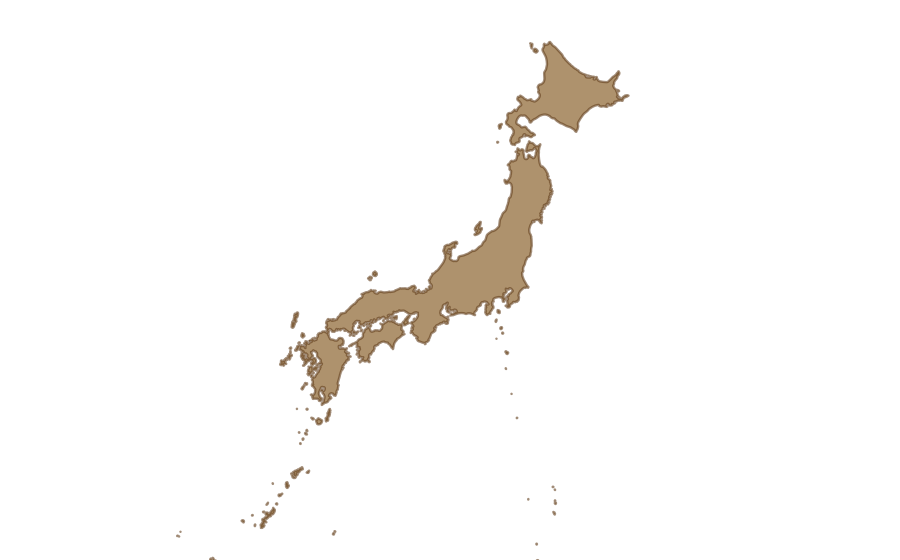
Aizu-Wakamatsu
Born to an Aizu retainer family and educated at Nisshinkan
Sources vary on the exact year. Classics, arithmetic, martial practice, and etiquette prepared retainers to combine domain administration with military service.
Person Guide
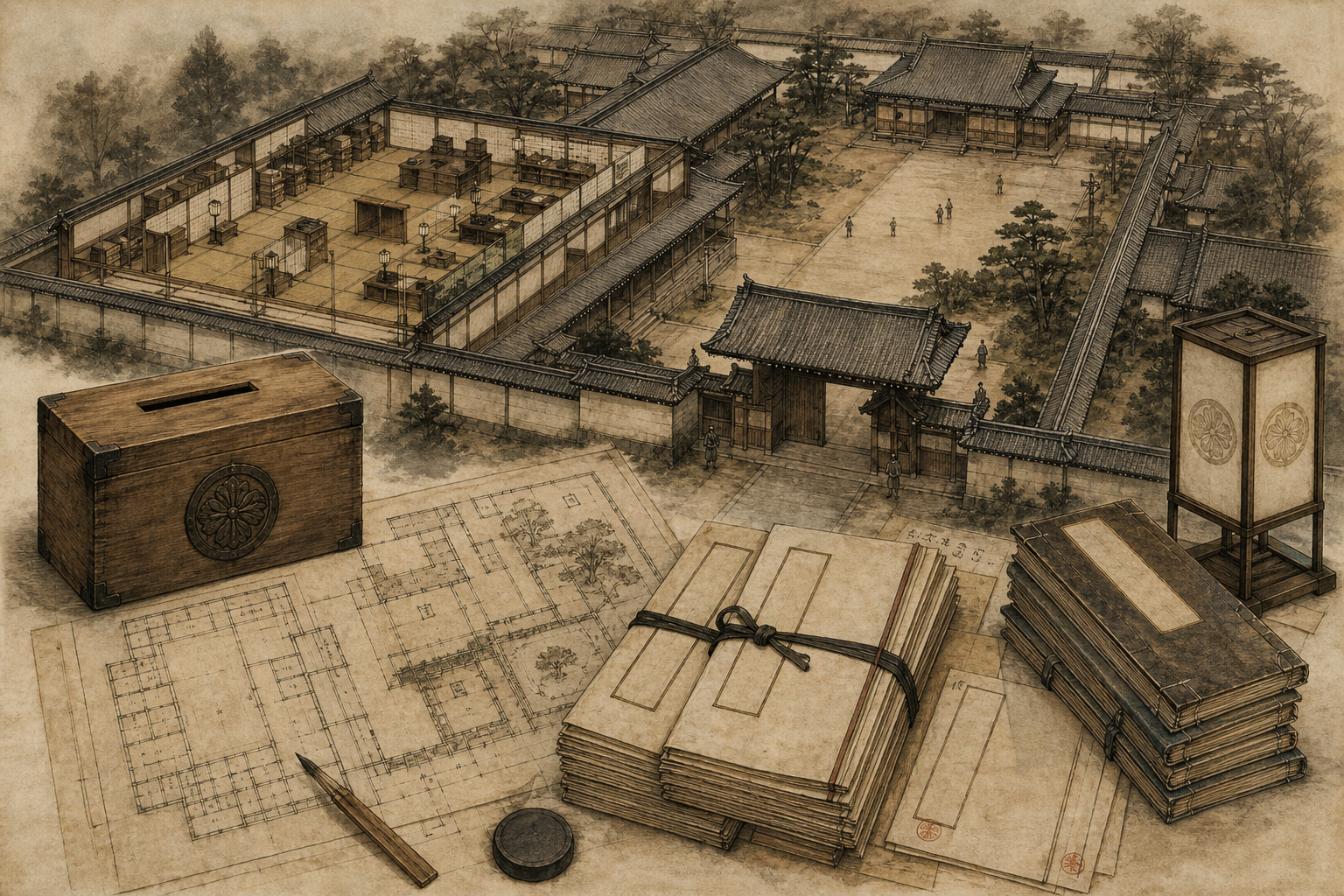
Jinbo Shuri is often reduced to an enlightened Aizu retainer made to bear the blame for defeat at Toba-Fushimi. The surviving material record instead follows the desks and Chinese classics of Nisshinkan, charts and Western military equipment at Nagasaki harbor, plans and document boxes of the Kyoto Shugoshoku compound, Kaiyo Maru and its eastward route from Osaka, the closed lattice and unanswered defense inside an Edo residence, and the paper of a final poem addressed to his mother. His advice is not treated as the sole cause of collective decisions.
Life
Aizu-Wakamatsu
Sources vary on the exact year. Classics, arithmetic, martial practice, and etiquette prepared retainers to combine domain administration with military service.
Kyoto
Following Katamori to Kyoto, he handles military administration, proposals, orders, and security information circulating through the compound.
Nagasaki
At Nagasaki he encounters ships, weapons, training methods, and foreign affairs, connecting Aizu military reform with an international strategic environment.
Kyoto and Osaka
He is associated with submission and peace, but the wording and influence of particular proposals must be tested rather than assumed.
Osaka to Edo
Yoshinobu and Katamori return to Edo after defeat. Their collective decision and the later concentration of blame on Jinbo are distinct questions.
Aizu residence in Edo
He dies under internal pressure and is remembered through a final poem to his mother; disputed date and site details remain explicit.
福島県会津若松市
復元された日新館の学習空間と鶴ヶ城の藩政空間を分けて歩き、修理の教育と勤務の基礎をたどる。
神保修理
Address福島県会津若松市河東町南高野高塚山10周辺
Nearby
京都府京都市
上屋敷絵図と現地碑を手掛かりに、会津藩が京都の治安・軍事・諸藩折衝を担った仕事場を読む。
神保修理
Address京都府京都市上京区京都府庁周辺
Nearby
長崎県長崎市
港、出島、海軍伝習の記憶を結び、1866年の派遣を世界観の転換という抽象語でなく海図と教練の調査として見る。
神保修理
Address長崎県長崎市出島町6-1周辺
Nearby
東京都港区
処分地の細部には資料差があるため、旧藩邸域として歩き、幽閉・移送・切腹を一つの建物へ安易に固定しない。
神保修理
Address東京都港区三田二丁目周辺
Nearby
Keys
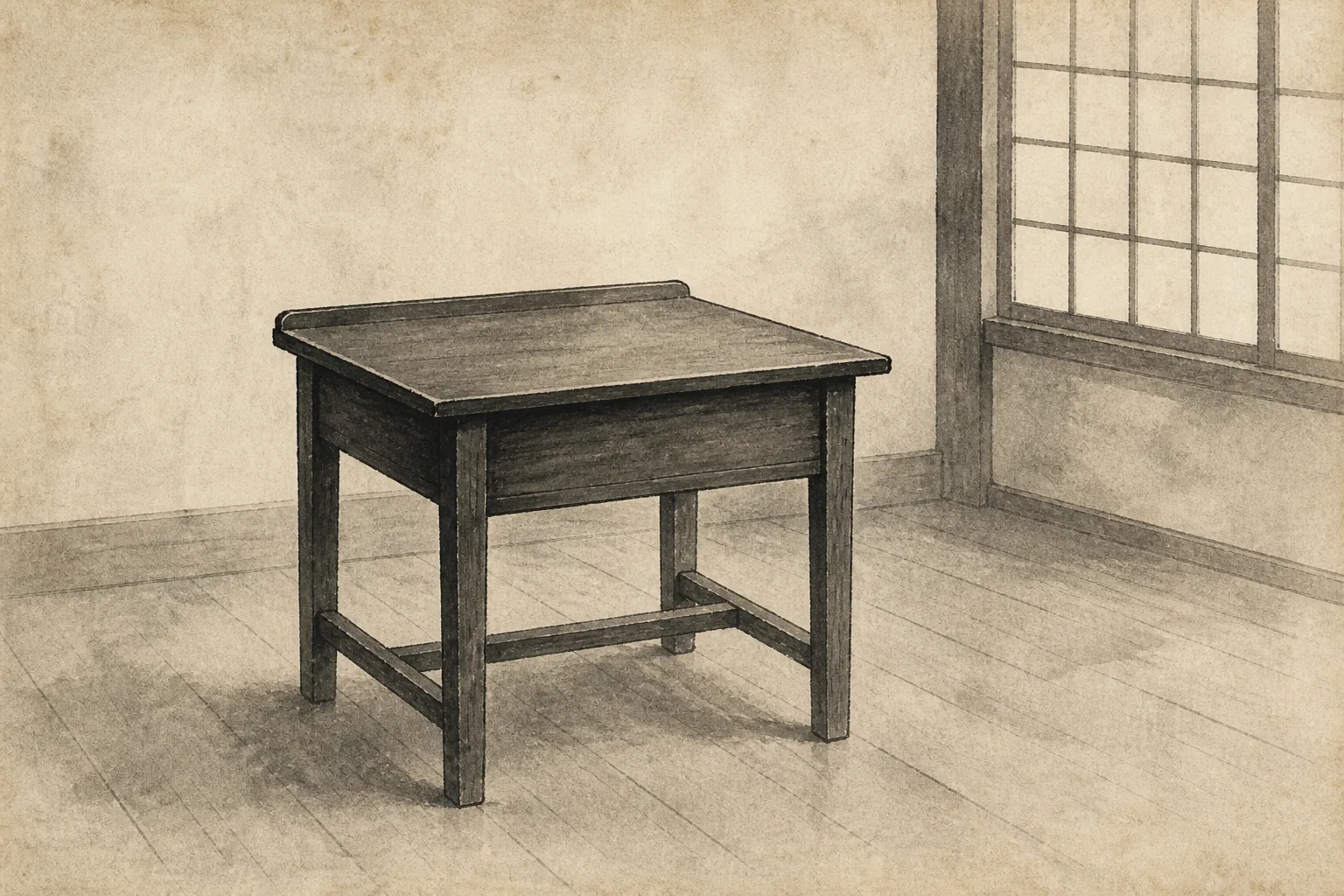
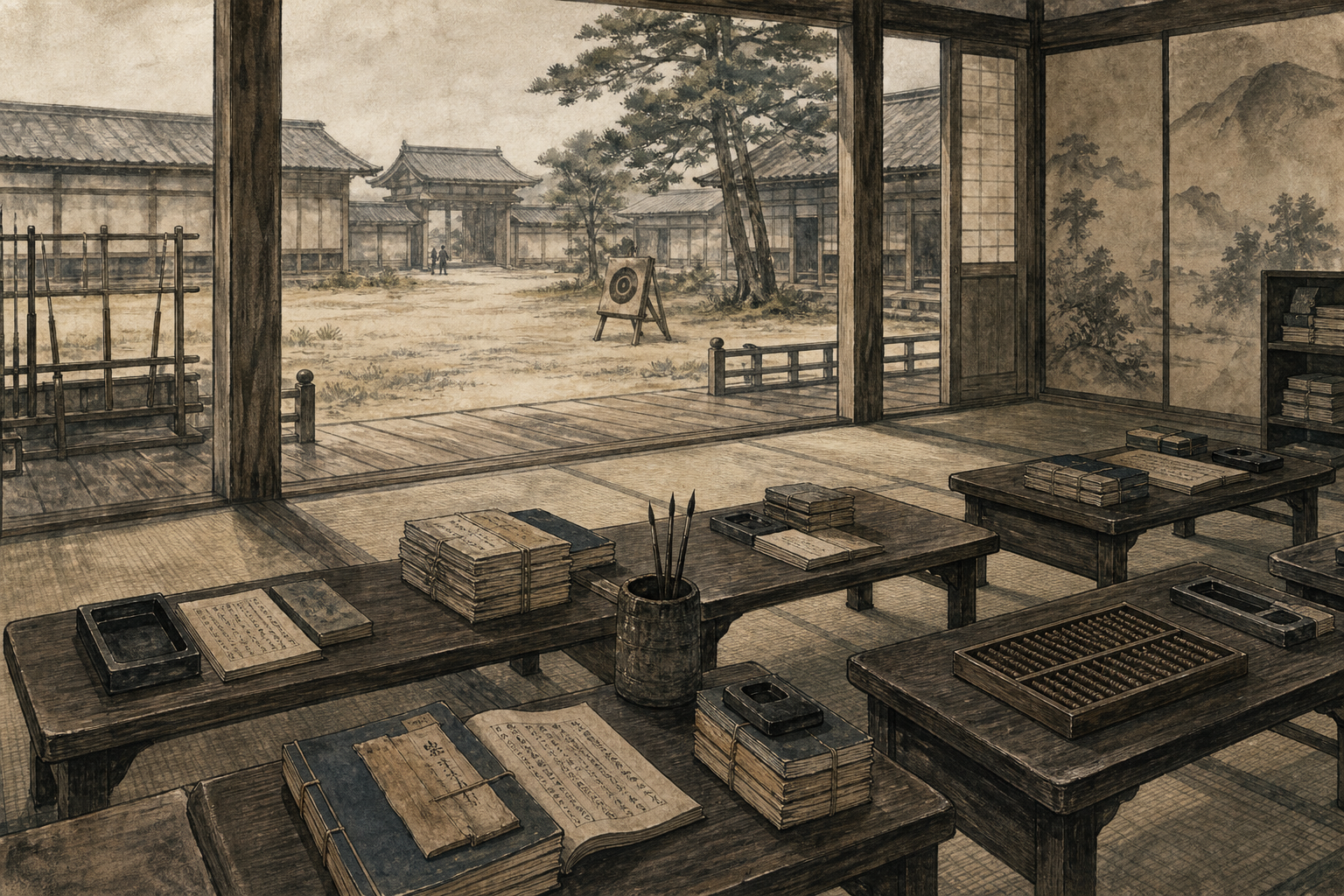
Jinbo was born into an Aizu retainer family and is remembered as a gifted student of the domain school Nisshinkan. Low desks, Chinese classics, brushes and inkstones, an abacus, archery and martial practice areas, and astronomical facilities reveal an institution that trained retainers for administration, warfare, and ritual at once. Calling him merely a brilliant pupil hides teachers, classmates, schedules, examinations, and the labor of maintaining books and equipment. His sense that domain service carried personal responsibility grew within this collective educational system rather than from talent alone.
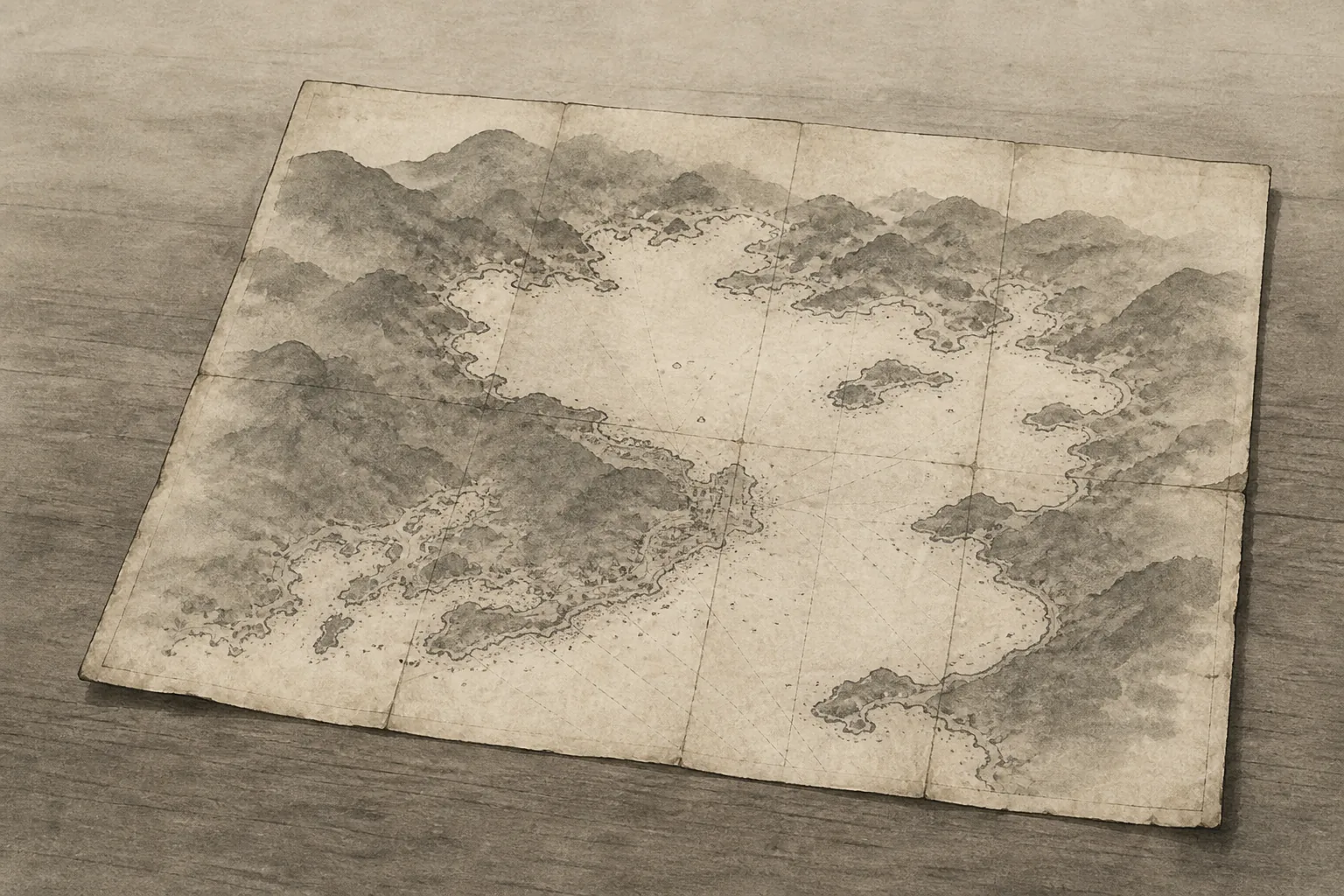
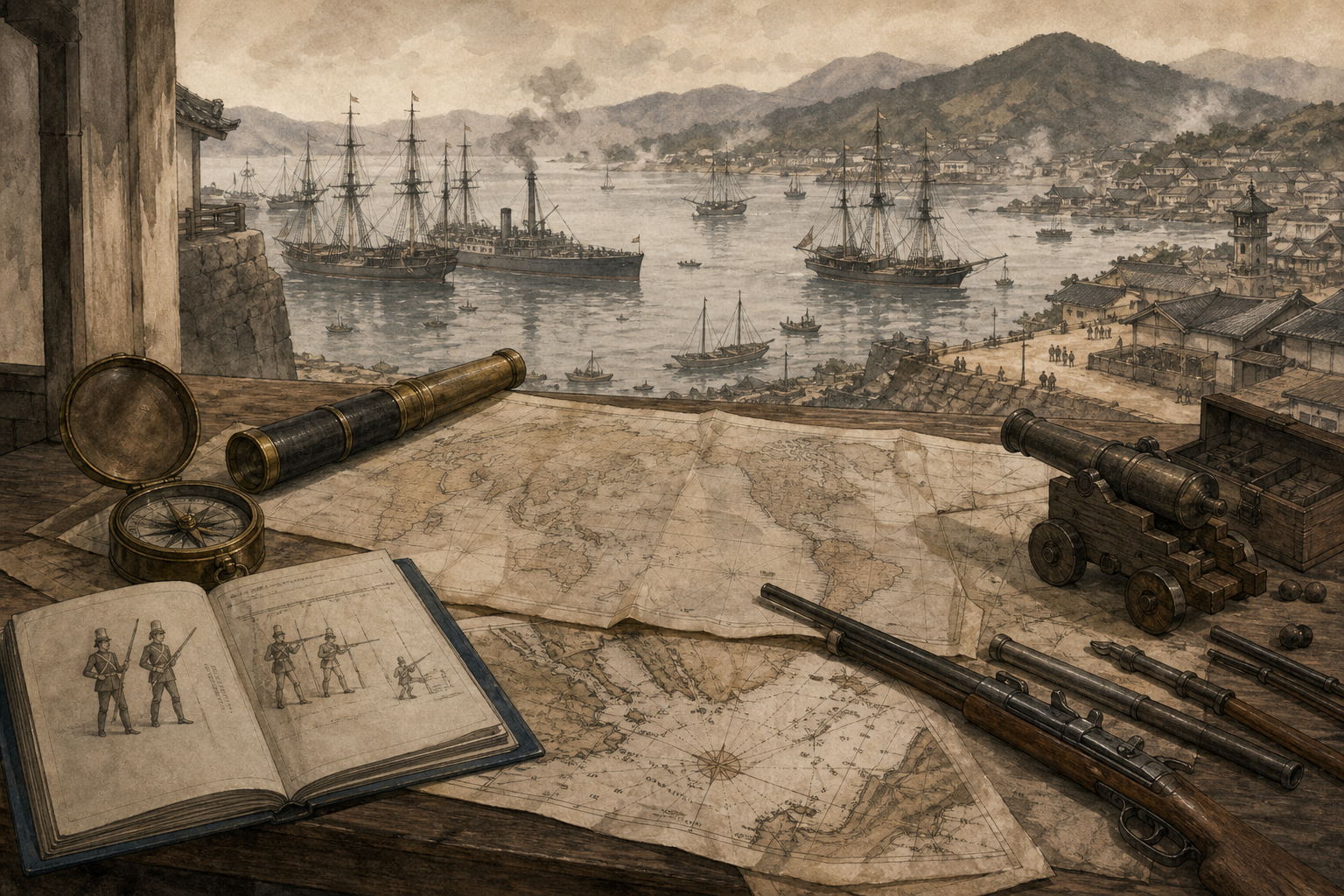
In 1866 Matsudaira Katamori sent Jinbo to Nagasaki to investigate Western military organization and drill. Harbor charts, a compass, telescope, steamships, firearm and cannon models, and Western military manuals turned “opening the country” into measurable problems of distance, speed, range, supply, and command. The record does not justify inventing every person he met or item he bought. Yet seeing an international port made it possible to consider the danger of endless warfare among domains and the need to reorganize Aizu forces within the same wider strategic frame.
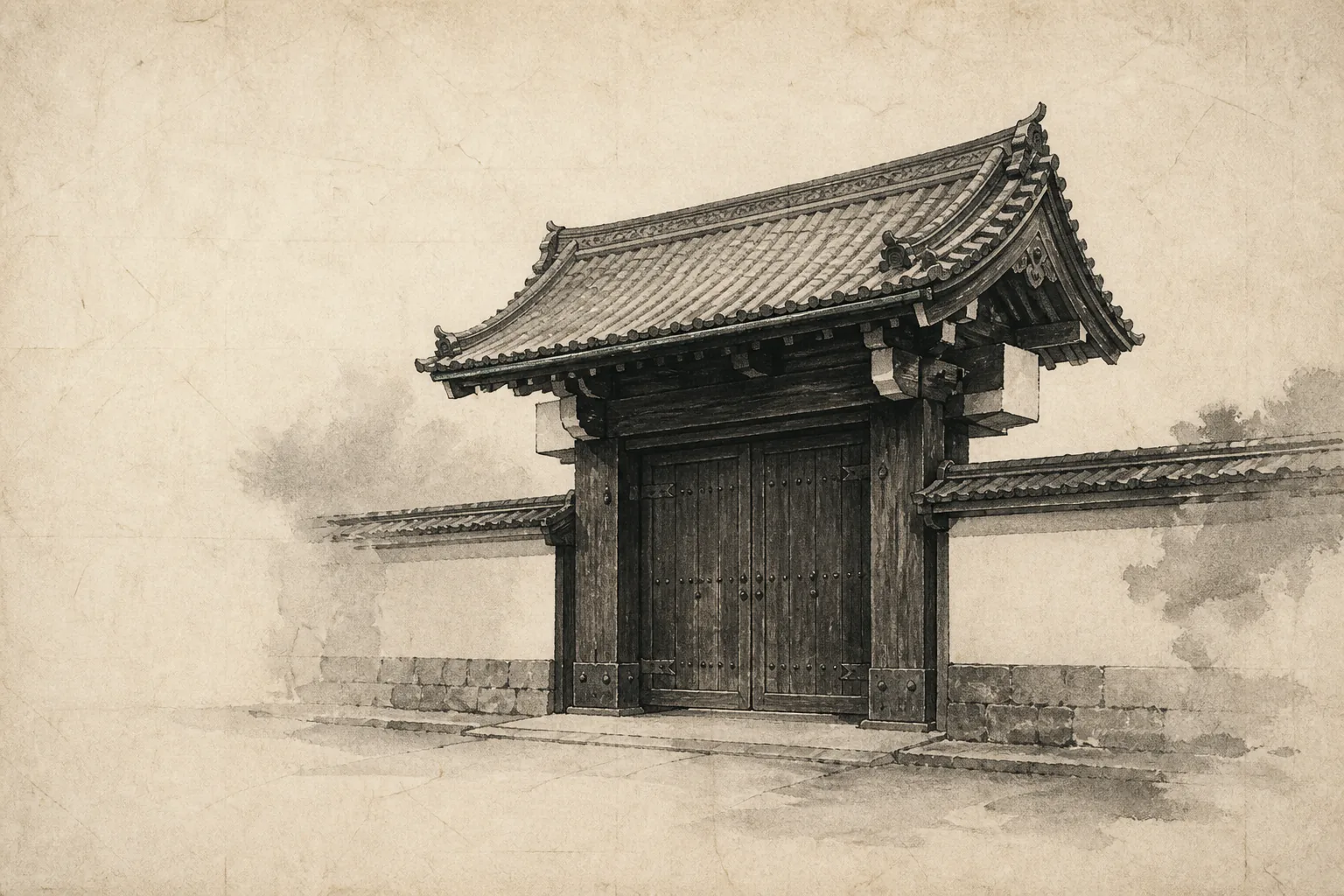
When Katamori became Kyoto Shugoshoku in 1862, Jinbo joined the Aizu operation in Kyoto and served in military administration. Surviving architectural plans of the Shugoshoku compound, its gates and guard rooms, petitions, proclamations, inter-domain letters, diaries, and document chests show an extensive office for receiving information and issuing orders, not simply an armed police post. Jinbo worked among fellow officers, messengers, copyists, and guards. That setting explains both his access to political debate and the limits of an adviser whose proposals still passed through a larger chain of command.
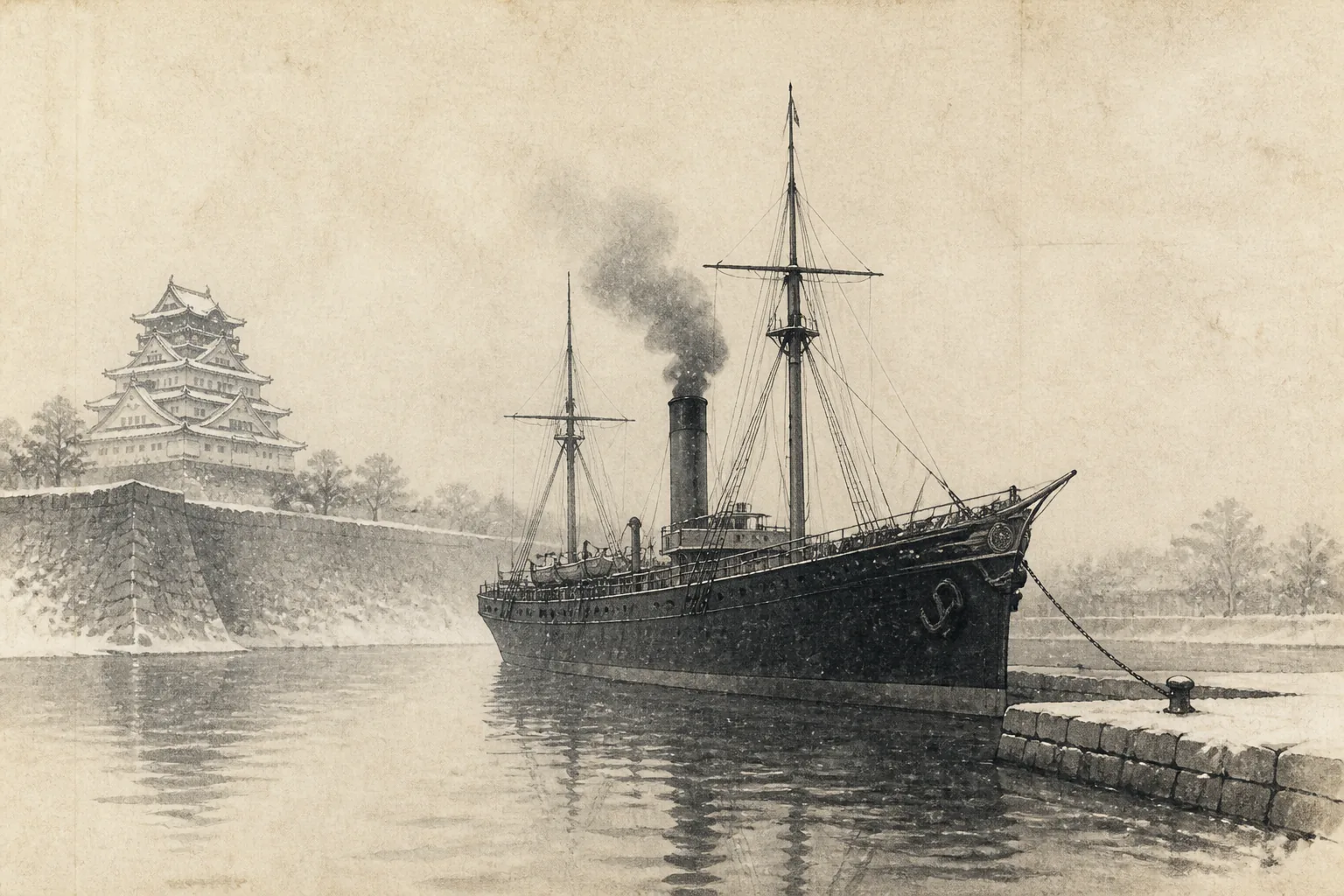
After defeat at Toba-Fushimi, Tokugawa Yoshinobu, Matsudaira Katamori, and other leaders left Osaka for Edo aboard Kaiyo Maru. A wet quay, abandoned standards and baggage, the steamship, a route chart, and compass make visible the withdrawal of commanders and the disorder left among their forces. Later accounts connect Jinbo with advice for submission or an eastward return, but a collective leadership decision cannot be reduced to his words alone. The actual command structure must be separated from the later process by which anger and responsibility inside Aizu converged on him.After the return east, Aizu authorities held Shuri responsible for defeat and ordered him to take his life at the domain’s Edo residence. The attribution therefore produced a sentence that concentrated responsibility for collective decisions on one person.
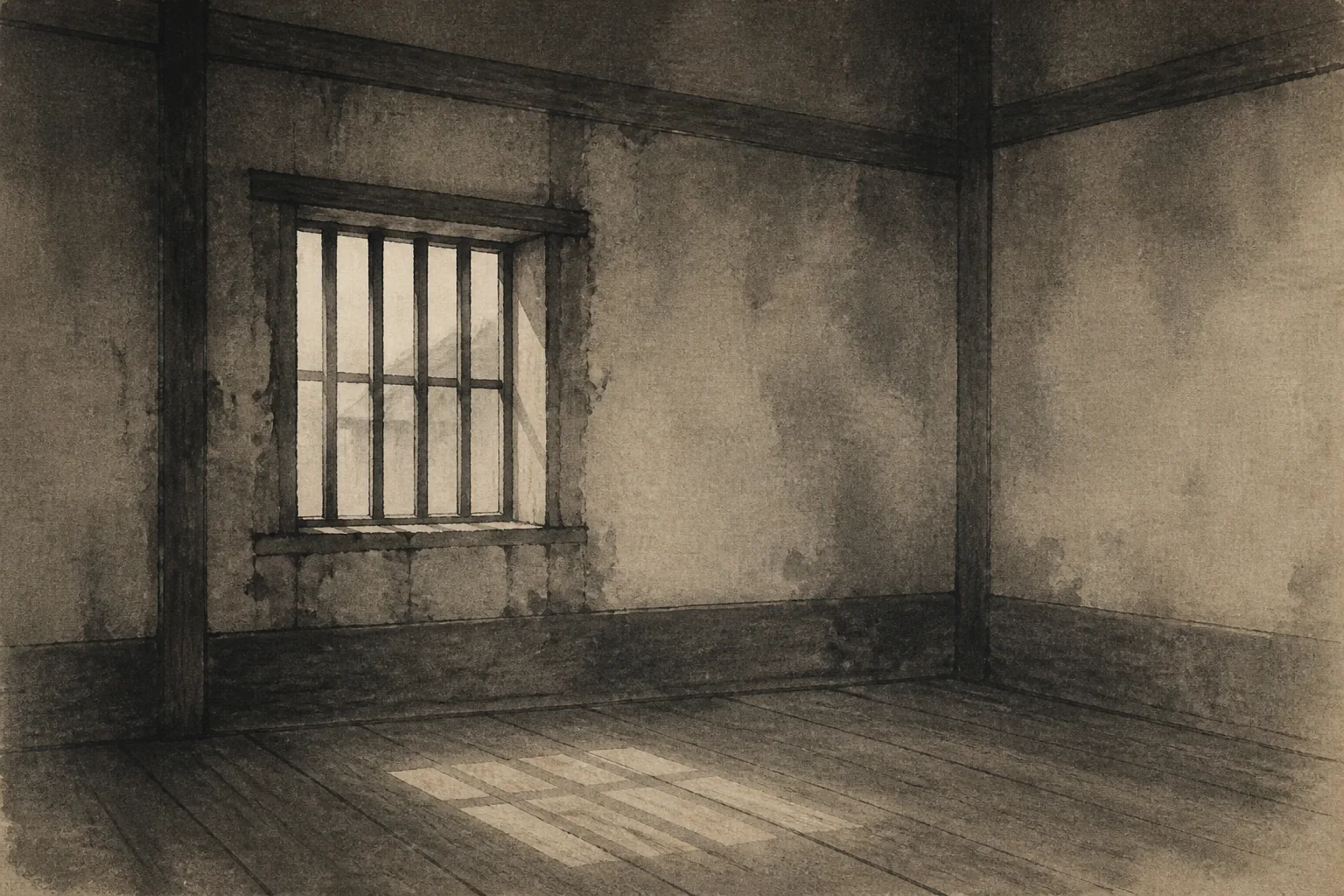
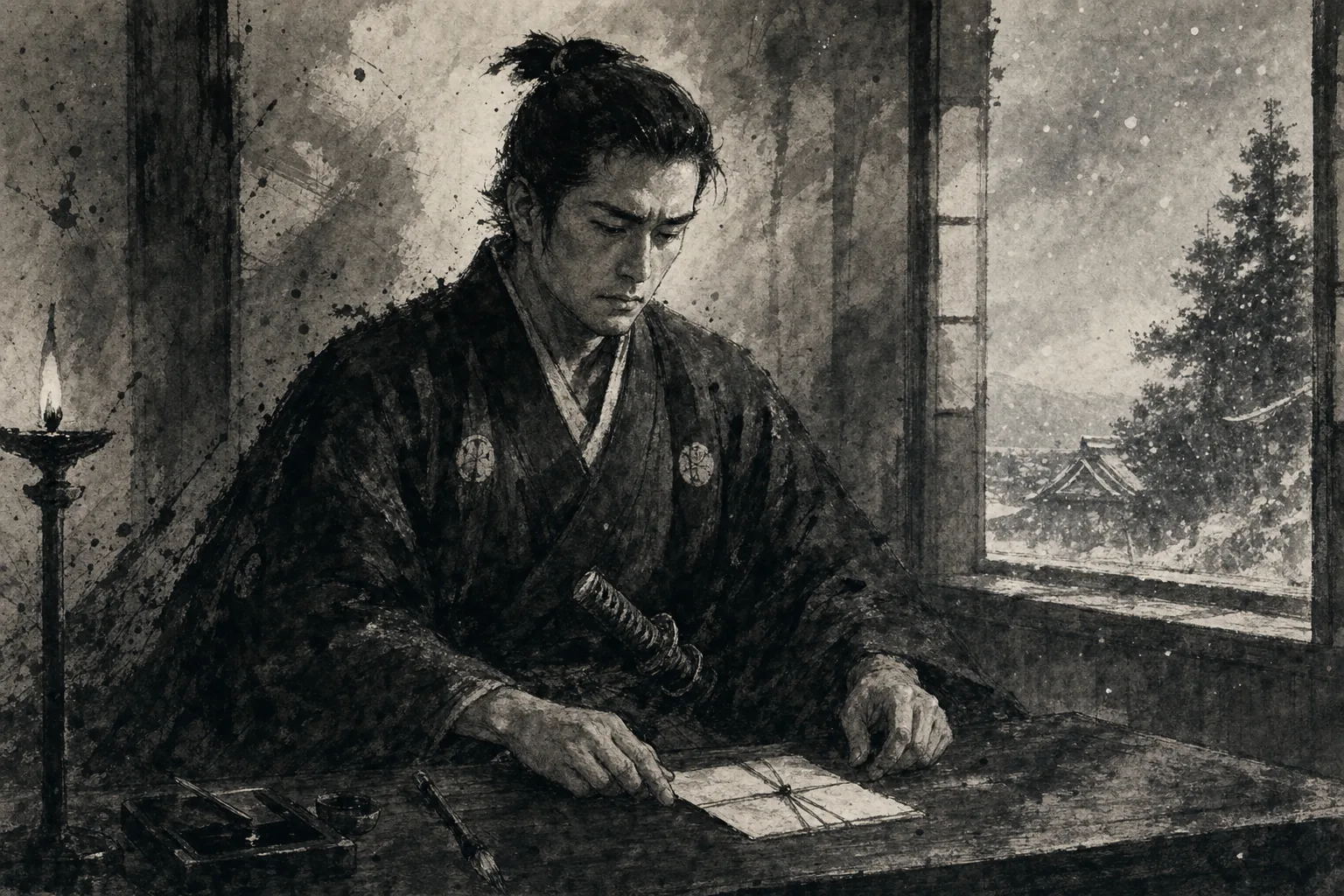
Back in Edo, Jinbo was confined and ordered to take his life amid Aizu’s pursuit of responsibility for the defeat and the eastward return. A barred window, rope-bound document chest, unread defense statement, extinguished lamp, folded formal clothing, and short sword represent institutional isolation within his own side rather than death in combat. Sources differ over the precise residence, movement between compounds, and old-calendar date, so the entire sequence should not be pinned to one modern spot. Nor should “a hard-line conspiracy” replace analysis of how a defeated organization urgently produced a culprit.
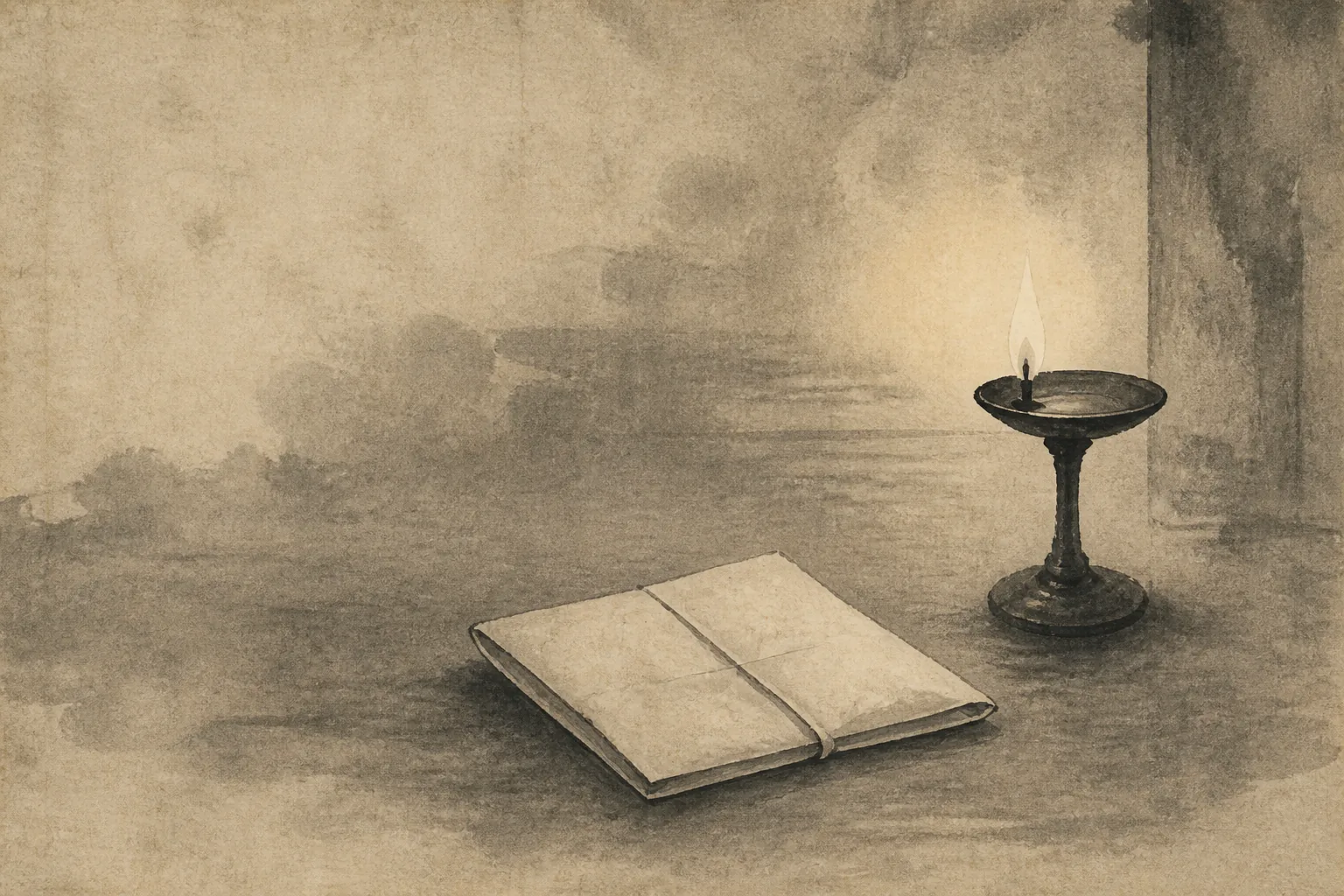
Jinbo’s final poem is transmitted as imagining his mother waiting for his return and receiving only fragile news instead of her son. Drying ink on handmade paper, an inkstone, sandals that will not be worn, a small sewing box, and a lamp by the doorway move attention from councils and military orders to domestic time. Wording and transmission require caution, and filial affection must not turn a coercive punishment into a beautiful warrior legend. The gap between the son expected home and the family left waiting lets readers judge organizational responsibility from the scale of everyday life.
VISIT
Search events related to Shuri Jinbo →Browse all Bakumatsu events →