Aizu castle town
Grows within Iinuma family relationships, writing, sewing, and household obligations
The page avoids invented anecdotes and uses genealogy and domestic materials as bounded context.
Person Guide
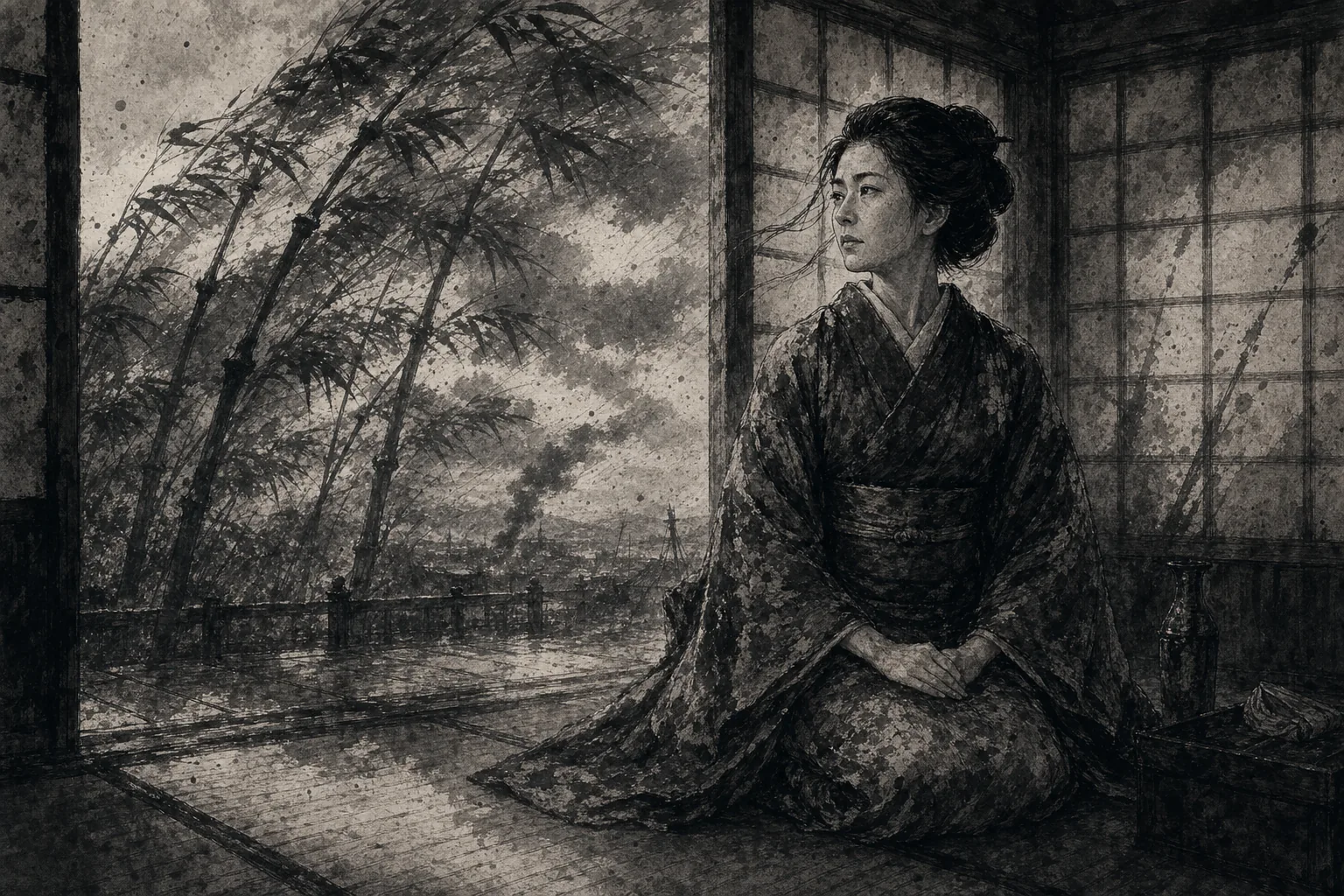
Saigo Chieko is often enclosed within one scene of family death and the later honorific image of an exemplary Aizu woman. The surviving material record instead follows the Iinuma family network and writing tools, the reconstructed plan and household equipment of the Saigo residence, letters and expense ledgers reaching the household during the Kyoto Protector years, a castle-town map and emergency bundles on 23 August 1868, paper and brushes through which the death poem was transmitted, and the family graves and later nayotake monument at Zenryuji. Because direct evidence about Chieko is limited, verified facts, contextual household history, reconstruction, and later commemoration remain visibly separate. Civil-war coercion, especially toward children and noncombatants, is not converted into a beautiful loyalty tale.
Life
Aizu castle town
The page avoids invented anecdotes and uses genealogy and domestic materials as bounded context.
Otemachi, Aizuwakamatsu
Plans, accounts, kitchens, clothing, and service reveal scale without relying on honorific stereotypes.
Correspondence between Aizu and Kyoto
This is household context, not evidence that Chieko personally took part in policy.
Shirakawa front and Aizu castle town
Campaign arrows return to children, food, clothing, and roads that noncombatants could use.
Saigo residence
Fear, norms, poor information, and children’s lack of choice remain beside later loyalty narratives.
Zenryuji and Aizuwakamatsu
Transmission, monument building, and reconstruction remain distinct from the original event.
福島県会津若松市
西郷頼母邸を基に復元された施設で、追手町にあった旧邸そのものではない。奥向き、台所、調度の配置を生活史の手掛かりとして見る。
西郷千重子
Address福島県会津若松市東山町大字石山字院内1
Nearby
福島県会津若松市
鶴ヶ城北出丸正面の追手町に残る邸跡表示。復元武家屋敷、善龍寺の墓と碑とは別地点である。
西郷千重子
Address福島県会津若松市追手町
Nearby
福島県会津若松市
再建天守を幕末当時の現存建物とはしない。城内展示と城下図を使い、八月二十三日の侵入経路と家々の位置を検証する。
西郷千重子
Address福島県会津若松市追手町1番1号
Nearby
福島県会津若松市
八月二十三日の城下侵入を一つの劇的場面にせず、門、道、避難、伝令、混乱が各家へ届く時間としてたどる。
西郷千重子
Address福島県会津若松市栄町周辺
Nearby
福島県会津若松市
人物伝承だけでなく、家政道具、古文書、城下図、戦争資料の来歴を調べる。展示替えがあるため公開状況を確認する。
西郷千重子
Address福島県会津若松市城東町1番25号
Nearby
福島県会津若松市
西郷家21人の墓と千重子の歌にちなむ碑がある。邸跡や自決地と同一視せず、後世の顕彰と供養の場所として訪れる。
西郷千重子
Address福島県会津若松市北青木周辺
Nearby
Keys
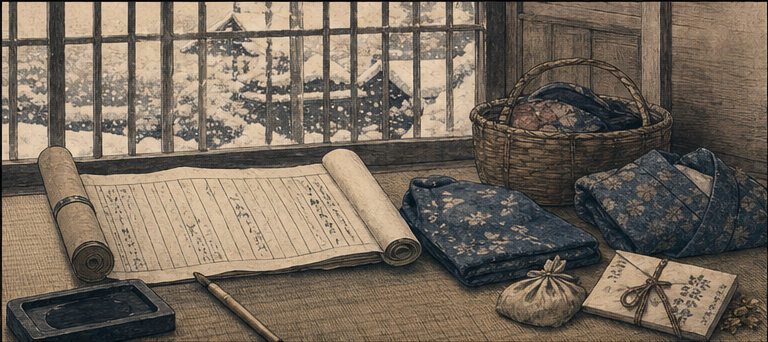
Born in 1835 with the Iinuma family name, Chieko later married Aizu chief retainer Saigo Tanomo. Her relationship as an aunt of Iinuma Sadakichi, the surviving Byakkotai member, is one concrete link between the Iinuma and Saigo households. A genealogy, household register, brush, inkstone, sewing basket, folded children’s clothes, and medicine packets provide material prompts for studying how samurai women supported birth records, clothing, nursing, gifts, and ritual. They are not presented as Chieko’s surviving possessions. Rather than invent childhood anecdotes or a precise birthplace interior, the section directs readers to family genealogy, women’s literacy, sewing, household medicine, and the structure of Aizu retainer families.

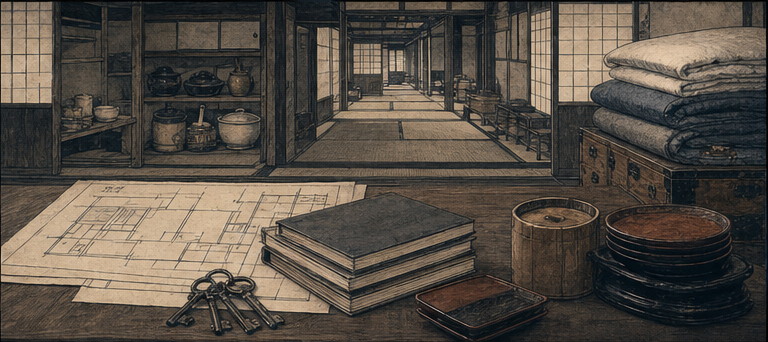
The Saigo family had supplied Aizu chief retainers for generations, and Tanomo’s household is described as holding 1,700 koku. A large residence required account books, storehouse keys, rice measures, lacquer trays, pots, hearths, bedding chests, clothing storage, and organized service. This material scale is more useful than reducing Chieko to the later phrase “good wife and wise mother.” The marked residence site in Otemachi is the historical location. Today’s Aizu Bukeyashiki is a reconstructed complex based on the residence, not the same site and not a surviving original building. Its plan and utensils should be read with their reconstruction evidence and linked to studies of Aizu retainers, samurai kitchens, domestic accounts, and women’s household management.
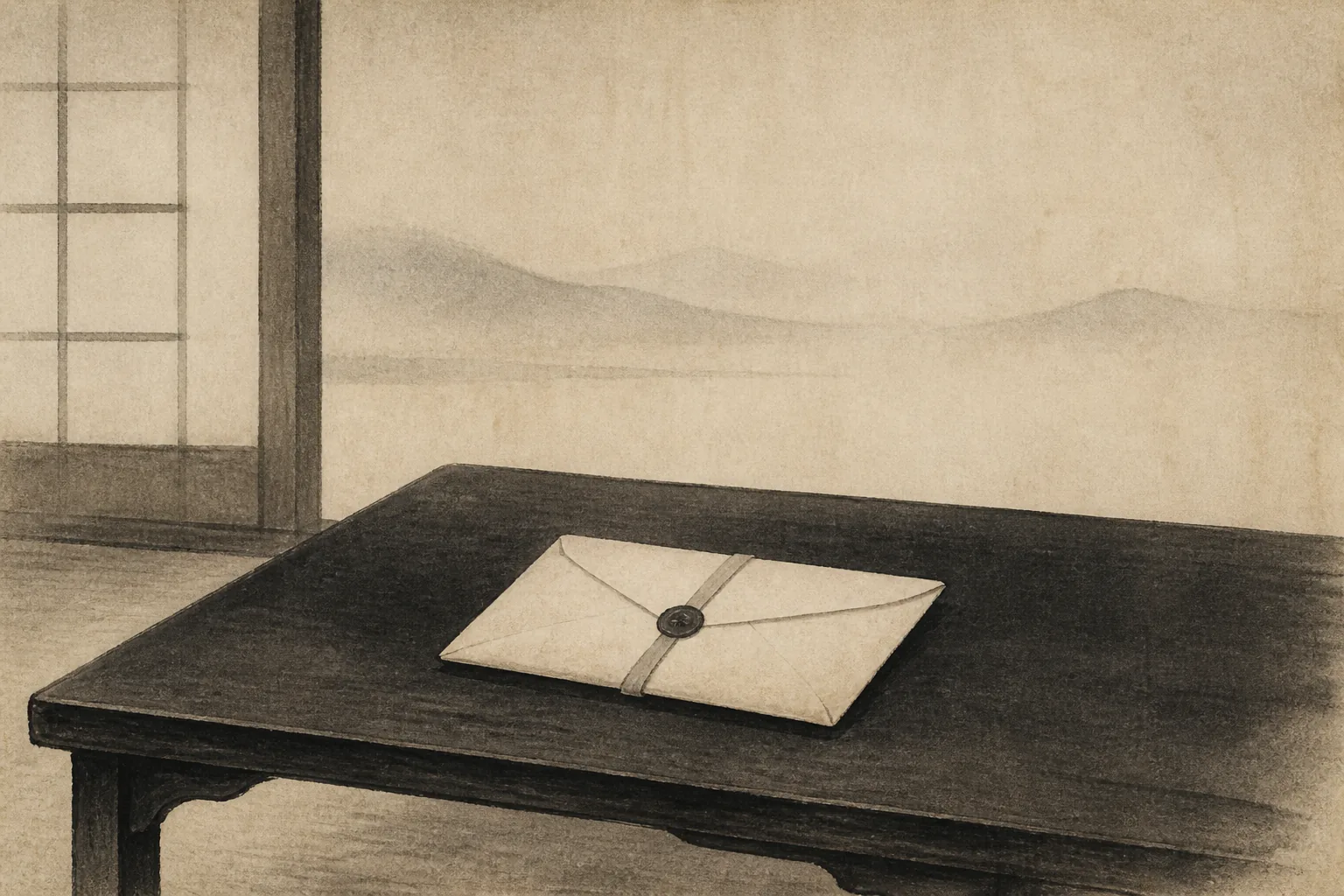
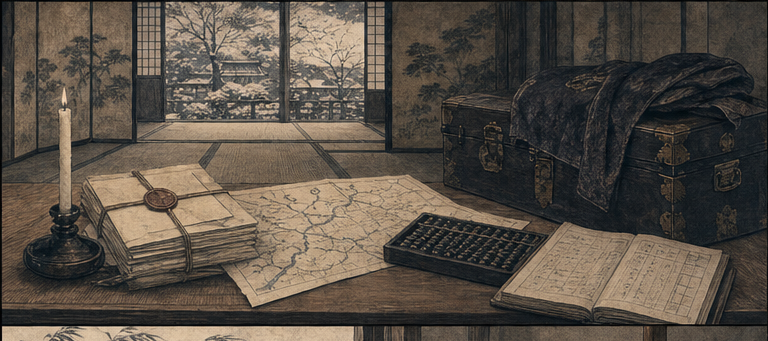
In 1862 Tanomo opposed Lord Matsudaira Katamori’s acceptance of the Kyoto Protector post and lost his position as chief retainer. Official letters, a Kyoto route map, travel chest, expense ledger, abacus, candles, stored winter clothing, and guest trays suggest how distant politics arrived at an Aizu household as information, absence, expense, hospitality, and altered status. The page does not claim that Chieko traveled to Kyoto, participated directly in policy, or wrote a particular surviving letter. The precise household consequences require verification in Saigo and domain records. The objects create reading paths into the Kyoto Protector office, Aizu finance, chief-retainer households, long-distance correspondence, and women’s position within political households without assigning undocumented agency.
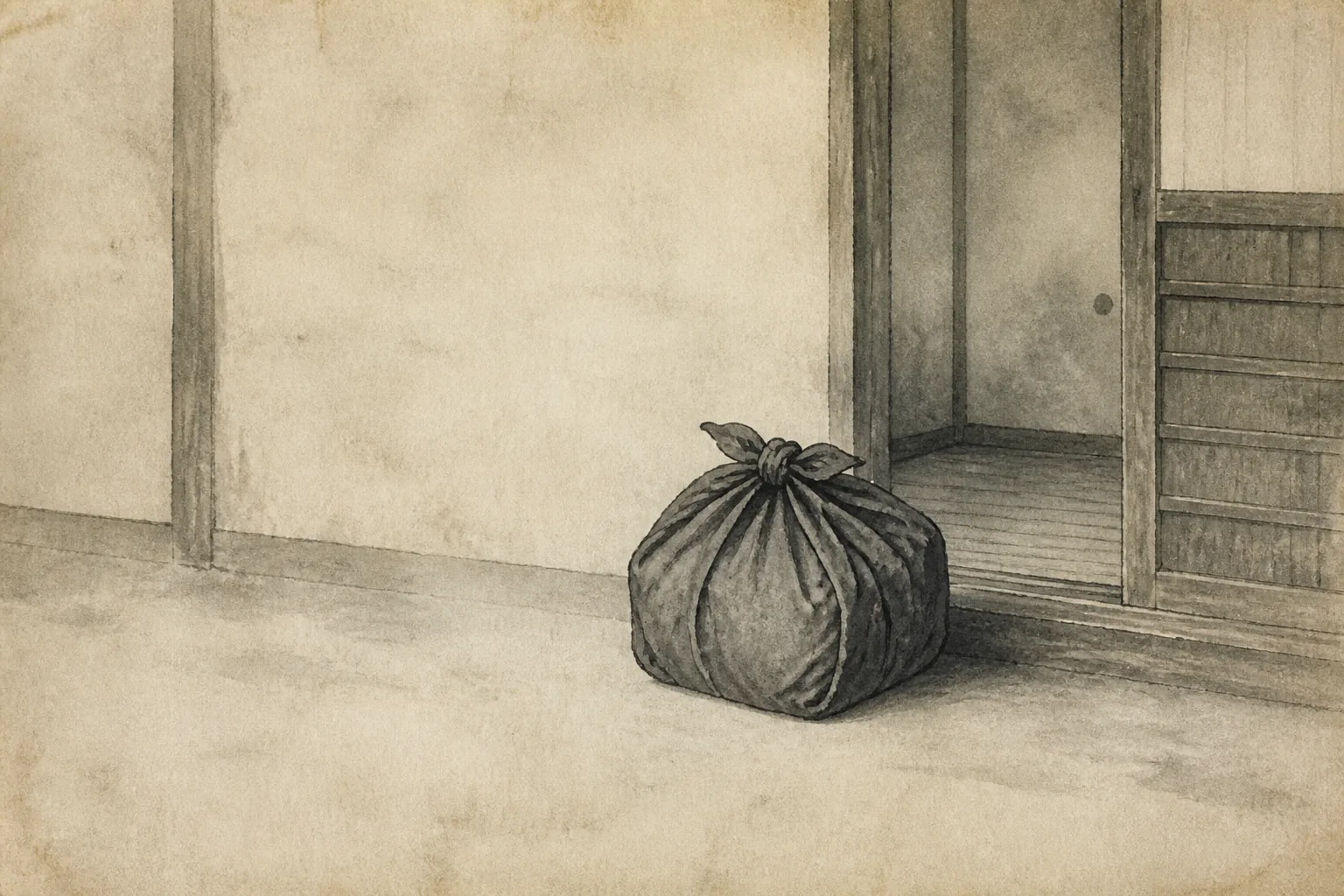
On 23 August 1868 new-government forces entered the Aizuwakamatsu castle town, bringing combat from gates and roads into domestic interiors. A street map, gate positions, carrying bundle, straw sandals, water flask, medicine pouch, lantern, and children’s folded clothing turn invasion into urgent questions: which road remained open, who could walk, and what could be carried. The deaths of twenty-one Saigo relatives are often told as avoiding burden or dishonor, but that framing cannot erase fear of capture, warrior-house norms, limited information, and the absence of meaningful choice for young children. Maps of the Kogamachi gate, Otemachi, evacuation routes, and civilian damage make the war visible beyond battlefield arrows.
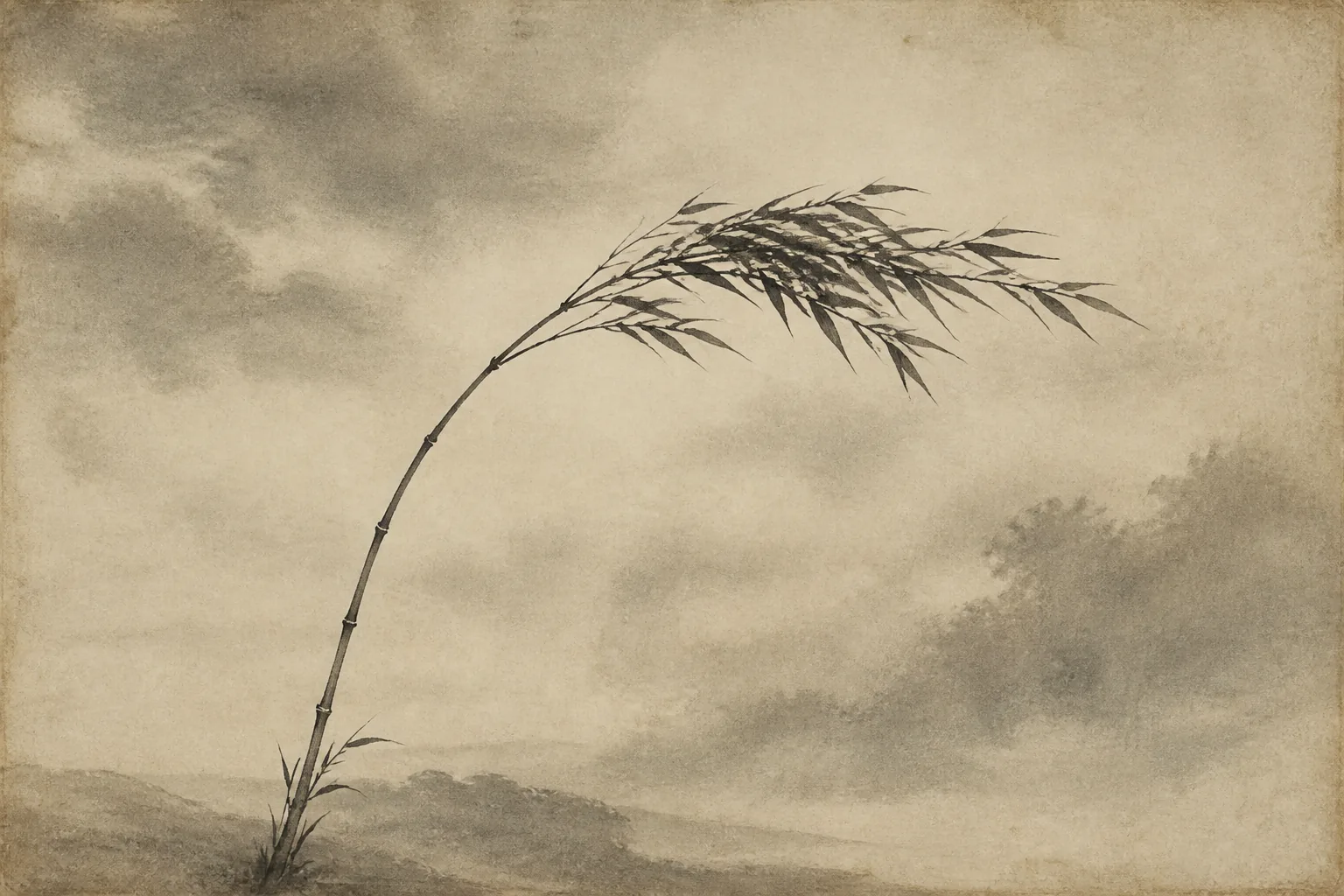
The poem beginning “nayotake no kaze ni makasuru mi nagara mo” is transmitted as Chieko’s final poem. Tanzaku paper, writing sheets, brush, inkstone, lamp, and bamboo bending in wind represent the processes of composition, copying, publication, and inscription. This reconstructed scene does not claim that the displayed writing is Chieko’s autograph. Circulated Japanese texts vary, including tawamanu or tayumanu and endings translated as “I hear” or “know,” so each form must be tied to a source. Bamboo joints should not be flattened into triumphant resilience alone. The poem joins a body subjected to outside force with a boundary its speaker attempts to retain, opening research into death poems, textual transmission, women’s writing, and memorial inscription.
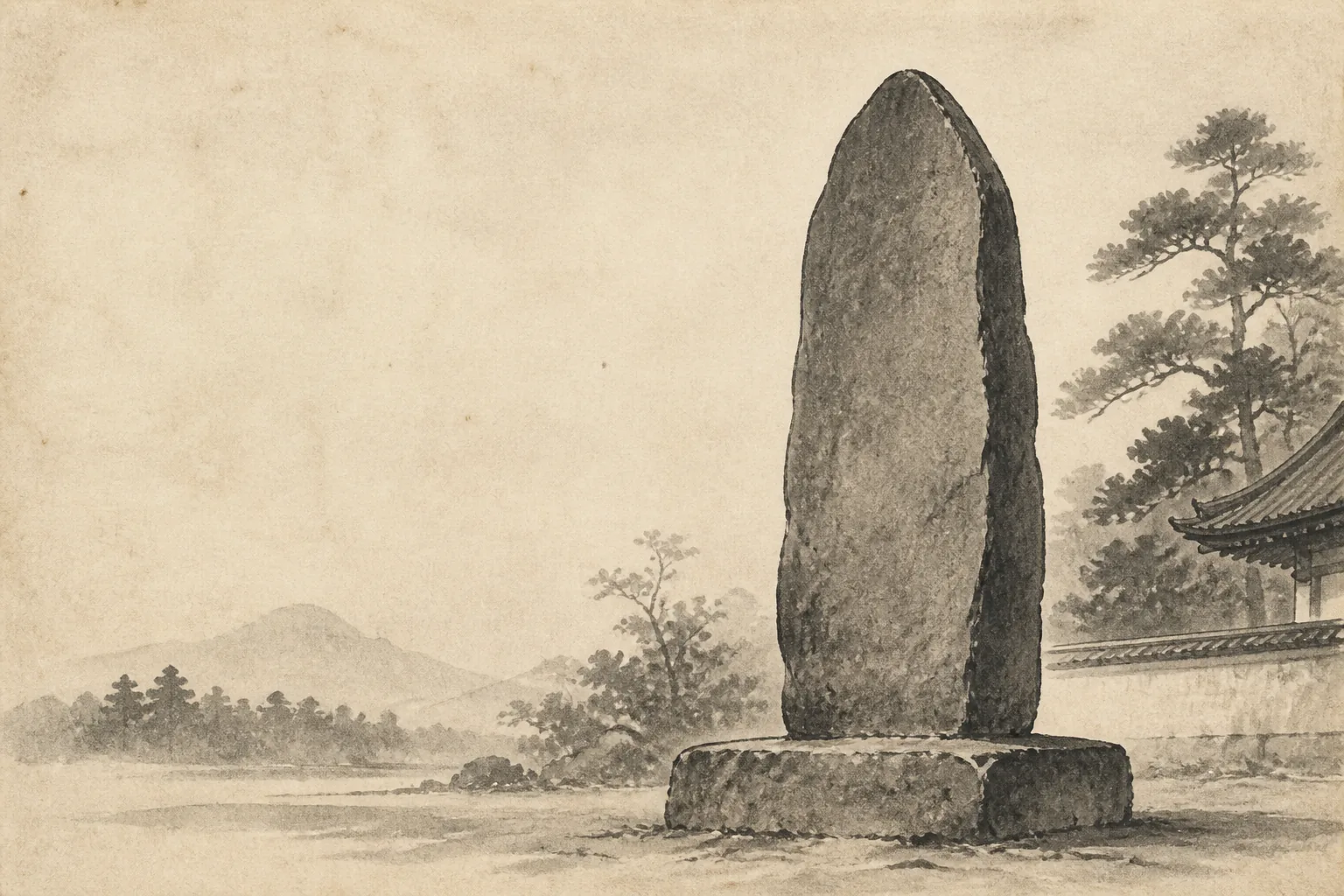
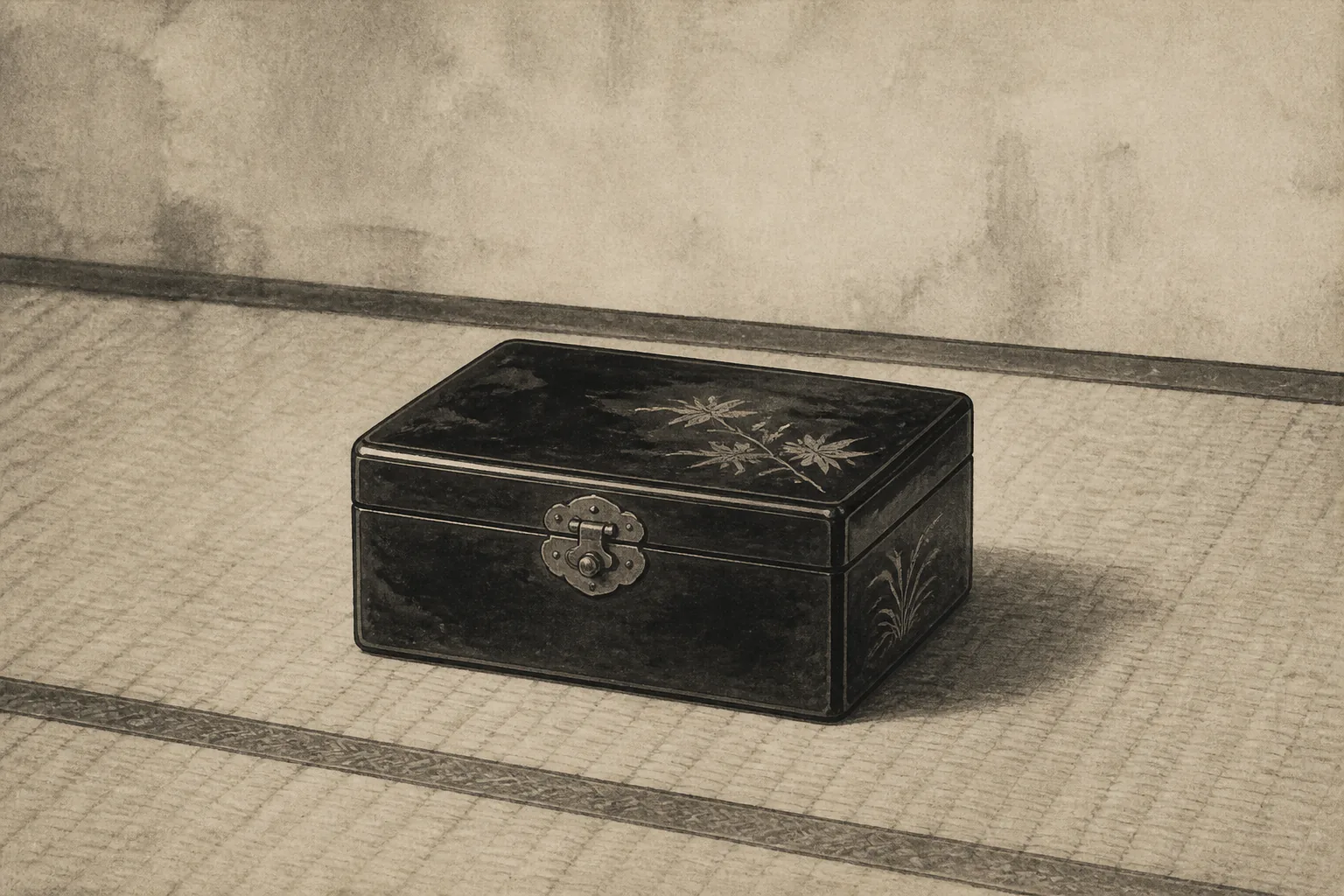
Zenryuji contains the graves of the twenty-one Saigo family members and a monument named for Chieko’s nayotake poem. Gravestones, epitaphs, the later stone monument, incense vessel, water ladle, flowers, bamboo leaves, and rubbing paper show how relatives, residents, and visitors have given the deaths durable language and ritual form. The Otemachi residence site marks the event; Zenryuji is a separate place of burial, worship, and commemoration. Its inscriptions are not automatically contemporary eyewitness records, so establishment dates, calligraphers, relocation, and cemetery repairs require checking. The memorial also invites readers to ask what the exemplary-woman narrative preserved and what it obscured about children, coercion, and civil war.
VISIT
Search events related to Chieko Saigo →Browse all Bakumatsu events →