Azono area, Tosa
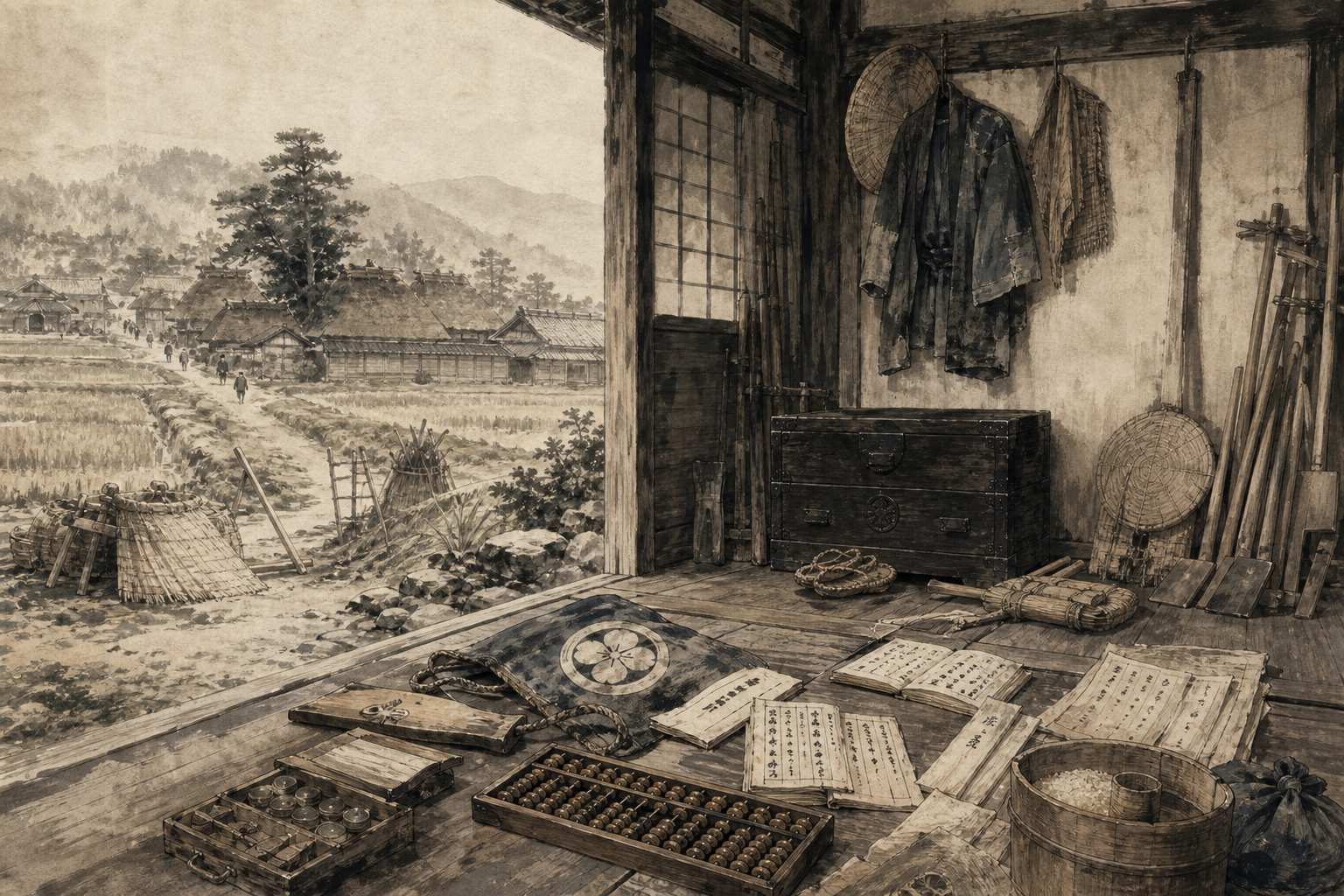
Grows among land papers, rice, farm tools, household accounts, and a sword chest
Goshi rank, rural work, household labor, and weapon costs create the practical conditions for later martial training.
Know the Person
Okada Izo should not be reconstructed from the later label 'Izo the Killer' and a sequence of assassination scenes. The surviving material record follows land and stipend papers, household account, rice measure, abacus, patched clothing, farm tools, and a closed sword chest in a Tosa goshi household; bamboo swords, wooden practice weapons, armor, straw target, water bucket, and training ledger at the Takechi Zuizan dojo; armor chest, practice-sword bag, dojo entry token, route map, rain cape, sandals, medicine packet, and lodging book on an Edo martial-training journey; Kyoto street map, lantern, checkpoint pass, letter case, whistle, rope, and sheathed sword; arrest paper, transfer order, sealed box, interrogation notes, kasho statement, inkstone, and restraints; and prison bars, straw mat, water bowl, shackles, judgment document, execution register, and grave marker. Attribution, custody, and record-making remain visible.
Life
Azono area, Tosa
Goshi rank, rural work, household labor, and weapon costs create the practical conditions for later martial training.
Saenba, Kochi castle town
Swordsmanship begins as embodied technique and shared discipline before dojo relationships acquire political force.
highway and Edo
Roads, inns, introductions, and practice with other schools add technique and urban networks without proving a specific rank.
Kyoto and the Tosa residence
Escort and messaging work must be separated from attacks attributed with varying certainty in different sources.
Kyoto, Tosa, Kochi
Custody, questioning, scribal wording, coercion, and editing mean the statement cannot be treated as transparent confession.
Kochi castle town and Azono cemetery
Execution site and grave remain separate, and death is read through suppression and judicial institutions rather than killer legend.
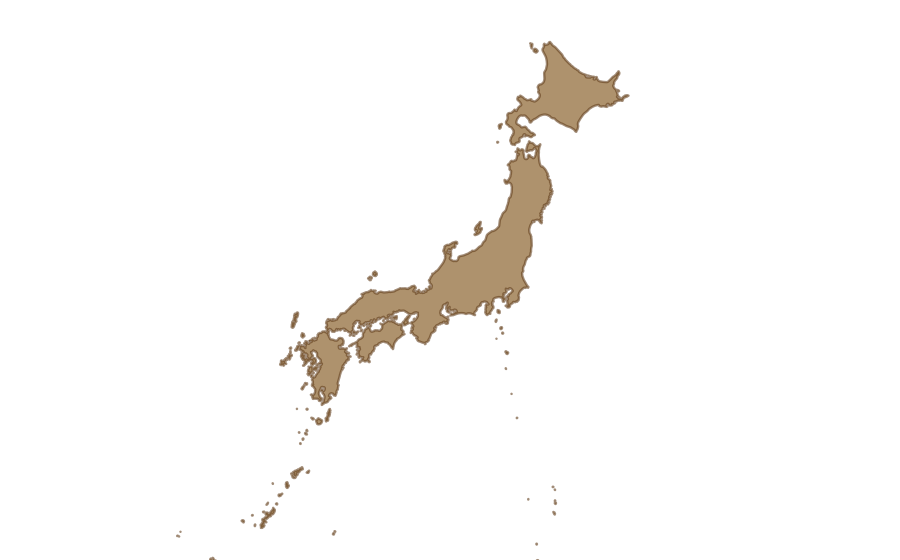
高知県高知市
生家建物の現存を前提にせず、土地、扶持、米、農具、刀箪笥を持つ郷士家の生活を薊野周辺からたどる。
岡田以蔵
Address高知県高知市薊野周辺
Nearby
高知県高知市
横堀公園の碑は道場の実位置から約30メートル離れると高知県が案内する。碑と旧位置を同一の建物跡と誤認しない。
岡田以蔵
Address高知県高知市菜園場町・横堀公園周辺
Nearby
東京都
特定道場・流派の断定を避け、土佐から江戸へ防具、竹刀袋、紹介状を運び、他流と稽古した移動の場として示す。
岡田以蔵
Address東京都千代田区・台東区周辺
Nearby
京都府京都市中京区
夜間の警衛・探索と暴力事件を区別し、提灯、市街図、通行札、密書、捕縛状、送還状から藩邸実務を見る。
岡田以蔵
Address京都府京都市中京区木屋町通蛸薬師周辺
Nearby
高知県高知市
旧牢や処刑施設の正確な一点を現代地図だけで断定せず、高知城下の藩庁・拘禁・取調べを史料からたどる調査拠点。
岡田以蔵
Address高知県高知市丸ノ内・帯屋町周辺
Nearby
高知県高知市
高知県が案内する岡田家墓地。処刑地そのものではなく、家の墓と後世の顕彰・評判を検証する終点。
岡田以蔵
Address高知県高知市薊野北町周辺
Nearby
Keys
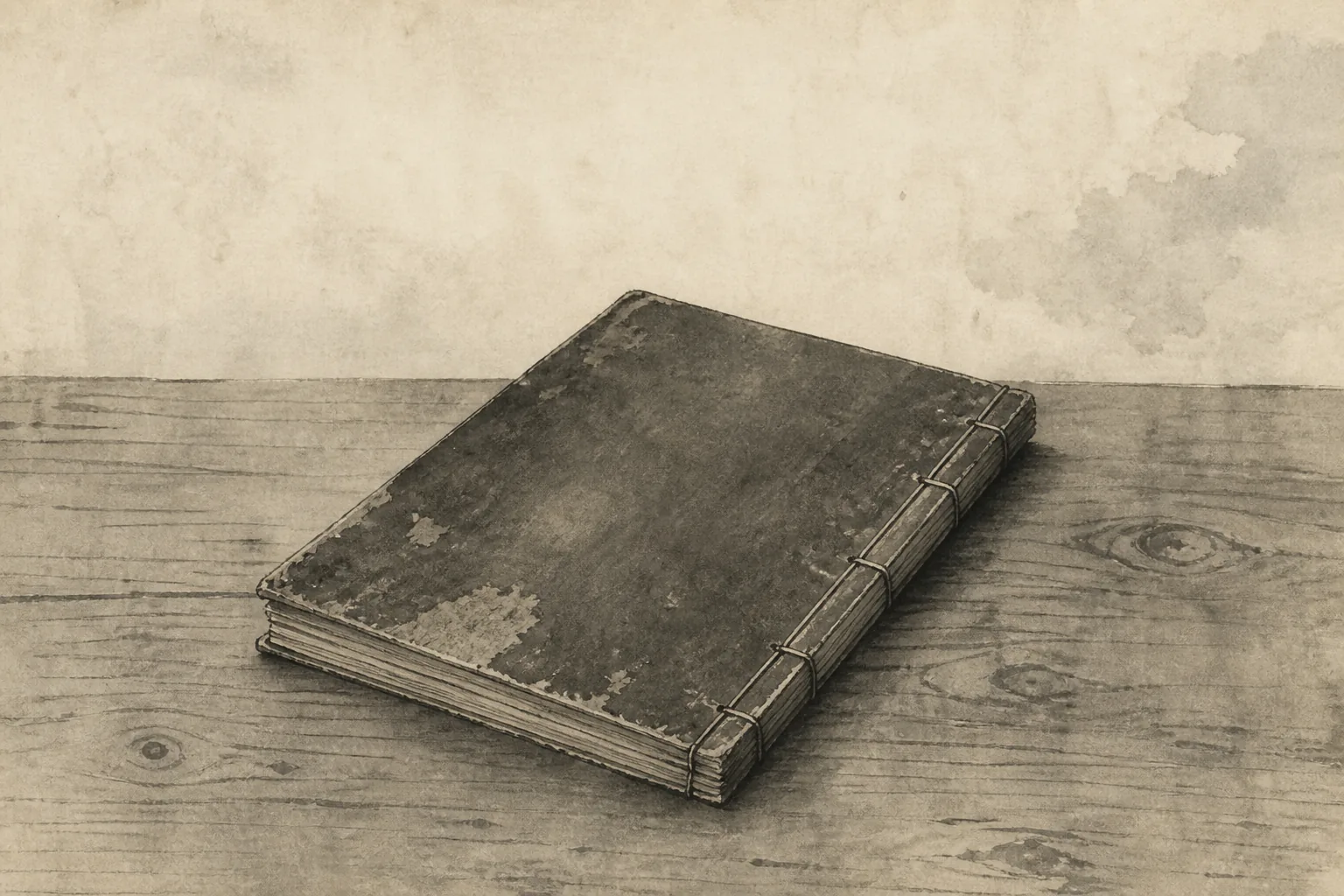
Okada was born in 1838 into a Tosa goshi household. Land and stipend notes, a household account, rice measure, abacus, pawn slip, patched clothing, straw sandals, sickle, hoe, and closed sword chest show that goshi status was neither only the right to wear swords nor a simple synonym for poverty. Institutional difference from upper retainers, cultivation and side work, family labor, formal and daily clothing, and the cost of maintaining weapons coexisted. His later life should not be reduced to resentment over rank. The objects instead identify the practical conditions under which a limited household supported martial training and absorbed its expense.
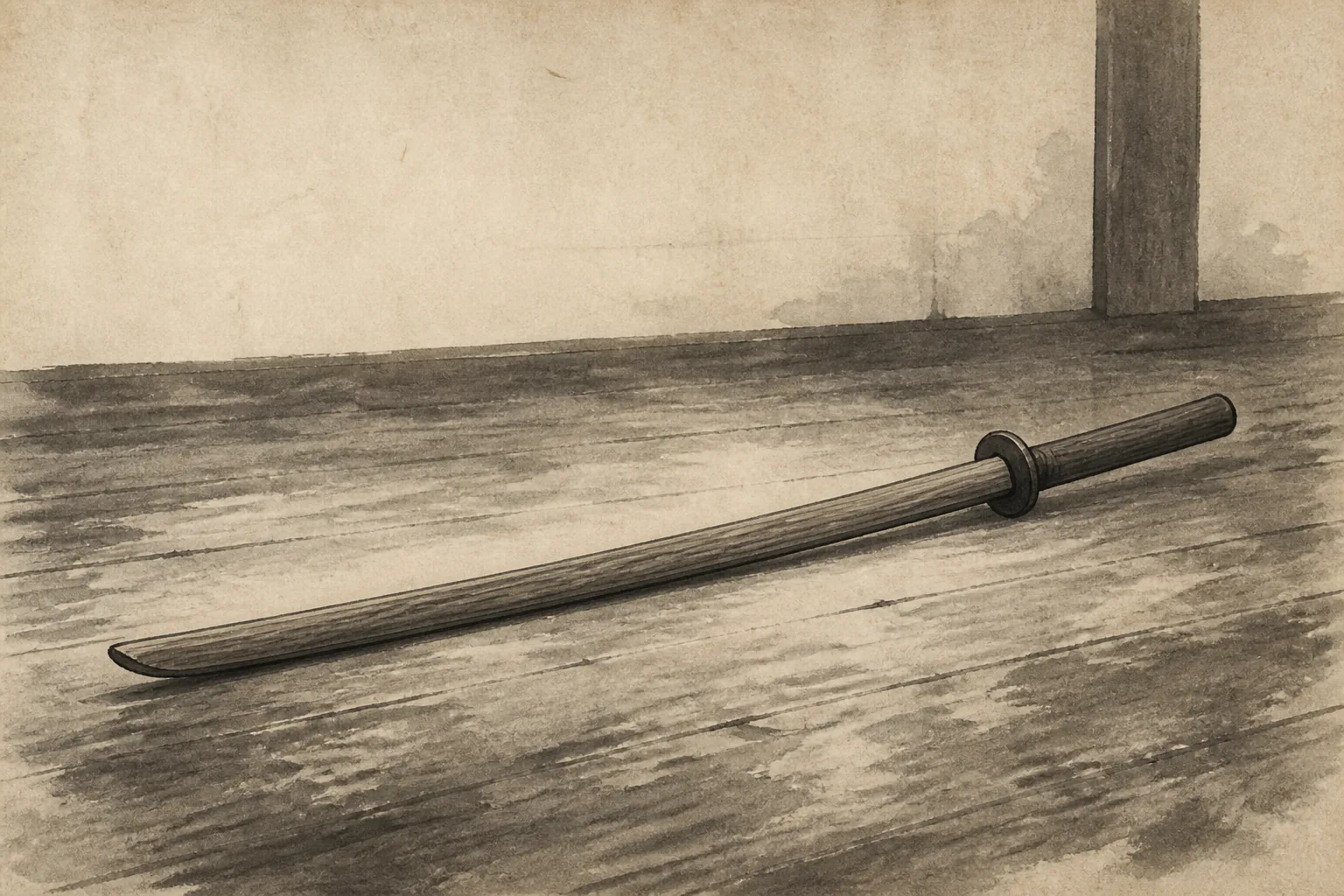
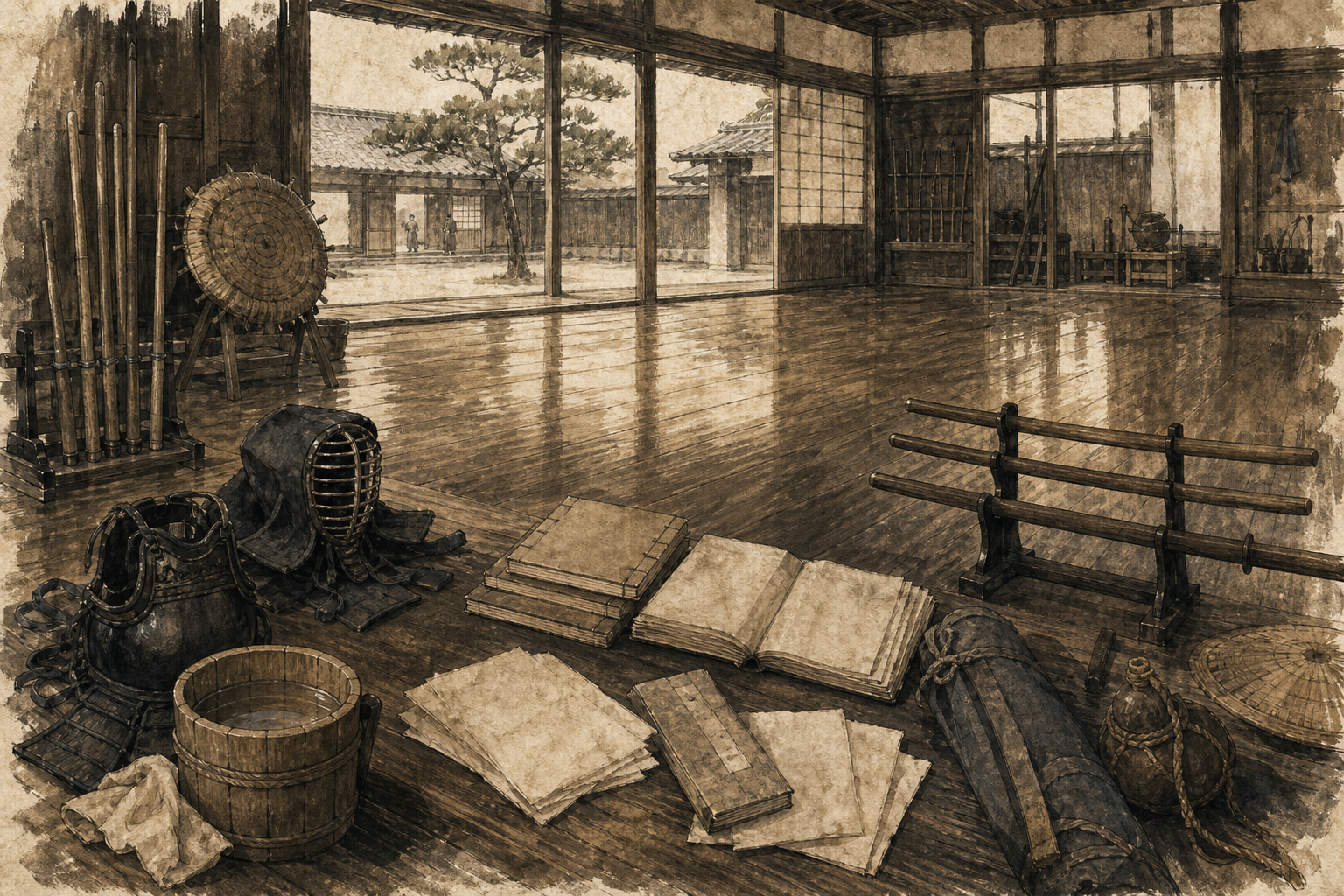
Okada studied swordsmanship at Takechi Zuizan's dojo in Saenba. Bamboo swords, wooden practice weapons, mask, cuirass, gloves, straw target, weapon rack, water bucket, towels, cleaning tools, and a training ledger place the sword before assassination stories, as repeated work in distance, footwork, receiving, striking, etiquette, and maintaining a shared floor. Takechi was both teacher and later leader of the Tosa Loyalist Party, but not every pupil should be dissolved into one political command. Kochi Prefecture notes that the monument in Yokobori Park stands about thirty meters from the likely dojo location, so marker and original building site remain distinct on the map.
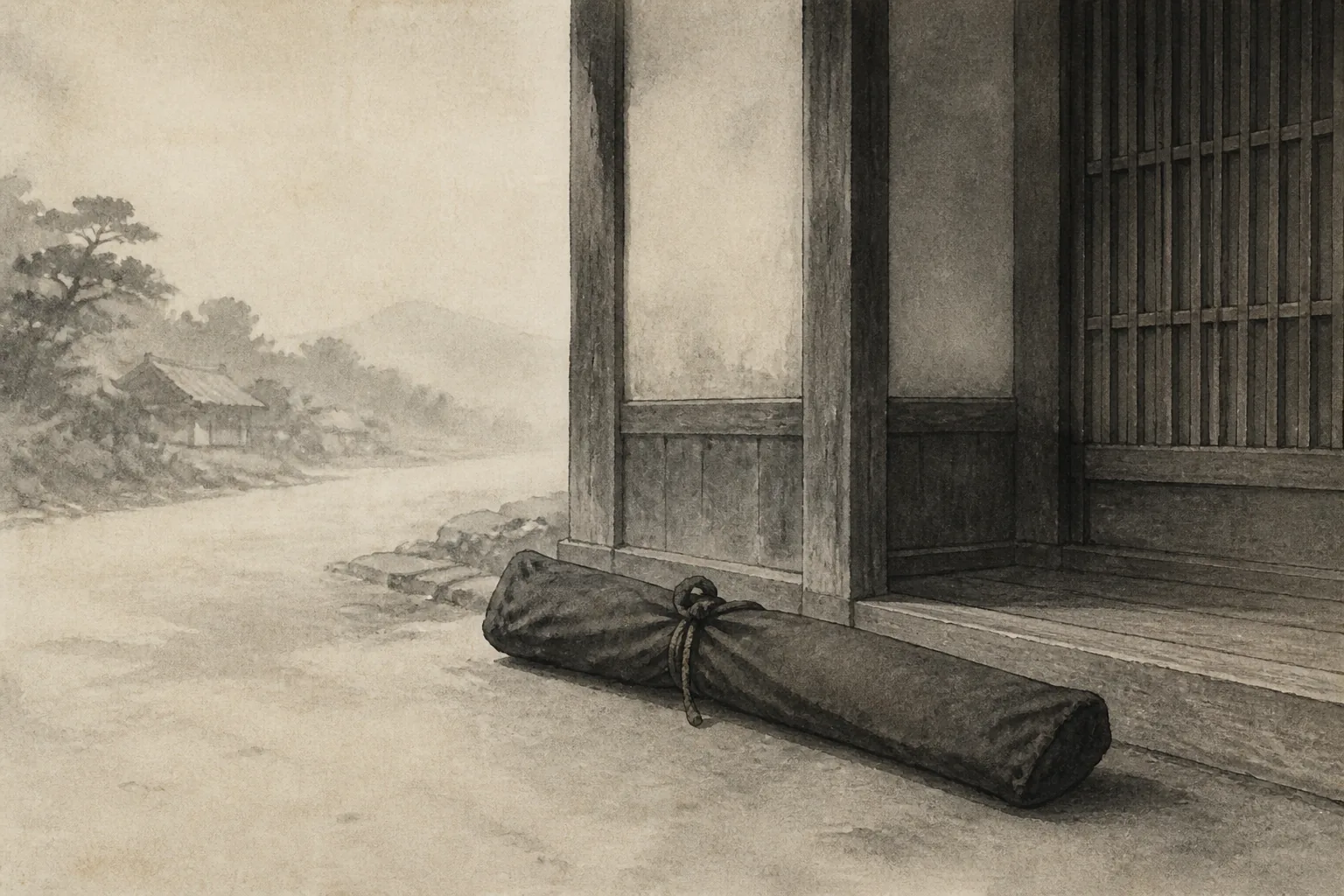
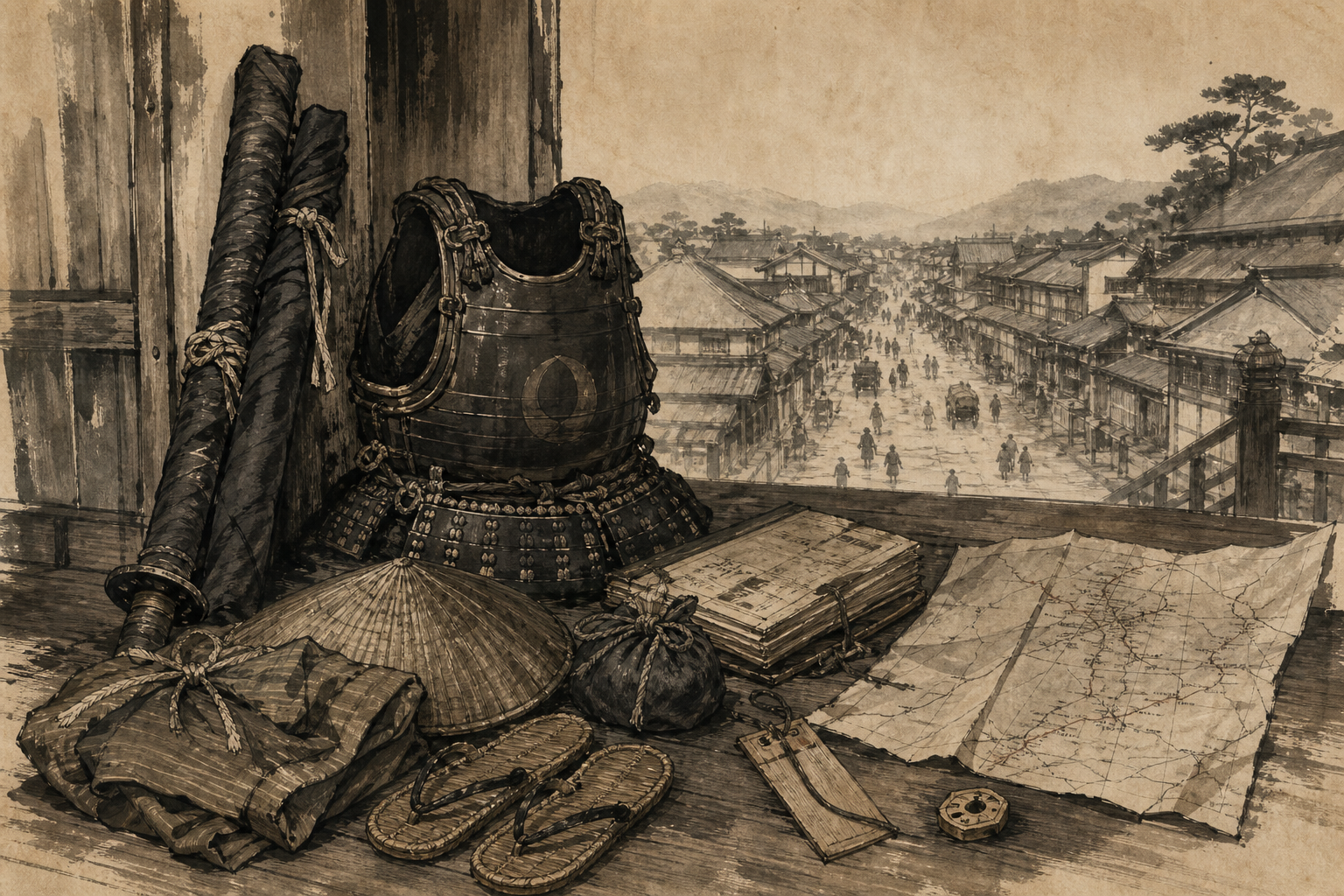
The young Okada is remembered as traveling to Edo with Takechi and others for martial study. An armor chest, practice-sword bag, letter of introduction, dojo entry token, route map, rain cape, spare sandals, medicine packet, coin string, and lodging ledger return training from legends of victory to walking from Tosa, paying for inns, accepting dojo rules, and practicing forms and free bouts against unfamiliar partners. Biographies differ over precise schools, lineages, and licenses, so the page does not award an unsupported rank. Contact with other schools brought not only technique but also access to an urban network of domain residences, martial halls, and masterless warriors.
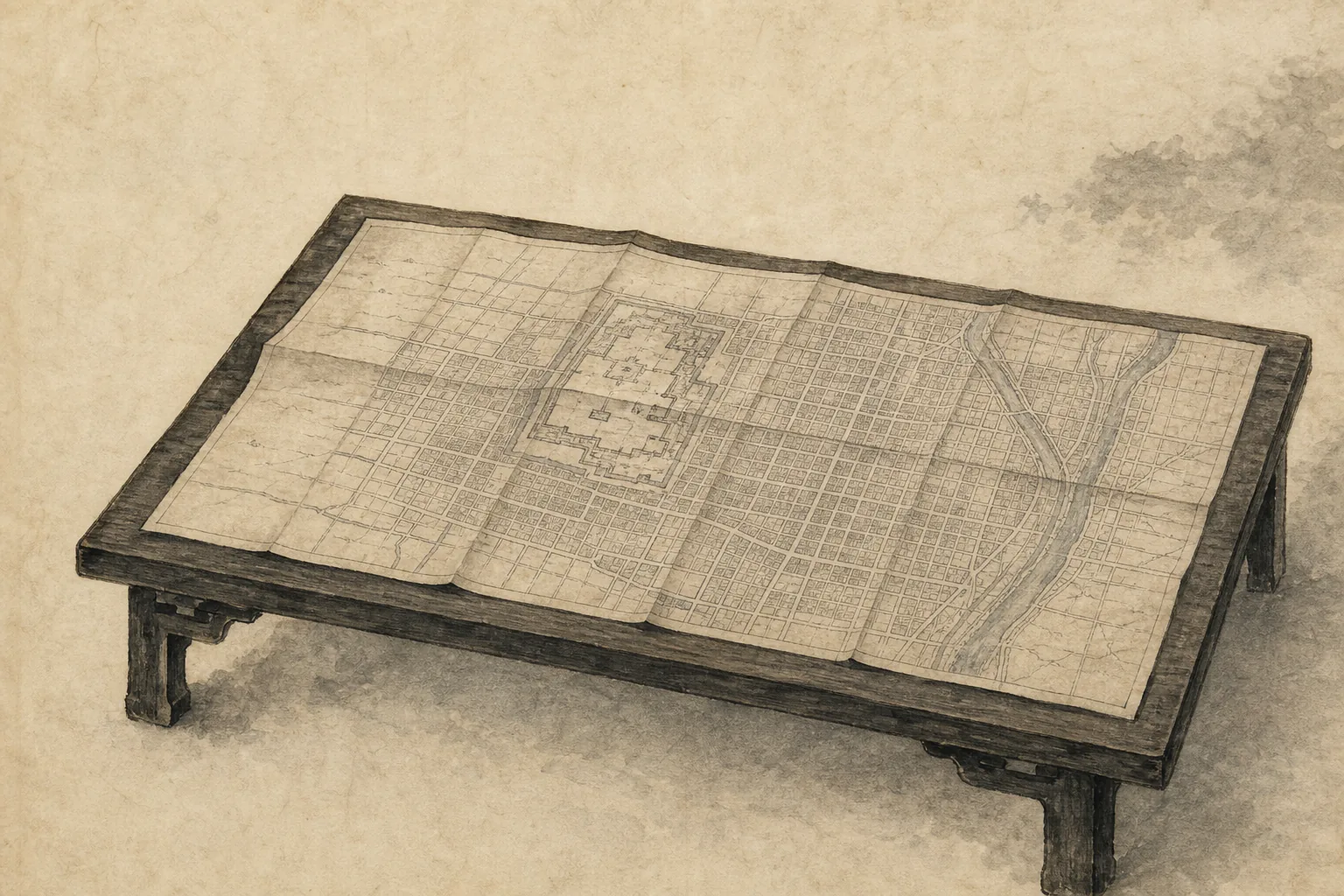
In Bunkyu-era Kyoto, domain officers, activists, townspeople, and patrols moved among the palace, residences, inns, Kiyamachi, and Kawaramachi. A Kyoto street map, lantern, rain cape, checkpoint pass, hidden letter case, whistle, arrest rope, sandals, and sheathed sword make night escort, lookout, messaging, search, and inspection concrete. Individual attacks attributed to Okada carry different evidentiary strength in contemporary records and later biographies. The page therefore does not present a sensational 'kill list' as settled fact. Guarding and private punishment, orders and personal action, rumor and recorded statement must be separated within an urban system that enabled political violence.
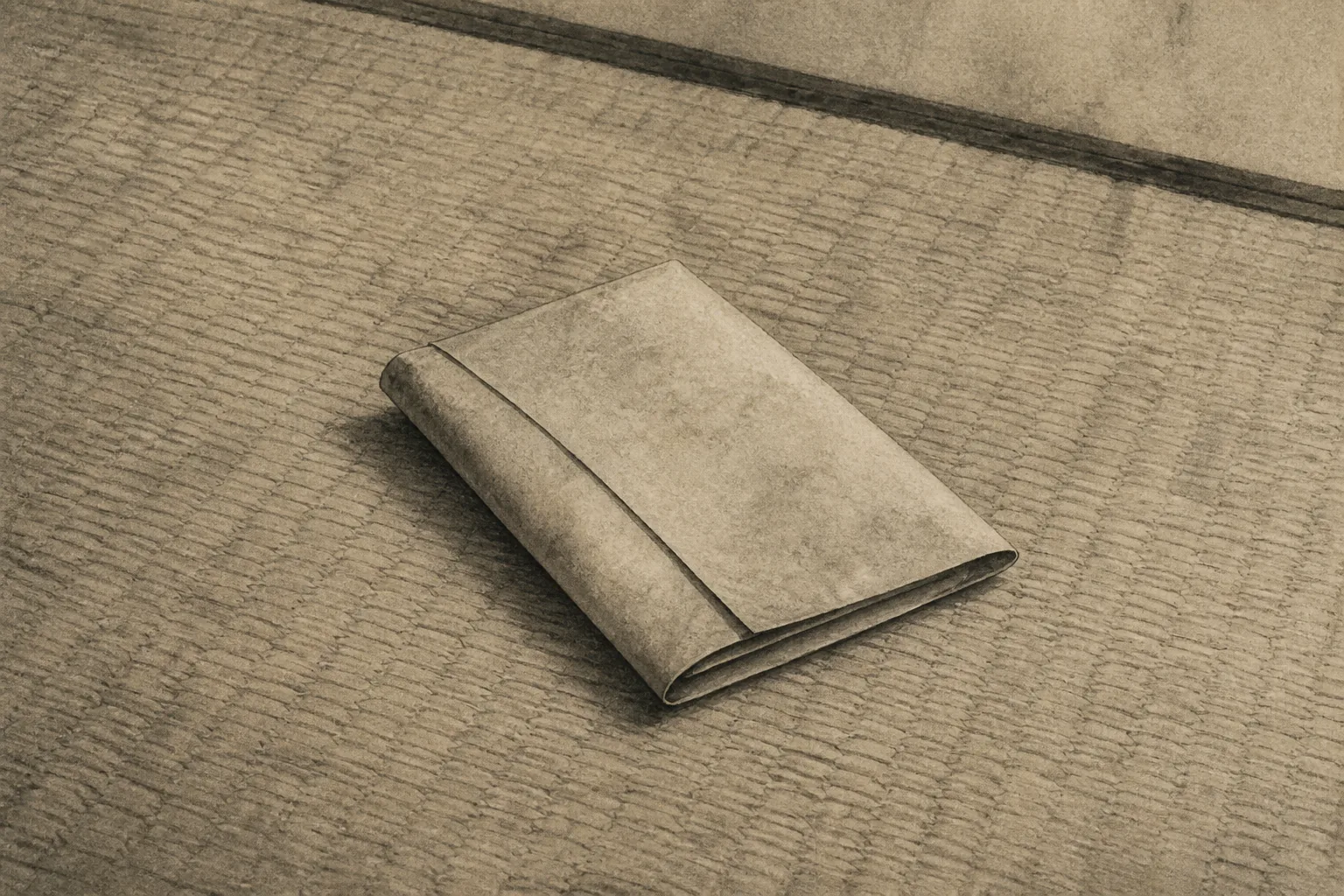
Captured in Kyoto in 1864, Okada was returned to Tosa and interrogated during suppression of the loyalist network. Arrest papers, handover receipt, transfer order, sealed document box, rope, wooden restraints, interrogation notes, inkstone, brushes, and the compiled kasho statement show events becoming domain judicial prose. A kasho is not an audio recording of an unmediated voice. Confinement, possible torture or coercion, question order, a scribe's vocabulary, the narrative needed by domain authorities, and later fair copying or editing shaped the document. Its content should be neither discarded wholesale nor accepted wholesale before asking who produced it under what conditions.The interrogation ended in Izo’s execution and exposure of his head in the intercalary fifth month of 1865. Because the written statements helped sustain the domain’s sentence, their conditions of production affected judgment and life rather than merely later reputation.
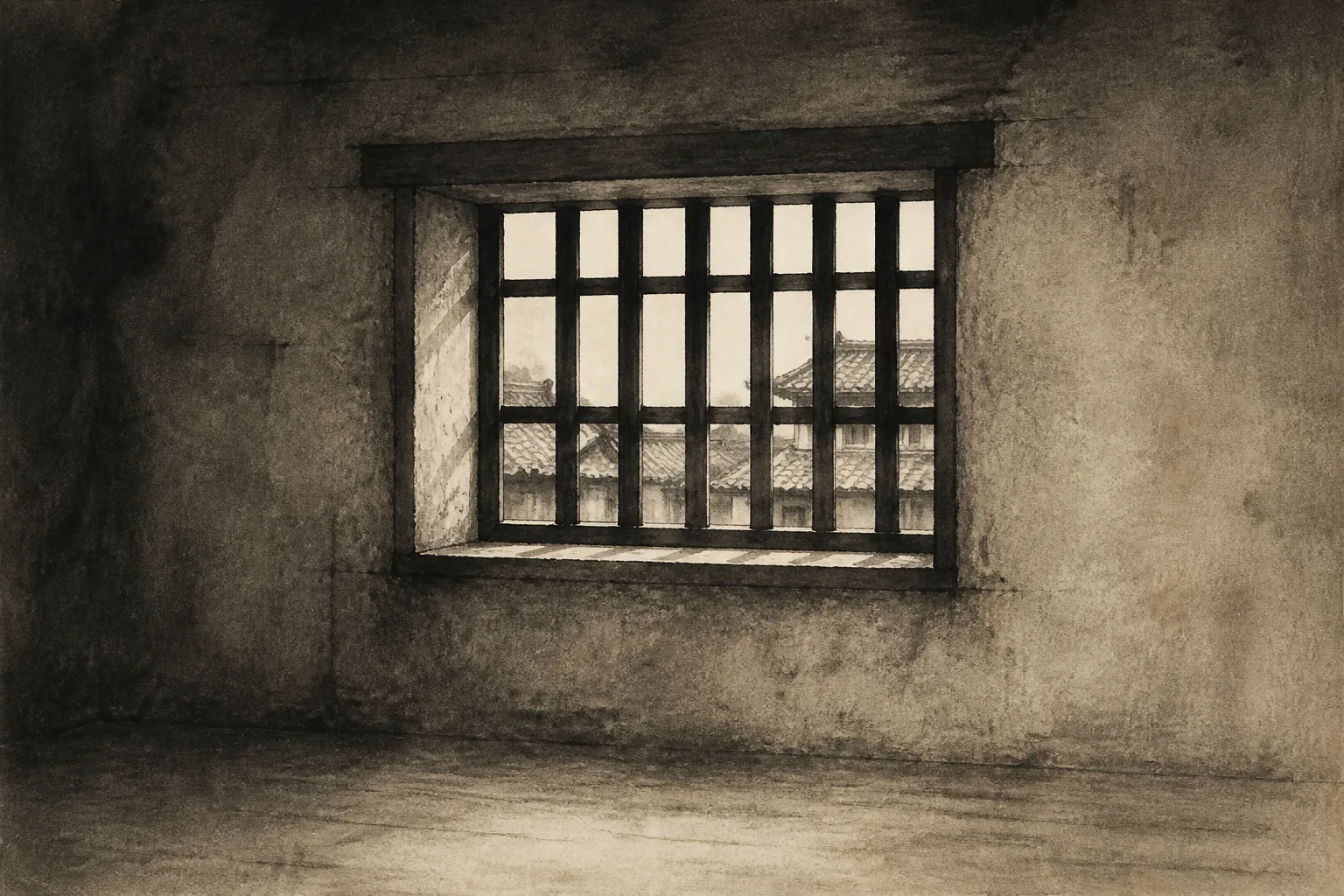
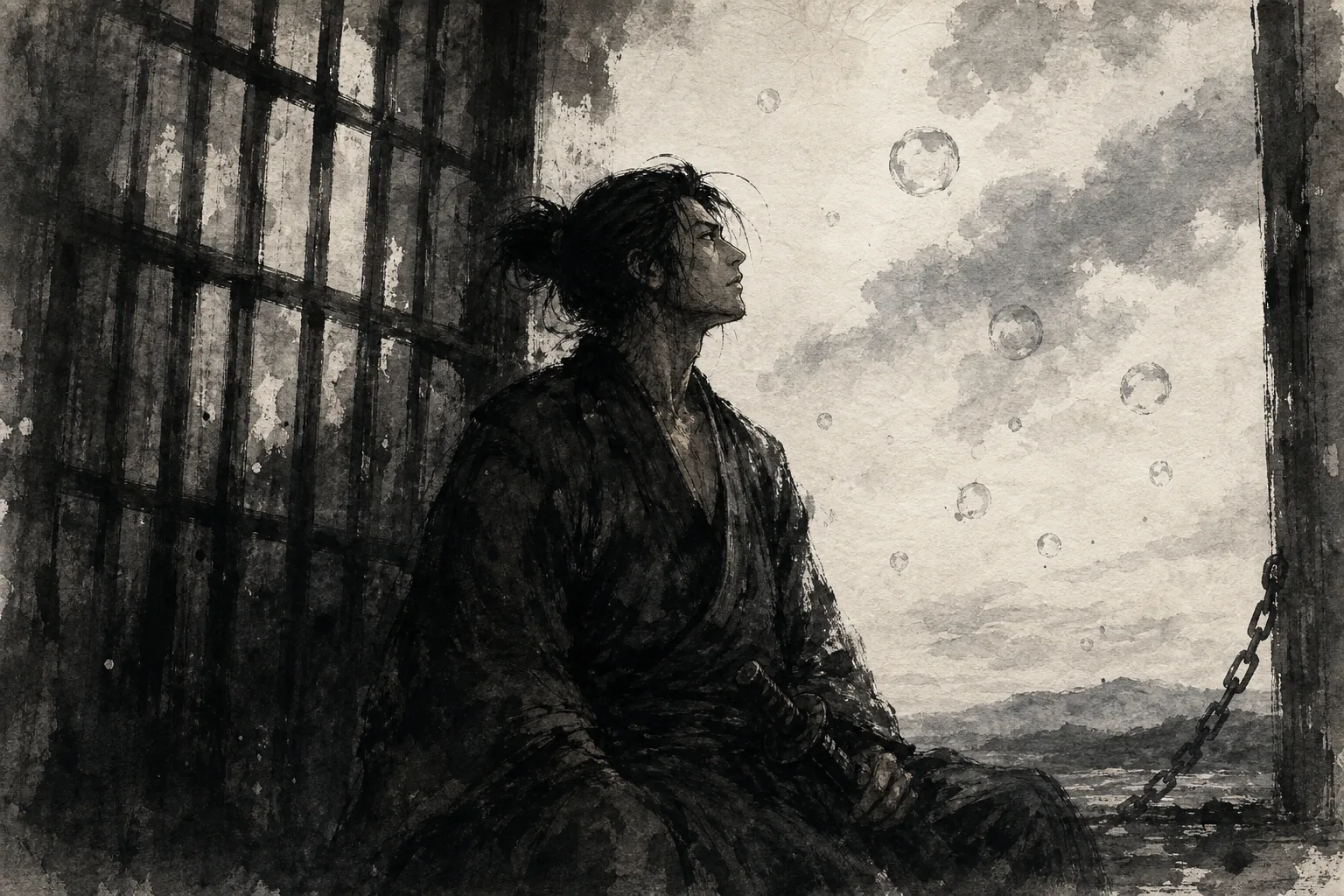
Okada remained in a prison cell in Kochi castle town and was executed in 1865. A barred window, straw mat, water bowl, shackles, bundle of clothes, judgment document, execution register, officials' duty log, and grave marker return death from a dramatic swordsman's finale to domain factional conflict, suppression of the Tosa Loyalist Party, confinement, and sentencing. The method of death and attributed final words need not be repeated for spectacle. Fellow detainees, clerks who produced the records, and family consequences also matter. The Okada family cemetery at Azono is not the execution site; it is a place to compare personal burial and the later killer legend.
VISIT
Search events related to Izo Okada →Browse all Bakumatsu events →