Tesshu Yamaoka · Shogunate retainer Tesshu Yamaoka's death poem, "腹痛や苦しき中に明けがらす". Read the original Japanese, modern translation, interpretation, and historical context as distinct parts of the poem.
Person
One of the great figures of the late shogunate, renowned for swordsmanship, Zen, calligraphy, and the negotiations for Edo's bloodless surrender.
Learn about Yamaoka Tesshu
Translation
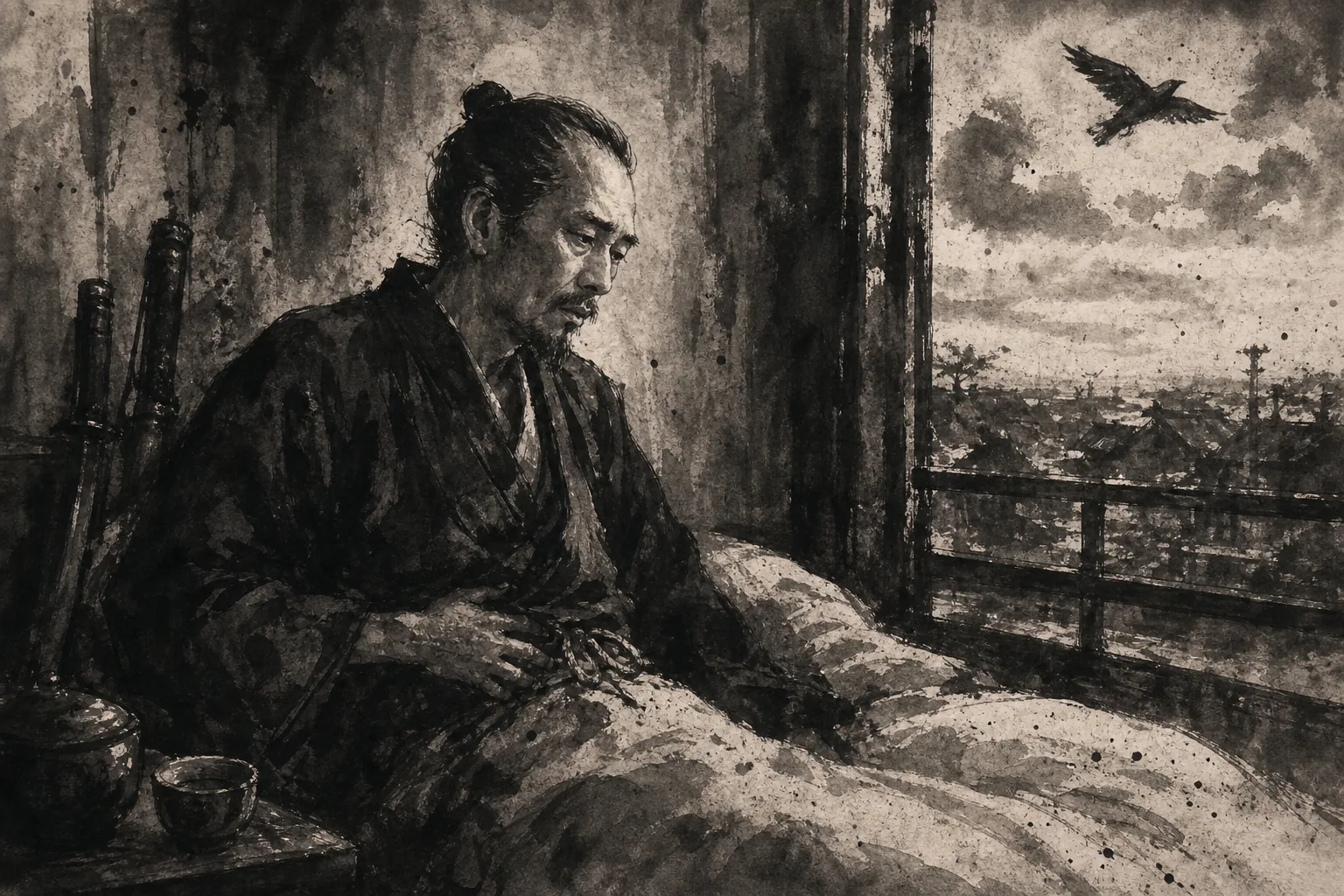
In the pain of the belly, a crow calls at daybreak.
Poetic Shape A Japanese death poem is less a final explanation than a last shape given to feeling. Its brevity matters: a life is not narrated, but compressed into a few lines that leave room for silence.
Reading
Rather than grandeur befitting a master, only bodily pain and a crow at daybreak remain.It resonates with Yamaoka Tesshu's Zen-like stripping away.
Background
Introduced as Yamaoka Tesshu's death poem.Although he was one of the Three Great Swordsmen of the Bakumatsu, the end is reduced to an extremely plain verse.
Source / Transmission Wording and readings may differ by transmission; this page treats the text as one circulated form.
Further Reading
Find related books and places to stay For readers who want more historical context, these links search for related books on external stores.
Affiliate link