Iino, Kazusa
Born into the Iino Hoshina house
Old- and new-calendar conventions produce 1832/1833 forms. She grows within a daimyo genealogy and managed household.
Person Guide
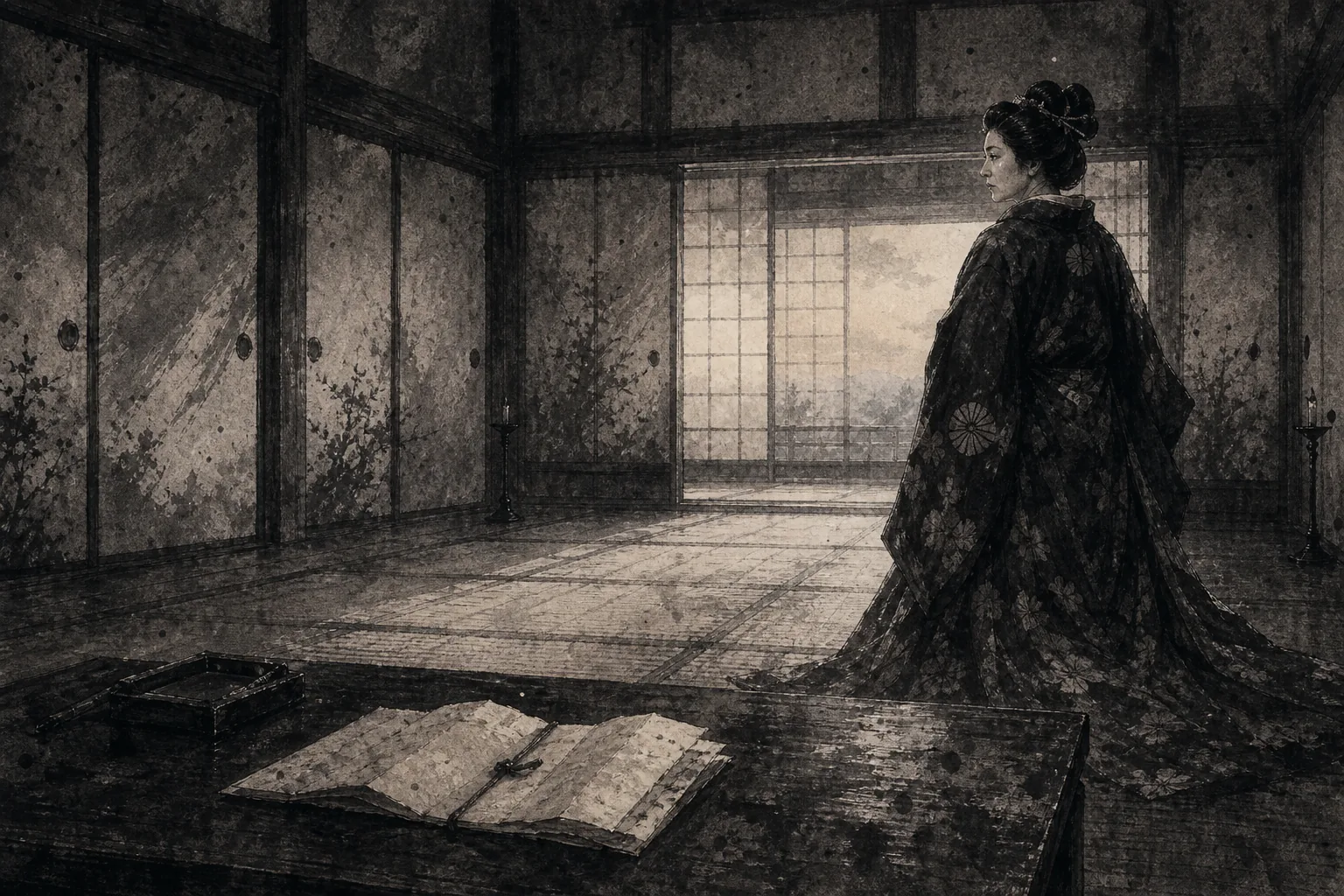
Matsudaira Teru, widely known as Teruhime, was an adopted daughter of the Aizu Matsudaira family. During the Aizu War, she became a source of support for the women and children sheltering inside Tsuruga Castle. Her surviving waka also preserves the grief that followed Aizu's defeat.
Life
Iino, Kazusa
Old- and new-calendar conventions produce 1832/1833 forms. She grows within a daimyo genealogy and managed household.
Iino to Edo Aizu residence
Succession concerns bring her into the Aizu Matsudaira house, where she learns ritual, cultivated arts, and inner-household administration.
Nakatsu and Edo
A daimyo marriage moves trousseau property and attendants; her return places her again within the Edo Aizu inner quarters.
Edo to Aizu
Household members carry travel equipment, medicine, bedding, supplies, and records after political and military defeat.
Tsuruga Castle
About five hundred women and children divide cooking, nursing, bullet work, and fire control; Teru’s rank and everyone’s labor remain distinct.
Tokyo and Aizu memory
She mourns Kayano Gonbei, leaves waka volumes, dies in Tokyo, and is buried at the Matsudaira family Innai cemetery in Aizu.
Futtsu, Chiba Prefecture
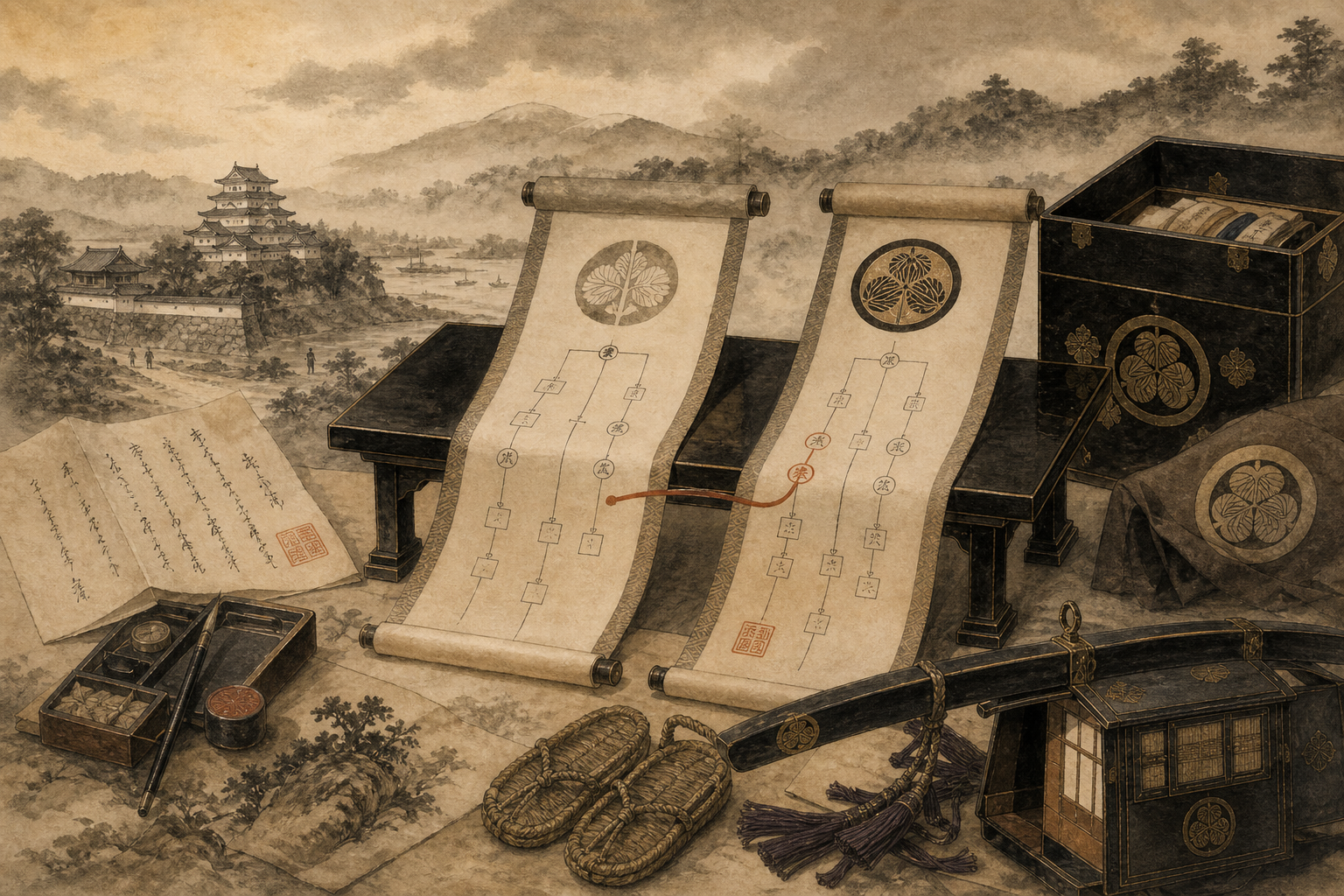
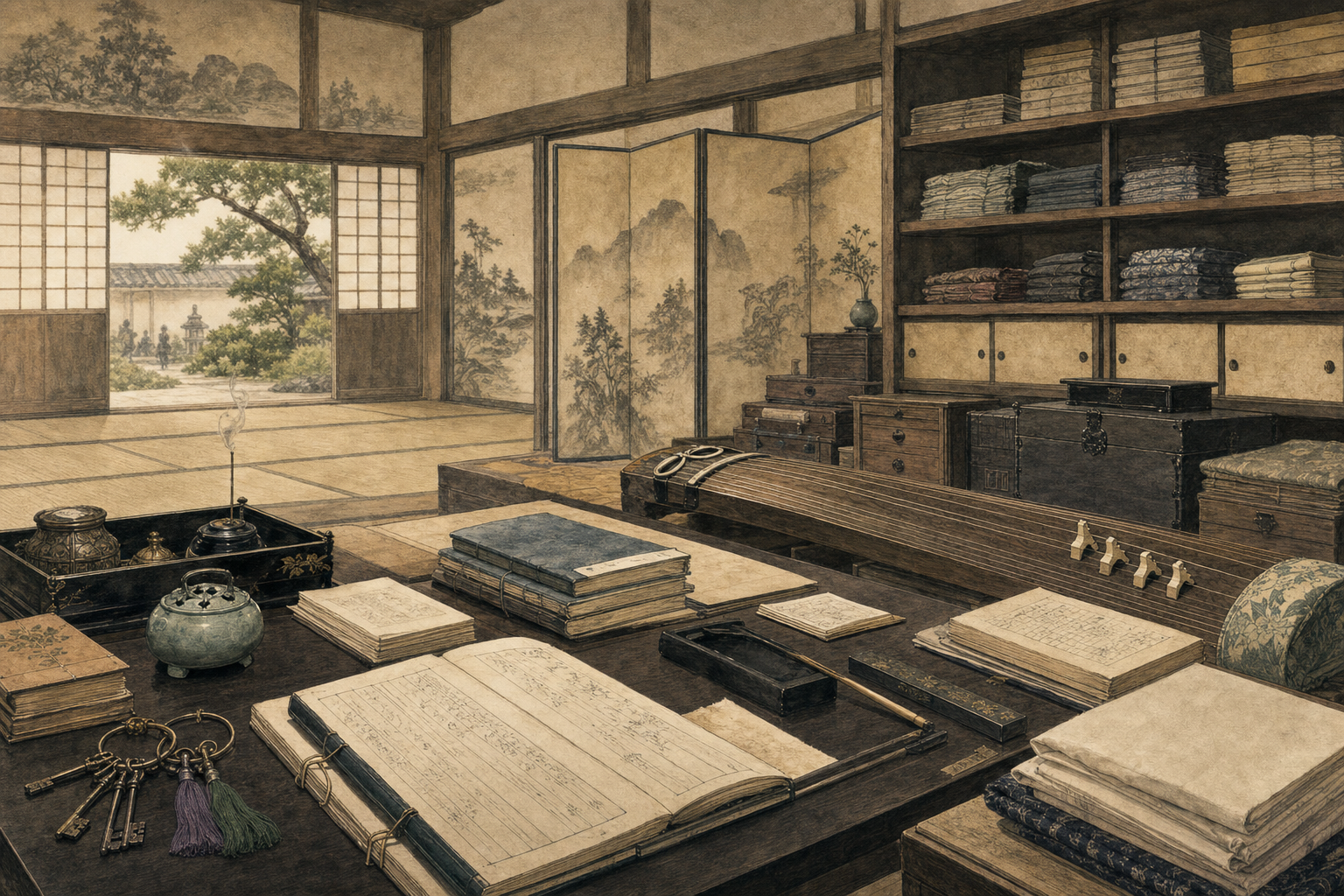
The former administrative site and family genealogies place Teru's birth and childhood adoption within formal ties between daimyo houses.
Matsudaira Teru (Teruhime)
AddressShimoiino area, Futtsu, Chiba Prefecture
Nearby
Minato, Tokyo
Account books, keys, supplies, cultivated arts, and household administration help distinguish the different Aizu residences and Teru's responsibilities after divorce.
Matsudaira Teru (Teruhime)
AddressMita 2-chome area, Minato, Tokyo
Nearby
Nakatsu, Oita Prefecture
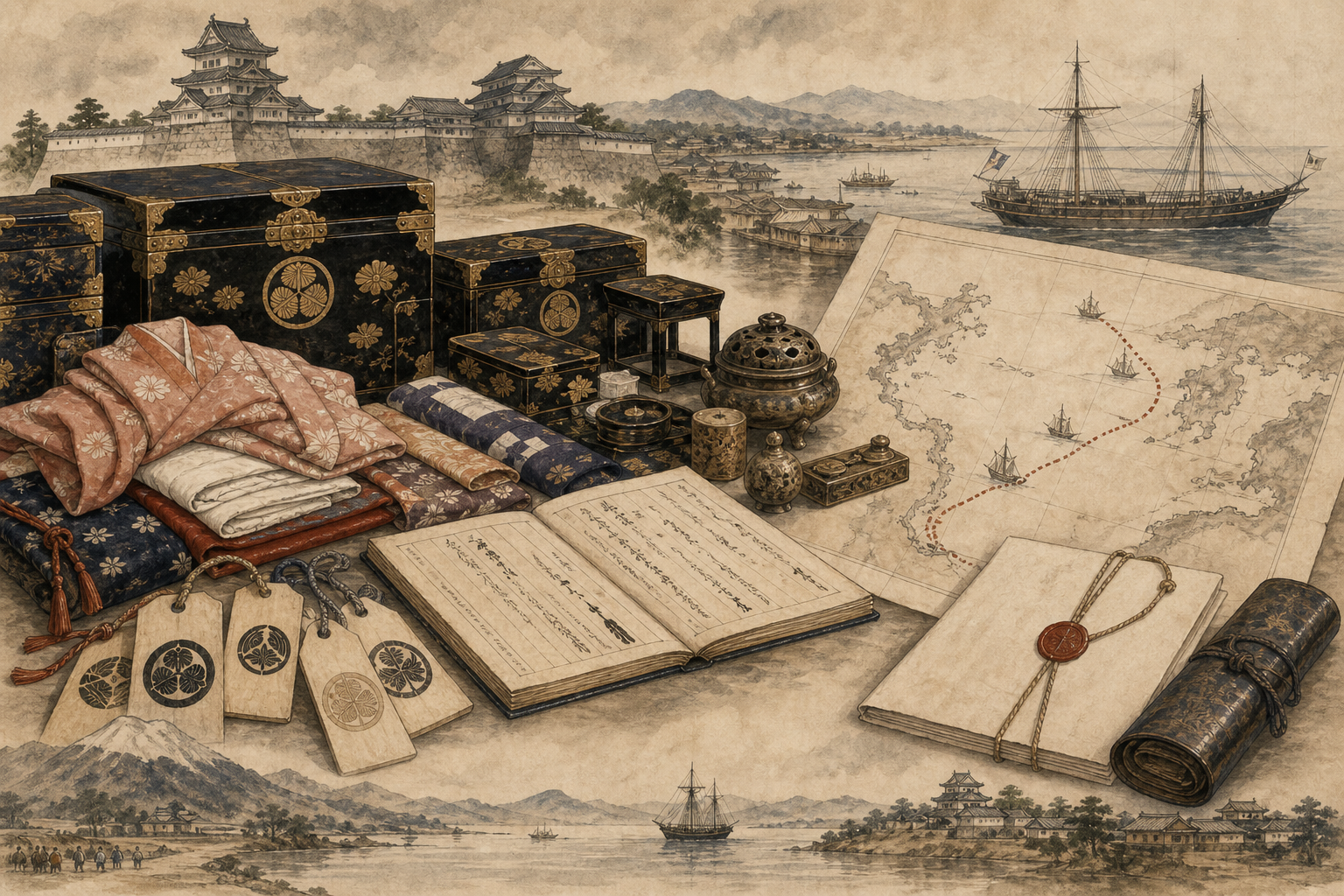
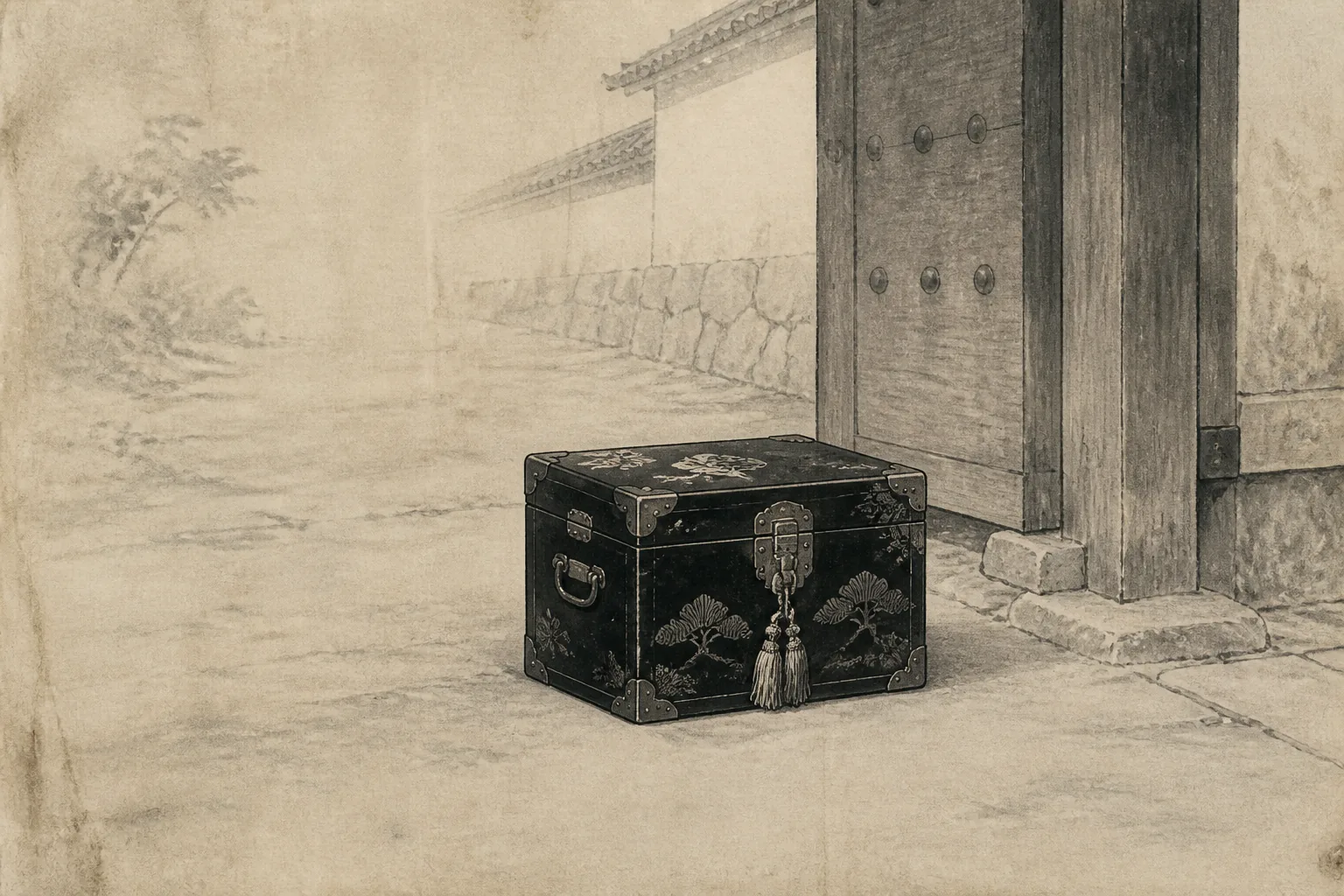
The trousseau, inventory, sea route, and returned chests show marriage between daimyo houses as a movement of people and property.
Matsudaira Teru (Teruhime)
Address1273-2 Ninocho Honmaru, Nakatsu, Oita Prefecture
Nearby
Aizuwakamatsu, Fukushima Prefecture
Cooking, nursing, ammunition work, firefighting, and rationing show that the siege was sustained by many people rather than by one princess alone.
Matsudaira Teru (Teruhime)
Address1-1 Otemachi, Aizuwakamatsu, Fukushima Prefecture
Nearby
Aizuwakamatsu, Fukushima Prefecture
Her waka, letters, and grave trace the sixteen years she lived after the war and the memorial culture that followed.
Matsudaira Teru (Teruhime)
AddressInnai area, Ishiyama, Higashiyama-machi, Aizuwakamatsu
Nearby
Keys
Teru was born the third daughter of Hoshina Masamoto, lord of Kazusa Iino, and at about ten became an adopted daughter of Aizu lord Matsudaira Katataka. Genealogical scrolls, an adoption petition and shogunate notice, seals, a document chest, small sandals, and palanquin fittings show that this was not merely a child moving between relatives. It belonged to daimyo succession planning and the formal relationship between the Hoshina and Matsudaira houses. Before the familiar title “princess,” she was registered and educated as an adopted daughter expected to carry a house’s future, ritual standing, and alliances.
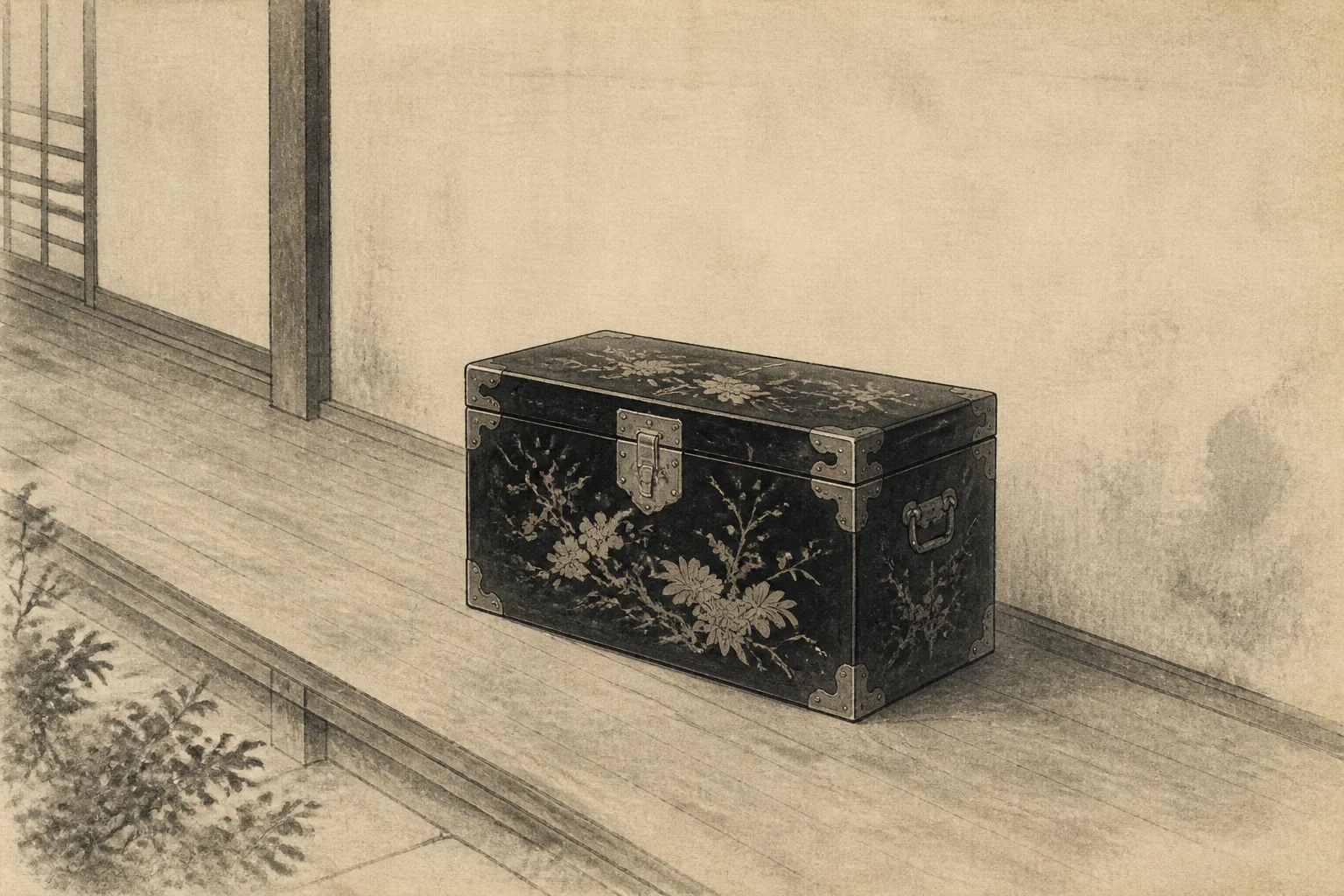
At about eighteen Teru married Nakatsu lord Okudaira Masamoto and several years later returned divorced to the Edo Aizu residence. Lacquered trousseau chests, clothing, incense and cosmetic utensils, a marriage inventory, route chart, baggage tags, and sealed return papers reveal marriage between daimyo houses as an organized transfer of property, attendants, messages, and rank. The divorce should not be reduced to her personality or health, since succession and household interests also structured it. Returned chests were not only signs of a failed union; they became material foundations for her renewed place in Aizu’s inner household.
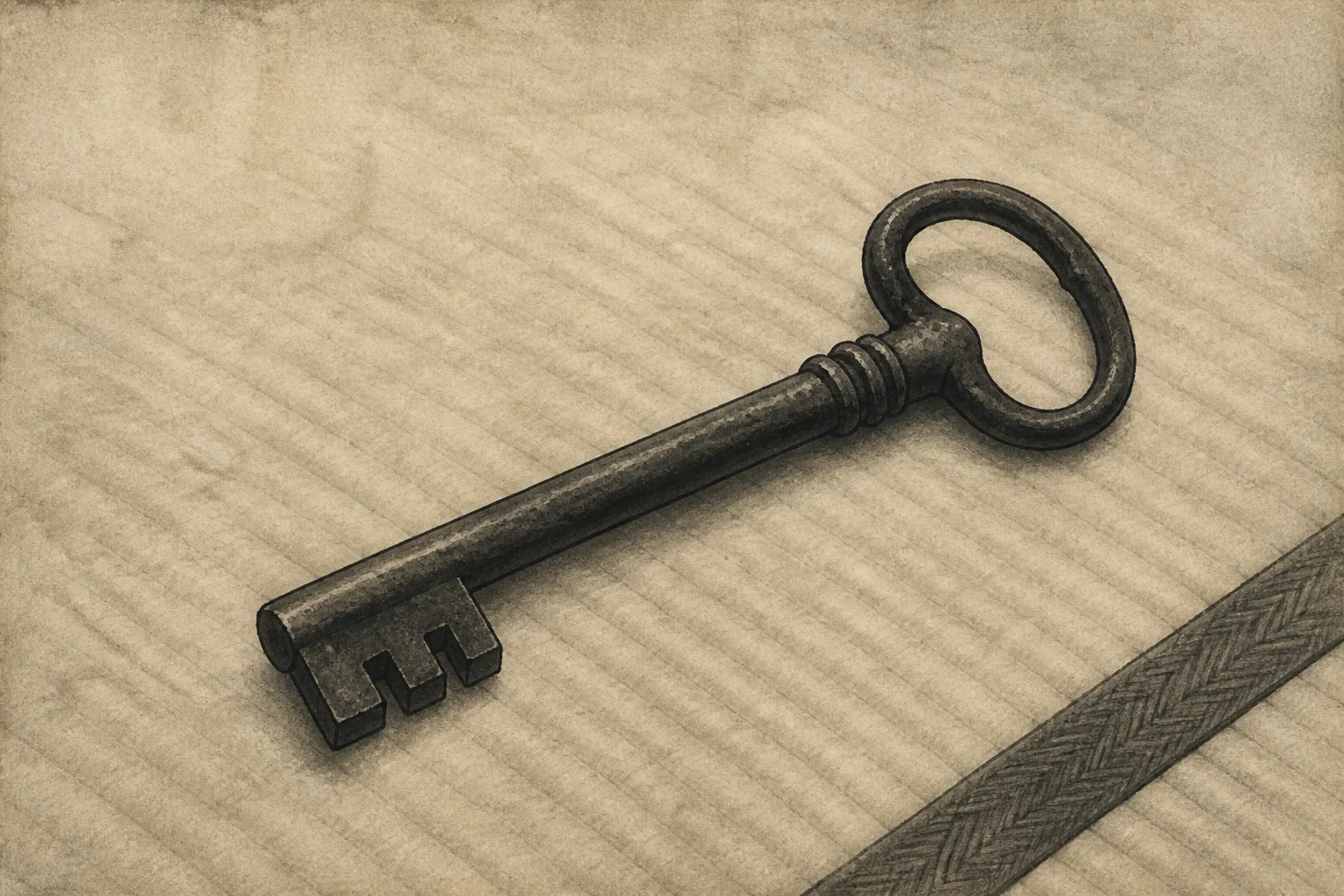
After divorce Teru returned to the Edo Aizu residence. Following the early death of Katamori’s wife Toshihime, Teru occupied the highest-ranking female position around the house and participated in the inner quarters. Storeroom and room keys, ledgers allocating food, cloth, and personnel, sewing boxes, a koto, incense burner, waka papers, inkstone, and letter chest show that the inner quarters were an organization managing many women servants and substantial supplies, not a private salon. Calligraphy, etiquette, incense, music, and poetry served ritual, gifts, mourning, communication, and household order.
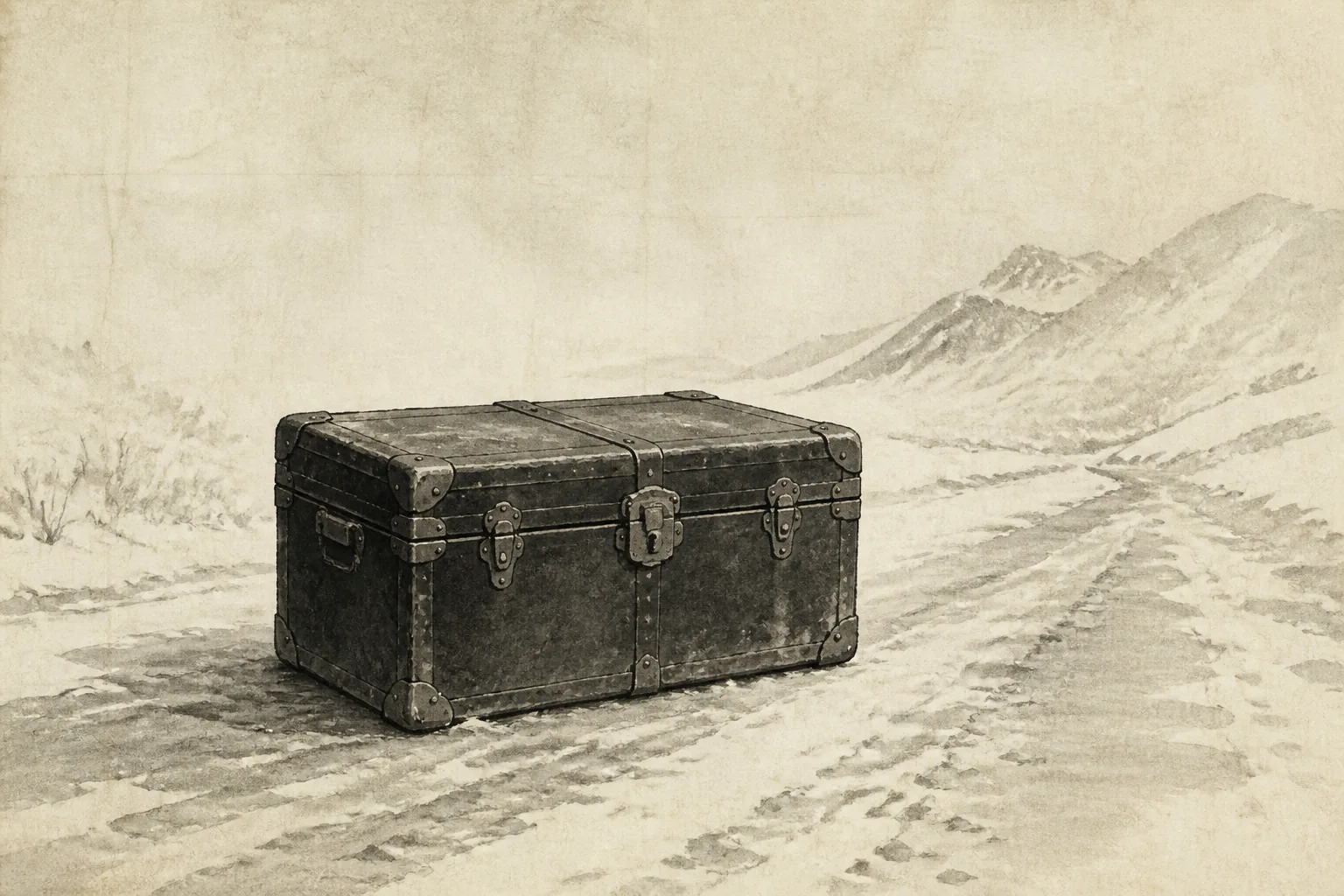
After defeat at Toba-Fushimi, Aizu people withdrew from Edo toward Aizu in the second month of 1868, and Teru was among those who moved. A highway map, checkpoint passes, travel chests, bedding rolls, a medicine box, tableware, weather covers, porters, and pack animals show a political crisis transformed into long-distance movement involving relatives, servants, older people, and stores. This was not Teru’s solitary return. It required closing a residence, selecting records and necessities, arranging lodgings, and protecting a traveling household. The same travel equipment soon became part of preparation for siege conditions.
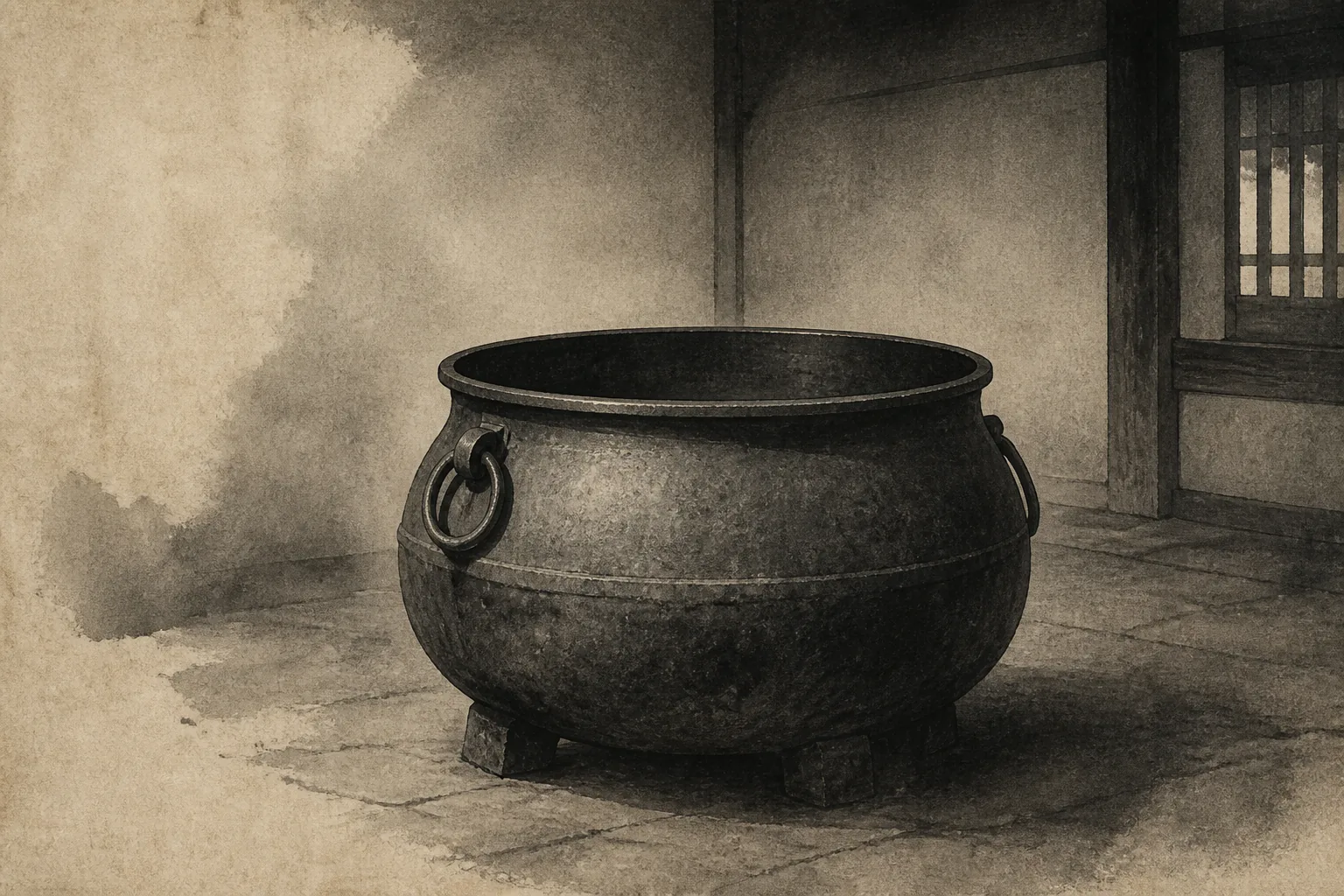
About five hundred women and children entered Tsuruga Castle during the Aizu War. Teru is remembered as their highest-ranking center and a source of morale. Huge cooking cauldrons, rice baskets, ration bowls, bandages, hot water and medicines, torn cloth, bullet molds and lead, water buckets, and wet quilts used against fires show that armed defenders could not sustain the siege alone. Cooking, nursing, ammunition production, fire control, and care for wounded and dead were distributed among many women, children, and officials. Their collective work should not be absorbed into a claim that Teru personally performed or commanded every task.
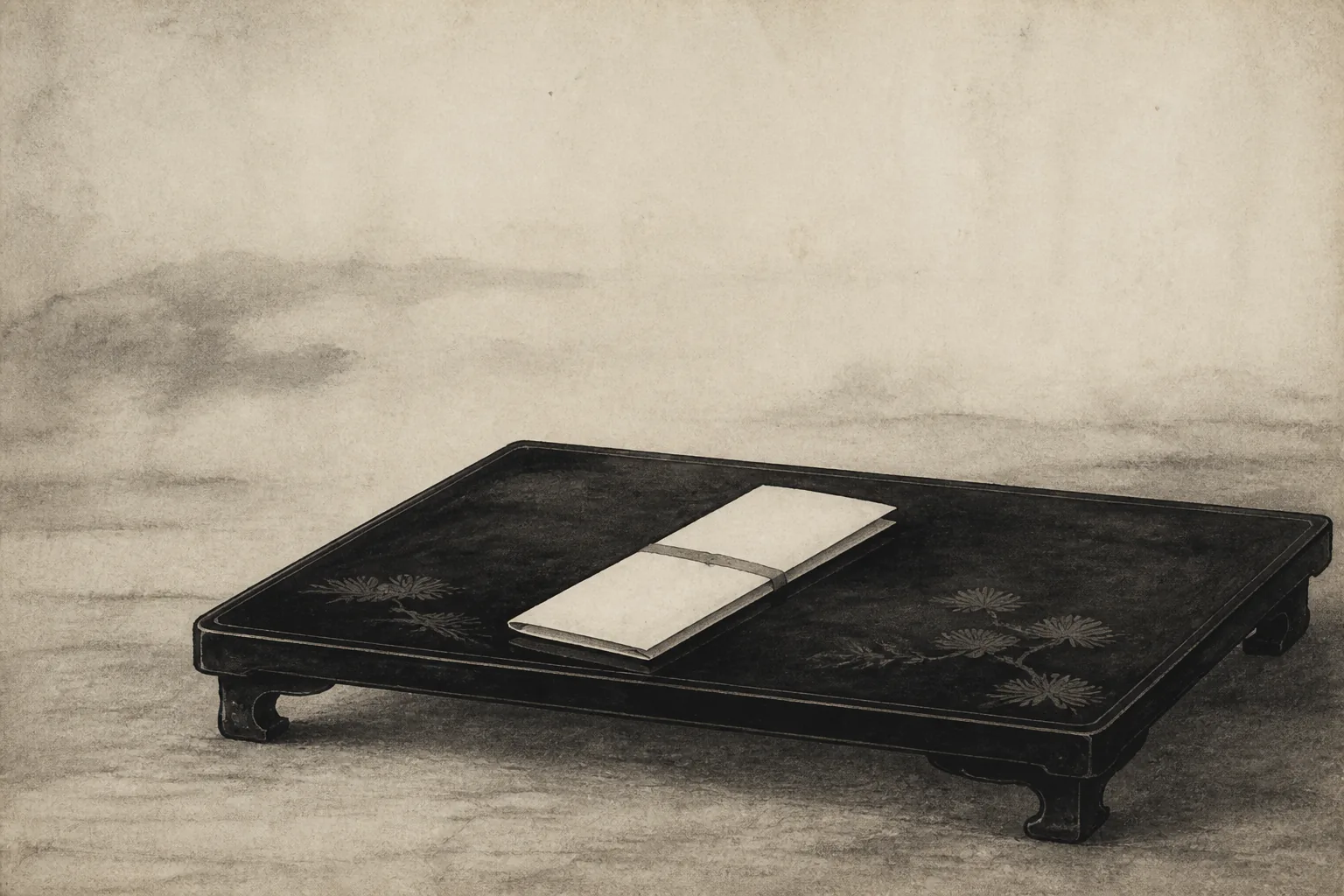
Aizuwakamatsu preserves letters, a waka poem, and a memorandum sent by Katamori and Teru to Kayano Gonbei before he was executed as the bearer of Aizu’s war responsibility. The poem mourning him through uncertainty between dream and waking, six surviving Matsudaira Teru waka volumes, an inkstone, letter chest, incense burner, memorial tablet, and the Innai family cemetery show that her work did not end with the siege. Poetry stored names and grief across the sixteen years she lived after the war. Loyalty should not beautify the political transfer of blame to one man; the documents keep that death beside the survivors’ long memory.
VISIT
Aizu History Museum at Aizu Bukeyashiki · FukushimaOfficial information
A special exhibition presenting Aizu samurai culture through military, artistic, historical, and everyday materials from the collection.
Tsurugajo Castle Tower, First-floor Exhibition Room · FukushimaOfficial information
A collection exhibition examining why the young Byakkotai fought and how the Boshin War led to their deaths.
Tsurugajo Castle Tower, First-floor Exhibition Room · FukushimaOfficial information
An exhibition tracing historical connections between Kyoto and Aizu, including the Kyoto Shugoshoku.
Search events related to Teruhime →Browse all Bakumatsu events →