Keisuke Otori · Shogunate retainer
Original
夏日田家暮
Keisuke Otori's Chinese-style poem, "夏日田家暮雲鎖山邨翠色催田田水漲翠秧". Read the original Japanese, modern translation, interpretation, and historical context as distinct parts of the poem.
Person
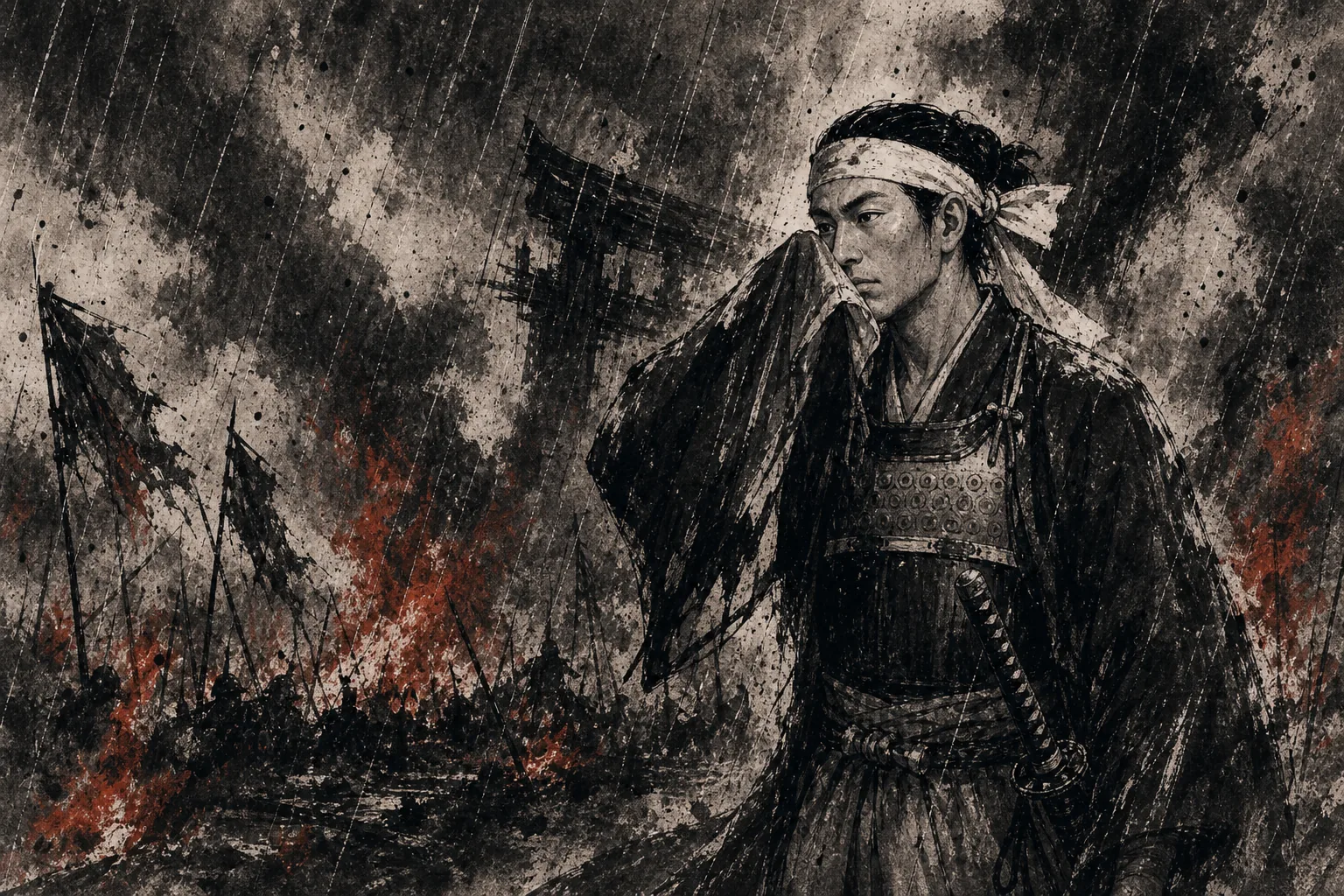
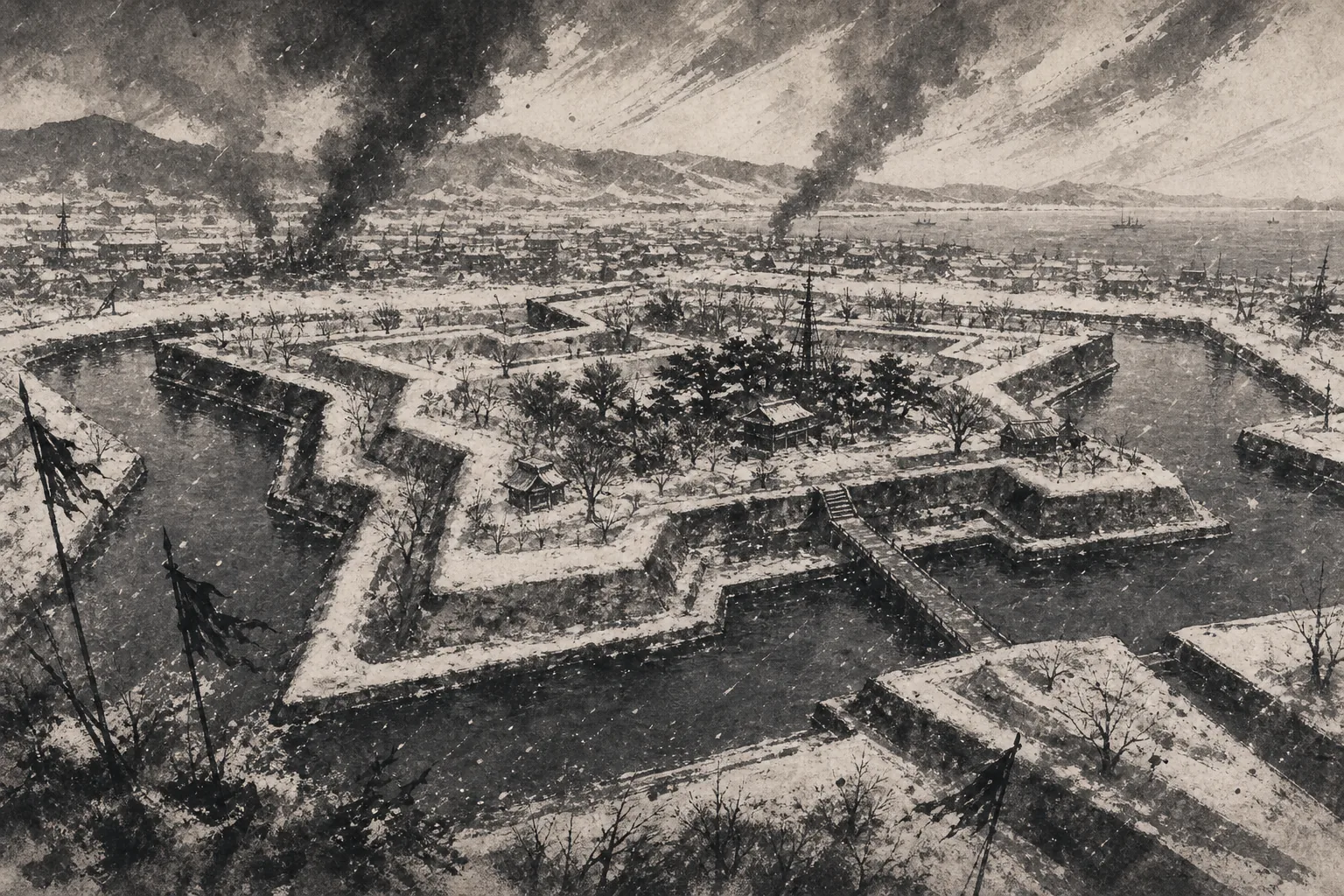
A shogunate infantry commander who fought with the former shogunate forces through the Hakodate War and later served the Meiji state.
Learn about Otori Keisuke
Translation
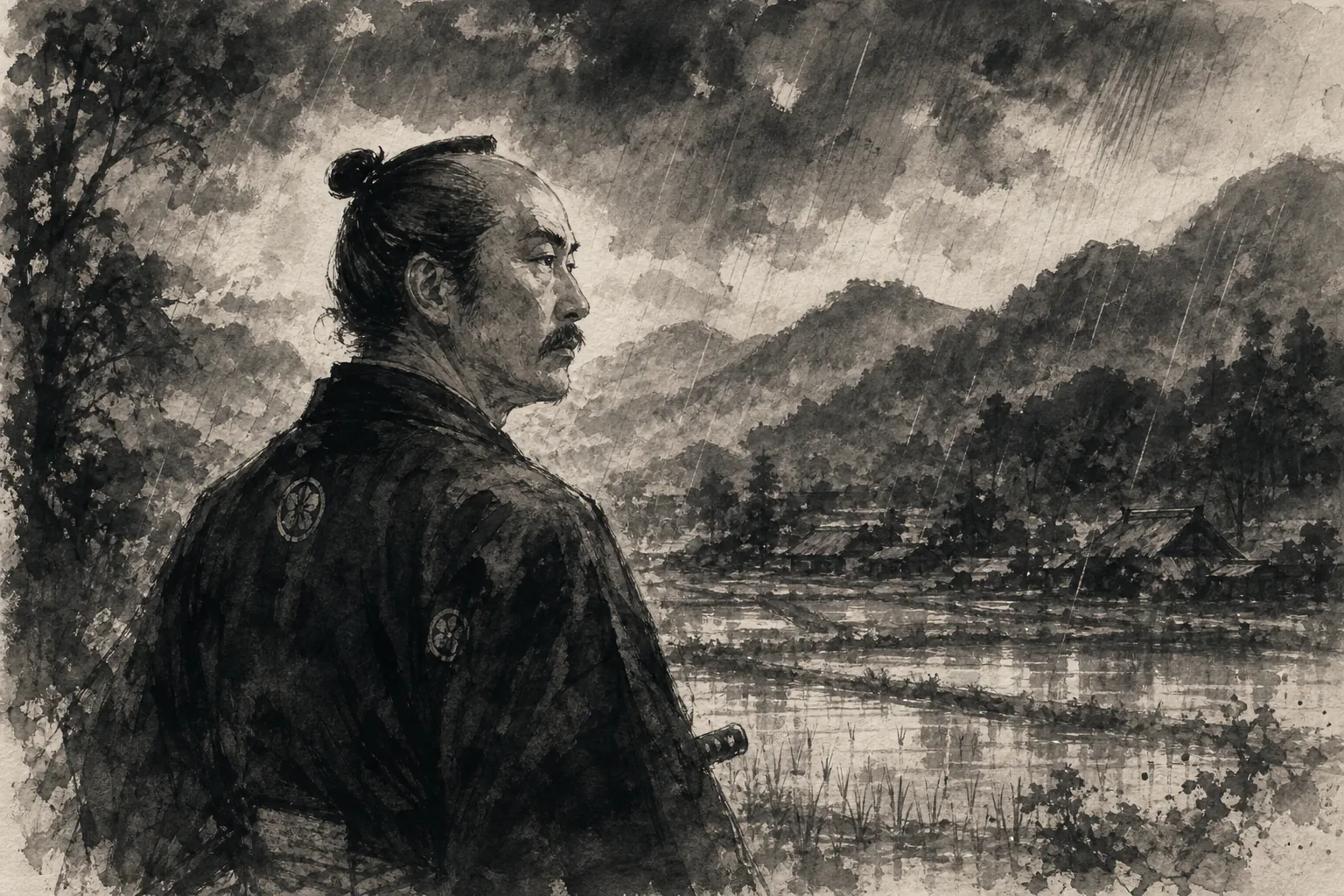
Clouds close the mountain village as green deepens; fields fill with water, frogs boil around the house, and a light wind brings rain.
Poetic Shape Kanshi draws on a classical Chinese poetic tradition, where restraint, allusion, and moral tension carry much of the weight. The poem sounds formal, but the pressure beneath it is personal.
Reading
Unlike the Otori of the Hakodate War, this resonates as a quiet pastoral poem from after the fighting.The later life of a former shogunate fighter carries its own afterglow.
Background
A seven-character quatrain seen in Otori Keisuke's surviving calligraphy.The contrast is striking: a practical soldier of the Bakumatsu later writing of a rural evening.
Source / Transmission Wording and readings may differ by transmission; this page treats the text as one circulated form.
Further Reading
Find related books and places to stay For readers who want more historical context, these links search for related books on external stores.
Affiliate link