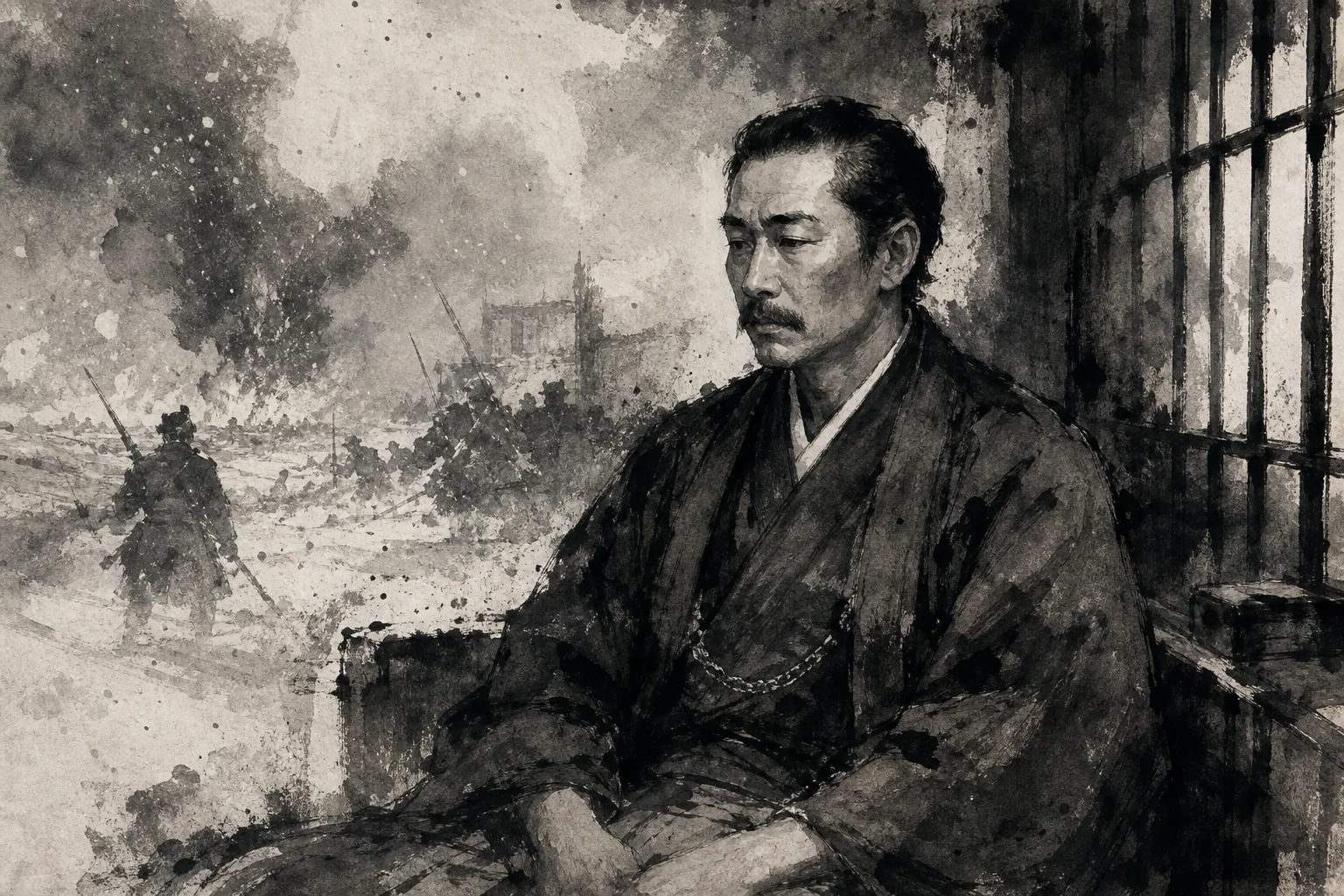
Takeaki Enomoto · Former shogunate
Person
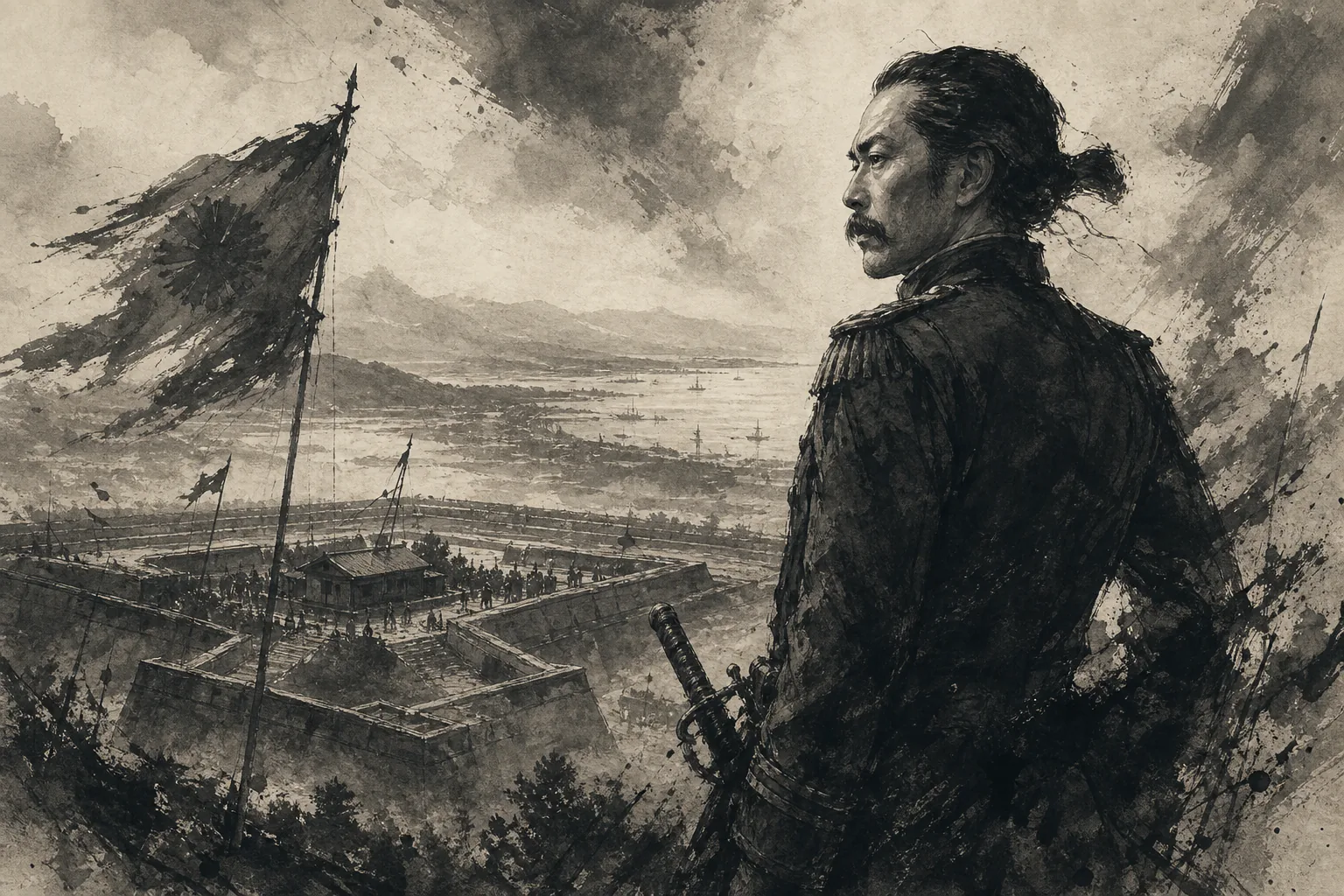
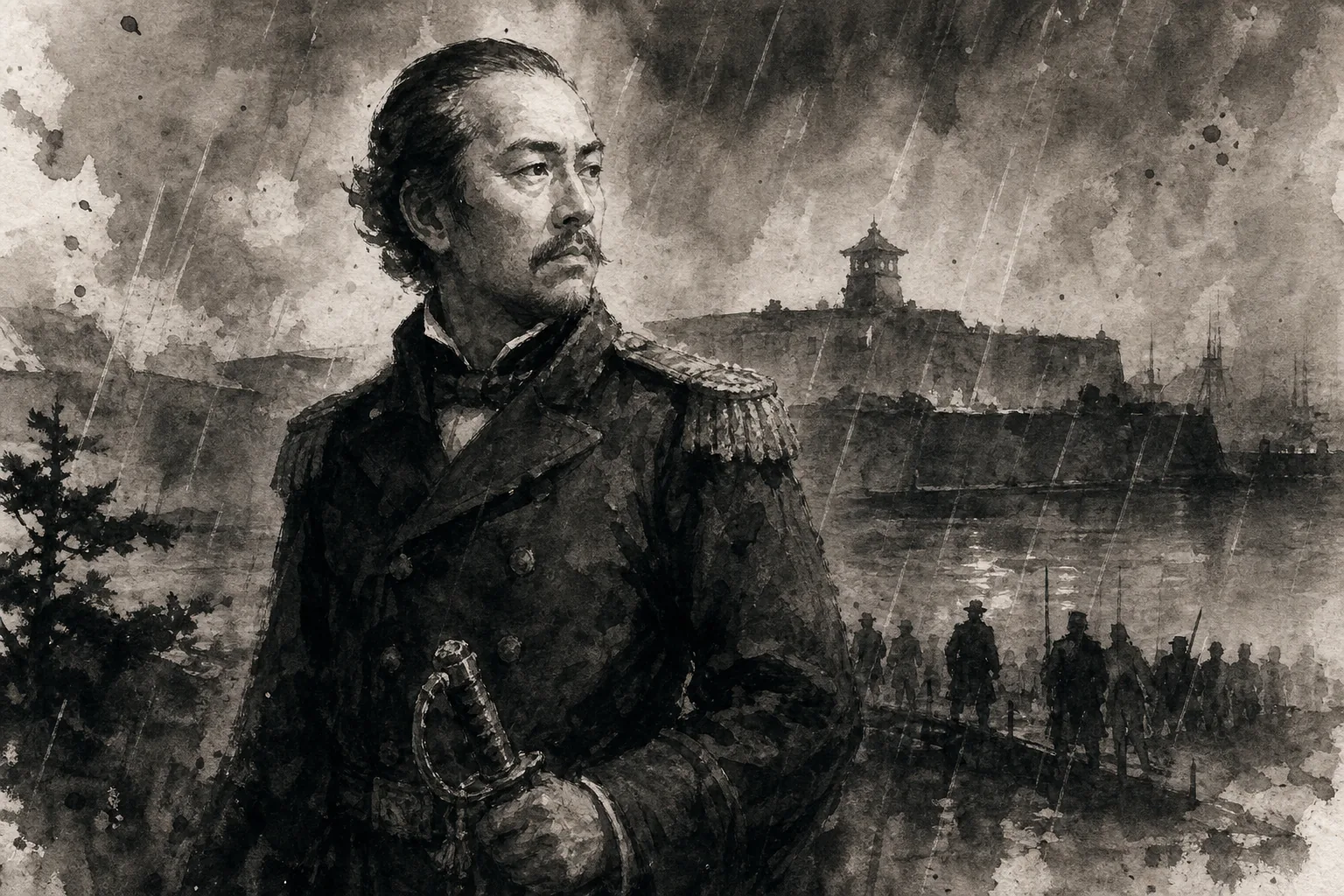
Commander of the shogunate navy and president of the Hakodate government, later imprisoned and then employed by the Meiji state. He is one of the most complex defeated men of the Bakumatsu: a rebel, a prisoner, a technocrat, and eventually a servant of the new order.
Translation
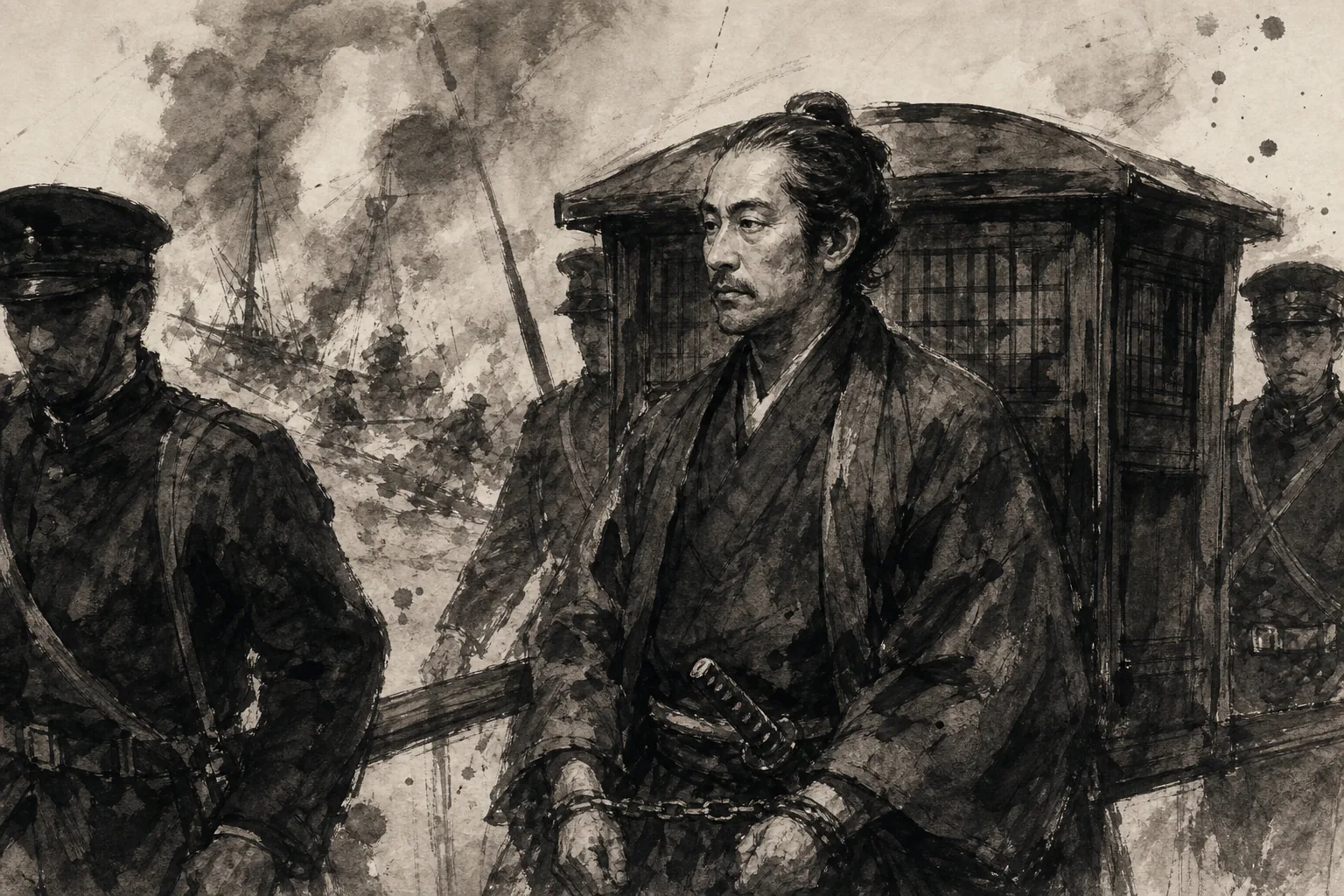
Escorted under guard, the window darkened, the hundred battles through mountains and rivers seem like a dream as I go to await judgment.
Reading
The scene of being transported after defeat is clear and severe. There is a contrast between a hundred battles like a dream and the darkness of the real palanquin. Read together with Takeaki Enomoto, the poem is not only a matter of literal meaning; it shows movement and solitude at the edge of an age. With the figure in mind, what remains after reading is resolve, solitude, and the beauty that often belongs to the defeated side.
Background
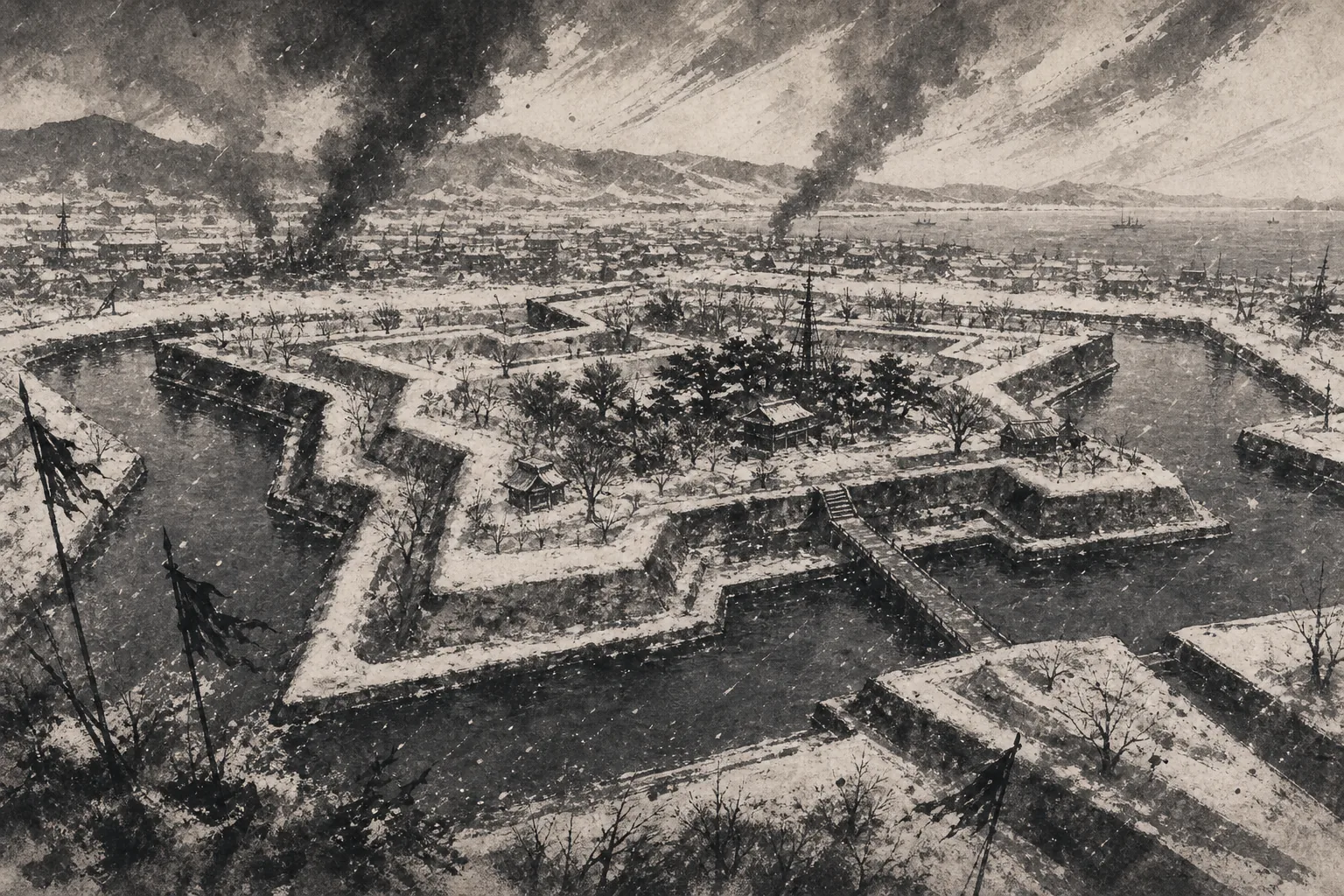
Introduced as a Chinese poem written while Enomoto was being escorted to Tokyo after the Hakodate surrender. It marks the turn from fighter to judged prisoner. Commander of the shogunate navy and president of the Hakodate government, later imprisoned and then employed by the Meiji state. The words carry the inner pressure of someone caught in Bakumatsu politics, war, execution, exile, or the losses that followed the Restoration. Even where the transmission is uncertain, they quietly preserve the pain of the age.
Source / Transmission Wording and readings may differ by transmission; this page treats the text as one circulated form.