Shozan Sakuma · Matsushiro
Original
題地球儀詩
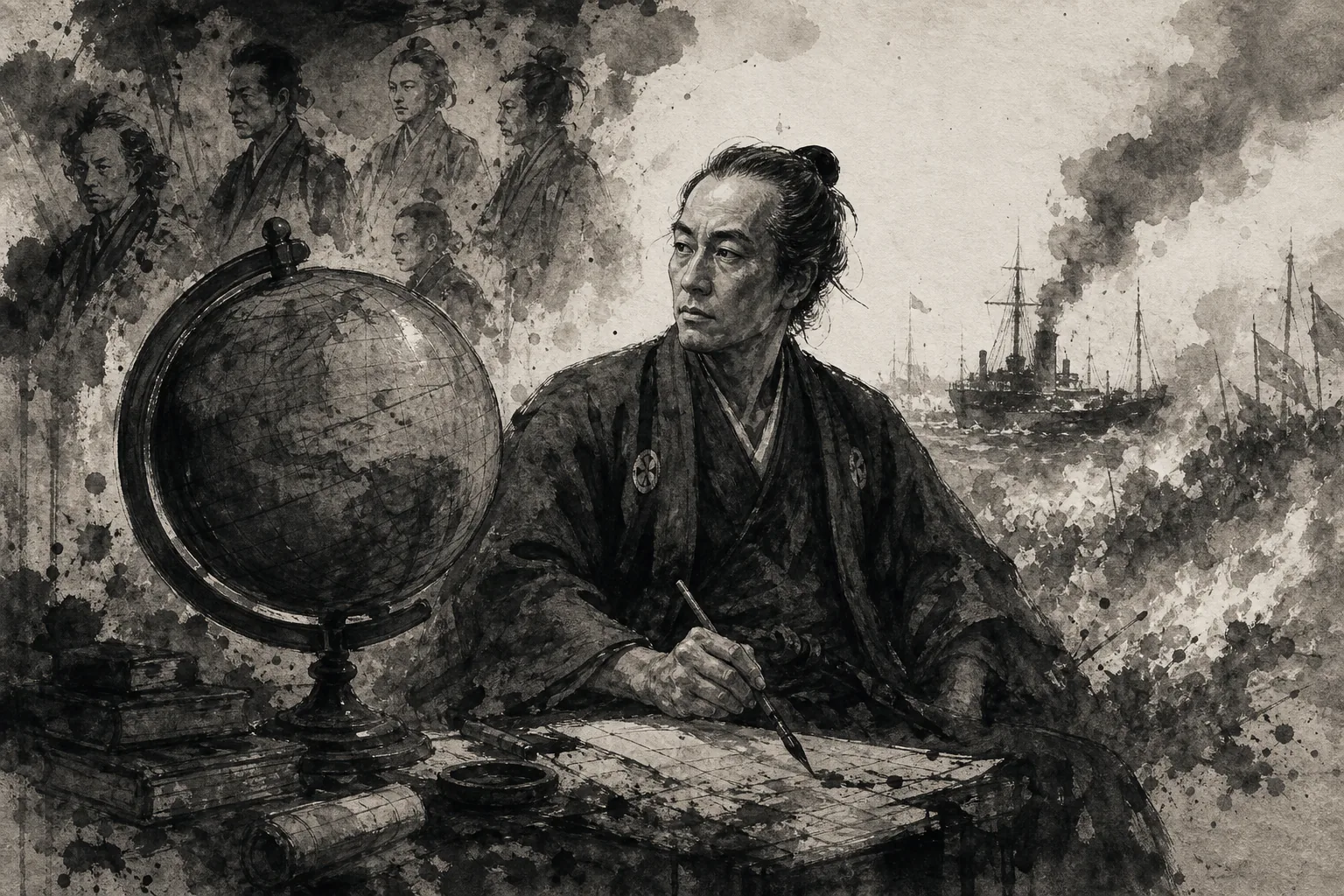
Shozan Sakuma's Chinese-style poem, "題地球儀詩東洋道徳西洋芸匡廓相依完圏". Read the original Japanese, modern translation, interpretation, and historical context as distinct parts of the poem.
Person
A thinker who joined Western learning with Confucian thought and influenced Katsu Kaishu, Yoshida Shoin, and Sakamoto Ryoma.
Learn about Sakuma Shozan
Translation
Eastern ethics and Western arts must sustain one another to complete the globe; no half of the world can be missing.
Poetic Shape Kanshi draws on a classical Chinese poetic tradition, where restraint, allusion, and moral tension carry much of the weight. The poem sounds formal, but the pressure beneath it is personal.
Reading
This poem symbolizes the Bakumatsu idea of opening the country.Within an ink-dark world, the globe stands as a foreign object charged with the shock of opening the country.
Background
Known as a poem Sakuma Shozan wrote on a globe.It links his vast perspective, often phrased as Eastern morals and Western technique, to the tragedy of his assassination by loyalists.
Source / Transmission Wording and readings may differ by transmission; this page treats the text as one circulated form.
Further Reading
Find related books and places to stay For readers who want more historical context, these links search for related books on external stores.
Affiliate link