Shinbashaku, Kumamoto
Born into the Komori Family and Adopted by the Kawakami
He grew up among lower retainers and later served as a castle attendant in Kumamoto.
Know the Person
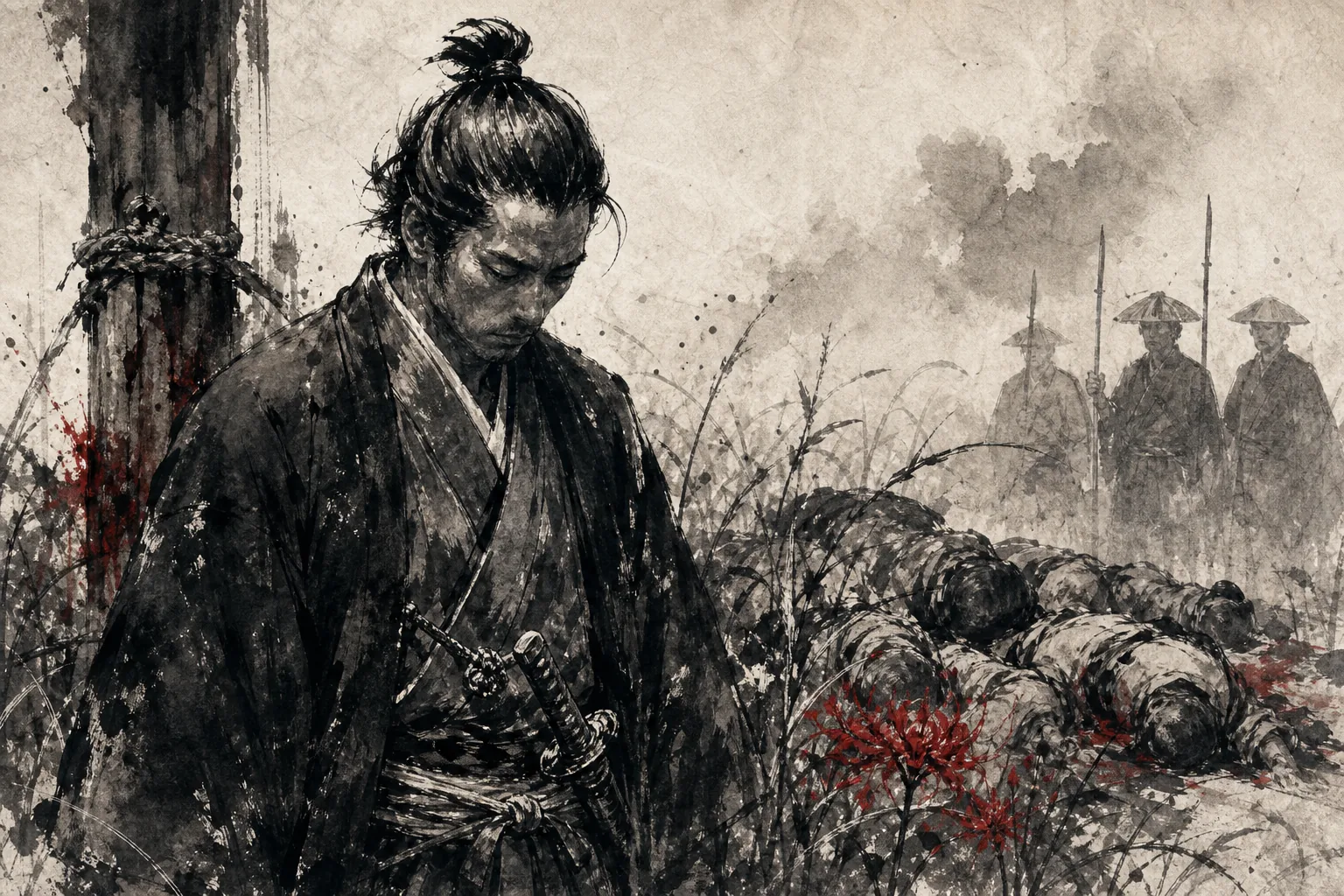
Approach Kawakami Gensai through workplaces and records rather than the later label of master assassin: service tools from Shinbashaku and Kumamoto Castle, books at Gendokan, a duty log in the Kyoto Kumamoto residence, Sakuma Shozan's saddle and Western-learning instruments at Kiyamachi, Choshu correspondence beside a prison inventory, and Yushukan training materials beside trial papers. Separating the one well-attested killing from later legends reveals how scholarship, information work, violence, education, and Meiji punishment became connected.
Life
Shinbashaku, Kumamoto
He grew up among lower retainers and later served as a castle attendant in Kumamoto.
Gendokan, Kumamoto
Gendokan learning and ties to Miyabe Teizo shaped a forceful loyalist-expulsionist position.
Kyoto Kumamoto residence
Official information work overlapped with communication among Higo and Choshu activists.
Kiyamachi, Kyoto
The attested event should be separated from the many later assassin legends attached to him.
Kumamoto and Choshu
Conflict inside the domain led to confinement until political authority changed with the Restoration.
Tsurusaki, Kumamoto, and Tokyo
After attempting military education, he was transferred to Tokyo and executed at thirty-eight.
熊本県熊本市
熊本城の内外を歩き、下級藩士の職務、城下町の身分秩序、原道館へ通じる地域環境を確かめる。
河上彦斎
Address熊本県熊本市中央区本丸1-1周辺
Nearby
京都府京都市
碑と高瀬川沿いの街路から、洋学者象山の仕事と、攘夷派が襲撃へ進んだ政治状況を考える。
河上彦斎
Address京都府京都市中京区木屋町通御池上る周辺
Nearby
大分県大分市
河港と街道が交わる鶴崎で、維新後に彦斎が兵士教育を試みた場所と地域史をたどる。
河上彦斎
Address大分県大分市鶴崎周辺
Nearby
Keys
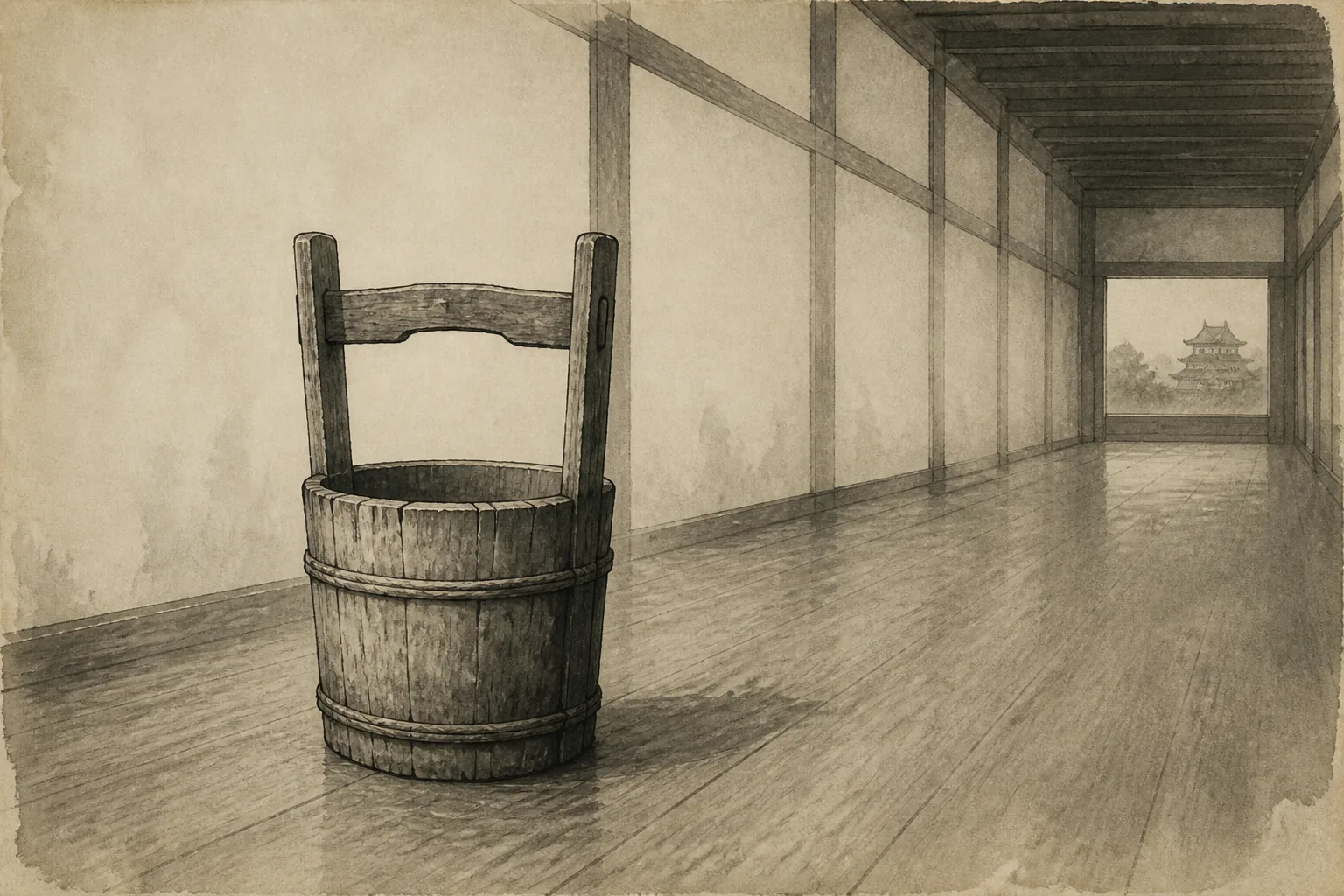
Born into the Komori household in Shinbashaku, Kumamoto, Gensai was adopted by the Kawakami family and entered service as a low-ranking castle attendant. Buckets, brooms, cloths, sandals, duty tokens, and an inventory chest replace the glamorous swordsman with routine labor. Maintaining corridors and handling small tasks made the distance between senior retainers and subordinate offices tangible while placing him inside the domain's flow of orders and information. Low status and proximity to the castle administration coexisted in the environment from which his political life emerged.
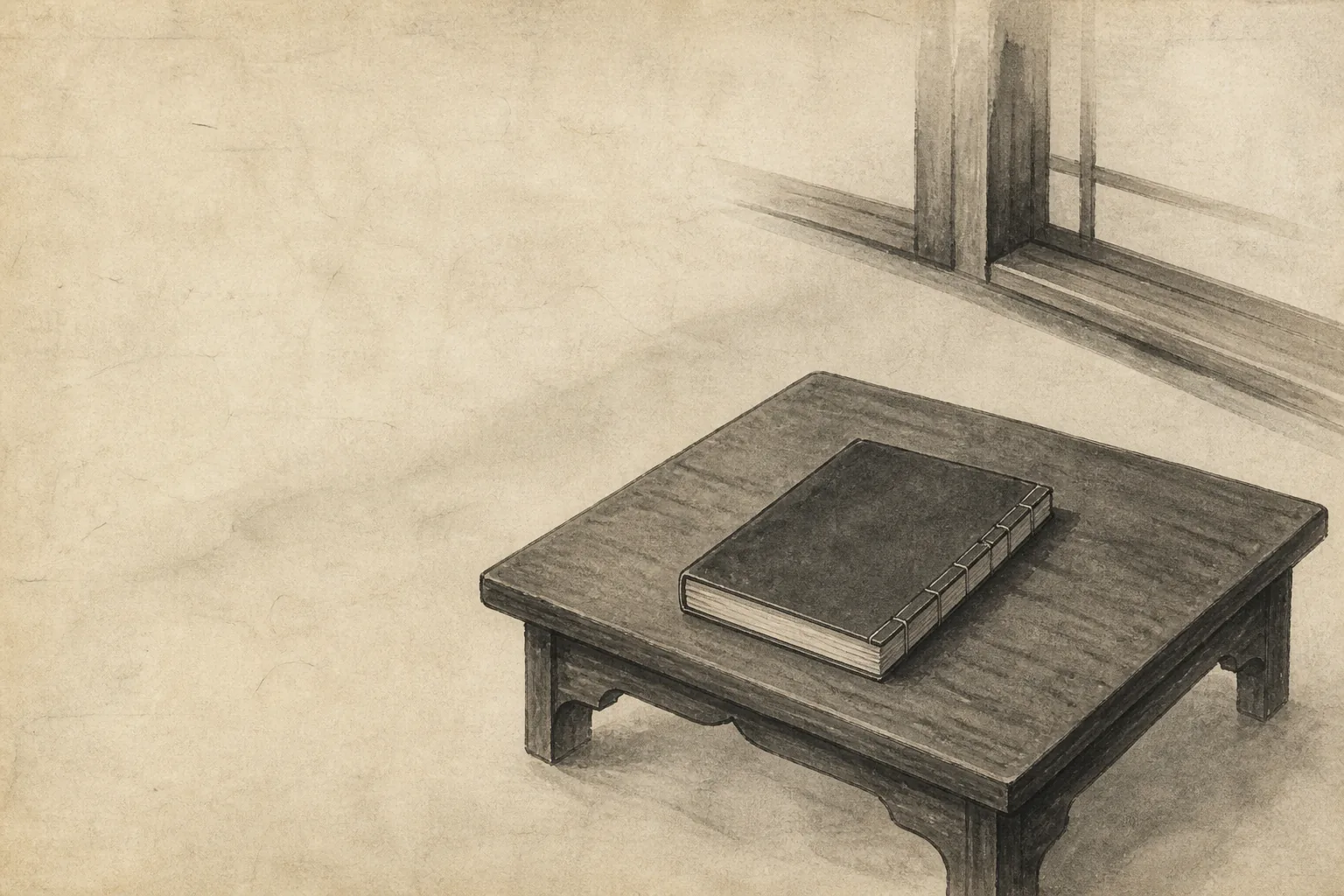
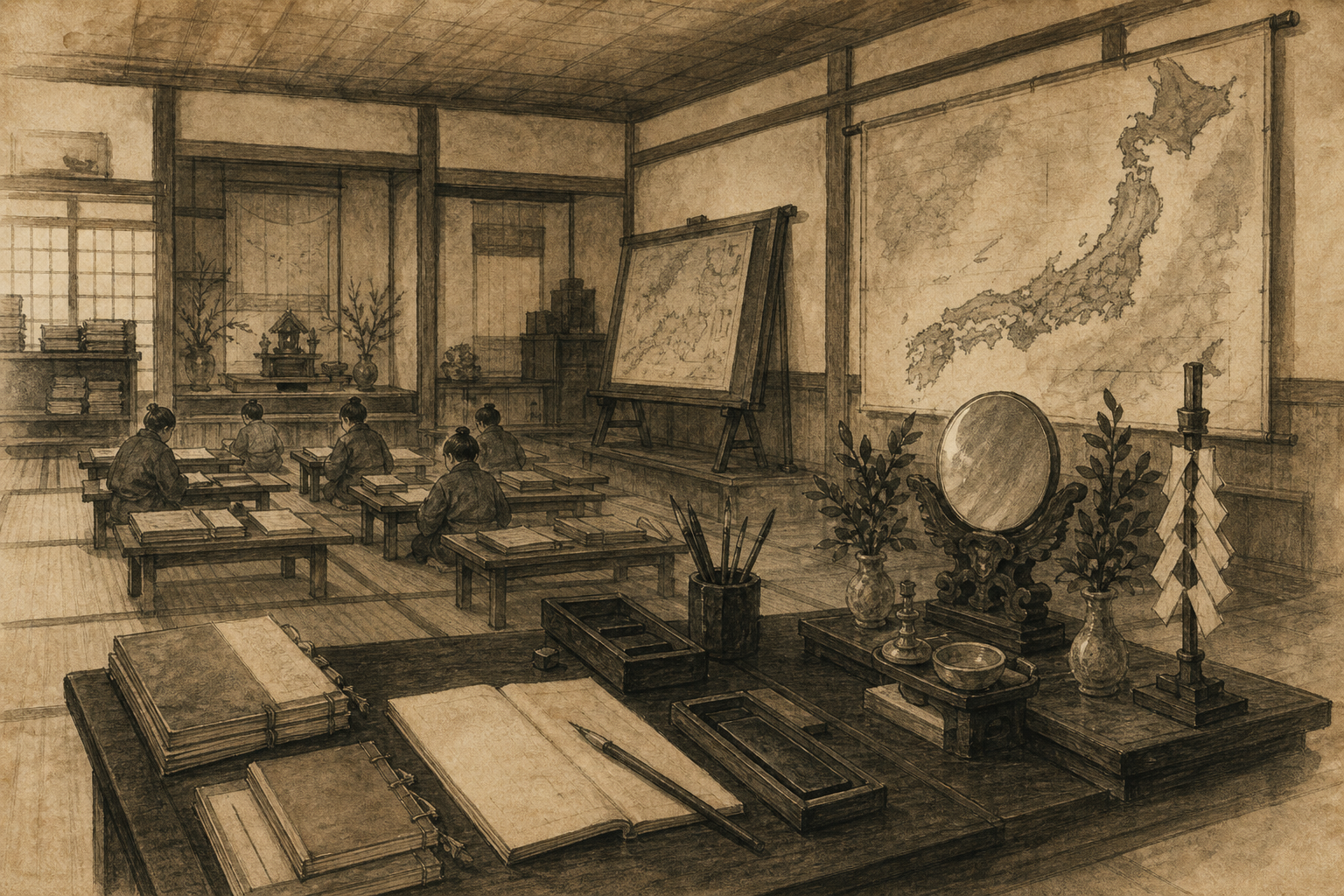
At Hayashi Oen's Gendokan, Gensai studied kokugaku and Shinto and entered the circle of Higo loyalists around Miyabe Teizo. Bound classics, copied notes, a sacred mirror, ritual implements, a map of Japan, brushes, and low desks show ideology being assembled through reading and repeated lectures. The academy's intellectual environment could engage more than one field, but Gensai moved toward uncompromising expulsionism. Material study places his later actions inside a particular learning community and crisis discourse instead of explaining them as an innate appetite for violence.
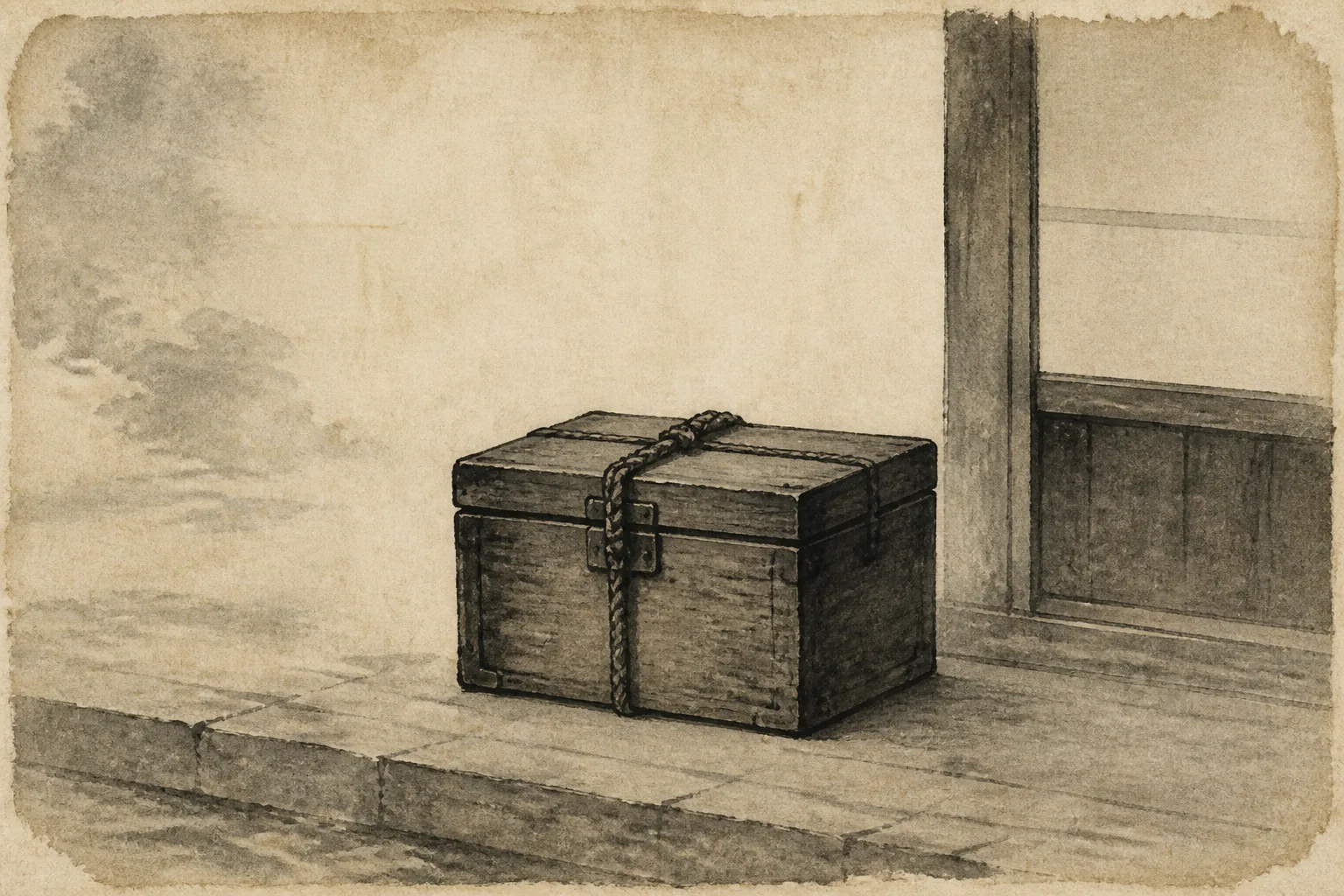
During service at the Kyoto Kumamoto residence, Gensai encountered politics through gate movements, messengers, letters, and the routines of domain representation. A duty log, entry passes, sealed letter box, city map, lantern, travel hats, and messenger sandals show that loyalist activism depended on collecting, transmitting, and concealing information as much as carrying weapons. Contact with Miyabe and Choshu-oriented activists grew around this institutional junction. Official duty and politics exceeding the domain's policy therefore occupied the same office, creating the tension that later led to imprisonment.
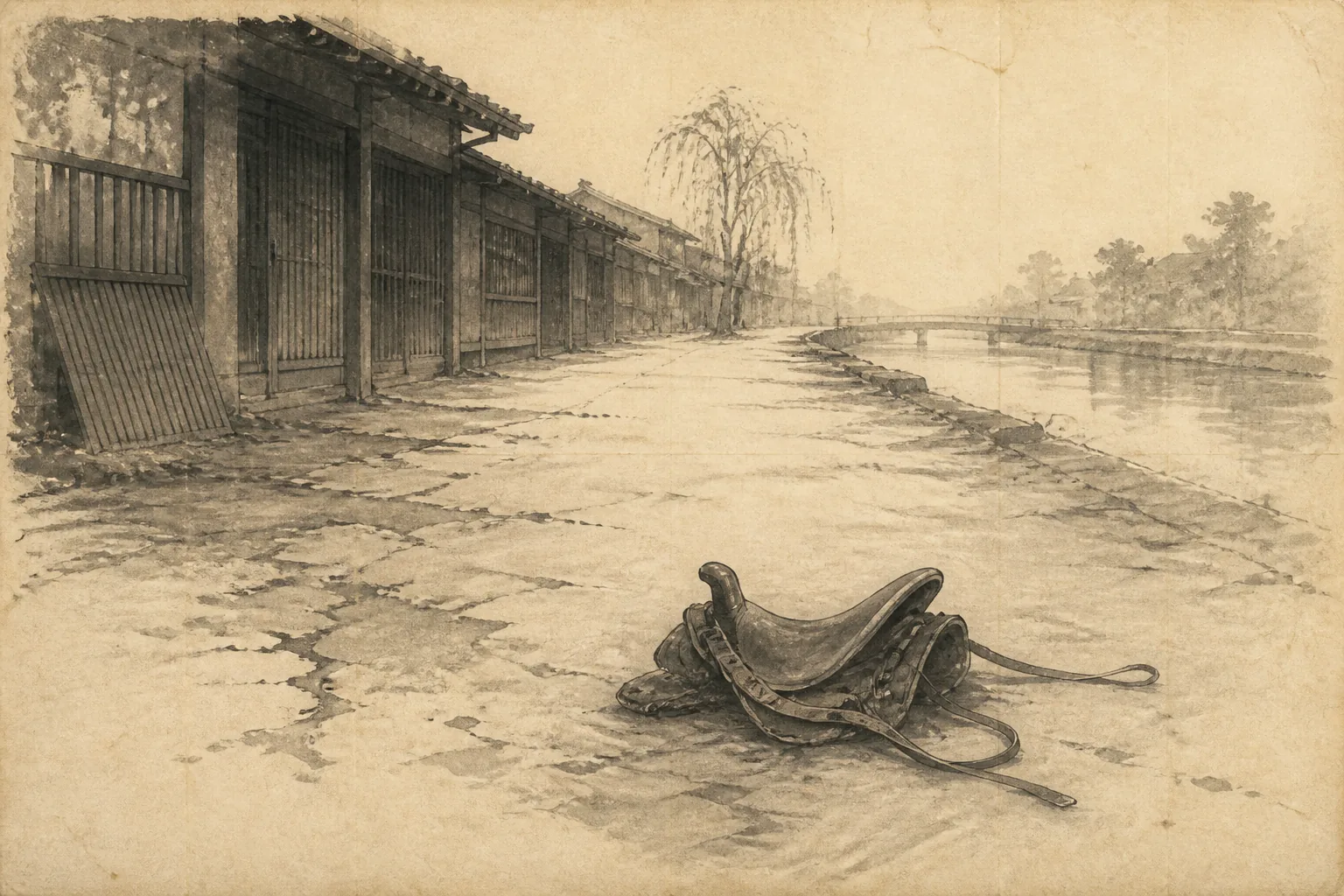
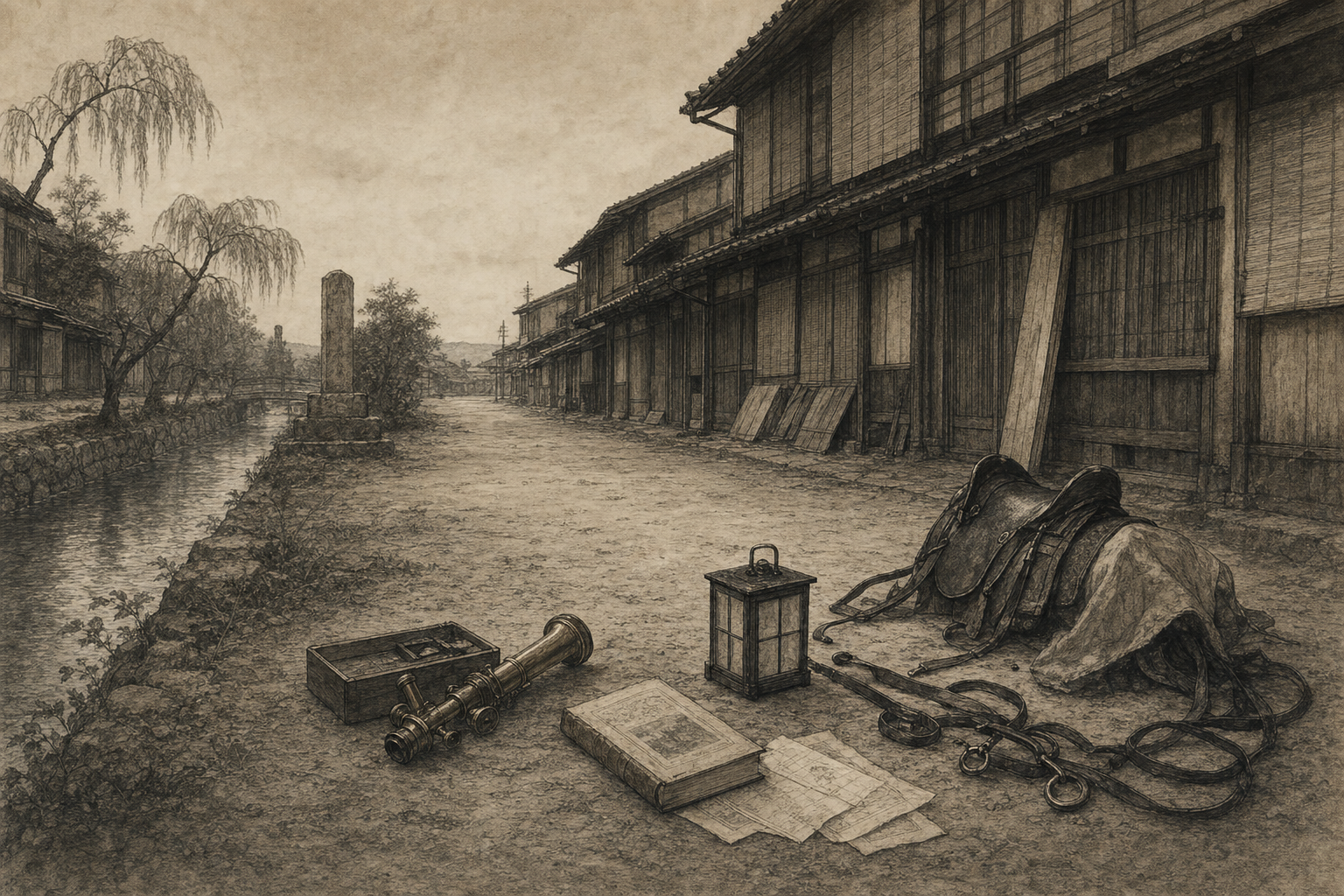
In 1864 the scholar Sakuma Shozan, an advocate of opening the country and court-shogunate cooperation, was attacked and killed on Kiyamachi street; Gensai's involvement is widely attested. An empty road, horse tack and saddle, a dropped Western-learning book, optical instrument, lantern, inspection papers, and today's memorial marker keep both victim and place visible. Quotations supposedly uttered afterward and claims of many other killings accumulated in later storytelling. The documented assassination should not be expanded into a stylish legend of technique; it belongs to a violent collision over Japan's response to foreign power.
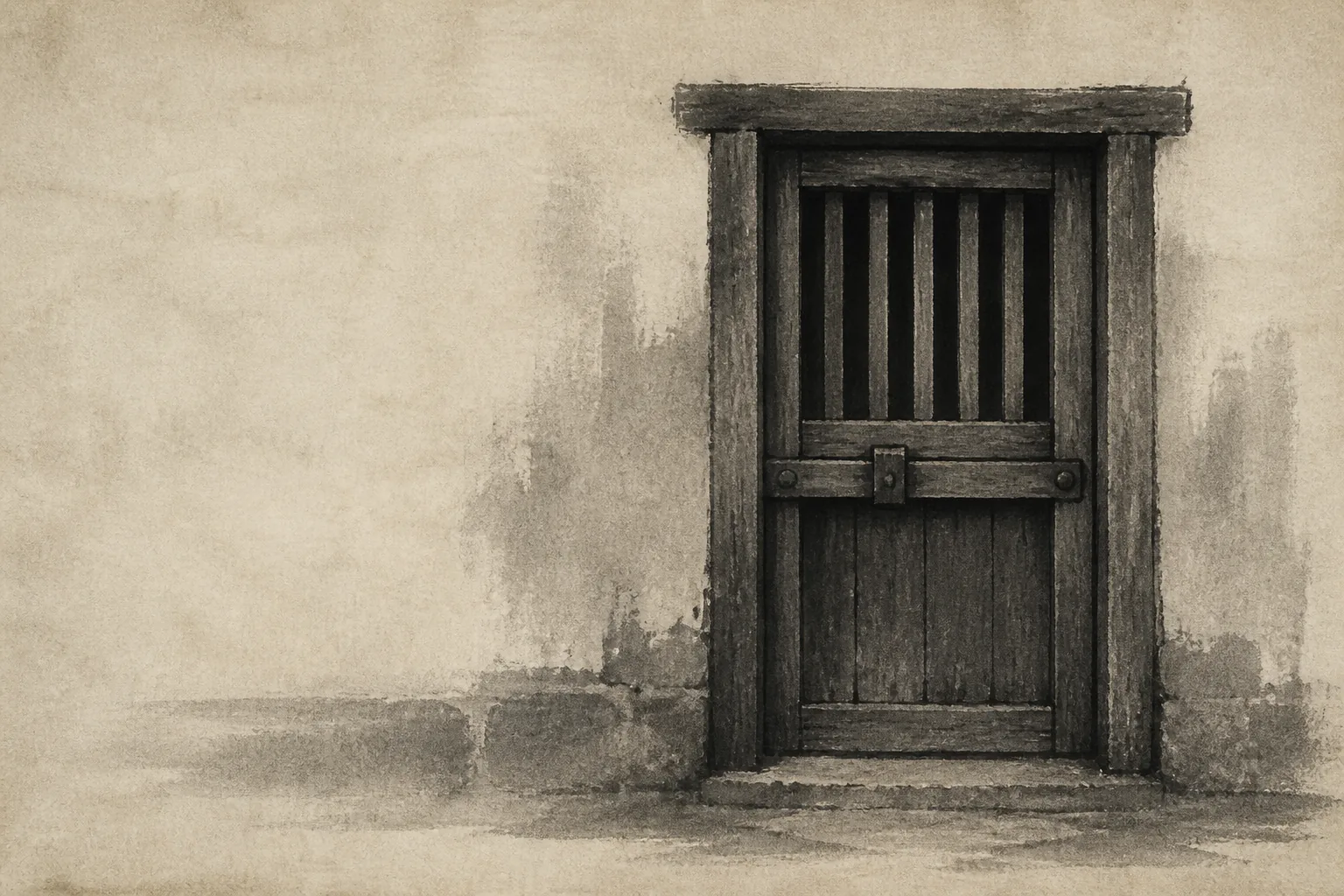
After the Kinmon Incident, the Kumamoto domain treated Gensai's connection to Choshu as a danger and placed him in imprisonment after his return. Sealed correspondence, courier tube, Shimonoseki Strait map, travel pass, and worn sandals show the physical work behind cross-domain solidarity; bars, a meal bowl, chains, and a confiscation inventory show its administrative suppression. Because he sympathized beyond the border without simply abandoning the domain, different factions alternately tried to use or restrain him. The objects turn political fellowship into a conflict over institutional obedience.
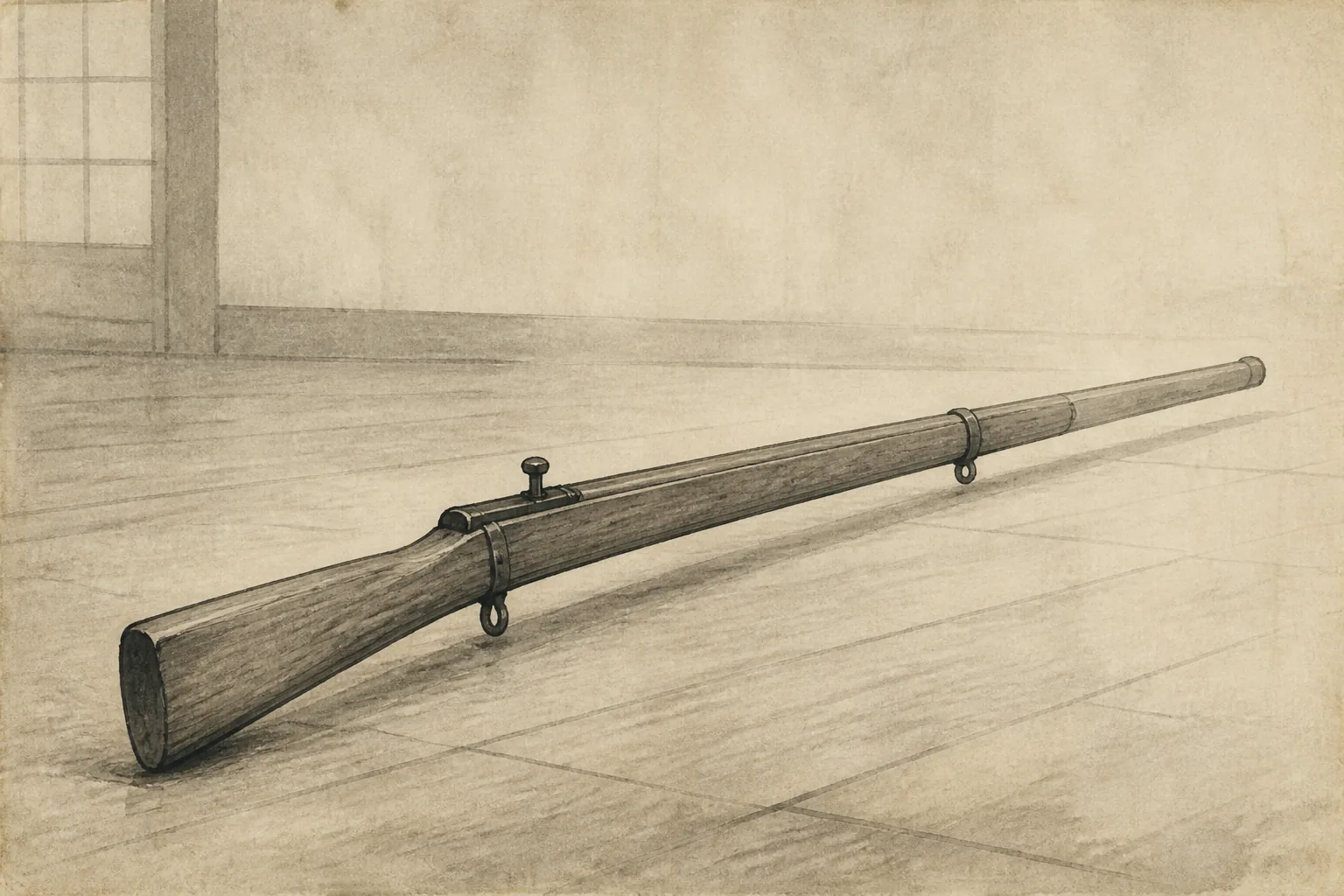
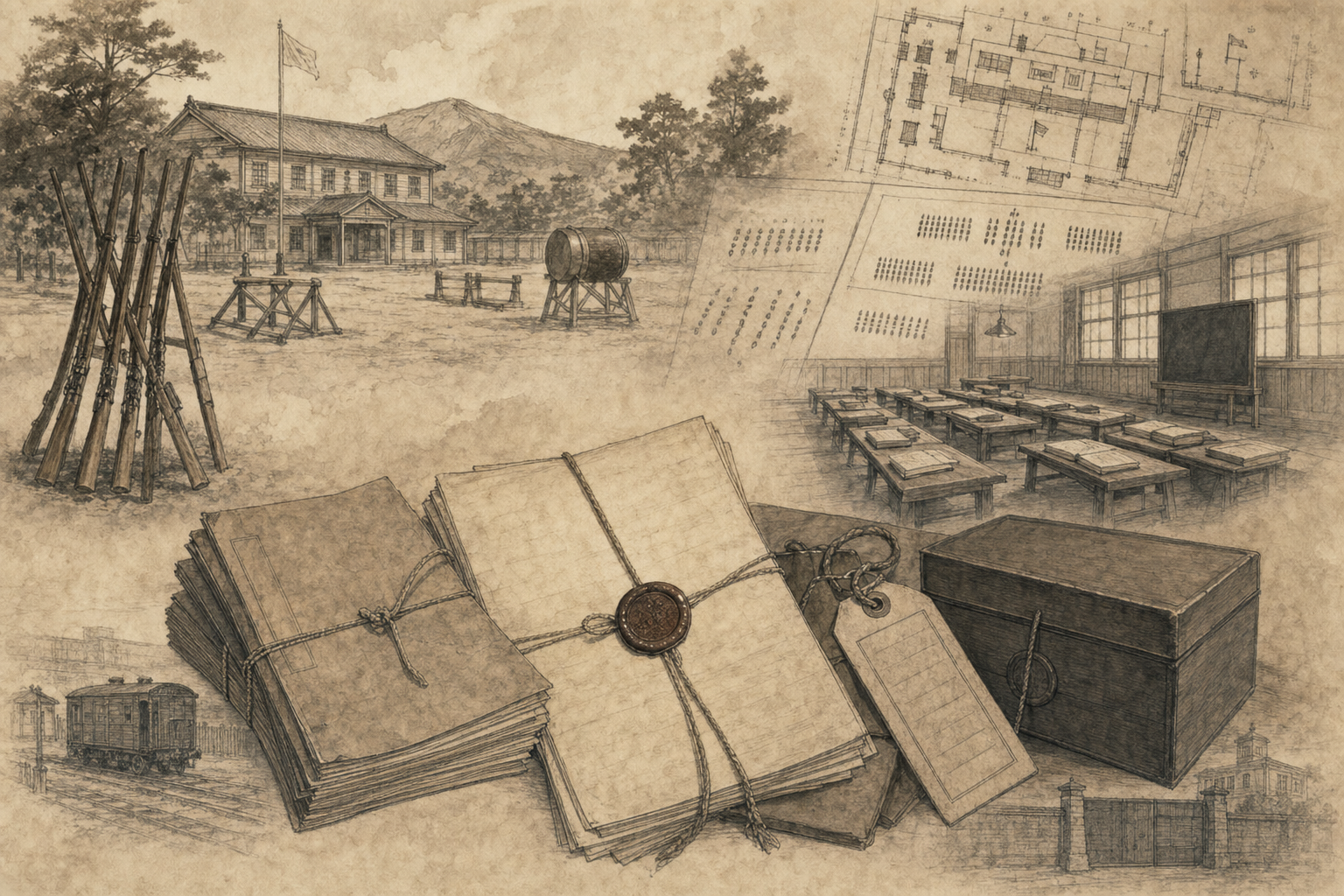
After the Restoration, Gensai used the name Koda Genbei and directed military education at Yushukan in Tsurusaki, a Kumamoto domain enclave. Wooden rifles, drum, formation diagrams, desks, and military texts show an effort to translate conviction into disciplined instruction. His sheltering of Dairaku Gentarō and other connections made the new government regard him as dangerous. He was accused in relation to the Two Princes affair and the killing of Hirosawa Saneomi, but suspicion must not be equated automatically with proven action. Interrogation bundles and judgment papers end with his execution in 1872.
VISIT
Search events related to Gensai Kawakami →Browse all Bakumatsu events →