Inokuchi, Tosa
Born into an Impoverished Country-Samurai Household
A thatched home, farm work, and restricted status shaped his earliest understanding of opportunity.
Know the Person
Meet Iwasaki Yataro through material settings rather than a solitary founder myth: the thatched birthplace at Inokuchi, a Nagasaki trading desk, warehouses and former domain ships at Nishi-Nagahori, flags and seals behind the company mark, holds of requisitioned military transports, and tickets from a ruinous fare war. His skill mattered, but so did assets inherited from Tosa, state protection, military contracts, wartime profit, and government-directed competition.
Life
Inokuchi, Tosa
A thatched home, farm work, and restricted status shaped his earliest understanding of opportunity.
Edo, Tosa, and Nagasaki
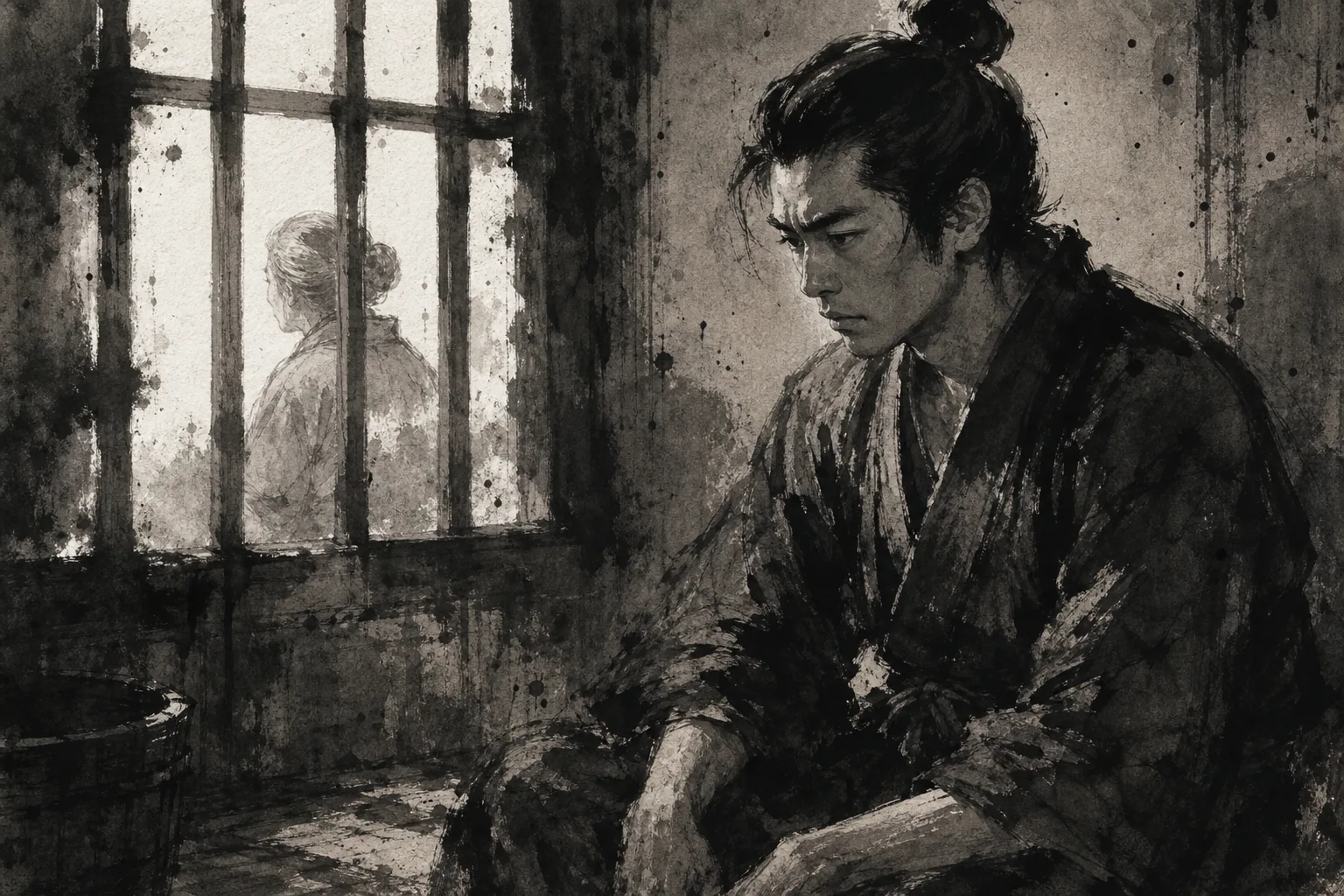
After imprisonment and restored service, he managed accounts and negotiation with foreign merchants.
Osaka and Tokyo
He carried three domain ships, staff, and commercial relationships into a privately controlled enterprise.
Japan, Taiwan, and Shanghai
Taiwan Expedition and Satsuma Rebellion contracts linked military logistics to rapid accumulation.
Tokyo and elsewhere
Diversification and training grew beside mounting criticism of Mitsubishi's proximity to government.
Domestic routes and Tokyo
He died of stomach cancer at fifty; his brother Yanosuke succeeded him before the Nippon Yusen merger.
高知県安芸市
茅葺きの家、三階菱の紋が残る土蔵、列島を模したと伝わる庭石から、出発点となった暮らしを見る。
岩崎弥太郎
Address高知県安芸市井ノ口甲1696
Nearby
大阪府大阪市
土佐藩蔵屋敷の記憶が残る場所から、倉庫、堀、荷と船を結んだ海運事業の足場をたどる。
岩崎弥太郎
Address大阪府大阪市西区北堀江4丁目9-7
Nearby
長崎県長崎市
外国船と商館が集まった港で、帳簿、契約、荷物の検査を通じて弥太郎が学んだ取引の実務をたどる。
岩崎弥太郎
Address長崎県長崎市出島町6-1周辺
Nearby
Keys
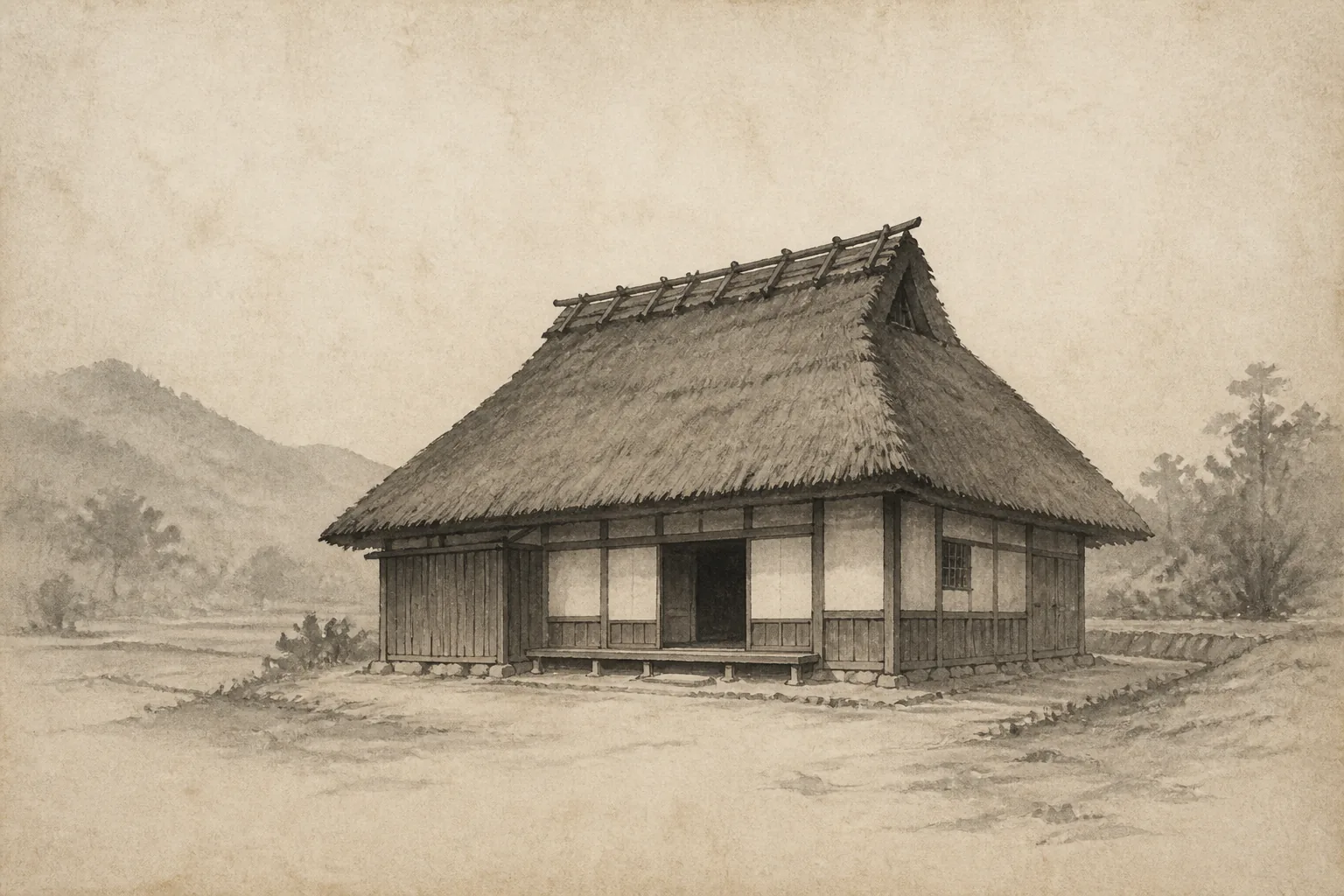
The modest compound at Inokuchi joined a thatched dwelling, farm tools, well, and storehouse. Yataro's household belonged to an impoverished lower stratum of former country samurai, so agricultural work and tight finances were close at hand. A roof tile bears the Iwasaki family's three-tiered diamonds. Courtyard stones are traditionally said to form a map of Japan arranged by the young Yataro, although that claim should remain tradition rather than proven fact. The surviving objects hold material constraint and a durable awareness of family identity in the same place.
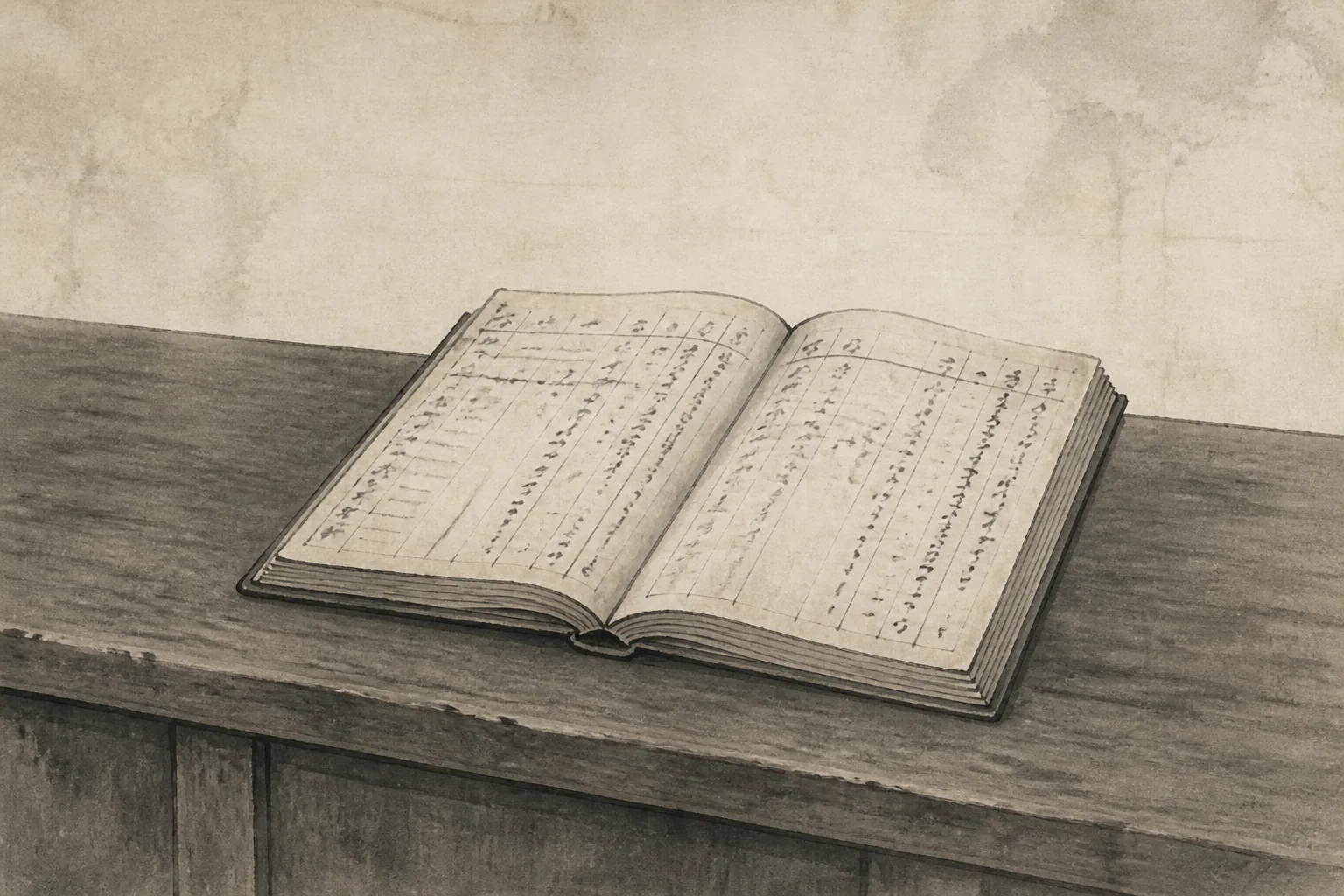
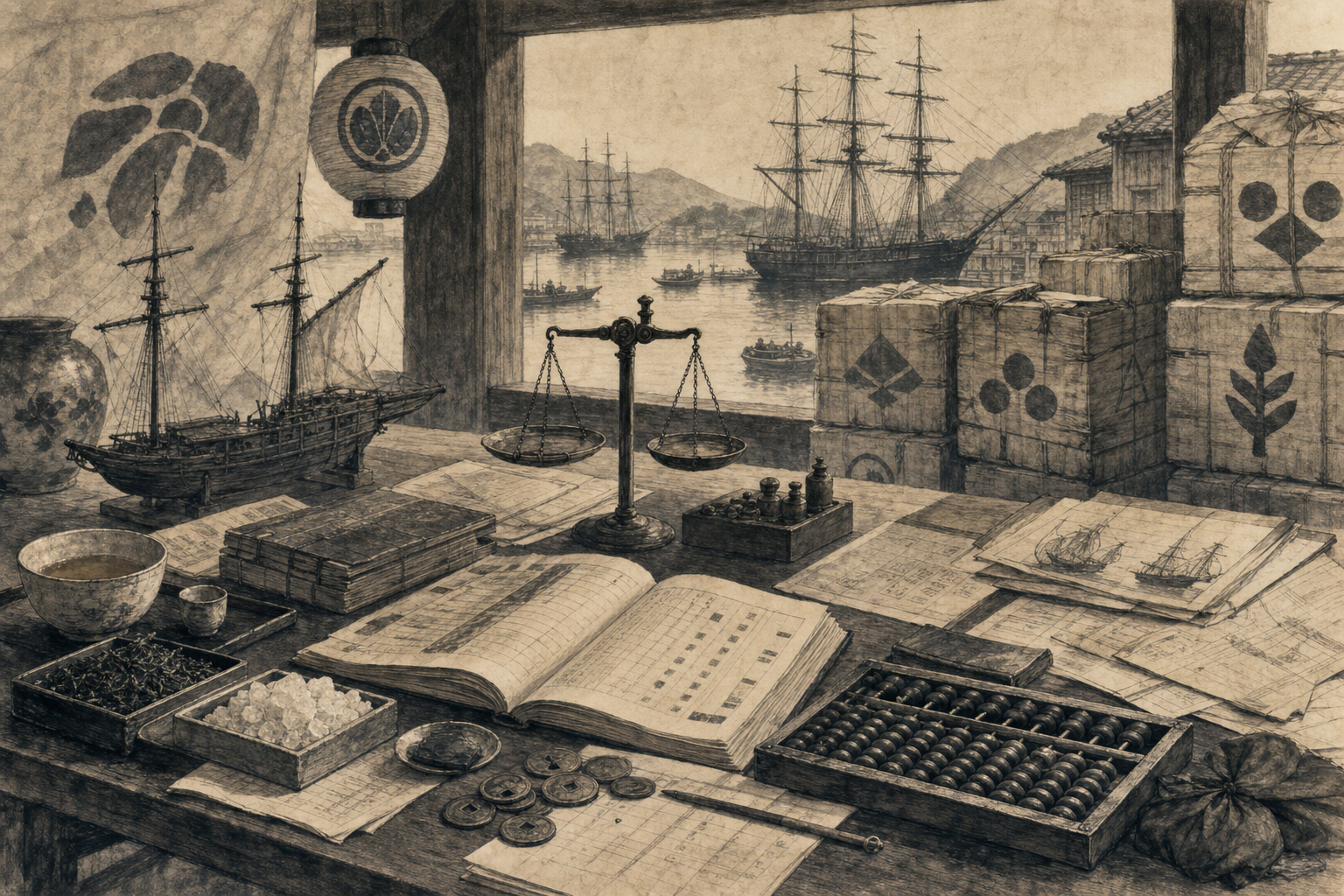
At the Tosa domain's Nagasaki office, ships, arms, tea, camphor, invoices, and payments connected local officials with foreign merchants. Ledgers, an abacus, scales, bills, sample goods, and cargo tags show that trade depended on verification and cash flow as much as language or nerve. Yataro handled negotiation and accounts as a domain official, not yet as an independent company founder. The office joined port intelligence, personal networks, and disciplined bookkeeping, teaching him how a ship and its cargo could be converted into a repeatable transport business.
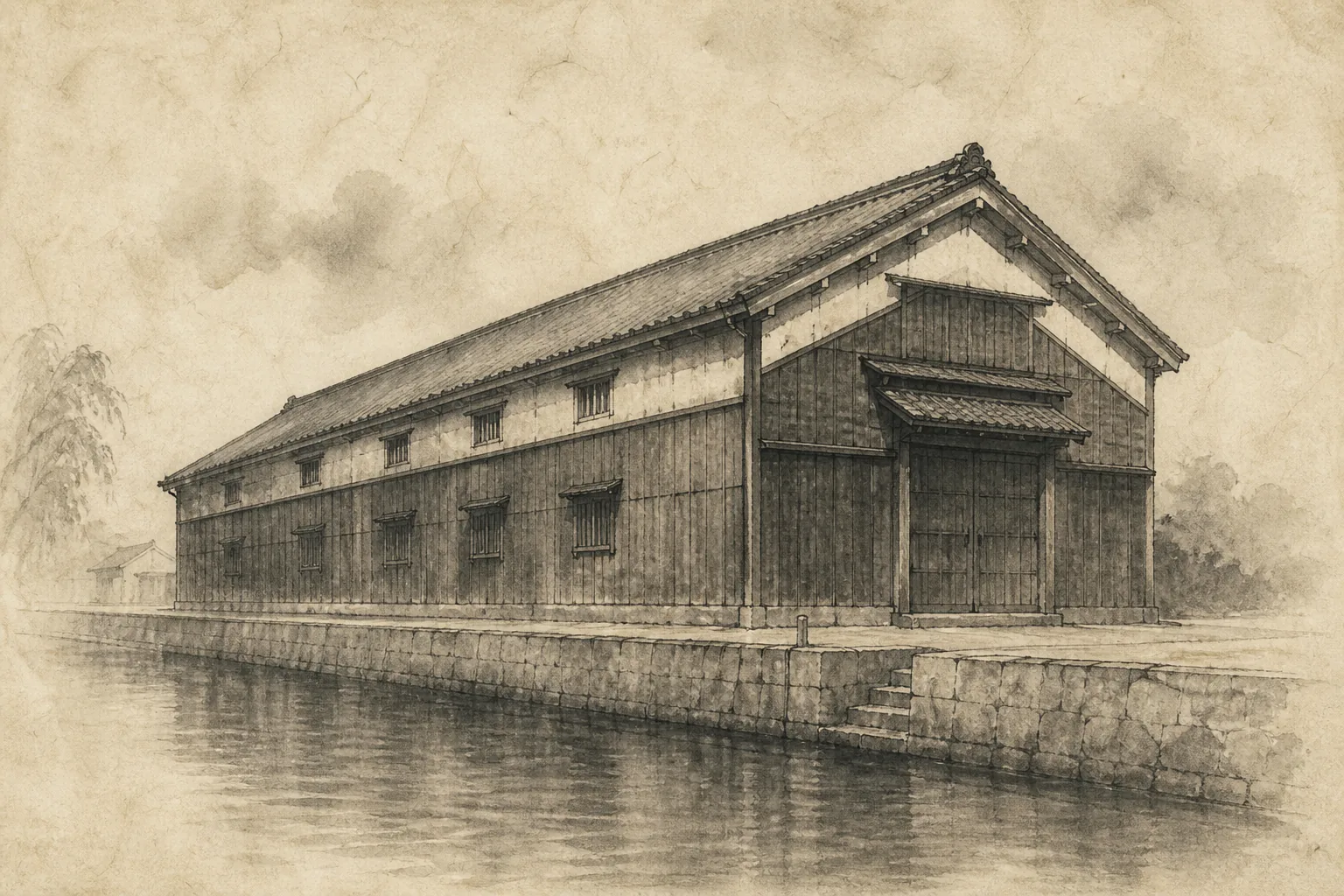
Tsukumo Shokai began operations in 1870 using three domain ships and a base near Osaka's Nishi-Nagahori canal. Warehouse bales, coal, manifests, freight tables, and cargo receipts reveal maritime transport as a chain of collecting goods, scheduling vessels, preventing delay, and recovering payment. Yataro first supervised the operation for Tosa and assumed ownership after abolition of the domains. This was not creation from nothing: vessels, employees, relationships, and facilities crossed from a domain enterprise into the business that would be renamed Mitsubishi.
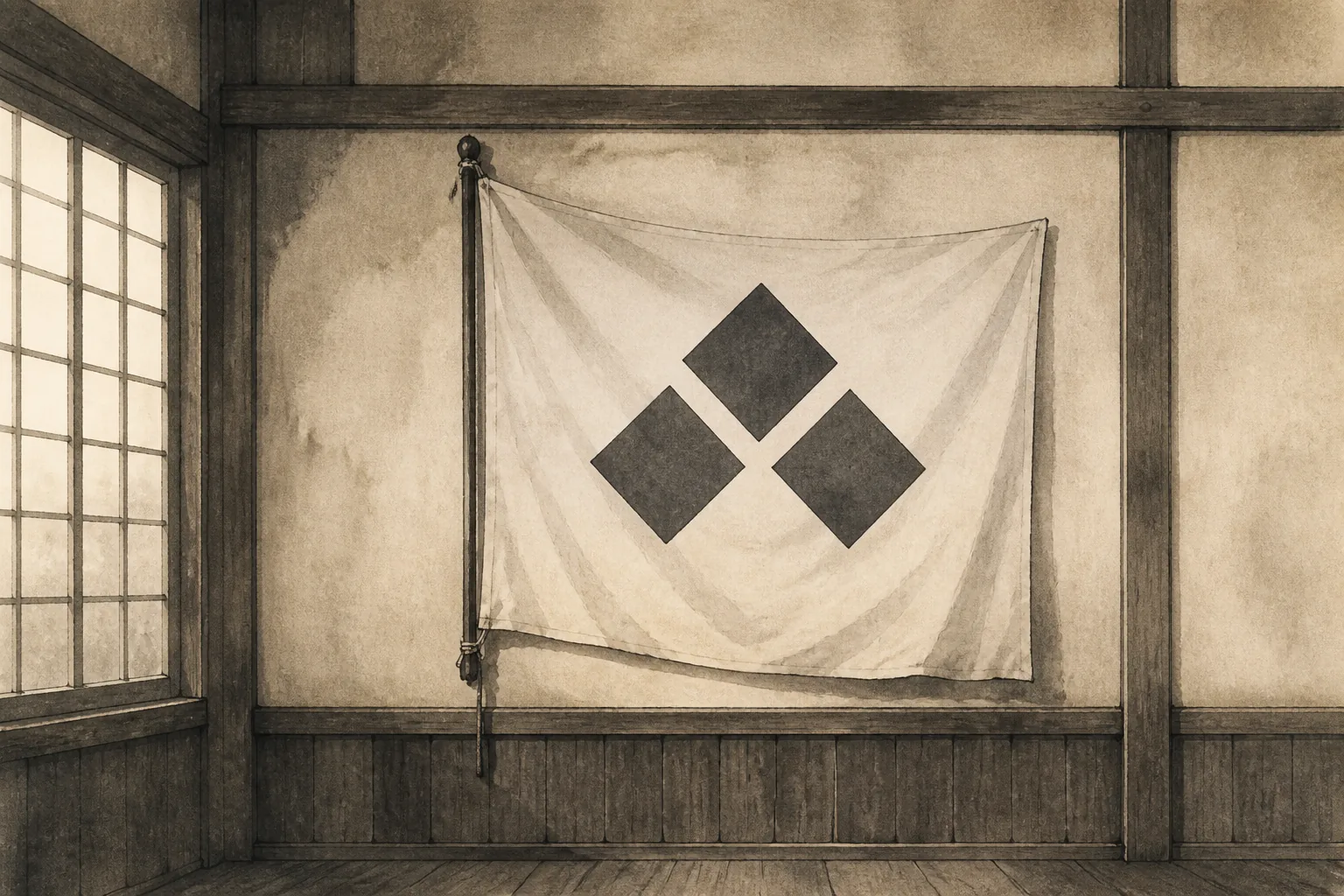
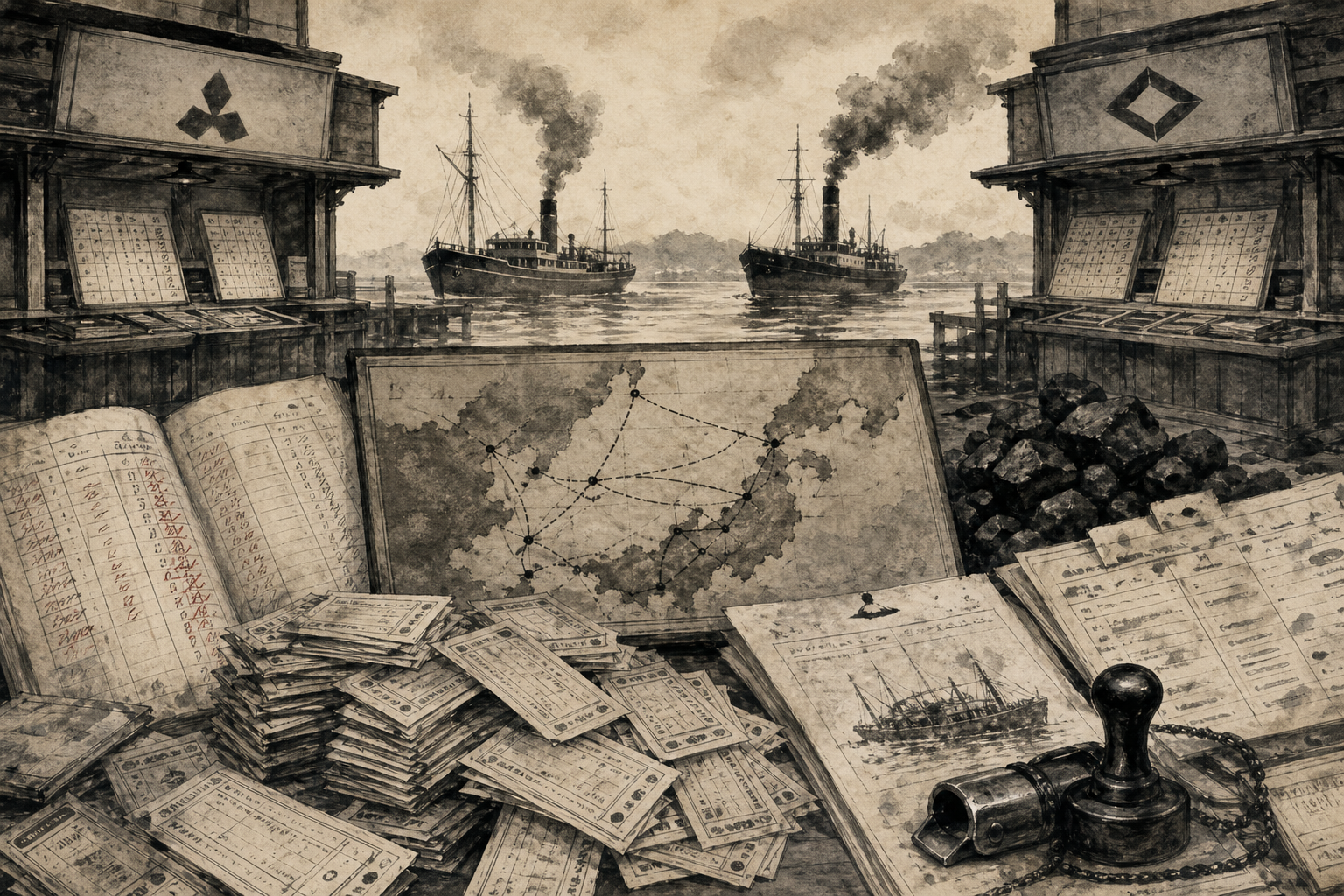
An early ship flag used triangular diamonds that developed into the later Mitsubishi mark. The design is often linked to the Iwasaki three-tiered diamonds and the Tosa Yamauchi three oak leaves, but Mitsubishi's own account does not claim certainty about the precise origin. Setting flag, roof tile, stencil, seals, and papers recording the names Tsukumo, Mitsukawa, and Mitsubishi together separates documented visual change from a neat legend. On busy routes the sign identified vessels at a distance and told shippers which organization accepted responsibility for their cargo.
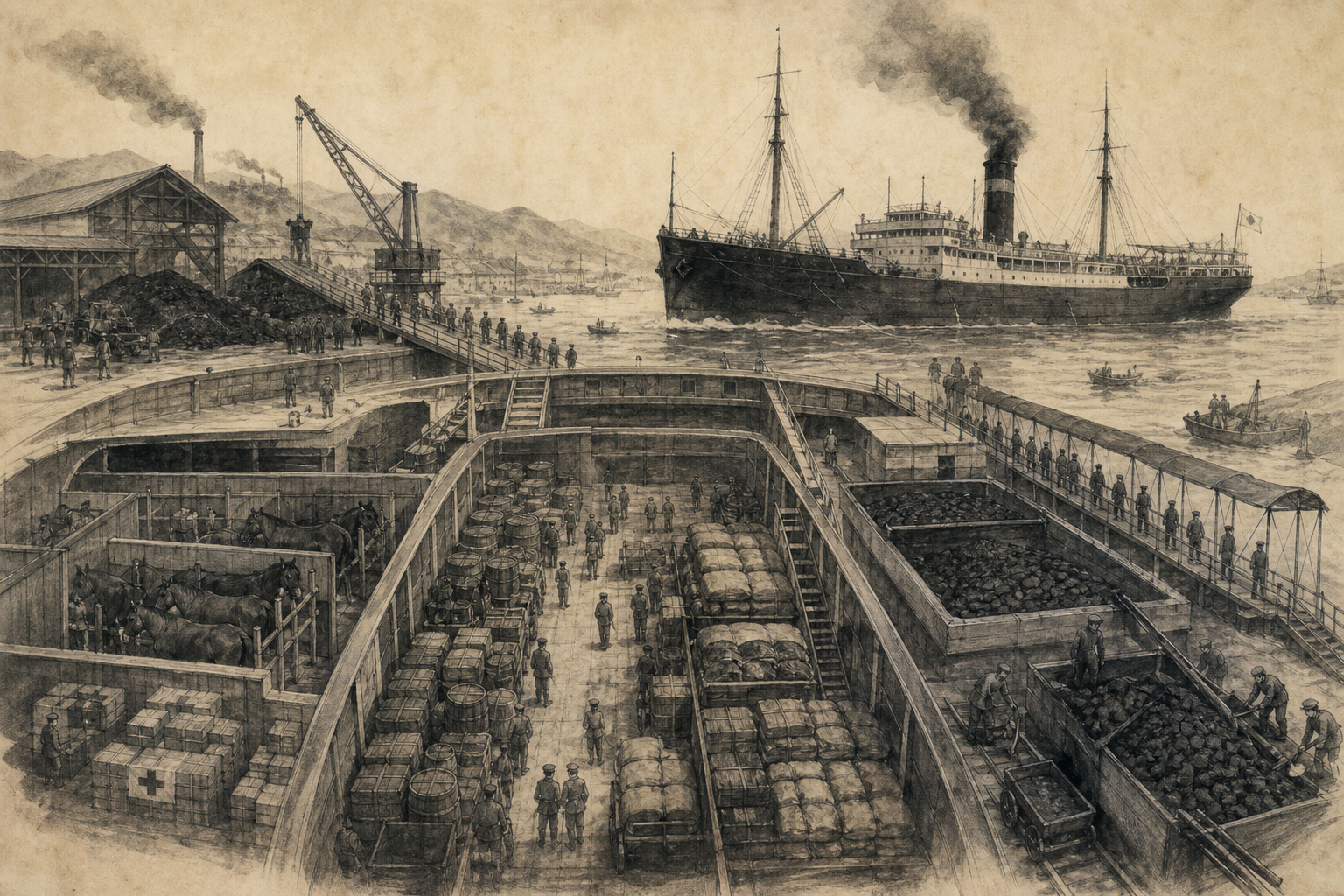
Mitsubishi carried transport for the Taiwan Expedition, opened a Shanghai route, and moved troops and supplies during the Satsuma Rebellion with requisitioned vessels including Tokai Maru. Provisions, medical crates, horse stalls, coal bunkers, and dispatch schedules make the logistics behind combat visible. Reliable delivery brought state protection and access to ships, while profits financed a larger fleet and related industries. The expansion therefore cannot be credited to entrepreneurial genius alone: it also rested on warfare, government contracts, public policy, and preferential opportunities that competitors criticized.
From 1883 Mitsubishi fought the government-backed Kyodo Unyu through steep fare cuts. Rival ticket windows, cheap tickets, timetables, route maps, coal invoices, repair bills, and red-ink ledgers show why growing passenger numbers could still exhaust both companies. Yataro died in 1885 while the struggle continued. The rivals were then merged into Nippon Yusen, so the endpoint was neither a simple victory nor an unregulated market result. The material record exposes modern shipping as a public-policy problem in which competition, subsidy, service continuity, and consolidation were inseparable.
VISIT
Search events related to Yataro Iwasaki →Browse all Bakumatsu events →