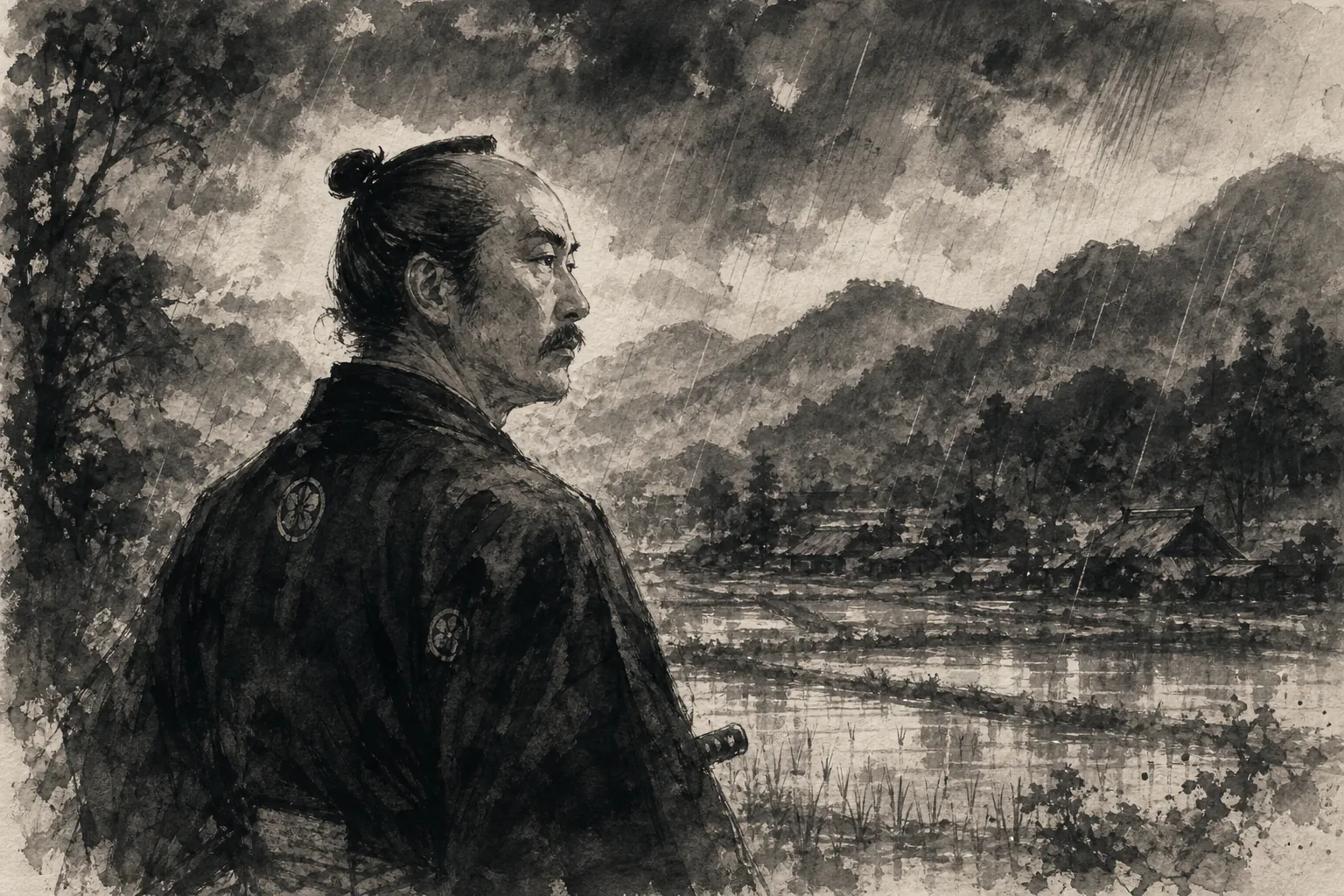
Kaishu Katsu · Shogunate retainer
Original
過遠州灘
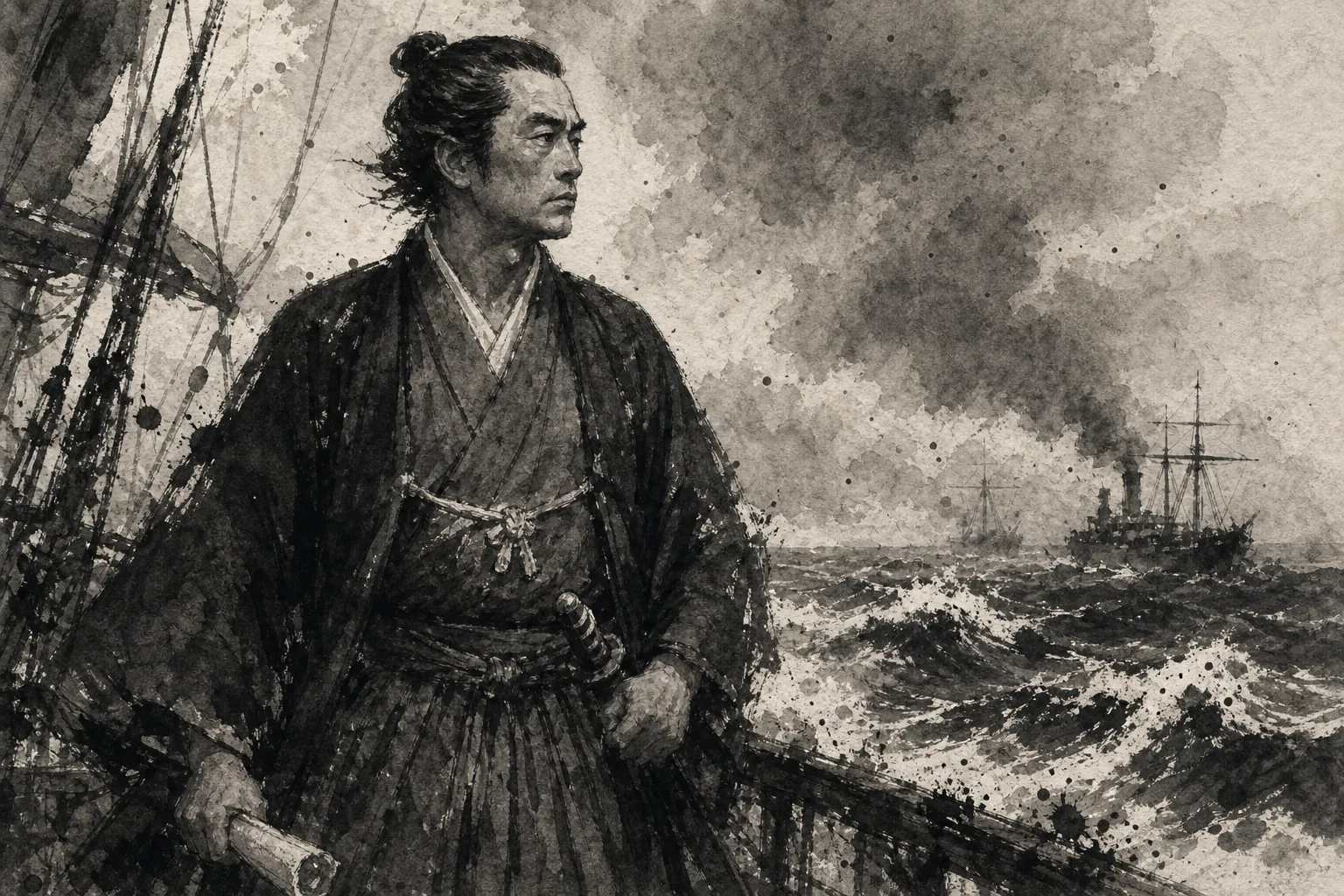
Kaishu Katsu's Chinese-style poem, "過遠州灘丹心憂國幾艱難西走東奔未處安". Read the original Japanese, modern translation, interpretation, and historical context as distinct parts of the poem.
Person
A shogunate naval reformer and mediator who helped bring about the bloodless surrender of Edo Castle.
Learn about Katsu Kaishu
Translation
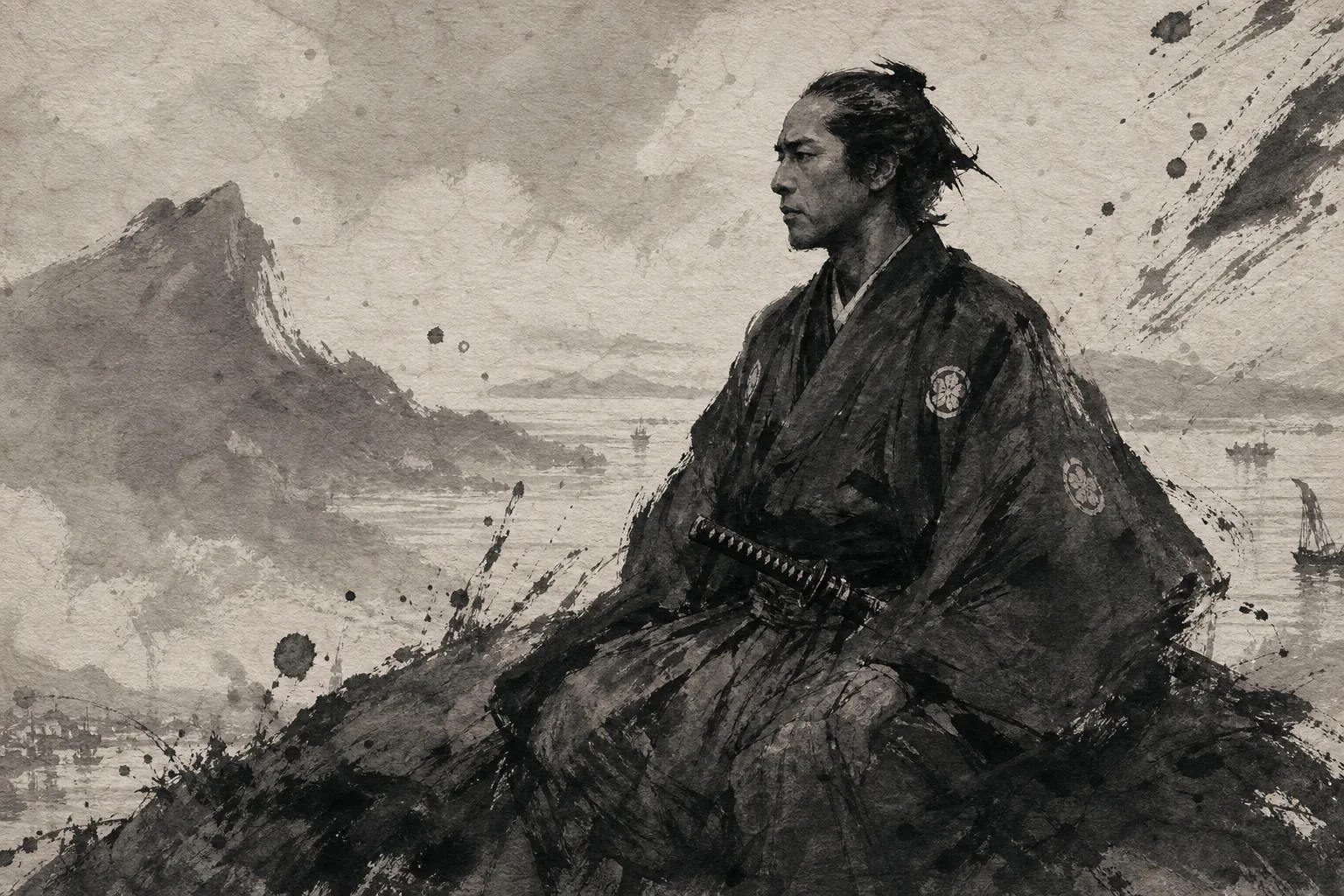
With a loyal heart anxious for the country, I run east and west through hardship; the waves of the open sea are nothing to fear.
Poetic Shape Kanshi draws on a classical Chinese poetic tradition, where restraint, allusion, and moral tension carry much of the weight. The poem sounds formal, but the pressure beneath it is personal.
Reading
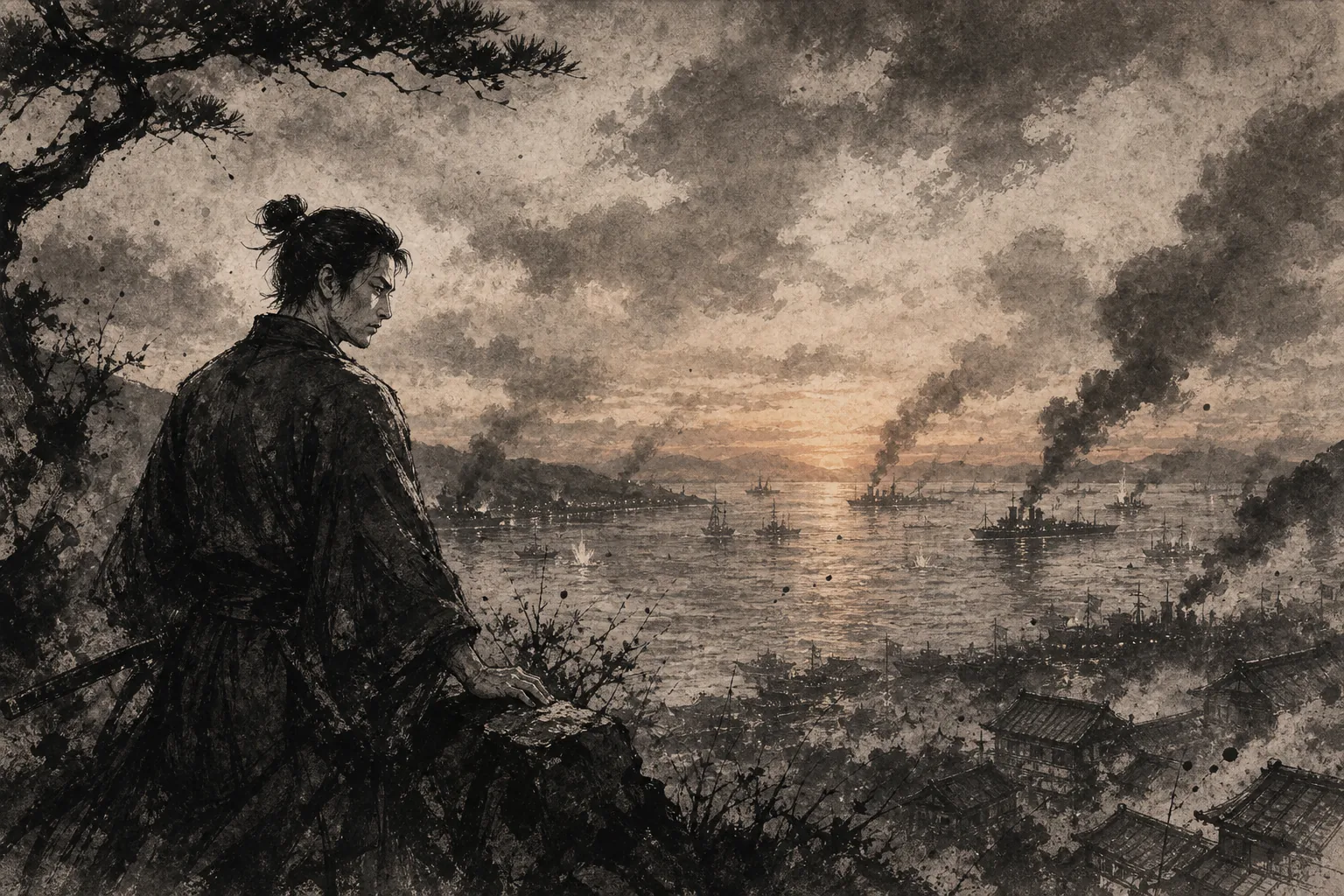
Katsu's energy and the scale of the sea fit together.Before becoming the mediator of Edo's bloodless surrender, he appears as a practical shogunate official crossing rough waters.
Background
A Chinese poem by Katsu about repeatedly crossing the Enshu Sea.It reveals a shogunate retainer continually moving among navy, diplomacy, and government affairs.
Source / Transmission Wording and readings may differ by transmission; this page treats the text as one circulated form.
Further Reading
Find related books and places to stay For readers who want more historical context, these links search for related books on external stores.
Affiliate link